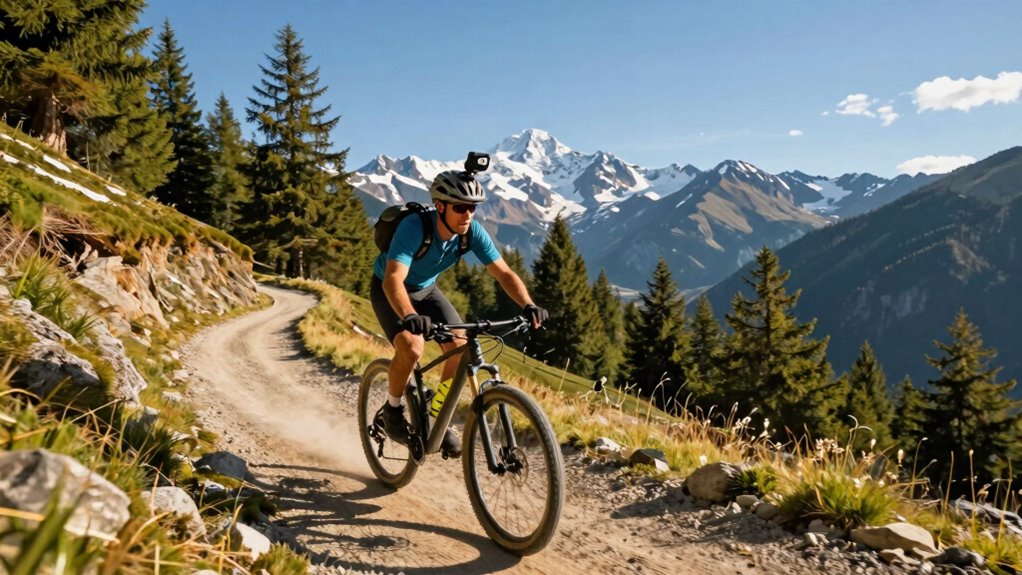

The Insta360 X5 is my best overall pick among 360 cameras for cycling, balancing 8K capture, stabilization, waterproofing, and replaceable lenses. For a road-focused setup, the Insta360 X4 Air Road Cycling Bundle adds an invisible selfie stick and cycling-oriented accessories, while the DJI Osmo 360 Road Cycling First-Person Combo is another dedicated road-riding option. The main tradeoffs are image detail versus file size and battery demands, plus the convenience of a ready-made bundle versus choosing mounts separately. Riders should also weigh lens protection and editing workflow, since a 360 camera needs reframing before many clips are ready to share. Read on for the full comparison and guidance on which setup fits your bike, rides, and filming habits.

Get sports gear delivered free with Prime
- Fast, free delivery on millions of items
- Prime Video, Amazon Music and more included
- Member-only deals all year
Complete the kit


Key Takeaways
- The Insta360 X5 is the strongest all-round choice: its 8K recording, stabilization, waterproof design, and replaceable lenses answer several demands of regular outdoor cycling in one camera.
- Bundles change the buying decision: the X4 Air Road Cycling Bundle and DJI Osmo 360 Road Cycling First-Person Combo are aimed at riders who want cycling-specific gear included, while standard and Essentials bundles may suit people building a custom setup.
- AKASO’s three combo listings share a core 5.7K proposition: Standard, Cycling, and Motorcycle bundles appear to differ more by included accessories than by the headline recording format, so check the mount contents before choosing.
- Higher resolution is not the only measure of ride footage: stabilization, secure mounting, battery planning, and the ability to reframe clips can matter more to a usable cycling video than the largest resolution figure.
- The lineup has distinct compromises: GoPro MAX adds traditional action-camera and live-streaming functions, while the FOSSiBOT FC360 highlights a 1/2-inch sensor and 8K recording; buyers should compare those strengths against their needs for bundle fit, lens protection, and editing.”


| cameras for cycling | Video resolution | Display | Weight | Photo resolution |
|---|---|---|---|---|
| AKASO 360 Action Camera Cyclin | 5.7K | 2.29-inch touchscreen | 180 g | 72MP |
| Insta360 X5 Waterproof 8K 360° | 8K (7680 × 4320) | 2.5 inches | 0.5 kg | — |
| Insta360 X5 Motorcycle Bundle | Up to 8K | 2.5 inches | 1.45 kg | — |
| Insta360 X4 Air Road Cycling B | 8K at 30fps | — | 165 g | — |
| AKASO 360 Action Camera Standa | 5.7K | 2.29-inch touchscreen | 180 g | 72MP |
| FOSSiBOT FC360 360 Camera 8K W | 8K | 3-inch LCD | — | 48MP |
| DJI Osmo 360 Road Cycling Firs | 8K | — | — | 120MP |
| GoPro MAX Waterproof 360 and T | — | 2-inch screen | 13.12 ounces | 16.6MP |
| AKASO 360 Action Camera Motorc | 5.7K | 2.29-inch touchscreen | 180g | 72MP |
| Insta360 X5 Essentials Bundle | 8K UHD | 2.5 inches | — | — |
More Details on Our Top Picks
AKASO 360 Action Camera Cycling Combo – 5.7K 360 Video, 360-SuperSmooth
The AKASO 360 Cycling Combo gives riders a lower-resolution alternative to the 8K Insta360 X5, with 5.7K 360 video, digital stabilization, horizon lock, and AI subject tracking. Its included invisible selfie stick is useful for perspective shots without filling the frame with the mount, while the 72MP photo capability adds flexibility for stills. For cycling, the combo is more ready to shoot than the Standard Combo, which lacks that stick. The tradeoff is that this model is listed as water resistant, not waterproof, and the listing does not specify battery life. It also comes without a Micro SDXC card, so riders need to supply storage before heading out. I’d choose it for a bundled 360 setup, not for maximum detail or wet-weather confidence.
Pros:- 5.7K 360 video and 72MP photo capture
- Horizon lock and AI subject tracking support steadier, easier-to-frame footage
- Invisible selfie stick is included for third-person cycling angles
- 2.29-inch touchscreen and AKASO 360 Studio editing options
Cons:- Micro SDXC card is not included
- Water resistance offers less reassurance for wet rides than a waterproof camera
- Battery life is not specified in the supplied product data
Best for: Cyclists who want an included invisible selfie stick and stabilization features for casual rides and social clips.
Not ideal for: Riders who film in heavy rain or want the detail and waterproof rating listed for the Insta360 X5.
- Video resolution:5.7K
- Photo resolution:72MP
- Sensor:1/2-inch CMOS
- Stabilization:Digital; horizon lock and AI subject tracking
- Weight:180 g
- Display:2.29-inch touchscreen
- Water resistance:Water resistant
- Storage:Micro SDXC; card not included
Our verdict“Choose this bundle if an included selfie stick and capable 5.7K cycling footage matter more than 8K detail or a clearly stated waterproof rating.”
Insta360 X5 Waterproof 8K 360° Action Camera with Stabilization and Replaceable Lens
For riders who want maximum capture detail and a camera suited to rougher conditions, the Insta360 X5 is the premium choice here. Its 8K 360 video, waterproof construction, FlowState stabilization, and replaceable lenses address common cycling concerns: movement, weather, and exposed glass near the road. The AKASO 360 Cycling Combo is lighter and includes a selfie stick, but it records at 5.7K and is only described as water resistant. The X5 also lists low-light processing and a built-in wind guard, useful when rides continue past bright daytime conditions. That capability comes with a substantial weight penalty at 0.5 kg, plus a more involved feature set that may take time to learn. I’d favor it for riders prioritizing image detail and durability over a light setup.
Pros:- 8K 360 video provides more detail for reframing than the 5.7K AKASO models
- Waterproof construction and replaceable lenses suit exposed cycling use
- FlowState stabilization and horizon lock help smooth moving footage
- Built-in wind guard and stated low-light capabilities broaden recording conditions
Cons:- At 0.5 kg, it is considerably heavier than the 165 g Insta360 X4 Air Road Cycling Bundle
- Feature-rich controls and editing can add a learning curve
- Requires a compatible Micro SD card
Best for: Frequent cyclists who record in varied weather and want 8K reframing room, replaceable lenses, and stronger protection.
Not ideal for: Weight-conscious road cyclists seeking a minimal handlebar or helmet setup, or beginners who want a simpler camera workflow.
- Video resolution:8K (7680 × 4320)
- Viewing angle:360 degrees
- Stabilization:FlowState stabilization
- Water resistance:Waterproof
- Weight:0.5 kg
- Battery life:Up to 208 minutes
- Display:2.5 inches
- Storage:Micro SD; UHS Speed Class 3, V30
Our verdict“Pick the X5 if waterproof 8K capture and replaceable lenses outweigh the extra weight and learning curve.”
Insta360 X5 Motorcycle Bundle – Waterproof 8K 360° Action Camera with Replaceable Lens and 3-Hour Battery
This Insta360 X5 Motorcycle Bundle brings the same broad 8K, waterproof, replaceable-lens appeal as the standalone X5, with FlowState stabilization and wind-reduction audio suited to exposed rides. For cyclists who also use motorcycle equipment, that shared-use angle may make more sense than buying a cycling-specific kit. Compared with the X4 Air Road Cycling Bundle, this listing emphasizes waterproofing to 15 m and a larger X5-style camera, while the X4 Air is far lighter at 165 g and explicitly includes a bike computer mount and strap. The stated 1.45 kg weight is a major concern for carrying or mounting on a bicycle, and the bundle’s motorcycle focus does not establish which cycling mounts are included. MicroSD is also separate, with battery life listed at up to 185 minutes. I’d pick it for multi-vehicle use, not a lightweight road-bike setup.
Pros:- 8K 360 capture with FlowState stabilization and horizon lock
- Waterproof to 49 ft (15 m) and fitted with replaceable lenses
- Wind-reduction audio is useful on exposed rides
- Shared motorcycle-and-cycling use can suit riders with both setups
Cons:- Listed weight of 1.45 kg is very heavy compared with the 165 g X4 Air Road Cycling Bundle
- MicroSD card is sold separately
- Bundle description does not specify a bike mount or other cycling-specific accessories
Best for: Cyclists who also ride motorcycles and want one waterproof 8K 360 camera for both activities.
Not ideal for: Road cyclists seeking a light, cycling-ready kit; the listed 1.45 kg weight and unclear bike-mount inclusions are poor fits.
- Video resolution:Up to 8K
- Viewing angle:360 degrees
- Stabilization:FlowState stabilization
- Water resistance:Waterproof to 49 ft (15 m)
- Weight:1.45 kg
- Battery life:Up to 185 minutes
- Display:2.5 inches
- Storage:MicroSD; card not included
Our verdict“Choose this X5 bundle for shared motorcycle and cycling use, but skip it if low weight or a clearly specified bike mount is a priority.”
Insta360 X4 Air Road Cycling Bundle – 8K 360 Camera with Invisible Selfie Stick, Replaceable Lenses, and AI Editing
The Insta360 X4 Air Road Cycling Bundle is the clearest fit for riders who care about carrying less: at 165 g, it is lighter than the 180 g AKASO models and far below the listed weight of the X5 Motorcycle Bundle. Its 8K 30fps recording, FlowState stabilization, horizon lock, and Active HDR pair well with cycling footage that may need reframing after the ride. The bundle also names cycling-oriented accessories—a bike computer mount and strap—rather than leaving mounting needs open-ended. Replaceable lenses add a practical safeguard for a camera exposed on a bike. The main compromise is reliance on the smartphone app for full editing, which makes phone-based workflow part of the package. I’d choose this over the X5 for a light road setup, but not if independent editing or a more clearly specified waterproof rating is the priority.
Pros:- 165 g weight suits lightweight bike setups
- 8K 30fps video with FlowState stabilization and horizon lock
- Includes a bike computer mount, strap, and replaceable lens kit
- Active HDR can help manage changing light during outdoor rides
Cons:- Full editing features require the smartphone app
- Premium positioning may be excessive for casual recording
- Supplied data does not state a waterproof rating or battery life
Best for: Road cyclists who want a lightweight 8K camera with a stated bike mount, strap, and replaceable lenses.
Not ideal for: Riders who avoid smartphone editing workflows or need a stated waterproof depth for frequent wet-weather rides.
- Video resolution:8K at 30fps
- Weight:165 g
- Stabilization:FlowState stabilization
- Horizon lock:Yes
- HDR:Active HDR
- Included accessories:Bike computer mount, strap, replaceable lenses kit
- Cloud storage:Up to 2TB
Our verdict“Choose the X4 Air bundle if low weight and cycling-specific mounting accessories matter more than app-independent editing.”
AKASO 360 Action Camera Standard Combo – 5.7K 360 Video, 360-SuperSmooth
The AKASO 360 Standard Combo is a straightforward way into 360 cycling footage if the goal is to capture a ride and choose the framing later, rather than pay for 8K detail. Its 5.7K video, digital stabilization, horizon lock, AI subject tracking, and stated two-hour battery life cover the core needs for shorter rides. It also lists dual 48MP sensors and 72MP photos. Compared with the AKASO Cycling Combo, this version has a documented battery average life but does not include the invisible selfie stick; riders who want that angle should look at the Cycling Combo. The camera is water resistant rather than listed as waterproof, and its supplied data warns of weaker low-light results and no HDR support. A Micro SDXC card is required separately.
Pros:- 5.7K 360 video and 72MP photo capability
- Horizon lock, SuperSmooth stabilization, and AI subject tracking
- Two-hour average battery life is stated
- Compact 180 g body with a 2.29-inch touchscreen
Cons:- Invisible selfie stick is not included, unlike the AKASO Cycling Combo
- No HDR support and listed low-light limitations
- Micro SDXC card is not included, and the camera is described only as water resistant
Best for: New 360-camera users who want stabilization and tracking for daytime rides and already have a suitable mount or stick.
Not ideal for: Cyclists who need an included invisible selfie stick, strong low-light performance, HDR, or clearly specified waterproof protection.
- Video resolution:5.7K
- Photo resolution:72MP
- Sensor:1/2-inch CMOS; dual 48MP sensors listed
- Stabilization:Digital; SuperSmooth and horizon lock
- Battery life:2 hours
- Weight:180 g
- Display:2.29-inch touchscreen
- Storage:Micro SDXC; card not included
Our verdict“Choose this as a starter option for shorter daytime rides if you already have a mount and can accept 5.7K footage and limited wet-weather protection.”
FOSSiBOT FC360 360 Camera 8K Waterproof Action Camera with 1/2″ Sensor
For cyclists who want high-resolution reframing and serious water protection, the FOSSiBOT FC360 offers a distinct mix: 8K video, 48MP stills, and a stated waterproof depth of 50 meters. That depth is far beyond what most riders need for rain, but it gives this camera a tougher outdoor profile than the GoPro MAX, whose listing describes it as waterproof without giving a depth. Its 135-minute recording capacity also makes it a stronger fit for longer outings than the DJI Osmo 360, listed for up to 100 minutes in 8K mode. The tradeoff is that only 6GB of internal storage is listed, and the microSD card is sold separately. I’d choose it for wet-weather or extended rides, but not if I wanted the clearest memory-card and app workflow details before buying.
Pros:- 8K video gives flexibility to crop and reframe cycling footage.
- 48MP still resolution supports detailed frame grabs and photos.
- Listed waterproof rating reaches 50 meters.
- Recording capacity is listed as up to 135 minutes.
Cons:- MicroSD card is not included, and 6GB of internal storage is limited.
- The product data does not specify cycling mounts or editing-app details.
Best for: Cyclists planning long rides in heavy rain or wet conditions who want 8K footage and are willing to add a high-speed microSD card.
Not ideal for: Riders who want a ready-to-record setup out of the box or depend on generous internal storage; the listed 6GB fills the gap only modestly.
- Video resolution:8K
- Photo resolution:48MP
- Sensor size:1/1.2-inch
- Water resistance depth:50 meters
- Recording capacity:Up to 135 minutes
- Internal storage:6GB
- MicroSD support:Up to 1TB; high-speed card recommended
- Display:3-inch LCD
Our verdict“Choose the FOSSiBOT FC360 for long, wet rides and high-resolution reframing, provided you are prepared to supply a microSD card.”
DJI Osmo 360 Road Cycling First-Person Combo, 360 Action Camera
The DJI Osmo 360 Road Cycling First-Person Combo is the most directly cycling-oriented choice here: its named combo points toward rider-perspective footage, while its 360, selfie, and single-lens modes give you options beyond a fixed forward view. Its 8K video and 120MP photos are a step up on paper from the GoPro MAX’s 5.6K spherical video and 16.6MP photos, making the DJI a better fit for riders who expect to crop footage after the ride. The listed IP68 protection and magnetic quick-release also suit changing outdoor setups. There are tradeoffs: 8K recording is listed for up to 100 minutes, shorter than the FOSSiBOT FC360’s 135-minute capacity, and the product data flags Google Play compatibility issues with DJI Mimo. Its broad feature set may take time to learn.
Pros:- 8K video and 120MP photos provide substantial scope for reframing.
- Magnetic quick-release supports quick changes between mounting positions.
- IP68 protection suits outdoor riding in wet conditions.
- Selfie, single-lens, and vlogging modes add flexibility beyond 360 capture.
Cons:- 8K battery life is listed at up to 100 minutes, less than the FOSSiBOT FC360’s stated recording capacity.
- DJI Mimo has noted compatibility issues on Google Play.
- The range of modes may take beginners time to learn.
Best for: Cyclists who want a dedicated road-riding combo, high-resolution 360 footage, and several ways to frame rider-perspective clips.
Not ideal for: Android riders who rely on Google Play for the DJI Mimo app, or long-distance cyclists who need more than the listed 100 minutes of 8K recording.
- Video resolution:8K
- Photo resolution:120MP
- Water resistance:IP68
- Connectivity:Bluetooth and Wi-Fi
- 8K recording time:Up to 100 minutes
- Mounting feature:Magnetic quick-release
- Audio:Four microphones with wind-noise reduction
Our verdict“Pick the DJI Osmo 360 for a cycling-focused setup and high-resolution reframing, unless app compatibility or longer 8K recording time is your priority.”
GoPro MAX Waterproof 360 and Traditional Action Camera with Touch Screen, 5.6K Video, 16.6MP Photos, Live Streaming, Stabilization
The GoPro MAX earns its place for cyclists who want one camera to handle both spherical footage and conventional action-camera shots. Its listed standard video, photo, and time-lapse modes make it less narrowly focused on reframing than the 8K FOSSiBOT FC360 or DJI Osmo 360, but more adaptable when you want a simple forward-facing clip. The GoPro Quik app is positioned as an easy route to reframing and editing, while stabilization and Horizon Lock address the bumps and tilts common on a ride. Resolution is the tradeoff: 5.6K spherical video and 16.6MP photos trail the DJI Osmo 360’s listed 8K and 120MP figures. I’d favor the MAX for riders who value flexible shooting modes and established app-based editing over the highest listed capture resolution.
Pros:- Combines spherical capture with standard video, photos, and time lapse.
- GoPro Quik supports reframing and editing after a ride.
- HyperSmooth stabilization and Horizon Lock help steady changing viewpoints.
- Waterproof construction suits outdoor use.
Cons:- 5.6K video and 16.6MP photos are lower listed resolutions than the DJI Osmo 360.
- Requires proprietary batteries, limiting the appeal of a universal spare-battery setup.
- Some editing features depend on learning and using the GoPro Quik app.
Best for: Cyclists who want to switch between 360 capture and straightforward standard action-camera footage, then reframe clips in GoPro Quik.
Not ideal for: Riders prioritizing the highest available resolution or longer-term battery convenience; this model is listed at 5.6K and uses proprietary batteries.
- Spherical video resolution:5.6K
- Photo resolution:16.6MP
- Display:2-inch screen
- Connectivity:Wi-Fi
- Memory card type:MicroSD, Class C10
- Camera modes:360, standard video, photos, and time lapse
- Weight:13.12 ounces
Our verdict“Choose the GoPro MAX if switching between 360 and standard cycling footage matters more than matching the higher resolution listed for the DJI Osmo 360.”
AKASO 360 Action Camera Motorcycle Combo – 5.7K 360 Video, 360-SuperSmooth
The AKASO 360 Motorcycle Combo makes the most sense for cyclists drawn to the benefits of 360 reframing without needing the 8K capture listed for the FOSSiBOT FC360 or DJI Osmo 360. Its 5.7K video, digital stabilization, and horizon lock target the practical problem of shaky, tilted footage on rough roads. The included invisible selfie stick can create a floating follow-cam effect, a useful creative angle for solo rides, while AI subject tracking can help keep the rider prominent during reframing. Compared with the GoPro MAX, the AKASO offers higher listed 360 video resolution and 72MP stills, but it does not offer the same stated mix of 360 and traditional action-camera modes. A microSD card is not included, and the listed combo includes one battery, so longer rides may call for extra planning.
Pros:- 5.7K 360 video with digital stabilization and horizon lock suits bumpy rides.
- Invisible selfie stick enables distinctive rider-following angles.
- AI subject tracking can simplify keeping a cyclist in frame.
- 72MP photos offer higher listed still resolution than the GoPro MAX.
Cons:- MicroSD card is not included.
- The combo lists one battery, which may constrain extended recording days.
- Its feature set may take time to learn and manage.
Best for: Cyclists who want stabilized 5.7K 360 footage, an invisible selfie-stick perspective, and AI-assisted reframing without prioritizing 8K.
Not ideal for: Riders who need an included memory card or want a clearly documented multi-battery setup for long days away from power.
- Video resolution:5.7K
- Photo resolution:72MP
- Sensor size:1/2-inch
- Image stabilization:Digital
- Display:2.29-inch touchscreen
- Weight:180g
- Memory card support:MicroSDXC, C60 or V60 listed
- Included battery:One
Our verdict“Choose the AKASO Motorcycle Combo for stabilized reframing and creative selfie-stick shots, but plan separately for memory and battery needs.”
Insta360 X5 Essentials Bundle – Waterproof 8K 360° Action Camera with Stabilization and Replaceable Lenses
For cyclists who expect to record for hours, the Insta360 X5 Essentials Bundle stands apart with a listed three-hour battery life and two batteries. That makes it a stronger endurance pick on paper than the DJI Osmo 360’s up to 100 minutes in 8K mode, though those figures are not presented on identical recording conditions. Its 8K 360 capture, hybrid stabilization, and replaceable lenses make it attractive for rougher rides where smooth footage and lens repairability matter. The FOSSiBOT FC360 also offers 8K and a 50-meter water-depth listing, but the X5 specifies waterproofing to 15 meters and adds replaceable lenses. The main caution is portability: the supplied specs list a weight of 1.42kg, far heavier than the AKASO’s 180g, and a microSD card is sold separately.
Pros:- Listed battery life reaches three hours, with two batteries included.
- 8K 360 video supports detailed post-ride reframing.
- Replaceable lenses can reduce the impact of lens damage.
- Hybrid stabilization supports smoother footage on uneven routes.
Cons:- The listed 1.42kg weight is a substantial burden for a compact cycling setup.
- MicroSD card is sold separately.
- Its 15-meter waterproof rating is shallower than the FOSSiBOT FC360’s listed 50-meter depth.
Best for: Cyclists recording long outings who value 8K 360 capture, replaceable lenses, and a two-battery setup over minimal carry weight.
Not ideal for: Weight-conscious road cyclists or riders who want to start recording without buying a separate microSD card.
- Video resolution:8K UHD
- Viewing angle:360 degrees
- Water resistance:Waterproof to 15 meters
- Battery life:Up to 3 hours
- Number of batteries:2
- Image stabilization:Hybrid
- Display:2.5 inches
- Listed weight:1.42kg
Our verdict“Choose the Insta360 X5 Essentials Bundle for long recording sessions and replaceable lenses if its listed weight is acceptable for your bike setup.”

How We Picked
I ranked these 10 options around the needs of cyclists rather than resolution claims alone. The main criteria were capture capability, stabilization for rough pavement and trail vibration, weather readiness, lens durability or replacement, battery and mounting practicality, and how much useful cycling gear each bundle includes. I also considered whether a camera’s features suit a rider who wants quick ride highlights or someone willing to reframe footage into polished clips.
The ranking favors balanced ride setups: the X5 leads because its feature mix addresses image quality, stabilization, and lens serviceability without tying it to a single cycling style. Road-focused bundles rank well when their included accessories reduce setup friction, while the AKASO versions are separated chiefly by bundle purpose rather than their shared 5.7K headline. The GoPro MAX and FOSSiBOT FC360 fill more specialized roles, so their placement depends on whether a buyer values traditional-camera versatility or a stated sensor and resolution combination over the more cycling-specific package.
| cameras for cycling | Stabilization | Water resistance |
|---|---|---|
| AKASO 360 Action Camera Cyclin | Digital; horizon lock and AI subject tracking | Water resistant |
| Insta360 X5 Waterproof 8K 360° | FlowState stabilization | Waterproof |
| Insta360 X5 Motorcycle Bundle | FlowState stabilization | Waterproof to 49 ft (15 m) |
| Insta360 X4 Air Road Cycling B | FlowState stabilization | — |
| AKASO 360 Action Camera Standa | Digital; SuperSmooth and horizon lock | — |
| FOSSiBOT FC360 360 Camera 8K W | — | — |
| DJI Osmo 360 Road Cycling Firs | — | IP68 |
| GoPro MAX Waterproof 360 and T | — | — |
| AKASO 360 Action Camera Motorc | — | — |
| Insta360 X5 Essentials Bundle | — | Waterproof to 15 meters |
Factors to Consider When Choosing 360 Cameras For Cycling
Choosing a 360 camera for a bike involves more than picking the highest resolution. I would start with how the camera will mount, how much footage I plan to keep, and whether I want to edit every ride or just save a few highlights.
Choose a Mounting Position Before Choosing a Bundle
A 360 camera can record the rider, bike, and surroundings in one take, but the view depends heavily on where it sits. A seatpost or rear-facing mount can show the rider and road behind, while a handlebar position may capture more of the cockpit and forward route. Mount height and distance from the bike also affect how visible the support looks in the reframed shot. A bundle label such as road cycling or motorcycle does not prove that its mount suits your frame, riding posture, or local trail rules. Check the included clamp, extension, and attachment points against your bike before buying, and use a mount rated for vibration rather than relying on a loose general-purpose adapter.
Treat Resolution as a Crop Budget, Not a Guarantee
With 360 footage, the camera records a broad scene that you later crop into a conventional frame. Higher capture resolution can preserve more detail in that crop, especially when the final video shows a narrow view of the road or rider. It also creates larger files and can raise demands on storage, transfer time, editing hardware, and battery life. A rider who posts short clips may gain more from stable framing and a manageable workflow than from recording every outing at the maximum setting. Compare the final delivery format you use with the camera’s capture modes, and leave storage headroom for longer rides.
Plan for Lens Exposure and Repair
Because a 360 camera uses lenses on opposing sides, a lens may face outward even when the camera is mounted securely. A fall, roadside grit, or careless packing can damage exposed glass and spoil footage across a wide view. Replaceable lenses can make repair more practical, but they do not remove the need for careful handling or compatible protection. Lens guards may affect image quality or stitching, so check their fit and use guidance for the specific camera rather than assuming any cover will work. Riders on gravel or technical trails should give lens serviceability and protective accessories more weight than a commuter filming smooth pavement.
Budget for Battery, Heat, and Storage on Long Rides
High-resolution recording can consume power and storage faster than a short test clip suggests. Cold weather, frequent screen checks, wireless transfers, and long recording sessions can also change how much runtime is available on a ride. Carrying spare batteries is only helpful if the camera supports a practical swap routine and the spares can be stored safely. Before a long event or tour, estimate recording time, file size, and charging access using the modes you expect to use. A lower capture setting or selective recording can be a better choice than trying to film every minute at maximum quality.
Account for Editing Time and Privacy
360 footage usually asks for an extra step: choosing the view, direction, and framing after recording. That flexibility is useful when a ride includes unexpected scenery, but it can turn a large folder of clips into a substantial editing task. App-based reframing may suit quick sharing, while a desktop workflow can offer more control but needs compatible hardware and time. Cycling footage can also capture other road users, homes, and license plates, so think about what you publish and whether you need to crop or blur identifiable details. If you want clips ready to share with minimal work, prioritize a workflow you will actually use over features that only help after extensive editing.
Compare Bundle Contents Against Your Existing Gear
Camera bundles can look similar in name while including different mounts, batteries, cases, or selfie sticks. A cycling-specific kit may save setup effort, but duplicate mounts have little value if you already own compatible hardware. Conversely, a camera body without the right extension or secure clamp may cost time and extra purchases before it is ride-ready. Check each listing’s exact contents and compatibility rather than assuming that Cycling, Motorcycle, or Essentials means the same set of accessories. I would choose the bundle that closes a real gap in my kit, not the one with the longest accessory list.
Frequently Asked Questions
Is an 8K 360 camera worth choosing over a 5.7K model for cycling?
It can be worthwhile if you often crop a small part of the spherical image into a standard video, since more capture detail can leave more room for reframing. That advantage comes with larger files and potentially more demanding editing and storage needs. For casual ride clips, a well-stabilized 5.7K camera may be easier to manage and can still provide useful reframing flexibility. Think about the resolution at which you publish and how tightly you crop, rather than comparing the headline numbers alone. In this lineup, that makes the 8K Insta360 and FOSSiBOT options stronger candidates for detail-focused editing, while the AKASO models offer a different balance.
Should I buy a cycling bundle or a standard camera bundle?
Choose a cycling bundle when its included mount or extension fits your bike and saves you from sourcing compatible parts separately. A standard or Essentials package can be a better fit if you already have secure mounts or want to select accessories for several bikes. Bundle names can suggest a use case without revealing whether the actual clamp matches your handlebar, seatpost, or frame. Review the included items and attachment compatibility before deciding, especially if the camera will be exposed to sustained vibration. The X4 Air Road Cycling Bundle and DJI road combo are aimed at ride setups, while the AKASO variants make checking the exact bundle contents particularly relevant.
Can I leave a 360 camera recording for an entire ride?
That depends on the camera’s recording mode, battery capacity, storage, temperature, and how long the ride lasts; a headline runtime cannot account for every riding condition. High-resolution recording can fill storage and consume power faster, while cold weather and frequent interaction may reduce usable runtime. Before relying on continuous recording for an event, test the mode you plan to use and estimate the required cards, batteries, or charging stops. You can also record selected sections instead of every mile, which reduces editing time as well as file volume. For long rides, a realistic power and storage plan matters as much as the camera’s maximum resolution.
Will a 360 camera capture useful footage if I do not want to edit?
A 360 camera records a wide spherical view, so you usually need to choose a direction and crop a conventional frame before sharing a polished clip. Some companion apps can simplify reframing, but they still involve selecting shots and checking the result. If you want footage ready to post straight from the camera, a traditional action camera may be a simpler match than any option in this roundup. A 360 model makes more sense when you value the ability to decide later whether to show the road, rider, or scenery. Try the companion editing workflow with sample footage before a major ride so the process does not become an unwanted chore.
What should I prioritize for gravel or trail cycling: stabilization or replaceable lenses?
Both matter, but they solve different problems: stabilization helps smooth movement in the recorded image, while replaceable lenses address the cost and practicality of damage. On rough routes, secure mounting and stabilization support watchable footage, yet exposed lenses face greater risk from falls, dust, and debris. If you ride technical trails often, give lens protection and repair options extra weight alongside stabilization. For smoother gravel or paved rides, stabilization and a reliable mount may have more day-to-day value than a repair feature you rarely need. Either way, check how compatible lens guards affect image quality before relying on them.
Conclusion
For most cyclists, I recommend the Insta360 X5 as the best overall because its 8K capture, stabilization, waterproofing, and replaceable lenses make a balanced package for varied rides. The AKASO 360 Standard Combo is my best value-style pick for riders who want a 5.7K entry into reframable footage, while the Cycling or Motorcycle versions make more sense when their included accessories match the bike. For a premium-ready setup, I would choose the Insta360 X5 Essentials Bundle if its added kit suits my existing gear, or the Insta360 X4 Air Road Cycling Bundle when a road-specific bundle and invisible selfie stick are the priority. Beginners who want cycling-oriented accessories should start by comparing the X4 Air bundle with the DJI road combo, then choose the workflow they find easier to manage. Riders seeking traditional-camera functions should look at the GoPro MAX, while those drawn to a stated 1/2-inch sensor and 8K capture can compare the FOSSiBOT FC360; in either case, check mounting fit, lens protection, and editing needs before committing.
Halloween Picks
halloween
As an affiliate, we earn on qualifying purchases.