Choosing the right bike computer for gravel riding involves balancing advanced navigation features with durability and ease of use. The Garmin Edge 1050 Premium stands out as the overall best, thanks to its comprehensive metrics and touchscreen interface. For riders seeking a compact option, the Garmin Edge 540 offers a streamlined design with essential features. Meanwhile, the Magene C706 provides excellent map navigation and voice guidance for those who prioritize detailed routing. This category presents tradeoffs between screen size, battery life, and navigation complexity—continue reading for a detailed breakdown of the top options and how to choose the right one for your gravel adventures.
Open a free Amazon Business account
Business pricing, bulk buying and tax-exempt orders.
Create a free accountAs an affiliate, we earn on qualifying purchases.
Complete the kit


Key Takeaways
- Top picks balance navigation sophistication with rugged durability suitable for gravel conditions.
- Screen size varies from compact to large, influencing visibility and interface ease during rides.
- Battery life is a critical factor, especially on long gravel adventures where charging options are limited.
- Advanced navigation features like offline maps and re-routing differentiate premium models from basic ones.
- Price ranges significantly, with premium options offering more features but at a higher cost, while budget models focus on core functionalities.
| Magene C606 V2 Bike Computer GPS |  | Best Overall for Versatile Navigation and Cycling Dynamics | Display: 2.8-inch color touchscreen | Battery Life: 15-25 hours | Navigation: Offline multi-source route planning | VIEW ON AMAZON | See Our Full Breakdown |
| CYCPLUS Wireless GPS Bike Computer G1 |  | Best for Long Rides with Simple Data Tracking | Weight: 70g | Screen Size: 2.0 inches | Battery Capacity: 1200mAh | VIEW ON AMAZON | See Our Full Breakdown |
| Garmin Edge 1050 Premium Cycling Computer |  | Best for Advanced Metrics and Smart Connectivity | Display: Vivid color touchscreen | Battery Life: Up to 20 hours (60 hours in saver mode) | Connectivity: Smartphone notifications, Garmin Pay, incident detection | VIEW ON AMAZON | See Our Full Breakdown |
| Magene C706 Smart GPS Bike Computer |  | Best for Advanced Training and Smart Controls | Display: 3.3-inch color touchscreen | Map Navigation: Full turn-by-turn with voice guidance | Satellite Compatibility: Beidou, GPS, Glonass, Galileo, QZSS | VIEW ON AMAZON | See Our Full Breakdown |
| Garmin Edge 540 Compact GPS Cycling Computer | 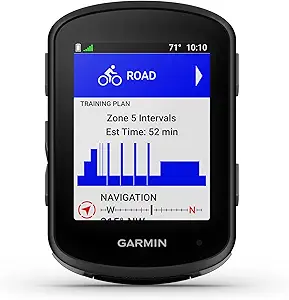 | Best for Extended Rides and Simplicity in Navigation | Battery Life: Up to 26 hours | Battery Saver Mode: Up to 42 hours | Navigation: Multi-band GNSS technology | VIEW ON AMAZON | See Our Full Breakdown |
| iGPSPORT BSC300T Wireless Bike Computer GPS with Touchscreen and Offline Map Navigation |  | Best Overall for Versatile GPS Navigation and Data | Screen Size: 2.4 inches | Navigation: Offline map download, route preview, turn prompts | Satellite Support: GPS, Beidou, GLONASS, Galileo, QZSS | VIEW ON AMAZON | See Our Full Breakdown |
| Wireless GPS Bike Computer, 2.4-inch Screen, IPX7 Waterproof, 28H Runtime, Auto Backlight, MPH/KMH, Altitude & Gradient Data |  | Best for Long Rides with Basic Data and Durability | Weight: 50g | Screen Size: 2.4 inches | Waterproof Rating: IPX7 | VIEW ON AMAZON | See Our Full Breakdown |
| Wireless GPS Bike Computer with 2.4-inch Screen, 650mAh Battery, IPX7 Waterproof, and 28H Runtime |  | Best for Sensor-Free Detailed Ride Data and Weather Resistance | Screen Size: 2.4 inches | Battery Capacity: 650mAh | Runtime: 28 hours | VIEW ON AMAZON | See Our Full Breakdown |
| Magene C506 GPS Bike Computer – 2.4″ Touchscreen, Smart Navigation, Wireless Connectivity, Indoor Cycling & Training |  | Best for Smart Navigation and Indoor Training | Display: 2.4-inch color touchscreen | Weight: 76g | Connectivity: Bluetooth, WiFi, ANT+ | VIEW ON AMAZON | See Our Full Breakdown |
| GEOID CC700 Pro 2.8″ Color Touchscreen GPS Bike Cycling Computer with Map Navigation and Re-Route Planning |  | Best for Large Screen & Advanced Navigation | Display: 2.8-inch color touchscreen | Navigation: Offline maps, turn prompts, re-route | Satellite Support: GPS, BEIDOU, GLONASS, QZSS, GALILEO | VIEW ON AMAZON | See Our Full Breakdown |
| iGPSPORT BSC500 GPS Bike Computer with 3.3” Touchscreen, Voice Navigation, and Climb Training |  | Best for Intuitive Navigation and Training | Screen Size: 3.3 inches | Navigation: GPS, Beidou, GLONASS, GALILEO, QZSS | Operation: Touchscreen and button | VIEW ON AMAZON | See Our Full Breakdown |
| Garmin Edge 1040 Solar GPS Bike Computer with Solar Charging |  | Best for Extended Battery Life and Advanced Navigation | Control Method: Application | Special Features: Bluetooth, Solar Charging | Battery Life: Up to 100 hours in battery saver mode | VIEW ON AMAZON | See Our Full Breakdown |
| bike computers for gravel riding | Connectivity | Display | Battery Life |
|---|---|---|---|
| Magene C606 V2 Bike Computer G | Wi-Fi and Bluetooth | 2.8-inch color touchscreen | 15-25 hours |
| CYCPLUS Wireless GPS Bike Comp | — | — | — |
| Garmin Edge 1050 Premium Cycli | Smartphone notifications, Garmin Pay, incident detection | Vivid color touchscreen | Up to 20 hours (60 hours in saver mode) |
| Magene C706 Smart GPS Bike Com | Wi-Fi and Bluetooth | 3.3-inch color touchscreen | — |
| Garmin Edge 540 Compact GPS Cy | Smart notifications, training prompts | Ride type-specific maps | Up to 26 hours |
| iGPSPORT BSC300T Wireless Bike | ANT+/Bluetooth 5.0 | — | — |
| Wireless GPS Bike Computer | Rechargeable USB-C | — | 28 hours |
| Wireless GPS Bike Computer wit | — | — | — |
| Magene C506 GPS Bike Computer | Bluetooth, WiFi, ANT+ | 2.4-inch color touchscreen | Up to 24 hours |
| GEOID CC700 Pro 2.8" Color Tou | WiFi, ANT+, Bluetooth | 2.8-inch color touchscreen | — |
| iGPSPORT BSC500 GPS Bike Compu | — | — | — |
| Garmin Edge 1040 Solar GPS Bik | — | — | Up to 100 hours in battery saver mode |
More Details on Our Top Picks
Magene C606 V2 Bike Computer GPS
The Magene C606 V2 stands out for its large, vibrant touchscreen and comprehensive navigation features, making it ideal for riders who want detailed data and offline route planning. Compared to the Garmin Edge 1050, it offers similar advanced cycling dynamics but at a potentially lower price point, though its interface can feel overwhelming initially. The support for multiple power meters and cycling metrics makes it suitable for serious enthusiasts, but the complex interface might challenge casual users. Its 15-25 hour battery life is decent for long gravel rides, yet the device’s complexity could require a learning curve. This model is better suited for experienced riders craving full customization and in-depth data. It’s less ideal for beginners or riders seeking a simple, straightforward device.Pros:- Large, vibrant 2.8-inch touchscreen for clear data viewing
- Offline multi-source route planning and rerouting
- Supports cycling dynamics and live segment tracking
- Compatibility with various power meters
Cons:- Complex interface may require time to master
- Battery life could be limited on very long rides, especially with frequent screen use
Best for: Cyclists who prioritize advanced navigation, cycling metrics, and dynamic ride data for gravel adventures.
Not ideal for: Beginners or casual riders who prefer a simple, easy-to-use device without complex features.
- Display:2.8-inch color touchscreen
- Battery Life:15-25 hours
- Navigation:Offline multi-source route planning
- Connectivity:Wi-Fi and Bluetooth
- Waterproof:IPX7
- Compatibility:Power meters (Magene P715, Garmin Rally, Favero Assioma)
Our verdict“This is a top choice for experienced gravel riders seeking detailed navigation and cycling analytics, despite its learning curve.”
CYCPLUS Wireless GPS Bike Computer G1
The CYCPLUS G1 offers a lightweight, pocket-friendly design with a clear 2.0-inch screen, making it a practical choice for gravel riders who value simplicity and long battery life. Unlike the Magene C606 V2, it lacks touchscreen functionality but compensates with a straightforward setup and easy-to-read data. Its 55+ hours of battery life surpass many competitors, making it ideal for extended gravel adventures. However, it provides limited detailed analytics, which could be a drawback for those wanting in-depth performance insights like Garmin’s premium models. Its waterproof rating and automatic backlight enhance usability in diverse conditions. This device makes the most sense for riders seeking reliable basic tracking without complex features. It’s less suitable for those craving detailed metrics or advanced navigation features.Pros:- High-accuracy GPS tracking with long battery life
- Automatic backlight for easy reading in all conditions
- Waterproof design suitable for all weather
- Lightweight at 70g
Cons:- Limited detailed data analysis features
- No touchscreen, which might reduce ease of use for some users
Best for: Long-distance gravel riders who want a simple, durable, and long-lasting GPS device.
Not ideal for: Data enthusiasts or tech-savvy cyclists who need detailed analytics or touchscreen controls.
- Weight:70g
- Screen Size:2.0 inches
- Battery Capacity:1200mAh
- Waterproof Rating:IPX6
- Working Time:>55 hours
Our verdict“This compact, long-lasting GPS is ideal for gravel riders prioritizing durability and battery life over advanced analytics.”
Garmin Edge 1050 Premium Cycling Computer
The Garmin Edge 1050 stands out for its vivid color touchscreen and extensive feature set, making it well-suited for riders who want detailed navigation, performance metrics, and smart features. Compared to the Magene C606 V2, it offers more user-friendly interfaces and integrated smart functions, including incident detection and Garmin Pay. Its long, 20-hour battery life supports lengthy gravel rides, but the complexity of features can be intimidating for newcomers. The premium price reflects its advanced capabilities, which are especially attractive to tech-savvy cyclists seeking personalized coaching and hazard alerts. It’s less ideal for casual riders or those on a tighter budget who don’t need such extensive features.Pros:- Vivid color touchscreen with detailed navigation
- Long-lasting up to 20 hours (extended to 60 hours in battery saver mode)
- Smart features including incident detection, notifications, and payments
- Advanced performance metrics and hazard alerts
Cons:- Complex feature set may require a learning curve
- Premium price may be prohibitive for casual users
Best for: Serious gravel riders and enthusiasts who want a comprehensive, connected cycling computer with high-end metrics.
Not ideal for: Beginners or budget-conscious cyclists who prefer a simple, straightforward device without smart features.
- Display:Vivid color touchscreen
- Battery Life:Up to 20 hours (60 hours in saver mode)
- Connectivity:Smartphone notifications, Garmin Pay, incident detection
- Features:Road hazard alerts, course creation, live locations
- Built-in Speaker:Yes
Our verdict“This device is a prime option for experienced riders wanting a feature-rich, connected cycling computer that supports long, demanding gravel rides.”
Magene C706 Smart GPS Bike Computer
The Magene C706 offers a large 3.3-inch color touchscreen with full map navigation, voice guidance, and smart device controls, making it a standout for tech-savvy gravel riders. Its vibrant display and ambient lighting options provide a customizable interface, comparable to the Magene C606 V2 but with more focus on training and smart device integration. The full turn-by-turn navigation with voice prompts enhances route guidance, but the extensive features mean a steeper learning curve compared with simpler models like the CYCPLUS G1. Its support for indoor training, smart controls, and cycling dynamics makes it suitable for riders who want a multi-functional device. However, the price and need for compatible power meters may deter casual users. This device is best for advanced trainers and tech enthusiasts who demand more from their ride data.Pros:- Large, vibrant 3.3-inch touchscreen with customizable ambient lighting
- Full map navigation with voice prompts in 13 languages
- Supports advanced training features and smart device controls
- Indoor training simulation and smart trainer control
Cons:- Complex feature set may require a learning curve
- Price may be high for casual users or beginners
Best for: Cyclists seeking a versatile, feature-rich GPS with map navigation, voice guidance, and smart device controls.
Not ideal for: Riders who prefer simple, easy-to-use devices without extensive training features or high costs.
- Display:3.3-inch color touchscreen
- Map Navigation:Full turn-by-turn with voice guidance
- Satellite Compatibility:Beidou, GPS, Glonass, Galileo, QZSS
- Connectivity:Wi-Fi and Bluetooth
- Battery/Range:Up to 1,000 km route planning
Our verdict“This GPS excels for tech-savvy gravel riders who want detailed navigation, training tools, and smart controls in one device.”
Garmin Edge 540 Compact GPS Cycling Computer
The Garmin Edge 540 combines a compact form factor with long battery life, making it suitable for riders who want reliable performance over extended gravel rides. Its multi-band GNSS technology ensures accurate navigation, even in challenging environments, surpassing the Magene models in mapping reliability. The Edge 540’s simpler button controls provide quick access during rides, contrasting with the touch-heavy interfaces of the Garmin Edge 1050. Although it doesn’t offer the extensive smart features of the 1050, it still provides personalized coaching and detailed ride metrics for serious riders. Its 26-hour battery life makes it an excellent choice for multi-day gravel adventures, but the higher price may be a barrier for budget-conscious cyclists. It’s ideal for those who want a balance of durability, navigation accuracy, and long-lasting power.Pros:- Long battery life up to 26 hours, extended further in saver mode
- Multi-band GNSS technology ensures precise navigation
- Compact, lightweight design with button controls
- Points of interest maps and personalized coaching
Cons:- Less feature-rich than the Garmin Edge 1050 or Magene C706
- Higher price for a compact device might deter some users
Best for: Riders focused on long gravel excursions who prefer a smaller, more straightforward device with excellent battery life.
Not ideal for: Cyclists seeking advanced smart features or detailed coaching that go beyond basic performance metrics.
- Battery Life:Up to 26 hours
- Battery Saver Mode:Up to 42 hours
- Navigation:Multi-band GNSS technology
- Display:Ride type-specific maps
- Connectivity:Smart notifications, training prompts
Our verdict“The Edge 540 offers reliable, long-lasting navigation in a compact package, perfect for gravel riders on multi-day adventures.”
iGPSPORT BSC300T Wireless Bike Computer GPS with Touchscreen and Offline Map Navigation
The iGPSPORT BSC300T stands out for its large 2.4-inch touchscreen and comprehensive offline mapping, making it ideal for riders who want detailed route guidance alongside extensive ride metrics. Compared with the Magene C506, it offers more advanced navigation features and satellite support, though it may require a smartphone connection for full data analysis, which could be a drawback for those seeking complete independence. Its support for multiple bike types, including e-bikes, adds versatility, but the learning curve for advanced features might challenge new users. Supports multiple satellite systems for precise positioning and offline map download make this a top pick for serious gravel riders who value navigation and data depth. However, its battery life details are not specified, which may concern long-distance riders. Overall, this model suits those wanting a feature-rich device with route planning capabilities.Pros:- Large 2.4-inch touchscreen with easy operation
- Supports multiple satellite systems for precise positioning
- Offline map download and turn-by-turn navigation
- Compatible with various sensors and sharing platforms
Cons:- Requires smartphone connection for full data analysis
- Battery life not specified, may vary with usage
- Advanced features may be complex for new users
Best for: Cyclists who prioritize accurate navigation, extensive metrics, and multi-bike support, including e-bike riders.
Not ideal for: Beginners or riders seeking a simple, plug-and-play device, as the advanced features may require a learning curve.
- Screen Size:2.4 inches
- Navigation:Offline map download, route preview, turn prompts
- Satellite Support:GPS, Beidou, GLONASS, Galileo, QZSS
- Connectivity:ANT+/Bluetooth 5.0
- Supported Bikes:Road, Mountain, E-bike
- Data Metrics:Speed, distance, grade, cadence, calories, time, temperature
- App Compatibility:iGPSPORT app, Strava, Komoot
Our verdict“This device is best suited for experienced gravel riders who want detailed navigation and extensive data metrics.”
Wireless GPS Bike Computer, 2.4-inch Screen, IPX7 Waterproof, 28H Runtime, Auto Backlight, MPH/KMH, Altitude & Gradient Data
This wireless GPS bike computer offers a straightforward, sensor-free ride tracking experience with a clear LCD screen and auto backlight, making it suitable for riders who prefer simplicity. Compared to the Magene C506, it lacks detailed navigation but provides essential ride data like altitude and gradient, making it perfect for those focused on ride stats rather than navigation. Its waterproof IPX7 rating and 28-hour battery life ensure durability and endurance during long, unpredictable gravel rides. However, it doesn’t support advanced metrics or detailed route planning, which could be limiting for riders wanting more insights. Built-in GPS without sensors simplifies setup and long battery life supports multi-hour rides. This makes it a good choice for gravel riders who prioritize durability and basic data over complex navigation.Pros:- Built-in GPS for accurate ride tracking without sensors
- Clear LCD display with auto backlight
- Waterproof design suitable for rainy conditions
- Long battery life of up to 28 hours
Cons:- Limited to basic cycling data, no advanced metrics
- Requires charging, which may be inconvenient on multi-day rides
Best for: Long-distance gravel riders who need a durable, simple device with reliable basic data tracking.
Not ideal for: Riders seeking detailed navigation or advanced metrics, as this device is limited to core ride data.
- Weight:50g
- Screen Size:2.4 inches
- Waterproof Rating:IPX7
- Battery Life:28 hours
- Connectivity:Rechargeable USB-C
Our verdict“This device is ideal for gravel riders prioritizing durability, long battery life, and straightforward ride data.”
Wireless GPS Bike Computer with 2.4-inch Screen, 650mAh Battery, IPX7 Waterproof, and 28H Runtime
The Wireless GPS Bike Computer with a 2.4-inch LCD screen excels in providing detailed ride metrics like altitude and gradient, all without the need for external sensors. It shares the long 28-hour battery life with other models, but its standout feature is the sensor-free GPS setup, simplifying installation on gravel bikes. Compared with the Magene C506, it offers a similar range of data but emphasizes weather resistance with an IPX7 rating. However, it doesn’t include navigation features or advanced route planning, making it less suitable for riders who want turn-by-turn directions. Its small screen might be less visible for some, especially during fast descents or in bright sunlight. Sensor-free setup and waterproof design are ideal for riders who want durability and simplicity.Pros:- Detailed ride data including altitude and gradient
- Easy sensor-free GPS setup
- Long battery life of up to 28 hours
- Waterproof IPX7 design
Cons:- Limited to GPS data, no sensor integration
- Small screen size may reduce visibility
Best for: Riders who prioritize detailed ride data, weatherproofing, and easy installation without sensor fuss.
Not ideal for: Those wanting turn-by-turn navigation or advanced route features, as this device focuses mainly on core metrics.
- Screen Size:2.4 inches
- Battery Capacity:650mAh
- Runtime:28 hours
- Waterproof Rating:IPX7
Our verdict“This model best serves gravel riders seeking straightforward, durable ride metrics with minimal setup complexity.”
Magene C506 GPS Bike Computer – 2.4″ Touchscreen, Smart Navigation, Wireless Connectivity, Indoor Cycling & Training
The Magene C506 features a high-resolution 2.4-inch color touchscreen and supports turn-by-turn navigation, making it stand out for riders who want comprehensive route guidance. Compared to the GEOID CC700 Pro, it supports more apps like TrainingPeaks and STRAVA, and offers indoor training modes, catering to those who split their time between gravel and indoor workouts. Its fast GPS lock within five seconds and extensive sensor integration make it a versatile choice. However, setup can be complex for newcomers, and its durability in harsh weather isn’t as clearly defined. This device is well-suited for tech-savvy gravel riders who also do indoor training but may be overkill for those seeking simple ride data.Pros:- High-resolution color touchscreen with customizable data
- Fast and accurate GPS positioning
- Supports extensive sensor and device integrations
- Indoor cycling training capabilities
Cons:- Complex setup process may challenge beginners
- Limited info on screen durability in adverse weather
Best for: Cyclists who want detailed navigation, customizable data displays, and indoor training features.
Not ideal for: Riders preferring straightforward, minimal devices without complex setup or indoor functionality.
- Display:2.4-inch color touchscreen
- Weight:76g
- Connectivity:Bluetooth, WiFi, ANT+
- Battery Life:Up to 24 hours
Our verdict“This pick is best for tech-savvy gravel riders seeking advanced navigation and indoor training support in one device.”
GEOID CC700 Pro 2.8″ Color Touchscreen GPS Bike Cycling Computer with Map Navigation and Re-Route Planning
The GEOID CC700 Pro offers a larger 2.8-inch color touchscreen with vivid visuals, making it easier to see detailed maps and turn prompts during gravel rides. Its re-route planning and quick satellite positioning support keep your ride on track, especially when exploring unfamiliar routes. Compared with the iGPSPORT BSC300T, it emphasizes visual clarity and route flexibility, though it relies on app connectivity for re-routing and lacks specific battery life info. Its multi-language support and compatibility with indoor trainers broaden its appeal, but limited info on battery endurance might be a concern for long rides. This device is well-suited for riders who prioritize larger screens and detailed mapping, especially in complex terrains.Pros:- Vivid 2.8-inch color touchscreen for clear navigation
- Supports multiple satellite systems for quick positioning
- Re-route planning with instant recalculation
- Supports indoor training and third-party apps
Cons:- Requires app connection for re-route feature
- Limited info on battery life or charging specifics
- No mention of weather resistance beyond IPX7
Best for: Experienced gravel riders who want a large, vivid display and reliable re-routing during extensive rides.
Not ideal for: Casual cyclists or those who prefer a compact, lightweight device, as the larger screen adds weight and bulk.
- Display:2.8-inch color touchscreen
- Navigation:Offline maps, turn prompts, re-route
- Satellite Support:GPS, BEIDOU, GLONASS, QZSS, GALILEO
- Storage:4GB
- Connectivity:WiFi, ANT+, Bluetooth
- Waterproof:IPX7
Our verdict“This device is ideal for gravel riders needing a large display with reliable navigation and route flexibility.”
iGPSPORT BSC500 GPS Bike Computer with 3.3” Touchscreen, Voice Navigation, and Climb Training
The iGPSPORT BSC500 stands out for its large, 3.3-inch touchscreen that offers quick and easy access to navigation and training data, making it ideal for gravel riders who prefer a more interactive display. Unlike the Garmin Edge 1040 Solar, which emphasizes extended battery life and advanced features, the BSC500 focuses on user-friendly operation with voice alerts and route import capabilities. However, its complex features might pose a learning curve for new users, and it lacks details on battery life or waterproofing, which are critical for muddy, unpredictable gravel rides. Compared to simpler models like the CYCPLUS G1, it provides more functionality but at the cost of ease of use and potentially higher price. This pick makes the most sense for gravel cyclists who want detailed navigation and training options without sacrificing screen size or clarity.
Pros:- Large, easy-to-read touchscreen display
- Supports multiple satellite systems for precise positioning
- Compatible with popular cycling apps like Strava and Komoot
- Voice alerts enhance safety by reducing screen glances
Cons:- Complex features may require a learning curve
- Lack of information on battery life and waterproof rating
Best for: Riders who prioritize an intuitive, touchscreen interface with voice navigation and route planning.
Not ideal for: Those seeking a lightweight, straightforward device primarily for basic ride metrics, as the BSC500’s features may be overwhelming.
- Screen Size:3.3 inches
- Navigation:GPS, Beidou, GLONASS, GALILEO, QZSS
- Operation:Touchscreen and button
- Features:Voice navigation, route import, climb training, continue last ride
Our verdict“This device is ideal for gravel riders who want comprehensive navigation and training features in an easy-to-use touchscreen format.”
Garmin Edge 1040 Solar GPS Bike Computer with Solar Charging
The Garmin Edge 1040 Solar excels in offering long-lasting performance through solar charging, making it suitable for multi-day gravel rides where battery longevity is critical. Its multi-band GNSS technology ensures reliable positioning even in challenging environments, outperforming the iGPSPORT BSC500 in accuracy and durability. While the 1040 Solar’s advanced features and seamless app integration with platforms like Strava and TrainingPeaks make it a top-tier choice, its setup can be daunting for less tech-savvy riders, and the premium price may be a barrier for some. Additionally, it requires compatible sensors to unlock its full training potential, which could add to the overall cost. This model makes the most sense for gravel cyclists who ride long distances or in remote areas and value extended battery life above all else.
Pros:- Extended battery life with solar charging
- Accurate multi-band GNSS for difficult environments
- Seamless app connectivity and smart features
- User-friendly interface with customizable data fields
Cons:- Complex setup for initial configuration
- Premium price point may be prohibitive
- Requires compatible sensors for full training metrics
Best for: Long-distance gravel riders who need reliable, sustained navigation and performance tracking.
Not ideal for: Casual riders or beginners seeking a straightforward, budget-friendly device with minimal setup and features.
- Control Method:Application
- Special Features:Bluetooth, Solar Charging
- Battery Life:Up to 100 hours in battery saver mode
- Charging:Solar Power Glass lens
- Navigation Technology:Multi-band GNSS
- Compatibility:Strava, Komoot, TrainingPeaks, Garmin Connect
Our verdict“This device is best suited for experienced gravel riders who prioritize long battery life and precise navigation in challenging terrains.”

How We Picked
Products were evaluated based on their GPS accuracy, navigation capabilities, durability under rough conditions, battery life, ease of use, and overall value. We prioritized units that are specifically designed or well-suited for gravel riding, which demands ruggedness and clear, accessible mapping features. The ranking reflects a balance between feature set and price, ensuring options cater to different rider needs—from casual explorers to serious gravel racers. Our selection process aimed to highlight the best performing and most reliable devices in real-world gravel conditions, not just on paper.Factors to Consider When Choosing Bike Computers For Gravel Riding
When selecting a bike computer for gravel riding, it’s important to consider factors that impact usability, durability, and navigation accuracy. Gravel riding often involves rough terrain, variable weather, and long distances, so a device that can handle these challenges is essential. The right choice depends on your riding style, budget, and specific needs, whether that’s navigation, training metrics, or battery life. Here are key factors to keep in mind.Navigation Features and Map Capabilities
For gravel riding, reliable navigation is often the top priority. Look for devices with comprehensive mapping, offline map storage, and re-routing capabilities. Voice guidance can be useful for hands-free directions, especially on technical routes. Avoid models with limited or basic map features if you plan to explore unfamiliar trails regularly, as poor navigation can lead to frustration or getting lost.
Durability and Weather Resistance
Gravel rides expose your device to mud, water, and shocks. Choose a bike computer with an IPX7 or higher waterproof rating and a rugged build. Some units are designed specifically with shock absorption or reinforced casings, which can significantly extend their lifespan in tough conditions. Investing in a durable device reduces the risk of failure during critical moments.
Battery Life and Power Options
Long gravel rides can last many hours, so battery life is a vital consideration. Devices with extended runtime—ideally over 15 hours—ensure you won’t run out of power mid-ride. Consider models with solar charging or quick recharge features. Also, check if the device supports external power sources or has a low-power mode for conserving energy on extended trips.
Display Size and Usability
Display size impacts how easily you can read metrics and maps while riding. Larger screens provide better visibility but may be bulkier and less aerodynamic. Touchscreen interfaces are convenient but can be less responsive in wet conditions or with gloves. Conversely, button-controlled units offer more tactile feedback, which can be safer and more practical on rough terrain.
Connectivity and Compatibility
Most modern bike computers connect via Bluetooth or ANT+ to sensors like heart rate monitors, power meters, or cadence sensors. Compatibility with smartphone apps allows for easier route planning and data management. Ensure the device supports the apps and sensors you already own or plan to use, reducing setup headaches and improving overall functionality.
Price and Value
Prices range widely—from budget models offering core GPS functions to premium units with advanced mapping, training metrics, and solar charging. Assess your riding frequency, terrain complexity, and feature needs to determine where to invest. Spending more typically yields better durability, navigation, and display features, but ensure the added cost aligns with your actual riding preferences.
Frequently Asked Questions
How accurate are GPS units for gravel riding?
GPS accuracy varies depending on the device and environmental conditions. Most modern bike computers use dual satellite systems to improve precision, but dense tree cover, canyon-like terrain, or signal interference can affect performance. For gravel riding, a device with multi-constellation support and good satellite lock-in features will provide more reliable routing and tracking. Regular firmware updates also help maintain accuracy over time.
Is touchscreen navigation practical on rough trails?
Touchscreens can be very user-friendly in ideal conditions, but gravel and mud can impair their responsiveness. Many riders prefer button-based units for rugged terrain, as they offer tactile feedback and are easier to operate without removing gloves or risking screen damage. If you favor a touchscreen, look for models with glove-compatible screens and robust waterproof ratings to mitigate these issues.
How important is battery life for gravel rides?
Battery life is critical, especially on multi-hour or multi-day gravel adventures. A device with at least 15-20 hours of runtime will usually cover most rides, but longer trips may require external power options or solar charging. Always carry a backup power source if your rides extend beyond the device’s capacity, and consider models with quick recharge features to top up between rides.
Should I prioritize a large screen or compact design?
This depends on your riding style. Larger screens enhance visibility of maps and data at a glance, which is beneficial on technical or fast-paced rides. Compact models are lighter and less obtrusive, making them preferable if you value minimal weight or have a more aerodynamic setup. Balancing screen size with ease of use and weight is key for gravel riding.
Are premium features worth the extra cost?
Premium bike computers often include advanced navigation, solar charging, and extensive training metrics, which can greatly enhance your riding experience. Whether these features justify the higher price depends on your riding frequency, terrain, and personal goals. If you ride regularly, compete, or explore remote areas often, investing in a high-end model can provide long-term benefits and reliability.
Conclusion
For most gravel riders, the Garmin Edge 1050 Premium offers a well-rounded mix of navigation, durability, and smart features, making it the best overall choice. Beginners or casual riders might prefer the Garmin Edge 540 for its simplicity and compact size, while serious explorers or multi-day riders should consider models with extended battery life, like the Garmin Edge 1040 Solar. Budget-conscious cyclists will find value in models like the Magene C606 V2 or CYCPLUS G1, which deliver core GPS functionality without breaking the bank. Ultimately, your specific riding style, terrain, and feature priorities will determine the best fit.
As an affiliate, we earn on qualifying purchases.Fall Picks
fall essentials