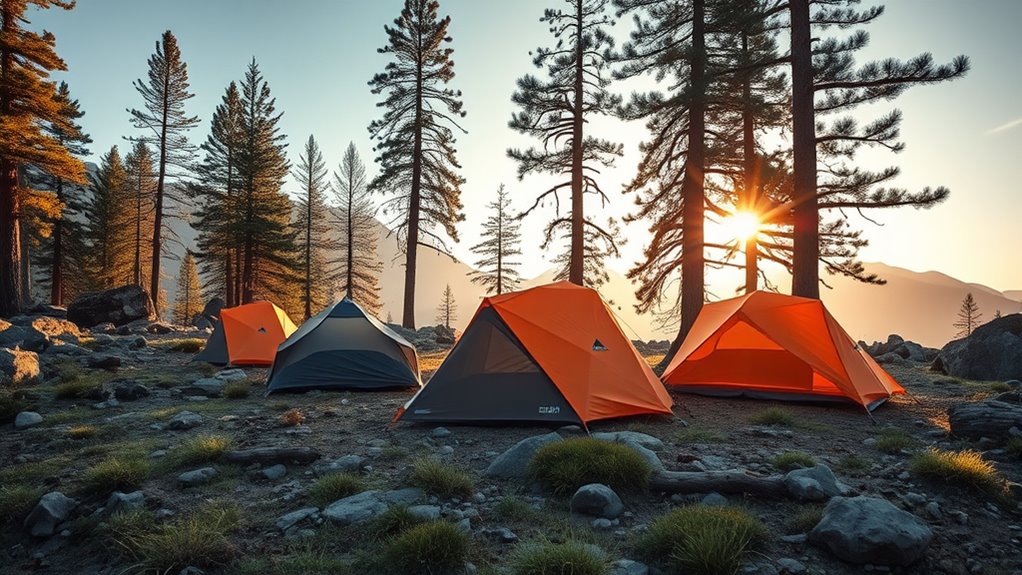

For ultralight bikepacking tents, my best overall pick is the MSR Hubba Hubba Bikepack 2, a purpose-built option that puts bike-friendly packing and two-person space ahead of shaving every last ounce. The Big Agnes Copper Spur HV Ultra Light Bikepack stands out for riders seeking a premium bikepacking-focused design, while the Naturehike Star Trail is a simpler one-person choice for weight-conscious trips. The main tradeoffs are packed size versus livable space, specialist bikepacking features versus lower weight, and three-season comfort versus more protective but heavier designs. I compare all 15 options by how well their stated designs suit carrying on a bike, not just by their camping features. Continue reading for the full breakdown and help matching a tent to your route, weather, and sleeping setup.

Get sports gear delivered free with Prime
- Fast, free delivery on millions of items
- Prime Video, Amazon Music and more included
- Member-only deals all year
Complete the kit


Key Takeaways
- Purpose-built packing separates the leading bikepacking picks. The MSR Hubba Hubba Bikepack 2 and Big Agnes Copper Spur HV Ultra Light Bikepack are the clearest fits for riders who want a tent designed around bike travel rather than a standard backpacking shelter.
- Solo riders have more weight-focused choices. The Naturehike Star Trail, Cloud-Up, and other one-person models may suit compact kits, but buyers should check packed dimensions and vestibule space rather than relying on the word “ultralight.”
- Capacity labels do not tell the whole story. Several listings cover multiple person counts or broad product families, so confirm the exact model, floor dimensions, and included components before comparing.
- Four-season claims bring a tradeoff. The ATEPA Voyage, Camppal, and Naturehike Giling may appeal to riders expecting colder or rougher conditions, but added protection can work against an ultralight loadout.
- Bikepacking fit depends on the whole packed system. Pole length, stuff-sack shape, and space for wet gear can matter as much as tent weight when handlebars, frame bags, and seat packs are already full.


| bikepacking tents ultralight | Weight | Doors | Occupancy |
|---|---|---|---|
| MSR Hubba Hubba Bikepack 2 Per | 3 lb 1 oz (1.40 kg) | 2 | — |
| Ultralight 1-Person Bivy Tent | 2.2 lb | — | — |
| ATEPA Voyage 1-2 Backpacking T | — | 1 | — |
| Clostnature 1/2/3/4 Person Lig | — | 1 | — |
| Backpacking Tent for Camping 1 | 3.9 lb | 2 | — |
| Naturehike Star River UL 2 Per | Approximately 4.07 lb | 2 | 2 people |
| Naturehike Star Trail Ultralig | 2.3 lb | 1 | 1 person |
| Naturehike Cloud-Up 1 Person T | 3.57 lb | — | — |
| Wander Hawk 1-2 Person Backpac | — | — | — |
| Camppal 1 Person Tent for Camp | 3.75 lb | 1 | 1 person |
| Big Agnes Copper Spur HV Ultra | 2 lb. 5 oz. | 1 | 1 person |
| Naturehike 1 Person Backpackin | 3.63 lb. | 1 | 1 person |
| Naturehike Giling 1/2 Person B | 3.53 lb. | — | 1 person |
| ALPS Mountaineering Lynx 1 Bac | — | — | 1 person |
| 1 Person Ultralight Backpackin | — | — | 1 person |
More Details on Our Top Picks
MSR Hubba Hubba Bikepack 2 Person Bikepacking Tent
I’d put the Hubba Hubba Bikepack first for riders who want a purpose-built two-person shelter rather than a backpacking tent adapted for a bicycle. Its short packing poles and bike-specific handlebar storage address a real packing constraint, while the rectangular floor and two doors make sharing the tent and organizing kit less awkward. Compared with the solo-focused ATEPA Voyage, it gives two riders more usable sleeping space; compared with the general-purpose Clostnature, its bikepacking details are the clearer reason to choose it. The tradeoff is a 3 lb 1 oz listed weight, which is substantial for a solo ultralight setup, and its 3-season design is not aimed at severe winter conditions. I’d also treat the lightweight fabric with care rather than expect it to shrug off rough handling.
Pros:- Bike-specific storage and short poles suit tight handlebar or bikepacking-bag packing.
- Rectangular floor plan offers practical room for two occupants and their kit.
- Two doors and two vestibules make shared access and gear separation easier.
- Listed weight of 3 lb 1 oz keeps it relatively light for a two-person bikepacking shelter.
Cons:- At 3 lb 1 oz, it is heavier than a dedicated solo shelter such as the ATEPA Voyage.
- Three-season construction is not intended for extreme winter use.
- Lightweight materials call for careful pitching and handling.
Best for: Two bikepackers who want a shared 3-season tent with bike-friendly pole packing, two doors, and room to organize gear.
Not ideal for: Solo riders focused on the lowest possible carried weight, or winter travelers seeking a shelter for harsh snow and cold.
- Capacity:2 people
- Weight:3 lb 1 oz (1.40 kg)
- Water resistance:1,200 mm
- Doors:2
- Vestibules:2
- Pole material:Aluminum
- Main material:100% nylon
Our verdict“Choose the Hubba Hubba Bikepack if two riders want bike-specific packing and shared space more than the lightest possible load.”
Ultralight 1-Person Bivy Tent for Camping, Waterproof & Mosquito Proof
For a bikepacker traveling alone, this 2.2 lb bivy-style tent puts low carried weight and a compact solo footprint ahead of roomy living space. Its freestanding setup and included aluminum poles offer more structure than a bare bivy, while the mosquito-proof mesh helps on buggy nights when an exposed sleeping setup is unappealing. Compared with the two-person MSR Hubba Hubba Bikepack, it is the more weight-conscious choice for one rider, but it gives up the second door, shared space, and bike-specific storage. The listed 80 × 230 cm dimensions may feel tight for taller riders, and there is little room to keep gear inside. Although the product describes itself as suitable for several seasons, I’d check the specific weather demands before treating it as a substitute for a dedicated storm shelter.
Pros:- Listed 2.2 lb weight suits solo riders keeping carried load down.
- Freestanding design and quick setup reduce fuss at camp.
- Mesh inner helps keep mosquitoes out while allowing airflow.
- Aluminum poles provide a structured shelter rather than an unsupported bivy.
Cons:- The 80 × 230 cm footprint and limited interior gear space may feel restrictive.
- Single-door access is less convenient than the two-door MSR Hubba Hubba Bikepack.
- No bike-specific storage or short-pole packing feature is listed.
Best for: Solo bikepackers who prioritize a light, compact sleeping shelter and mainly need protection from rain and insects.
Not ideal for: Tall riders, anyone wanting to store substantial gear inside, or bikepacking partners sharing one tent.
- Capacity:1 person
- Weight:2.2 lb
- Dimensions:80 × 230 cm (approximately 31.5 × 90.5 in)
- Poles:7 aluminum poles
- Outer and floor material:100% polyester, 210T Pongee
- Inner material:100% polyester B3 mesh
- Setup features:Freestanding, quick setup
Our verdict“Pick this bivy tent for solo trips where compact weight and insect protection matter more than room to spread out.”
ATEPA Voyage 1-2 Backpacking Tent, Ultralight 20D SilNylon, 4-Season Waterproof Freestanding Camping Tent with Expandable Vestibule
The ATEPA Voyage is the stronger fit when a solo bikepacker values a high stated waterproof rating and four-season positioning over dedicated bikepacking hardware. Its 20D nylon rainfly rated to 4,000 mm gives it a more weather-focused specification than the three-season Clostnature, while the expandable vestibule offers a place for muddy shoes or some kit without crowding the sleeping area. The freestanding dome format can also make pitching simpler when campsite options are limited. Its limits matter for bikepacking: the listing describes a one-person tent, the single door can complicate access, and vestibule expansion requires trekking-pole support. The supplied data does not give a packed size or weight, so I can’t rank its bike-bag fit against the explicitly compact-packing MSR Hubba Hubba Bikepack.
Pros:- Stated 4,000 mm rainfly rating targets wet-weather protection.
- Four-season designation suits buyers seeking broader seasonal coverage than the Clostnature’s 3-season rating.
- Expandable vestibule creates extra sheltered gear space.
- Freestanding dome setup offers a straightforward pitch.
Cons:- Listed as a one-person tent, with two-person use described only as minimalist.
- Single door offers less convenient access than the two-door MSR Hubba Hubba Bikepack.
- Vestibule expansion requires trekking poles, and no product weight or packed dimensions are supplied.
Best for: Solo bikepackers who prioritize a weather-oriented shelter and vestibule storage, and are willing to carry trekking poles for setup.
Not ideal for: Riders who need verified low packed weight, two-person room, or a vestibule that sets up without trekking poles.
- Listed occupancy:1 person
- Water resistance:4,000 mm
- Main material:20D nylon
- Rainfly:20D nylon, PU 4,000 mm+
- Doors:1
- Pole material:Aluminum
- Installation:Freestanding
Our verdict“Choose the Voyage for solo routes where weather protection and vestibule space outweigh uncertainty about packed weight and bike-bag fit.”
Clostnature 1/2/3/4 Person Lightweight Backpacking Tent, Easy Setup
I’d favor the Clostnature when simple setup and a strong stated waterproof coating matter more than specialist bikepacking features. The listing gives a PU 5,000 mm rating, mesh ventilation, two pockets, and a stated three-minute assembly time—useful details for riders who want a conventional shelter that is quick to pitch after a long day. Against the ATEPA Voyage, it trades four-season positioning and an expandable vestibule for a simpler three-season setup; against the MSR Hubba Hubba Bikepack, it lacks bike-specific storage and the convenience of two doors. The listed version is for one person, with only one vestibule, so keeping a bike or bulky bags out of the sleeping area may be awkward. The available specs also do not state its weight or packed dimensions, which makes ultralight bike-bag planning harder.
Pros:- Stated PU 5,000 mm water resistance suits wet-weather use.
- Three-minute assembly time offers a quick camp setup.
- Two windows and mesh ventilation support airflow.
- Two pockets provide basic organization for small essentials.
Cons:- No weight or packed dimensions are supplied, limiting confidence in ultralight bikepacking fit.
- One door and one vestibule offer less access and storage than the MSR Hubba Hubba Bikepack.
- Three-season rating is less suited to winter conditions than the four-season ATEPA Voyage.
Best for: Solo riders seeking a basic three-season tent with quick assembly, mesh ventilation, and a stated waterproof coating.
Not ideal for: Bikepackers who need verified ultralight weight, compact pole storage, two-door access, or ample sheltered gear space.
- Listed occupancy:1 person
- Water resistance:PU 5,000 mm
- Doors:1
- Vestibules:1
- Windows:2
- Poles:2
- Stakes:14
- Assembly time:3 minutes
Our verdict“Choose the Clostnature for quick-pitch three-season camping if its unspecified packed weight is acceptable for your bikepacking setup.”
Backpacking Tent for Camping 1-5 Person Ultralight Waterproof Windproof Outdoor with Two Doors
This tent’s main distinction is its advertised one-to-five-person capacity range and two-door layout, which may appeal to riders who want one shelter for different group sizes. The breathable doors and stated windproof, rainproof design point toward general camping versatility, but the product data provides little detail for judging how well that versatility translates to ultralight bikepacking. Unlike the precisely specified MSR Hubba Hubba Bikepack, this listing gives no weight beyond a broad 3.9 lb figure, no packed dimensions, and no bike-specific storage details. That makes it harder to know how much room it will take in a handlebar roll or whether the claimed capacity feels practical. Its fiber poles and TC cotton roof also differ from the aluminum-pole nylon designs here. I’d treat the all-season claim cautiously because no water-resistance rating or construction details are provided.
Pros:- Advertised capacity range may suit changing solo and group camping needs.
- Two doors can make entry and exit more convenient than the single-door Clostnature.
- Breathable doors are intended to support airflow.
- Listed weight of 3.9 lb gives a stated carry-weight reference.
Cons:- No dimensions or packed size are provided, making bike-bag fit difficult to judge.
- The broad one-to-five-person capacity range does not clarify practical sleeping space.
- No water-resistance rating or detailed material construction is supplied to support the all-season claim.
Best for: Bikepackers who need a tent advertised for changing group sizes and value two doors over verified compact packing.
Not ideal for: Ultralight-focused riders who need precise packed dimensions, a clearly defined capacity, or detailed weather-protection specifications.
- Advertised capacity:1–5 people
- Weight:3.9 lb
- Doors:2
- Materials:High-quality fabric, fiber tent poles, TC cotton roof
- Weather features:Windproof and rainproof (as listed)
- Season claim:All-season design (as listed)
- Ventilation:Breathable doors
- Setup:Quick setup (as listed)
Our verdict“Consider this tent only if flexible advertised capacity and two doors matter more than precise weight, pack size, and weather specifications.”
Naturehike Star River UL 2 Person Backpacking Tent
The Star River UL gives a pair of bikepackers two doors and two vestibules, making it easier to split entry and keep panniers or muddy shoes outside the sleeping area. At about 4.07 lb, it is heavier than the solo Star Trail, but offers room for two and a double-layer shelter rather than a one-person setup. Its listed three-minute pitch and compact design suit trips where camp comes after a long ride. The tradeoff is a relatively modest 1500 mm water-resistance rating, so I would favor a more strongly weather-rated option, such as the Cloud-Up, for sustained heavy rain. One support pole may also be less reassuring in exposed wind, and taller riders may find the interior snug.
Pros:- Two doors and two vestibules give partners separate access and covered gear storage.
- Approximately 4.07 lb is manageable for a two-person shelter.
- Double-layer construction separates the inner tent from the rain cover.
- Listed setup time is about three minutes.
Cons:- The 1500 mm water-resistance rating is modest compared with the Cloud-Up’s listed 4000 mm+ rating.
- A single support pole may limit stability in strong winds.
- Interior dimensions may be tight for two taller adults.
Best for: Bikepacking pairs who want separate doors and vestibules for gear, and can accept a compact sleeping area.
Not ideal for: Tall two-person teams or riders expecting exposed, storm-prone camps; the inner space may feel tight and the single-pole structure has a stated wind limitation.
- Occupancy:2 people
- Weight:Approximately 4.07 lb
- Water resistance:1500 mm
- Doors:2
- Vestibules:2
- Dimensions:82.7 x 51.2 x 41.3 in
- Setup time:Approximately 3 minutes
Our verdict“Choose the Star River UL when two doors and useful vestibule storage matter more than a roomier fit or stronger stated rain rating.”
Naturehike Star Trail Ultralight Backpacking Tent, 2.3 lb, 1 Person
At a listed 2.3 lb, the Star Trail is the clear pick here for solo riders who put carried weight ahead of extra room. Its compact 17.7 x 5.1 in pack size is useful when bikepacking bags are already crowded, while full-coverage mesh supports airflow and insect protection. Compared with the Cloud-Up 1, it is substantially lighter on the supplied specs, but the Cloud-Up offers a stated 4000 mm+ water-resistance rating and a defined vestibule area. The Star Trail’s listed rating is 1500 mm+, and its interior has limited room for gear, so I would pair it with careful packing and keep bags outside where conditions allow. It suits three-season solo trips, not winter rides or riders who want generous shelter space.
Pros:- Listed weight of 2.3 lb is the lowest among these five options.
- Compact packed dimensions help conserve space in bikepacking bags.
- Full-coverage mesh provides insect protection and ventilation.
- Listed setup time is three minutes.
Cons:- The 1500 mm+ water-resistance specification is lower than the Cloud-Up’s 4000 mm+ rating.
- Limited interior space leaves little room for storing bikepacking gear.
- One-person, three-season design does not suit pairs or winter trips.
Best for: Solo bikepackers who prioritize low carried weight and a compact bundle over indoor gear storage.
Not ideal for: Riders who need a roomy vestibule, stronger stated rain protection, or a tent that can accommodate a second person.
- Occupancy:1 person
- Weight:2.3 lb
- Packed size:17.7 x 5.1 in
- Water resistance:1500 mm+
- Material:Ultralight 10D nylon with waterproof coating
- Doors:1
- Setup time:3 minutes
Our verdict“Pick the Star Trail for solo three-season rides where every carried pound matters more than a roomy interior or higher listed water resistance.”
Naturehike Cloud-Up 1 Person Tent, Waterproof Ultralight Backpacking Tent for Camping and Hiking
The Cloud-Up balances solo carry weight with a comparatively high stated 4000 mm+ water resistance, making it the weather-minded alternative to the lighter Star Trail. Its 20.34 sq. ft. inner area and 4.84 sq. ft. vestibule give a solo rider a place to sleep and a separate spot for some gear, while the included footprint adds another layer beneath the tent. At 3.57 lb, it is notably heavier than the Star Trail’s 2.3 lb, so riders counting every ounce may prefer that simpler carry. The Cloud-Up lists a two-minute setup and aluminum poles, but its single door and single vestibule limit access and storage flexibility. I see it as a practical choice for solo trips where rain protection matters more than the smallest possible load.
Pros:- Listed 4000 mm+ water resistance is higher than the Star Trail’s 1500 mm+ specification.
- Inner area and a separate vestibule provide space for sleeping and some gear.
- Includes a footprint, stakes, and rainfly according to the product description.
- Listed installation time is two minutes.
Cons:- At 3.57 lb, it is heavier than the Star Trail for a solo shelter.
- A single door and vestibule limit entry options and covered storage.
- Three-season rating does not make it a winter tent.
Best for: Solo bikepackers who expect wet three-season conditions and want a defined vestibule plus included footprint.
Not ideal for: Weight-focused riders or anyone seeking multiple doors, ample gear storage, or a two-person shelter.
- Capacity:1 person
- Weight:3.57 lb
- Packed size:15.3 x 5.1 x 5.1 in
- Inner tent area:20.34 sq. ft.
- Vestibule area:4.84 sq. ft.
- Water resistance:4000 mm+
- Material:20D nylon with silicone coating
- Setup time:2 minutes
Our verdict“Choose the Cloud-Up if you want a solo tent with a higher stated rain rating and footprint, and can carry more than the Star Trail weighs.”
Wander Hawk 1-2 Person Backpacking Tent, Lightweight for Camping & Hiking
The Wander Hawk is the space-first choice in this group: its 90 x 54 in floor and 43 in interior height offer more usable room than the compact solo Star Trail, and the listed capacity allows one or two occupants. A custom-fit footprint is a useful inclusion for riders pitching on rough ground, though the package weight is 5 lb and the trail weight is 3 lb 14 oz. That makes it a less compelling ultralight pick than the Star Trail, especially for a solo rider who can manage with less interior space. The 20D ripstop nylon with silicone coating and ventilation focus support general backpacking use, but the supplied details do not give a hydrostatic rating. Its freestanding design may also need extra stakes when wind picks up.
Pros:- 90 x 54 in dimensions and 43 in height provide more room than the Star Trail’s compact solo format.
- Listed for one or two occupants, offering more flexibility than the one-person models.
- Includes a custom-fit footprint for added ground protection.
- 20D ripstop nylon with silicone coating is specified for the tent material.
Cons:- The 5 lb package weight is relatively heavy for an ultralight bikepacking shortlist.
- No water-resistance rating is provided in the supplied specifications.
- The freestanding design may need additional stakes in windy conditions.
Best for: Solo bikepackers who want extra interior room and a footprint, or occasional pairs willing to carry a heavier package.
Not ideal for: Weight-focused riders and campers who need a documented water-resistance rating or dependable performance at exposed windy sites.
- Capacity:1-2 people
- Trail weight:3 lb 14 oz
- Package weight:5 lb
- Dimensions:90 x 54 x 43 in
- Interior height:43 in
- Material:20D ripstop nylon with silicone coating
- Footprint:Custom-fit footprint included
- Design:Freestanding
Our verdict“Choose the Wander Hawk if extra room and an included footprint outweigh its heavier package and unspecified rain rating.”
Camppal 1 Person Tent for Camping Hiking Mountain Hunting Backpacking, 4-Season Windproof Rainproof Waterproof
The Camppal is the only four-season option among these five, giving solo riders a stronger case for shoulder-season trips than the three-season Star Trail or Cloud-Up. Its listed 3500-4000 mm water resistance and aluminum poles are aimed at wet and windy conditions, while the 3.75 lb weight remains within reach for a solo bikepacking load. That weather-oriented build brings a compromise: one door and no listed vestibule leave less room for airflow and wet gear than the Star River UL’s two-vestibule layout. The dimensions also describe a narrow sleeping footprint, so taller riders or those carrying bulky insulation may find it restrictive. I would choose it for a solo rider who needs seasonal range, not as the lightest shelter for ordinary summer miles.
Pros:- Four-season rating sets it apart from the three-season Star Trail and Cloud-Up.
- Listed water resistance of 3500-4000 mm is higher than the Star River UL’s 1500 mm rating.
- Aluminum poles and two guylines are specified for the shelter.
- Listed weight is 3.75 lb for a one-person tent.
Cons:- At 3.75 lb, it is heavier than the Star Trail’s 2.3 lb.
- One door and no listed vestibule restrict airflow and covered gear storage.
- The listed 8.2 ft length and 2.95 ft width may feel narrow, especially for taller campers.
Best for: Solo bikepackers riding in colder shoulder-season conditions who value a four-season rating and weather protection over low weight.
Not ideal for: Summer-focused ultralight riders, taller campers, or anyone needing a vestibule and more than one entrance.
- Occupancy:1 person
- Weight:3.75 lb
- Water resistance:3500-4000 mm
- Dimensions:8.2 ft L x 2.95 ft W x 2.95 ft H
- Material:Polyester with aluminum poles
- Doors:1
- Guylines:2
Our verdict“Pick the Camppal for solo bikepacking that extends into colder conditions, but skip it if minimum weight or vestibule storage is your priority.”
Big Agnes Copper Spur HV Ultra Light Bikepack Tent
I’d put the Copper Spur HV UL Bikepack first for riders who want a tent designed around bikepacking rather than a backpacking tent adapted for a handlebar roll. Its 13.5 x 6 in. packed size and bike-friendly webbing make it easier to fit among cycling gear, while the listed 2 lb. 5 oz. weight keeps the shelter load restrained. Two vestibules offer more gear separation than the single-vestibule Naturehike 1 Person Backpacking Tent, and ventilation plus an oversized ceiling pocket add comfort for multi-day trips. The tradeoff is a one-person layout and a footprint that is sold separately. I’d choose it over the heavier ALPS Mountaineering Lynx 1 when compact bikepacking carry matters more than a roomier-feeling setup.
Pros:- Bike-friendly daisy-chain webbing and compact packed dimensions suit bikepacking loads.
- Listed weight of 2 lb. 5 oz. is lower than the ALPS Mountaineering Lynx 1.
- Two vestibules create separate covered storage areas.
- Color-coded webbing and buckles simplify pitching, with vents and a ceiling pocket adding livability.
Cons:- Footprint is not included.
- One-person capacity limits shared trips and leaves little flexibility for carrying a companion.
- The supplied data gives a 1200 mm water-resistance figure, which is less reassuring on paper than the Naturehike 1 Person Backpacking Tent’s 4000 mm rating.
Best for: Solo bikepackers who want a purpose-oriented, compact tent with two vestibules and easy attachment points for cycling gear.
Not ideal for: Riders seeking a two-person shelter or an all-in-one ground-protection package, since this tent fits one and its footprint is separate.
- Occupancy:1 person
- Weight:2 lb. 5 oz.
- Packed size:13.5 x 6 in.
- Doors:1
- Vestibules:2
- Pole material:Aluminum
Our verdict“Choose this for solo bikepacking when compact carry and bike-specific details matter more than included ground protection or extra capacity.”
Naturehike 1 Person Backpacking Tent – Lightweight Waterproof 3-Season with Footprint
The Naturehike’s strongest bikepacking case is practical completeness: it includes a footprint, so riders do not need to source separate ground protection as they would with the Big Agnes Copper Spur HV Ultra Light Bikepack Tent. Its stated 4000 mm waterproof rating, taped seams, and freestanding design suit trips where campsite surfaces and weather may vary. The tradeoff is weight: at 3.63 lb., it is notably heavier than the Copper Spur’s listed 2 lb. 5 oz., and its 15.7-inch packed length asks for more room in a bike bag. One door and one vestibule also make the layout simpler, but less flexible for organizing gear. I’d favor it for riders who prioritize a ready-to-pitch kit over shaving every possible ounce.
Pros:- Included footprint adds ground protection without a separate purchase.
- 4000 mm waterproof rating and taped seams are useful for wet-weather trips.
- Freestanding design and stated setup time of under five minutes simplify pitching.
- Two-Y aluminum alloy poles provide a defined support structure.
Cons:- At 3.63 lb., it is substantially heavier than the Big Agnes Copper Spur HV Ultra Light Bikepack Tent.
- Packed length of 15.7 inches may be awkward for compact bike luggage.
- One door and one vestibule limit access and covered gear organization.
Best for: Solo riders who want a freestanding three-season shelter with a footprint included and are willing to carry more weight.
Not ideal for: Weight-conscious bikepackers with tight frame or handlebar-bag space, or riders who need two doors for easier access and gear separation.
- Occupancy:1 person
- Weight:3.63 lb.
- Packed size:15.7 x 5.9 x 5.9 in.
- Material:20D silicone-coated nylon
- Doors:1
- Vestibules:1
- Included ground protection:Footprint included
Our verdict“Pick this if an included footprint and a higher stated waterproof rating matter more than minimizing bikepacking weight and packed length.”
Naturehike Giling 1/2 Person Backpacking Tent, 4-Season Lightweight Waterproof Camping Tent
For riders who expect rough weather beyond ordinary three-season trips, the Giling’s four-season rating and reinforced wind-resistant structure make it the specialist choice in this group. Its 15D silicone-coated ripstop nylon, 3000 mm-plus waterproof rating, and sleeve-pole system are aimed at weather protection and a straightforward pitch. That comes with a clear bikepacking compromise: the listed 3.53 lb. weight is heavier than the Big Agnes Copper Spur HV Ultra Light Bikepack Tent, and its 15.4-inch packed length is less compact. The single vestibule is only 5.9 sq. ft., so storing bulky riding gear under cover may be a squeeze. I’d choose it over the Copper Spur when harsher conditions take priority over low weight and bike-specific packing details.
Pros:- Four-season rating and reinforced wind-resistant structure suit more demanding conditions than the three-season Copper Spur.
- 15D silicone-coated ripstop nylon balances low fabric weight with tear resistance.
- Integrated sleeve-pole system offers a direct setup method.
- 3000 mm-plus waterproof rating is specified for wet-weather protection.
Cons:- At 3.53 lb., it weighs more than the Big Agnes Copper Spur HV Ultra Light Bikepack Tent.
- Packed length of 15.4 inches is less convenient for compact bike bags.
- A single 5.9 sq. ft. vestibule may not cover larger bikepacking loads, and the fabric calls for careful handling.
Best for: Solo bikepackers who ride in colder, windier conditions and want a four-season-rated shelter with ripstop fabric.
Not ideal for: Fair-weather touring riders focused on the lightest, shortest-packed setup, or anyone who needs generous covered storage for bulky gear.
- Occupancy:1 person
- Weight:3.53 lb.
- Packed size:4.7 x 15.4 in.
- Interior dimensions:82.7 x 35.4 x 39.4 in.
- Vestibule area:5.9 sq. ft.
- Poles:2 aluminum alloy poles
- Stakes and guylines:12 stakes and 4 guylines
Our verdict“Choose the Giling for solo trips where four-season weather capability outweighs the extra carry weight and limited vestibule space.”
ALPS Mountaineering Lynx 1 Backpacking Tent
The Lynx 1 earns its place for riders who prefer a freestanding solo shelter over the lighter, more bike-focused Big Agnes Copper Spur HV Ultra Light Bikepack Tent. Aluminum pole clips make the structure straightforward to assemble, and the listed 7 ft. 6 in. length provides a useful sleeping footprint. A rainfly rated at 1500 mm and a 2000 mm floor coating offer defined protection, while the vestibule gives wet or dirty gear a place outside the sleeping area. But at 4 lb. 1 oz. total weight and 17 inches packed, it is the least compelling match here for riders counting grams and managing limited bag space. I’d take it for simple pitching and a sturdy-feeling setup, not for an ultralight packing list.
Pros:- Freestanding design with aluminum pole clips makes setup straightforward.
- 7 ft. 6 in. base length offers more sleeping length than a compact shelter may provide.
- Rainfly and floor have specified 1500 mm and 2000 mm coatings.
- Half-mesh walls and a vestibule support ventilation and covered gear storage.
Cons:- Total weight of 4 lb. 1 oz. is heavy beside the Big Agnes Copper Spur HV Ultra Light Bikepack Tent.
- Packed length of 17 inches takes up substantial space in bikepacking luggage.
- Solo interior and limited internal storage leave little room for sharing or organizing gear inside.
Best for: Solo bikepackers who value a freestanding pitch, a longer sleeping area, and a conventional pole-and-clip setup more than low weight.
Not ideal for: Ultralight riders with small frame bags or anyone trying to keep their shelter load near the Copper Spur’s listed weight.
- Occupancy:1 person
- Total weight:4 lb. 1 oz.
- Minimum weight:3 lb. 5 oz.
- Packed size:17 x 5 in.
- Base size:7 ft. 6 in. L x 2 ft. 8 in. W
- Center height:3 ft.
- Rainfly water resistance:1500 mm coating
- Floor water resistance:2000 mm coating
- Doors and vestibules:1 door and 1 vestibule
Our verdict“Choose the Lynx 1 if easy freestanding setup and sleeping length matter more than an ultralight bikepacking load.”
1 Person Ultralight Backpacking Tent – 3 Season
At an approximate 2.2 lb., this tent is the weight-first option in the group, undercutting even the Big Agnes Copper Spur HV Ultra Light Bikepack Tent’s listed 2 lb. 5 oz. That difference can appeal to minimalist riders, while the stated 5000 mm-plus fly and 6000 mm-plus floor ratings offer a strong waterproofing claim on paper. Its A-frame support can use aluminum poles or trekking poles, but those supports are not included, and the supplied details do not establish the same bike-specific attachments as the Copper Spur. Four stakes and one guyline also suggest a sparse anchoring setup compared with the Naturehike Giling’s 12 stakes and four guylines. I’d treat it as a minimalist option for settled three-season routes, not a ready-made shelter for exposed or changeable campsites.
Pros:- Approximate 2.2 lb. weight is lower than the Big Agnes Copper Spur HV Ultra Light Bikepack Tent.
- Specified fly and floor waterproof ratings are 5000 mm-plus and 6000 mm-plus.
- Can be supported with aluminum poles or trekking poles.
- Mesh inner tent and ventilation features are intended to limit condensation.
Cons:- Support poles or trekking poles are not included, adding a dependency for setup.
- Only four stakes and one guyline are listed, offering less anchoring equipment than the Naturehike Giling.
- Single-person, single-door design limits access and gear separation.
Best for: Experienced solo bikepackers who prioritize low shelter weight, already have compatible poles, and camp mainly in three-season conditions.
Not ideal for: Newer riders who want a complete, bike-specific tent kit, or those pitching on exposed sites that call for more anchoring points and guylines.
- Occupancy:1 person
- Approximate weight:2.2 lb.
- Fly water resistance:5000 mm+
- Floor water resistance:6000 mm+
- Form factor:A-frame
- Support options:Aluminum poles or trekking poles, not included
- Doors and windows:1 door and 1 window
- Stakes and guylines:4 stakes and 1 guyline
Our verdict“Pick this for the lowest listed weight if you already have suitable poles and can accept a minimalist, less bike-specific setup.”

How We Picked
I ranked these shelters by how closely their stated design fits ultralight bikepacking: carrying efficiency, useful sleeping space, weather protection, setup practicality, and the likelihood that the tent can fit a loaded bike’s limited storage. Models explicitly described as bikepacking tents receive an advantage for this use case, while conventional backpacking tents remain in the lineup when their solo or lightweight format could work for riders. I also weighed capacity and season claims against likely tradeoffs rather than treating a larger number of features as an automatic benefit.
Ranking reflects the information available in each product description, not hands-on testing or unverified specifications. Listings with broad capacity ranges or limited detail rank less confidently because buyers need to confirm the exact model’s packed dimensions, pole segments, included footprint, and usable interior. That is why the MSR and Big Agnes bikepack models lead, while compact solo options and versatile backpacking tents serve more specific needs. A tent can be a reasonable camping shelter without being the best match for a tight bikepacking setup.
Factors to Consider When Choosing Bikepacking Tents Ultralight
Choosing a bikepacking tent is less about finding the lowest claimed weight and more about checking whether its packed shape, layout, and protection work with your route and luggage. I would compare the complete packed shelter—not just the tent body—and decide which compromises you can live with before choosing a model.
Check Packed Shape Before Chasing a Weight Number
A tent’s packed length can matter more than a small difference in listed weight when your handlebar roll is already crowded. Look for pole sections short enough to fit your intended bag, then check whether the poles, fly, and body can be divided among frame, seat, or handlebar storage. A long, narrow sack may ride poorly on some bikes even if the total load is light. Do not assume that a “bikepacking” label automatically fits every handlebar setup; bar width, brake hoses, and front accessories change the available space. If the listing omits packed dimensions, confirm them before buying rather than planning around the product name.
Choose Capacity for Your Real Sleeping Setup
A two-person rating generally describes maximum occupancy, not generous room for two riders and their bikepacking gear. If you sleep with a partner, compare floor width and length with both sleeping pads, then ask where bags and damp clothing will go. Solo riders may prefer a one-person shelter for a compact load, but the space saved can mean a tight interior during hours of rain. A two-person tent used solo can add comfort and room for kit while taking up more luggage space. Match the tent to the people and pads you carry most often, not an occasional trip scenario.
Match Season Claims to Route Exposure
“Four-season” on a listing is not a substitute for understanding wind exposure, expected precipitation, and temperature on your route. More protective designs may bring extra fabric or structure that is hard to justify on mild, established summer routes. Conversely, a light three-season shelter may be a poor fit for exposed trips where strong wind or persistent weather is expected. Check the manufacturer’s stated conditions and setup requirements, including whether the tent needs specific staking to perform well. Avoid choosing a heavier shelter solely because a season label sounds safer; choose protection that matches the weather you are likely to face.
Count the Whole Shelter, Not Just the Tent Body
Product listings may quote a minimum weight that excludes stakes, guylines, stuff sacks, or a footprint. Those pieces still occupy space and may be needed for a stable pitch or to protect the floor. Before comparing two models, identify what is included and what you would add for your trips. An included footprint can simplify packing, but its weight and packed volume belong in the comparison. Also check whether the fly and inner can be pitched in a way that suits wet conditions, since keeping the sleeping area dry can matter more than a small difference on paper.
Think Through Setup and Camp Space
After a long ride, a shelter that is straightforward to pitch can be more useful than a marginal weight saving paired with a fiddly setup. Check whether the tent is freestanding, semi-freestanding, or dependent on stakes, and consider where you expect to camp. Hard ground and limited staking spots can make a freestanding structure easier to place, while a stake-dependent design may need more care on rocky or compacted sites. Vestibules also affect everyday use: they can keep shoes and bags outside the sleeping area, but they need suitable ground space. Practice the intended pitch at home and learn how the components pack back into your bike luggage.
Spend More Only for a Benefit You Will Use
A premium bikepacking tent makes the most sense when its shorter packed components, ride-friendly storage, or added interior comfort solve a recurring problem in your setup. If you mostly camp on short summer trips and already have room for a standard backpacking tent, a specialist design may not change your ride much. The reverse is true for a bike with restricted handlebar space: a purpose-built pole package can be more useful than buying a lighter tent that will not pack where you need it. Compare durability, repair options, and replacement-part availability as well as weight. Treat upgrades as answers to specific route or luggage constraints, not as a goal by themselves.
Frequently Asked Questions
Can I use a regular backpacking tent for bikepacking?
Yes, if its packed dimensions and weight work with your bike luggage. A conventional backpacking tent may offer a useful lightweight option, but long pole segments can be awkward on handlebars or inside small frame bags. Check whether the components can be split among bags and whether the tent leaves room for essential repair gear, food, and clothing. A purpose-built bikepacking model is more compelling when storage length is a persistent constraint. For occasional trips with roomy panniers, a backpacking tent may be a practical choice.
Is a one-person tent enough for solo bikepacking?
It can be, especially if you want to keep packed volume down and do not need to store bags inside the sleeping area. The key question is whether the interior fits your sleeping pad and gives you enough room to change clothes or wait out bad weather. If gear must stay inside, compare the floor plan and vestibule space rather than relying on the person rating. Riders who expect long wet nights may value a roomier shelter more than the smallest possible packed size. Try mapping your pad and typical gear against the listed dimensions before deciding.
Should I choose a four-season tent for unpredictable weather?
Not automatically: four-season designs can add weight and packed bulk that may be unnecessary for the routes and temperatures you usually ride. First identify the conditions you actually expect, including wind exposure, snowfall risk, and how sheltered your campsites are. Then compare the maker’s stated use and setup requirements with those conditions. A season label alone does not tell you how a tent handles every storm or campsite. If your trips range from mild summer weekends to exposed shoulder-season rides, prioritizing a shelter suited to the harsher trips may make sense, but account for the extra load on every ride.
What should I check when a tent listing offers several capacities?
Confirm the exact configuration you are buying, since a shared listing may cover different floor plans, weights, or included parts. Look for the selected model’s packed dimensions, floor measurements, pole length, and whether the stated weight includes stakes and a footprint. Do not use a broad “one to four person” description as a substitute for the specifications of your chosen version. If those details are unclear, ask the seller or manufacturer before planning your luggage around them. This is especially important when comparing versatile listings with clearly identified bikepacking models.
When is a premium bikepacking tent worth the extra investment?
It is most worthwhile when the tent’s bike-specific packing features solve a real limitation, such as poles that do not fit your current bags or a need to carry a shared shelter on a narrow handlebar setup. Frequent riders may also value a layout and build intended for repeated trips, though durability and repair support should be checked rather than assumed. If your existing backpacking tent packs neatly and meets your weather needs, a premium replacement may bring little practical change. Compare the complete packed shelter and the space it frees on the bike, not only the tent body’s weight. Choose the upgrade when its benefits match your routes and luggage.
Conclusion
For most riders looking for a shelter built around bike travel, my best overall recommendation is the MSR Hubba Hubba Bikepack 2; it is the clearest all-around fit in this lineup for riders who want a purpose-built two-person option. Choose the Big Agnes Copper Spur HV Ultra Light Bikepack as my best premium pick if its bikepacking-focused format suits your storage needs. For a solo, weight-conscious setup, compare the Naturehike Star Trail and Cloud-Up, checking the exact packed details before choosing. My best value direction is a simpler conventional backpacking model such as the Naturehike Star River UL or ALPS Mountaineering Lynx 1 when its specifications suit your trips and you do not need bike-specific pole packing. For beginners, favor a clearly specified, straightforward shelter over a broad capacity listing; for colder or more exposed routes, investigate the ATEPA Voyage, Camppal, or Naturehike Giling against the conditions you expect. The best choice is the one whose packed form, capacity, and weather range fit your bike and rides—not the one with the most ambitious label.