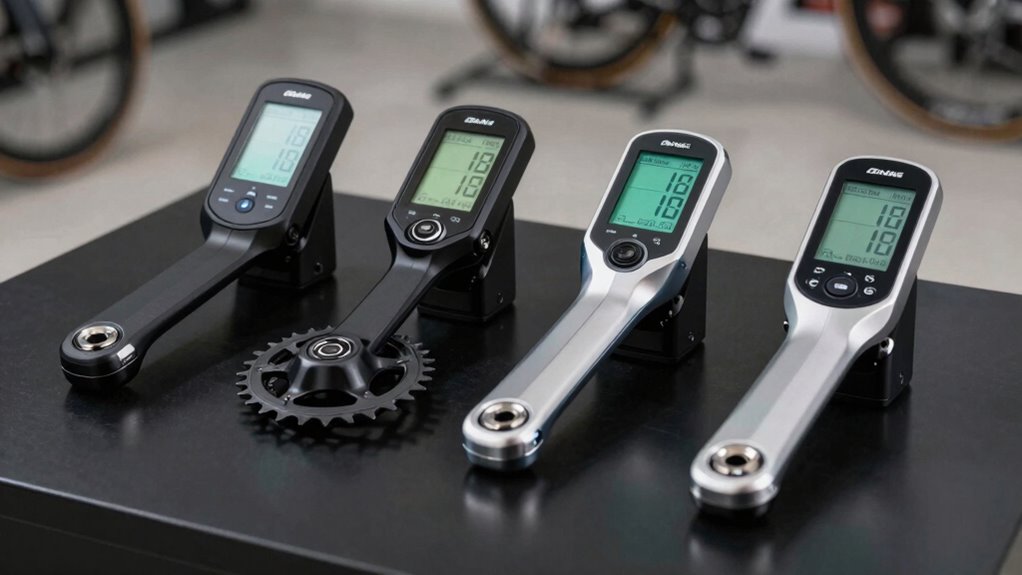

Choosing a crank based power meter in 2026 means balancing accuracy, compatibility, and convenience. The SRAM Thread Mount Power Meter Spider stands out for its ease of installation on SRAM cranks and waterproofing, making it ideal for rugged conditions. The CooSpo Power Meter S10 offers exceptional accuracy and long battery life but is limited to Easton cranks. Meanwhile, the GEOID PM500 provides a lightweight, highly precise option with broad compatibility, suited for serious riders. Each choice involves tradeoffs between compatibility, battery life, and cost—so understanding your specific cycling setup is key.
Complete the kit


Key Takeaways
- Accuracy varies from ±1% to ±1.5%, affecting data reliability for training.
- Compatibility is often limited to specific cranksets, requiring careful selection.
- Battery life can range from 120 to 380 hours, impacting maintenance frequency.
- Waterproof ratings (IPX7) ensure durability in all weather conditions.
- Installation complexity varies; some are quick swaps, others need calibration.
| SRAM Thread Mount Power Meter Spider for Crankset |  | Best for Compatibility with SRAM Cranks | Battery: CR2032, 200 hours | Connectivity: Bluetooth Low Energy, ANT | Waterproof: IPX7 | VIEW ON AMAZON | See Our Full Breakdown |
| CooSpo Power Meter Crankset S10, 160-172.5MM, BLE/ANT+ Cycling Power Meter for Easton 110 BCD 4-Bolt |  | Best for Accurate Dual-Sided Power Measurement | Compatibility: Easton 110 BCD 4-bolt | Crank Arm Length: 160-172.5mm | Connectivity: BLE/ANT+ | VIEW ON AMAZON | See Our Full Breakdown |
| PM500 Bike Power Meter Crankset, ±1.5% Accuracy, Lightweight 680g, 300h Battery Life, 110BCD, Bluetooth & ANT+, IPX7 Waterproof for Road Bikes |  | Best for Versatile, Accurate Data Collection | Weight: 680g | Battery Life: 300 hours | Waterproof Rating: IPX7 | VIEW ON AMAZON | See Our Full Breakdown |
| Magene P715 Power Meter Pedals |  | Best for Easy Installation and Versatility | Power Accuracy: ±1% | Battery Life: 120 hours | Weight: 157g per pedal | VIEW ON AMAZON | See Our Full Breakdown |
| Magene PES P505/P515 Power Meter Crankset – ±1% Accuracy, Lightweight, Waterproof |  | Best for Heavy-Duty, All-Weather Use | Weight: 625g | Battery Life: 380 hours | Waterproof Rating: IPX7 | VIEW ON AMAZON | See Our Full Breakdown |
| crank based power meter | Battery Life | Connectivity | Weight |
|---|---|---|---|
| SRAM Thread Mount Power Meter | — | Bluetooth Low Energy, ANT | — |
| CooSpo Power Meter Crankset S1 | 300 hours | BLE/ANT+ | — |
| PM500 Bike Power Meter Crankse | 300 hours | — | 680g |
| Magene P715 Power Meter Pedals | 120 hours | Bluetooth & ANT+ | 157g per pedal |
| Magene PES P505/P515 Power Met | 380 hours | — | 625g |
More Details on Our Top Picks
SRAM Thread Mount Power Meter Spider for Crankset
This SRAM power meter spider excels in rugged conditions thanks to its IPX7 waterproof rating and user-replaceable battery. It transmits data wirelessly via Bluetooth and ANT, making setup straightforward. However, its limited battery life of 200 hours and restriction to SRAM thread mount cranksets restrict its appeal. Compared with more versatile models, this pick is ideal for SRAM users seeking reliable waterproofing but less so for those with non-SRAM setups or seeking longer battery life.
Pros:- Wireless Bluetooth and ANT data transfer
- Waterproof IPX7 design for all-weather riding
- User-replaceable CR2032 battery for convenience
Cons:- Limited to SRAM thread mount cranks
- Battery life of only 200 hours
- No detailed compatibility info provided
Best for: Dedicated SRAM crankset users who prioritize waterproofing and wireless data transmission.
Not ideal for: Riders with different crank standards or those seeking extended battery longevity.
- Battery:CR2032, 200 hours
- Connectivity:Bluetooth Low Energy, ANT
- Waterproof:IPX7
Our verdict“A solid waterproof choice for SRAM crankset owners who value wireless convenience over battery longevity.”
CooSpo Power Meter Crankset S10, 160-172.5MM, BLE/ANT+ Cycling Power Meter for Easton 110 BCD 4-Bolt
The CooSpo Power Meter S10 shines with its ±1% accuracy and long-lasting 300-hour rechargeable battery, making it a top choice for serious training. It is designed specifically for Easton 110 BCD 4-bolt cranksets, which limits its compatibility but ensures precise measurement. Compared to the GEOID PM500, it offers a slightly more affordable option with excellent accuracy, though it requires app calibration for optimal results. This model is better suited for riders who own Easton cranks and want accurate, reliable data without frequent charging.
Pros:- Exceptional ±1% measurement accuracy
- Long battery life of 300 hours
- Compatible with most bike computers and apps
Cons:- Limited to Easton 110 BCD cranks
- Requires calibration via app for best results
- Price may be higher than entry-level models
Best for: Competitive cyclists needing high accuracy on Easton cranksets.
Not ideal for: Riders with different crank standards or looking for a universal option.
- Compatibility:Easton 110 BCD 4-bolt
- Crank Arm Length:160-172.5mm
- Connectivity:BLE/ANT+
- Battery Life:300 hours
Our verdict“A highly precise, durable choice for Easton crankset users demanding accuracy and longevity.”
PM500 Bike Power Meter Crankset, ±1.5% Accuracy, Lightweight 680g, 300h Battery Life, 110BCD, Bluetooth & ANT+, IPX7 Waterproof for Road Bikes
The GEOID PM500 combines high-precision ±1.5% measurement with a lightweight 680g design and a long 300-hour battery life. Its broad compatibility, including 110BCD and Shimano 12-speed systems, makes it suitable for a wide range of riders. Compared to the CooSpo S10, it offers slightly less accuracy but more universal compatibility, which benefits riders with multiple bikes or varying crank standards. The PM500’s durable aluminum build and waterproof rating make it a reliable choice for all-weather training.
Pros:- High accuracy of ±1.5%
- Long battery life of 300 hours
- Compatible with various bike systems and platforms
Cons:- May require compatibility checks for specific bikes
- Price not specified, potentially costly
- Installation might need professional help for some setups
Best for: Enthusiasts seeking a versatile, high-accuracy power meter for multiple bikes.
Not ideal for: Budget-conscious riders or those with incompatible cranksets outside supported standards.
- Weight:680g
- Battery Life:300 hours
- Waterproof Rating:IPX7
- Compatibility:110BCD, Shimano 12-speed
Our verdict“A flexible, high-precision crankset ideal for riders with multiple bikes or diverse setups.”
Magene P715 Power Meter Pedals
The Magene P715 pedals deliver ±1% power accuracy in a lightweight 157g per pedal design. They stand out for their simple, one-minute installation process and support for Bluetooth and ANT+ connectivity, making them versatile for different bike types. Compared with crank-based options, these pedals are easier to switch between bikes, but their accuracy, while excellent, depends heavily on proper calibration. They are perfect for riders prioritizing quick setup and compatibility across multiple bikes without complex installation procedures.
Pros:- High-precision ±1% accuracy
- Lightweight at 157g per pedal
- Supports Bluetooth and ANT+ for wide device compatibility
Cons:- Requires initial calibration for accuracy
- Limited to compatible pedal systems
- Price not specified
Best for: Casual riders and commuters who want easy, portable power measurement.
Not ideal for: Riders seeking maximum accuracy or with incompatible pedal standards.
- Power Accuracy:±1%
- Battery Life:120 hours
- Weight:157g per pedal
- Connectivity:Bluetooth & ANT+
Our verdict“A user-friendly, versatile pedal option for quick setup and multi-bike use.”
Magene PES P505/P515 Power Meter Crankset – ±1% Accuracy, Lightweight, Waterproof
The Magene PES P505/P515 delivers consistent ±1% accuracy with durable 7075 aircraft-grade aluminum and an impressive 380-hour battery life. Its broad compatibility with 110BCD and 4-bolt cranksets and waterproof IPX7 rating make it suitable for extended, all-weather rides. Compared to the GEOID PM500, it offers similar accuracy but adds a more rugged build and longer battery life. This model is ideal for riders who need a reliable power meter in demanding conditions, even if it might require some initial setup calibration.
Pros:- High accuracy of ±1%
- Exceptional 380-hour battery life
- IPX7 waterproof rating for all-weather durability
Cons:- Installation may need professional help
- Potentially higher cost due to premium build
- Compatibility depends on crankset standards
Best for: Riders seeking a rugged, long-lasting power meter for challenging weather conditions.
Not ideal for: Budget-conscious users or those with incompatible crank standards outside supported models.
- Weight:625g
- Battery Life:380 hours
- Waterproof Rating:IPX7
- Material:7075 aluminum
Our verdict“A robust, high-accuracy crankset built for serious training in all weather conditions.”

How We Picked
Our selection process focused on several key factors: measurement accuracy, compatibility with popular bike systems, ease of installation, battery life, and durability. We prioritized products that are widely used and reviewed positively by cycling enthusiasts and professionals alike. Tradeoffs were carefully considered; for example, highly accurate models may have limited compatibility, while more universal options might sacrifice a small degree of precision. This approach ensures each product serves a distinct rider profile, from casual enthusiasts to competitive racers.
| crank based power meter | Connectivity |
|---|---|
| SRAM Thread Mount Power Meter | Bluetooth Low Energy, ANT |
| CooSpo Power Meter Crankset S1 | BLE/ANT+ |
| PM500 Bike Power Meter Crankse | — |
| Magene P715 Power Meter Pedals | Bluetooth & ANT+ |
| Magene PES P505/P515 Power Met | — |
Factors to Consider When Choosing Crank Based Power Meters
Selecting the right crank based power meter involves understanding your riding style, compatibility needs, and desired features. Whether you prioritize ultimate accuracy, ease of installation, or durability, the options vary widely. A clear grasp of your bike’s crank standards, preferred connectivity, and budget will guide you toward the best choice for your training and racing goals.Compatibility and Compatibility Checks
Before purchasing, verify your crankset’s compatibility. Some models are designed exclusively for specific standards like SRAM thread mount or Easton 110 BCD, while others offer broad compatibility with multiple systems. Ensuring compatibility prevents costly returns and guarantees accurate data collection.
Accuracy and Data Reliability
Accuracy ratings, typically ±1% or ±1.5%, influence how reliable your ride data is. Pros and competitive riders often prefer ±1% for precise training metrics, while casual riders may be satisfied with ±1.5%. Consider your training level and the importance of data precision when choosing.
Battery Life and Maintenance
Longer battery life reduces maintenance and interruptions. Models with 300+ hours are ideal for extended training camps or racing seasons, while shorter durations may suit casual riders. Rechargeability also plays a role, with some units featuring USB charging for convenience.
Durability and Weather Resistance
For all-weather riding, waterproof ratings like IPX7 are essential. Rugged construction using aircraft-grade aluminum or water-resistant seals ensures your power meter withstands rain, mud, and rough handling, extending its lifespan and reliability.
Frequently Asked Questions
How accurate are crank based power meters?
Most crank based power meters offer accuracy within ±1% to ±1.5%, which is sufficient for serious training and racing. The slight difference can matter for elite athletes tracking small performance gains, so choose a model that matches your precision needs.
Are crank based power meters compatible with all bikes?
No, compatibility depends heavily on your crankset standards. Some models are designed specifically for certain systems like SRAM thread mount or Easton 110 BCD, while others are more universal. Always check the manufacturer’s specifications before purchasing.
How often do I need to calibrate my power meter?
Calibration frequency varies by model but is generally recommended every few rides or when changing batteries. Many units require calibration via an app for optimal accuracy, which is a quick process but essential to maintain data reliability.
Can I switch a power meter between bikes?
Yes, especially pedal-based models like the Magene P715 are designed for easy swapping. Crank-based models may require more effort related to compatibility and installation, but many are portable enough for multiple bikes with the right adapters.
What is the typical battery life for crank power meters?
Battery life ranges from around 120 hours for pedal-based models to over 300 hours for some crankset options. Rechargeable models with longer life reduce the frequency of charging, making them more convenient for extended training periods.
Conclusion
For dedicated SRAM riders or those seeking waterproof durability, the SRAM Thread Mount Power Meter Spider is a reliable choice. Serious racers prioritizing precision may prefer the CooSpo S10 or Magene PES P505/P515 for their high accuracy and long battery life. Casual riders or commuters who want quick, easy setup should consider the Magene P715 pedals, which combine simplicity with solid performance. Ultimately, your specific bike setup, training goals, and budget will determine the best crank based power meter for you.