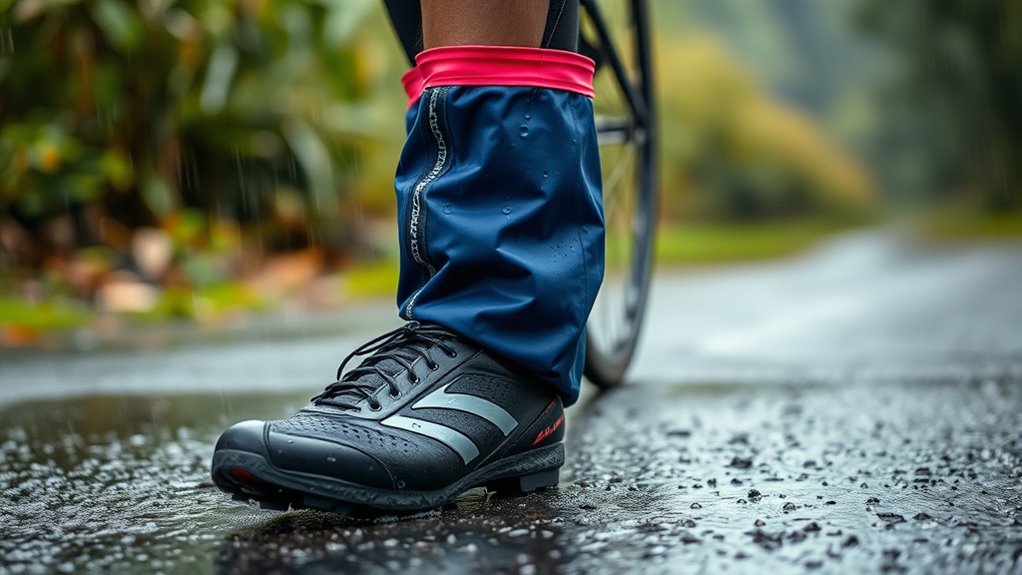

For most wet-weather rides, I’d start with the GripGrab DryFoot 2 Waterproof Rain Overshoes for cycling-focused shoe coverage; the Giro Alpineduro Rain Gaiter is another strong candidate for riders seeking a dedicated cycling design, while reflective shoe covers suit commutes where visibility matters. Choosing cycling gaiters for rain means balancing coverage, shoe compatibility, walking comfort, and how securely the fabric stays in place. Short shoe covers are easier to pair with cycling shoes, while taller leg gaiters can protect more of the lower leg but may be less convenient on the bike. No single style fits every shoe and riding setup, so I compare the tradeoffs across all seven options below.

Get sports gear delivered free with Prime
- Fast, free delivery on millions of items
- Prime Video, Amazon Music and more included
- Member-only deals all year
Complete the kit


Key Takeaways
- The GripGrab DryFoot 2 and Giro Alpineduro are the clearest cycling-specific options in this lineup; prioritize them when shoe fit and riding use matter more than general outdoor versatility.
- Reflective Waterproof Cycling Shoe Covers put visibility into the comparison, a useful distinction for commuters riding in rain and low light, though reflectivity does not replace lights.
- 3F UL GEAR shoe gaiters and its longer leg gaiters serve different coverage needs; check the height and attachment style rather than treating both as interchangeable overshoes.
- Generic waterproof cycling shoe covers may suit riders who want a straightforward shoe-cover format, but buyers should verify cleat access, sole openings, and compatibility with their shoes.
- The lineup spans cycling overshoes and general-purpose leg gaiters, so the best choice depends on whether rain reaches your shoes, cuffs, or lower legs—and on whether you need to walk in the gear.
| Giro Alpineduro Rain Gaiter |  | Best for Road-Shoe Fit | Material: Waterproof four-way stretch upper | Closure: YKK locking zipper | Strap: Heavy-duty belly strap | VIEW ON AMAZON | See Our Full Breakdown |
| GripGrab DryFoot 2 Waterproof Rain Overshoes for Cycling |  | Best for Commuting | Material: 90% polyester, 8% polyamide, 2% other fibres | Outer material: Synthetic | Size: XX-Large (12–13) | VIEW ON AMAZON | See Our Full Breakdown |
| 3F UL GEAR Ultralight Waterproof Shoe Gaiters for Rain and Snow |  | Best Compact Packable Option | Material: Dyneema-nylon blend | Unfolded size: 33/50 × 19 cm | Packed size: 6 × 10 cm | VIEW ON AMAZON | See Our Full Breakdown |
| 3F UL GEAR Ultralight Waterproof Leg Gaiters, Long Rain Leg Covers |  | Best for Full Lower-Leg Coverage | Material: Dyneema-nylon blend | Weight: 2.8 oz | Size M: 88 × 34 cm; recommended for heights below 170 cm | VIEW ON AMAZON | See Our Full Breakdown |
| Cycling Shoe Covers – Waterproof, Windproof Overshoes for Mountain and Road Bikes |  | Best for Road and Mountain Cleats | Outer material: Polyester | Inner material: Polyester | Sole material: Rubber | VIEW ON AMAZON | See Our Full Breakdown |
| Reflective Waterproof Cycling Shoe Covers – Unisex Bike Rain Boot (1 Pair) |  | Best for Low-Light Rain Rides | Item type: Bike short gaiter | Material: Polyester, PVC | Coverage: Extended ankle-high shoe coverage | VIEW ON AMAZON | See Our Full Breakdown |
| Waterproof Leg Gaiters, Adjustable Rain Protection Gaitors for Outdoor |  | Best for Full-Leg Outdoor Coverage | Material: 98% nylon, 2% plastic | Waterproof construction: Waterproof layer with full seam-sealed technology | Size M dimensions: 34 × 88 cm | VIEW ON AMAZON | See Our Full Breakdown |
| cycling gaiters for rain | Material | Closure |
|---|---|---|
| Giro Alpineduro Rain Gaiter | Waterproof four-way stretch upper | YKK locking zipper |
| GripGrab DryFoot 2 Waterproof | 90% polyester, 8% polyamide, 2% other fibres | Hook-and-loop fastener |
| 3F UL GEAR Ultralight Waterpro | Dyneema-nylon blend | — |
| 3F UL GEAR Ultralight Waterpro | Dyneema-nylon blend | — |
| Cycling Shoe Covers | — | Velcro hook-and-loop |
| Reflective Waterproof Cycling | Polyester, PVC | Full-length hook-and-loop fastener |
| Waterproof Leg Gaiters | 98% nylon, 2% plastic | — |
More Details on Our Top Picks
Giro Alpineduro Rain Gaiter
The Giro Alpineduro is the most road-shoe-focused option here: its waterproof four-way stretch upper is designed to wrap closely, while the locking zipper and heavy-duty belly strap help keep the cover in place as you pedal. That secure closure gives it a more fitted approach than the hook-and-loop design on the GripGrab DryFoot 2, which is aimed at everyday commuting and easier on-off use. Reflective details add useful visibility for rides in dim conditions. The tradeoff is fit: Giro specifies road shoes, so riders with mountain-bike footwear or unusually shaped shoes may be better served by the cleat-compatible Cycling Shoe Covers. Breathability and long-term wear details aren’t provided, so I’d treat this as a rain barrier rather than a proven all-day comfort pick.
Pros:- Waterproof four-way stretch material is intended to flex around road shoes.
- Locking YKK zipper and heavy-duty belly strap support a secure fit.
- Reflective details add visibility in low light.
- Lace hook helps anchor the gaiter at the shoe.
Cons:- Designed specifically for road shoes, limiting footwear compatibility.
- Breathability is not specified.
- Long-term durability information is not provided.
Best for: Road cyclists who want a close-fitting rain cover with a locking closure and reflective details for low-light rides.
Not ideal for: Mountain-bike riders or cyclists whose shoes fall outside the road-shoe fit, and anyone prioritizing documented breathability or long-term durability.
- Material:Waterproof four-way stretch upper
- Closure:YKK locking zipper
- Strap:Heavy-duty belly strap
- Visibility:Reflective details
- Shoe attachment:Lace hook
- Intended shoe type:Road shoes
Our verdict“Choose the Giro Alpineduro if you ride in road shoes and prefer a secure, close-fitting cover over the easier-access design of the GripGrab DryFoot 2.”
GripGrab DryFoot 2 Waterproof Rain Overshoes for Cycling
The GripGrab DryFoot 2 is the practical commuter pick: it is described as protecting shoes from rain, mud, and dirt, and its hook-and-loop fastening is simpler to put on and remove than the locking zipper on the Giro Alpineduro. A reinforced sole is useful for regular trips where covers encounter more than just wet pavement, while reflective elements suit rides in traffic and fading light. This is a less narrowly road-shoe-specific choice than Giro, but the available details don’t establish exact compatibility across shoe shapes. The listed size is XX-Large (12–13), so fit may be a deciding limitation rather than a minor detail. It is built for cycling, not casual use, and its black color option offers less choice than a rider might want for visibility or personal preference.
Pros:- Designed to guard against rain, mud, and dirt during everyday rides.
- Hook-and-loop fastener makes putting on and removing the overshoes straightforward.
- Reinforced sole is suited to regular cycling use.
- Reflective elements help with visibility.
Cons:- The listed XX-Large size may not suit many riders.
- Fit across different shoe shapes is not specified.
- Designed primarily for cycling rather than casual wear.
Best for: Daily commuters with larger cycling shoes who want easy-on overshoes for wet, dirty routes and reflective details.
Not ideal for: Riders outside the listed XX-Large size range, or anyone seeking a gaiter for casual wear or a clearly specified close fit across different shoe types.
- Material:90% polyester, 8% polyamide, 2% other fibres
- Outer material:Synthetic
- Size:XX-Large (12–13)
- Color:Black
- Closure:Hook-and-loop fastener
- Model name:GripGrab DryFoot 2nd Edition
- Included:One pair
- Sport type:Cycling
Our verdict“Pick the GripGrab DryFoot 2 for commuting if its XX-Large sizing suits your shoes and easy hook-and-loop access matters more than Giro’s road-shoe-specific fit.”
3F UL GEAR Ultralight Waterproof Shoe Gaiters for Rain and Snow
At a listed 44 g and packed dimensions of 6 × 10 cm, these 3F UL GEAR gaiters suit riders who want rain protection they can stash until the weather turns. The Dyneema-nylon blend is described as abrasion-resistant and water-repellent, and the design also targets snow, mud, and dust—broader trail coverage than the shoe-focused Giro Alpineduro. That broader use is also the key compromise: this is an outdoor lower-leg gaiter, not a cycling overshoe with a stated cleat opening or road-shoe-specific closure. The product description mentions adjustable fit and secure closures, but the listed specifications don’t spell out how they attach to a particular cycling shoe. I’d favor it for mixed trail conditions and a minimal pack, not for riders seeking a dedicated shoe-cover fit.
Pros:- Listed weight of 44 g supports a low-bulk carry option.
- Packs down to 6 × 10 cm.
- Dyneema-nylon blend is described as abrasion-resistant.
- Designed to block rain, snow, mud, and dust.
Cons:- No cycling-shoe or cleat compatibility details are provided.
- One-size design may not fit all leg sizes.
- Black is the only listed color.
Best for: Gravel and trail riders who want a very light, compact gaiter for carrying against changing rain, mud, or snow conditions.
Not ideal for: Road cyclists who need a shoe-specific cover or clearly documented cleat compatibility, and riders who need a size tailored to their leg measurements.
- Material:Dyneema-nylon blend
- Unfolded size:33/50 × 19 cm
- Packed size:6 × 10 cm
- Weight:44 g
- Color:Black
- Suggested users:Unisex-adult
- Model name:wh-9111
Our verdict“Choose these 3F UL GEAR gaiters when pack size and broad trail protection matter more than the dedicated shoe fit offered by the Giro Alpineduro.”
3F UL GEAR Ultralight Waterproof Leg Gaiters, Long Rain Leg Covers
These long 3F UL GEAR gaiters are the choice for riders who want coverage extending well above the shoe. Their Dyneema-nylon blend, adjustable Velcro, and fasteners are aimed at keeping rain, snow, and debris off the lower legs, making them more protective in scope than the Giro Alpineduro, which focuses on covering road shoes. The listed size options give buyers more fit guidance than the one-size compact 3F UL GEAR shoe gaiter, with separate measurements and height recommendations for M and L. The cost of that coverage is a larger garment: even packed dimensions are 8 × 12 cm, and the product gives no specific breathability information. This makes more sense for wet trail or mixed-weather rides than for someone who only wants a quick shoe cover for a road commute.
Pros:- Long-cover design protects more of the lower leg than shoe-focused overshoes.
- Dyneema-nylon blend is described as waterproof and abrasion-resistant.
- Velcro and fasteners allow fit adjustment.
- Packs into listed storage dimensions of 8 × 12 cm.
Cons:- Only M and L sizes are listed, which may leave some riders without a suitable fit.
- Breathability is not specified.
- Bulkier coverage may be unnecessary for riders who only need shoe protection.
Best for: Trail and trekking cyclists who want adjustable, long lower-leg coverage and can choose a size using the listed measurements and height guidance.
Not ideal for: Road commuters seeking compact shoe-only overshoes, or riders whose height or leg measurements fall outside the two listed size recommendations.
- Material:Dyneema-nylon blend
- Weight:2.8 oz
- Size M:88 × 34 cm; recommended for heights below 170 cm
- Size L:93 × 35 cm; recommended for heights above 170 cm
- Storage dimensions:8 × 12 cm
- Adjustment:Velcro and fasteners
- Intended activities:Hiking, cycling, and trekking
Our verdict“Pick these long gaiters for broader lower-leg protection on wet trails, but choose the Giro Alpineduro if your priority is a fitted cover over road shoes.”
Cycling Shoe Covers – Waterproof, Windproof Overshoes for Mountain and Road Bikes
For riders switching between road and mountain-bike footwear, these covers have the clearest stated versatility in this group: the sole opening accommodates both road and mountain-bike cleats. High-density polyester is described as waterproof and windproof, so the covers target wet-weather protection as well as a barrier against cold airflow. The hook-and-loop closure avoids the zipper used on the Giro Alpineduro and is intended to make on-off easier, though its roomy cut may not give the same close feel. Reflective strips add a visibility detail also found on the Giro and GripGrab options. The main drawback is fit uncertainty: sizing may run loose, and the listed weight of 0.42 lb per overshoe makes these a less compelling choice for riders focused on minimizing carried weight.
Pros:- Sole opening is specified for both road and mountain-bike cleats.
- High-density polyester is described as waterproof and windproof.
- Hook-and-loop closure makes on-off access straightforward.
- Reflective strips add visibility in low light.
Cons:- Roomy cut may feel loose to riders who prefer a close fit.
- Sizing can be tricky, with some users potentially needing to size down.
- Listed weight of 0.42 lb per overshoe may deter weight-conscious riders.
Best for: Road and mountain-bike riders who need one pair of overshoes to work with either cleat style and value easy hook-and-loop closure.
Not ideal for: Cyclists who want a close, lightweight fit or are reluctant to check sizing carefully because the cut may feel roomy.
- Outer material:Polyester
- Inner material:Polyester
- Sole material:Rubber
- Closure:Velcro hook-and-loop
- Weight:0.42 lb per overshoe
- Weather protection:Waterproof and windproof
- Cleat compatibility:Road and mountain-bike cleats
Our verdict“Choose these covers for stated road-and-mountain cleat compatibility; choose the Giro Alpineduro instead if a more road-shoe-focused fit is your priority.”
Reflective Waterproof Cycling Shoe Covers – Unisex Bike Rain Boot (1 Pair)
For riders who need rain coverage that also helps them stand out after dark, these ankle-high shoe covers combine waterproof polyester construction with wide reflective strips. The full-length hook-and-loop closure makes them quicker to adjust than a fixed-fit cover, while the cleat-cut bottom is designed to avoid blocking normal cleat contact. Compared with the GripGrab DryFoot 2 Waterproof Rain Overshoes for Cycling, the clearest selling point here is the emphasis on reflective visibility and a simple adjustable closure, rather than a named cycling-focused overshoe design. The tradeoff is fit: the cover may feel bulky, and its adjustable fastening may still be tight over very wide or thick shoes. I’d choose it for wet commutes where visibility matters, but skip it if your shoes have an unusually broad profile.
Pros:- Waterproof polyester and PVC construction helps shield shoes from rain.
- Wide reflective strips add visibility in low-light conditions.
- Extended ankle coverage helps limit water entry around the shoe opening.
- Full-length hook-and-loop closure allows quick adjustment, and the cleat-cut bottom is designed to leave cleats unobstructed.
Cons:- The cover may feel bulky, especially for riders who prefer a close fit.
- The adjustable opening may still be too tight for very wide or thick shoes.
- Only one color option is specified.
Best for: Commuters who ride in rain around dawn or after dark and want reflective coverage over cycling shoes.
Not ideal for: Riders with very wide or thick shoes, or anyone seeking a close-fitting cover with minimal bulk.
- Item type:Bike short gaiter
- Material:Polyester, PVC
- Coverage:Extended ankle-high shoe coverage
- Closure:Full-length hook-and-loop fastener
- Bottom design:Precision-cut opening for cleats
- Visibility feature:Wide reflective strips
- Package weight:94 g
- Suggested users:Unisex
Our verdict“Choose these for reflective rain coverage on low-light commutes, but look elsewhere if your shoes need a roomier or less bulky fit.”
Waterproof Leg Gaiters, Adjustable Rain Protection Gaitors for Outdoor
These are leg gaiters rather than cycling shoe covers, so their appeal is broader coverage: the waterproof layer and full seam sealing are intended to keep moisture, wind, and debris from entering around the lower leg. At 79 g in medium and 90 g in large, they are described as lightweight and portable, and magic-sticker adjustments help secure the fit. Compared with the 3F UL GEAR Ultralight Waterproof Shoe Gaiters for Rain and Snow, this pair is presented as a fuller leg-covering option for outdoor activities such as hiking and camping, not as a cycling-specific shoe cover. That reach can suit riders on rough, wet routes, but the product details do not specify a cleat opening or cycling-shoe fit. I’d skip it if you want a purpose-built cover that leaves cleats clear.
Pros:- Full seam-sealed construction is intended to limit water entry.
- Long leg coverage helps block debris and wind as well as rain.
- Lightweight listed weights support carrying the gaiters on outdoor trips.
- Adjustable magic-sticker fastening allows the fit to be secured.
Cons:- The product is described for hiking, climbing, and camping rather than cycling-specific use.
- No cleat opening or shoe-cover fit details are provided.
- Only orange is specified in the product details, with possible color variation.
Best for: Riders who also hike or camp and want lightweight, adjustable leg protection against rain, wind, and debris.
Not ideal for: Road and commuter cyclists looking for a shoe-specific gaiter with a stated cleat opening or cycling-focused fit.
- Material:98% nylon, 2% plastic
- Waterproof construction:Waterproof layer with full seam-sealed technology
- Size M dimensions:34 × 88 cm
- Size M weight:79 g
- Size L dimensions:35 × 93 cm
- Size L weight:90 g
- Adjustment:Magic-sticker fastening
- Listed color:Orange
Our verdict“Pick these for lightweight, full-leg protection across cycling and other outdoor activities, but choose a shoe-specific gaiter if cleat access is your priority.”

How We Picked
I ranked these options by how directly their design appears suited to cycling in rain, then weighed the buyer-facing details that affect real-world usefulness: coverage area, likely shoe and leg compatibility, fastening and adjustment, weather protection claims, visibility, and ease of use. A dedicated cycling overshoe has an advantage for riders who need a close fit around cycling shoes; a taller outdoor gaiter may make more sense when lower-leg coverage or off-bike use matters. I also treated product naming as a prompt to verify practical details, not proof of performance: buyers should check construction, closure placement, and sole or cleat access before ordering.
The order favors products with a clear cycling role and a useful balance of protection and usability. More general-purpose gaiters rank lower for this particular use case because added coverage can bring fit and movement compromises, while generic shoe-cover listings need careful compatibility checks. Since the supplied product information does not establish comparable test results or detailed construction specifications, I avoid claims about measured waterproofness or durability and make the ranking logic explicit: cycling fit first, then useful differentiators such as reflective detailing and broader coverage.
| cycling gaiters for rain | Closure |
|---|---|
| Giro Alpineduro Rain Gaiter | YKK locking zipper |
| GripGrab DryFoot 2 Waterproof | Hook-and-loop fastener |
| 3F UL GEAR Ultralight Waterpro | — |
| 3F UL GEAR Ultralight Waterpro | — |
| Cycling Shoe Covers | Velcro hook-and-loop |
| Reflective Waterproof Cycling | Full-length hook-and-loop fastener |
| Waterproof Leg Gaiters | — |
Factors to Consider When Choosing Cycling Gaiters For Rain
Before choosing, I’d match the gaiter to the route and the point where water gets in. Rain can soak shoes from above, splash them from the road, or run down from trouser cuffs; a cover that addresses one path may leave another exposed. These checks help avoid buying more coverage than you need—or a cover that cannot fit your shoes.
Match Coverage to Where Water Enters
Short shoe covers mainly shield footwear, while taller gaiters extend protection up the ankle or lower leg. If your shoes get wet from road spray, a cycling overshoe may be enough; if water runs down your trousers, a taller design may help close that gap. More fabric is not automatically better: extra height can bunch behind the knee or interfere with trouser cuffs. Think about your usual rain, road spray, and clothing before choosing a coverage level. A common mistake is buying leg gaiters when the real issue is water entering through a shoe opening. Pairing gaiter height with a secure overlap at the trouser cuff can matter as much as the material.
Check Shoe, Cleat, and Sole Compatibility
Do not assume a product labeled for cycling fits every cycling shoe. Road cleats, mountain-bike soles, flat pedals, and walking shoes need different openings and clearances. Look for a stated shoe-size range and inspect whether the sole is open around the cleat or covered across the bottom. A cover that blocks tread or cleat engagement can create a safety problem, even if it keeps rain off. If you ride with more than one shoe type, favor a design whose fit details clearly match both rather than relying on stretchy material alone. When product information is vague, measure your shoe and check the return policy before relying on it for a trip.
Balance Waterproofing With Heat and Comfort
A highly protective cover can also trap warmth and moisture from sweat, especially on hard efforts or mild rainy days. For short commutes in cold rain, fuller coverage may feel worthwhile; for longer rides, comfort and breathability can matter as much as blocking outside water. Product labels such as waterproof or windproof do not tell the whole story about seams, closures, or ventilation. Check how the cover closes and where water could enter around the ankle or sole. Avoid choosing solely by the strongest weather claim if you often ride in changing temperatures. A slightly less enclosing design may be more comfortable when rain is light and the ride is long.
Prioritize a Secure Fit That Stays Put
Wind and pedaling can pull loose fabric out of position, leaving gaps where spray reaches the shoe or sock. Adjustable closures can help accommodate different ankles and trouser layers, but too much tightening may make the fit uncomfortable or strain the material. Check whether the product uses a closure around the ankle, calf, or shoe, and whether that location works with your clothing. A gaiter should overlap the right layer without restricting ankle movement. Riders who frequently remove covers during a ride may prefer a simpler fastening system over a complicated one. Before a wet commute, check fit while seated on the bike, not only while standing.
Decide Whether Walking and Visibility Matter
Some riders need to walk into work, carry a bike upstairs, or cross rough ground, while others mainly want protection during pedaling. A shoe cover with limited sole exposure may be awkward or wear quickly when walked on, so inspect the bottom before buying. Reflective details can help make a rider more noticeable in dim conditions, but they are only one part of visibility; lights and bright clothing still matter. If your ride includes frequent stops, prioritize a design that is practical to remove or walk in. For uninterrupted rides, cycling fit and weather coverage may deserve more attention than off-bike convenience. Match this choice to your route rather than assuming every cover works equally well on foot.
Choose Versatility Only When You Will Use It
General outdoor leg gaiters may appeal if you also hike or walk in wet conditions, while cycling-specific overshoes are usually the more direct choice for regular rides. Versatility can reduce the number of items you need, but a multipurpose design may fit less neatly around a cycling shoe or pedal. Consider how often each use case occurs and whether one product can serve both without compromising safety or comfort. For occasional rainy rides, a simple shoe-cover format may be easier to store and put on. For frequent outdoor use beyond cycling, broader coverage can justify a less specialized fit. Avoid paying for height and adjustment features that your routes rarely require.
Frequently Asked Questions
Are cycling shoe covers better than long leg gaiters for a rainy commute?
They solve different problems, so I’d choose based on where your rain exposure occurs. Shoe covers are a more direct fit for keeping cycling footwear protected from spray, while long gaiters add coverage higher up the leg. If water commonly runs down your trousers, taller coverage may address a gap that shoe covers leave open. If your shoes are the main issue, extra leg coverage can add bulk without much benefit. Check that any option works with your cleats or sole and with the trousers you wear on the bike.
Can I use general outdoor gaiters with cycling shoes?
Possibly, but an outdoor gaiter is not automatically compatible with cycling footwear. Confirm that it fits your shoe shape and leaves the cleat or pedal-contact area unobstructed. A gaiter designed for hiking may cover more of the sole or move differently while pedaling. Also check whether its lower edge can stay secure through repeated ankle movement. If those details are not clear, a cycling-specific overshoe is the safer starting point for regular rides.
How can I tell whether a pair will fit my road or mountain-bike shoes?
Start with the product’s stated size range, then compare it with your actual shoe size and shape. Look for details about cleat openings, sole coverage, and whether the design is intended for road shoes, mountain-bike shoes, or both. Mountain-bike soles often have more tread, while road shoes can have larger exposed cleats, so the same cover may not sit properly on each. If the listing does not explain these points, contact the seller or choose a product with clearer compatibility information. A fit that interferes with cleat engagement or sole grip is not worth the extra coverage.
Will reflective shoe covers make me visible enough to ride in the rain at night?
Reflective details can help drivers notice movement when light reaches them, but they do not replace front and rear bike lights. Rain, darkness, and road spray can reduce visibility from several directions, so rely on more than one visibility measure. Check where reflective panels sit and whether they remain visible when you pedal or wear trousers over the cover. A reflective pair may be a useful addition for a commute, but fit and weather protection still need to match your shoes. Use lights and visible clothing as well, particularly on unlit roads.
Should I buy gaiters one size larger to fit over winter shoes?
Do not size up without checking the maker’s size range and intended shoe type. A loose cover can shift while pedaling and open gaps to rain, while a tight one may strain closures or restrict movement. Compare your winter shoe dimensions with the fit guidance and check whether the product is meant to stretch over bulky footwear. If you switch between summer and winter shoes, consider whether the cover can secure both rather than fitting one poorly. A secure fit around the shoe and ankle matters more than extra room by itself.
Conclusion
For a balanced cycling-first choice, I’d make the GripGrab DryFoot 2 my best overall starting point, with the Giro Alpineduro Rain Gaiter as another dedicated cycling option to compare for your shoe setup. The generic waterproof cycling shoe covers are the best value-style pick for riders who want a simple format, provided the listing confirms cleat and sole compatibility; I can’t identify a distinct best premium option from the supplied details alone, so I’d pay more only for a verified improvement in fit, materials, or closure. Beginners should favor a clearly sized cycling overshoe with an uncomplicated fit rather than starting with tall, general-purpose gaiters. For commuters who need added visibility, consider the reflective covers alongside proper lights; for riders needing more lower-leg coverage or outdoor versatility, compare the two 3F UL GEAR gaiters and the adjustable waterproof leg gaiters. Choose by coverage, shoe fit, and route—not by the word “waterproof” alone.