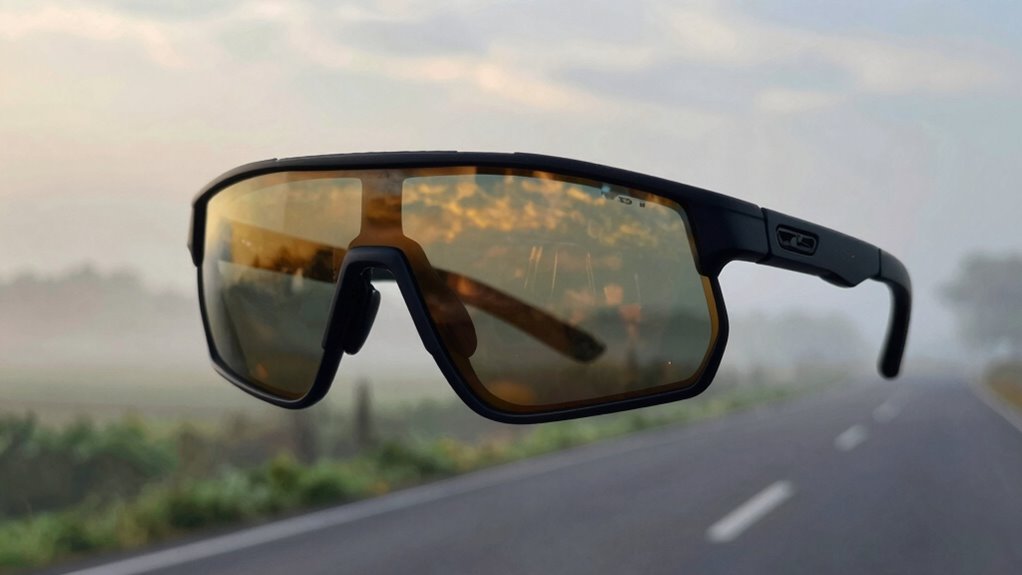
For cycling in changing or dim conditions, photochromic lenses are often the most practical choice because they adapt as light levels shift. I rank the KAPVOE K63 as the best overall pick for its photochromic design, while the ROCKBROS model with a myopia frame stands out for riders who need vision correction and the X-TIGER five-lens set for those who want to swap lenses by conditions. The main tradeoff is between adaptive convenience and the more direct control of interchangeable lenses; polarized lenses can also reduce glare but may not suit every low-light ride. Fit, lens tint, and how much light reaches your eyes matter as much as the product label. Read on for the full comparison and help matching a pair to your riding needs.

Get sports gear delivered free with Prime
- Fast, free delivery on millions of items
- Prime Video, Amazon Music and more included
- Member-only deals all year
Complete the kit


Key Takeaways
- Photochromic models lead this low-light roundup for riders who move between shade, open roads, and changing weather without stopping to swap lenses.
- KAPVOE K63 ranks first for broad everyday use, while the two Tifosi Moab Full-Frame listings and two Tifosi Vogel SL listings represent repeated model choices rather than four distinct designs.
- Interchangeable-lens kits trade convenience for control: X-TIGER‘s five-lens option offers more ways to match conditions, but requires carrying and changing spare lenses.
- Riders who need prescription support have a clearer niche choice in the ROCKBROS photochromic model with a myopia frame; standard shields may not accommodate their vision needs.
- Polarized options are not automatic low-light winners: they can cut reflected glare, but lens tint and the amount of visible light passing through should guide the choice.




| cycling sunglasses for low light | UV protection | Frame material |
|---|---|---|
| FAGUMA Polarized Sports Sungla | UV400 | — |
| KAPVOE Photochromic Cycling Su | UV400 | TR90 |
| Tifosi Moab Lite Half-Frame Sh | UVA / UVB | Grilamid TR-90 |
| Tifosi Vogel SL Shield Sunglas | 100% UVA/UVB | Grilamid TR-90 |
| ROCKBROS Cycling Glasses | UV protection specified; level not provided | TR90 |
| Rockbros Photochromic Sports S | Yes | Lightweight, durable high-quality material |
| Tifosi Vogel SL Shield Sunglas | 100% UVA/UVB | Grilamid TR-90 |
| ROCKBROS Photochromic Sports S | UV400 | Plastic |
| Tifosi Moab Full-Frame Cycling | 100% UVA/UVB | Grilamid TR-90 |
| X-TIGER Polarized Cycling Glas | Yes | TR90 |
| X-TIGER Polarized Sports Sungl | — | — |
| AJBAY Polarized Running Sungla | — | — |
| Lamicall 24g Polarized Sports | — | — |
| Tifosi Moab Full-Frame Cycling | — | — |
| Photochromic Cycling Glasses S | — | — |
More Details on Our Top Picks
FAGUMA Polarized Sports Sunglasses for Men UV400 Protection
The FAGUMA is the bright-day pick here, not the strongest choice for genuinely dim rides. Its polarized TAC lenses cut reflected glare, which can help on sunny roads, but the product details give no light-transmission range or low-light lens option. That makes it less adaptable when clouds roll in than the KAPVOE K63 or Tifosi Moab Lite, both of which use photochromic lenses. At 21 grams, it is the lightest option in this batch, and its UV400 protection suits extended outdoor wear. The tradeoff is a fixed lens with limited fit information: buyers who need a lens that brightens for shaded routes, dawn, or dusk should choose an adaptive model instead. I’d reserve this pair for riders whose routes are mostly sunny and glare-prone.
Pros:- Polarized TAC lenses reduce reflected glare in bright conditions.
- At 21 grams, it is the lightest listed option in this batch.
- UV400 protection is specified for UVA and UVB rays.
- Impact- and scratch-resistant construction is suited to active outdoor use.
Cons:- No photochromic or interchangeable lens option is listed for changing light.
- No light-transmission range is provided, so low-light suitability is hard to judge.
- Adjustable fit features and included accessories are not specified.
Best for: Cyclists on mostly sunny, glare-heavy routes who want a lightweight fixed-lens pair for daytime riding.
Not ideal for: Dawn, dusk, or heavily shaded-route riders who need a lens that becomes clearer as ambient light drops.
- Lens material:TAC HD polarized
- UV protection:UV400
- Lens width:65 mm
- Lens height:39 mm
- Temple length:126 mm
- Nose bridge:19 mm
- Weight:21 g
Our verdict“Choose the FAGUMA for sunny rides where glare control and low weight matter more than adapting to low light.”
KAPVOE Photochromic Cycling Sunglasses UV400 TR90 Men Women K63
The KAPVOE K63 earns its place as a practical adaptive option: its CAT.0–CAT.2 photochromic range is designed to move from clearer conditions toward moderate tint, making it better suited to variable daylight than the fixed-lens FAGUMA. For low-light cycling, that range is promising, though the stated warning against very low-light or night use matters; it is not a clear-lens substitute for darkness. A TR90 frame, soft rubber nose pad, and ventilation openings support a flexible fit and help limit fog during exertion. Compared with the Tifosi Moab Lite, the K63 lists a narrower lens range and no adjustable ear pieces, so fit customization is more limited. Its main appeal is straightforward light adaptation, with the tradeoff of a fixed, non-interchangeable lens that needs careful cleaning.
Pros:- Photochromic CAT.0–CAT.2 lens range adapts across changing daylight.
- TR90 frame is described as lightweight and flexible.
- Vent openings help reduce fog buildup during activity.
- Soft rubber nose pad supports a more secure fit.
Cons:- The fixed lens cannot be swapped for a dedicated clear or darker lens.
- The listed range is not intended for very low-light or night riding.
- Careful cleaning is needed to reduce the risk of lens scratches.
Best for: Daytime commuters and recreational cyclists whose routes alternate between sun and shade, but do not extend into night riding.
Not ideal for: Riders who need interchangeable lenses, precise fit adjustment, or reliable visibility in very dim conditions.
- Lens type:Photochromic
- Lens range:CAT.0–CAT.2
- UV protection:UV400
- UVA/UVB filtering:99.99%
- Frame material:TR90
- Frame features:Vent openings
- Nose pad:Soft rubber
Our verdict“Pick the KAPVOE K63 for variable daytime routes if you want a fixed photochromic lens and do not ride after dark.”
Tifosi Moab Lite Half-Frame Shield – Cycling, Baseball & Running
For riders prioritizing low-light flexibility, the Moab Lite has the clearest case in this group: its Light Night Fototec lens lists a broad 14–82% VLT range, giving it more documented adaptation than the KAPVOE K63’s CAT.0–CAT.2 range. That broad span makes the lens more compelling for routes that shift between shade and brighter stretches, though it does not mean every night-riding situation is covered. The vented polycarbonate shield can reduce fogging, while adjustable ear pieces and hydrophilic rubber contact points help keep the fit stable during hard efforts. At 27 grams, it is heavier than the 21-gram FAGUMA, and the half-frame shape may not suit very small or very large faces. I’d choose it for adaptability and fit tuning, not for a minimalist or universally adjustable fit.
Pros:- Light Night Fototec lens lists a broad 14–82% VLT range.
- Vented polycarbonate lens helps limit fogging during exertion.
- Adjustable ear pieces allow more fit tuning than the KAPVOE K63.
- Hydrophilic rubber nose and ear pieces are designed to grip better with moisture.
Cons:- At 27 grams, it weighs more than the FAGUMA in this batch.
- The half-frame fit may not work well for very small or very large faces.
- The lens color options are described as limited.
Best for: Road cyclists who ride through mixed light and want a wide stated VLT range plus adjustable fit points.
Not ideal for: Riders with very small or very large faces, or those seeking a dedicated clear lens for night-only use.
- Lens color:Light Night Fototec
- Visible light transmission:14–82%
- Lens material:Polycarbonate
- Frame material:Grilamid TR-90
- Weight:27 g
- UV protection:UVA / UVB
- Fit features:Hydrophilic rubber nose and ear pieces; adjustable ear pieces
Our verdict“Choose the Moab Lite if you want the broadest documented light-adaptation range here and can use its adjustable half-frame fit.”
Tifosi Vogel SL Shield Sunglasses
The Vogel SL is a sport-focused shield, but its listed smoke lens with bright blue mirror makes it a less convincing low-light pick than the photochromic Tifosi Moab Lite. There is no VLT range or adaptive lens feature in the supplied details, so I would treat it as better suited to brighter rides than to routes with prolonged shade or dusk conditions. Its 26-gram rimless design keeps the construction light and open, while hydrophilic rubber pads are meant to hold their grip when sweat builds. The shatterproof, water-repellent polycarbonate lens adds practical protection, but the rimless shield shape will not appeal to everyone and the product information lists few fit adjustments. Choose it for a lightweight, secure-feeling shield in daylight; skip it if your main need is a lens that clears as light fades.
Pros:- Rimless shield design gives broad coverage with a lightweight build.
- Shatterproof polycarbonate lens is water-repellent.
- Hydrophilic rubber pads are designed to improve grip when sweating.
- Lists 100% UVA/UVB protection.
Cons:- No photochromic feature or VLT range is listed for low-light assessment.
- Smoke lens with blue mirror is less clearly suited to dim conditions than the Moab Lite Fototec lens.
- Rimless styling and limited listed fit adjustments may not suit every rider.
Best for: Cyclists who want a lightweight, rimless shield for brighter daytime rides and value a secure grip during sweaty efforts.
Not ideal for: Low-light specialists who need a documented high-VLT or photochromic lens, or riders who prefer full-frame eyewear.
- Lens color:Smoke with bright blue mirror
- Lens material:Polycarbonate
- Lens features:Water-repellent, shatterproof
- Frame material:Grilamid TR-90
- Weight:26 g
- UV protection:100% UVA/UVB
- Frame design:Rimless shield
Our verdict“Choose the Vogel SL for a light, secure shield on brighter rides, not as the main pair for genuinely low-light cycling.”
ROCKBROS Cycling Glasses, Photochromic Sports Sunglasses for Men and Women, UV Protection
ROCKBROS makes sense for riders who want a photochromic lens and more control over nose fit without moving up to the Moab Lite’s more detailed lens setup. The adjustable nose pad can help cyclists fine-tune how the glasses sit, and the listed myopia-friendly design may suit riders looking for that accommodation. At 28 grams, it is not as light as the FAGUMA, and the product details do not give a VLT range or lens-category span. That omission makes its low-light performance harder to compare with the Tifosi Moab Lite, whose 14–82% VLT is specified. The TR90 frame is described as durable and flexible, but careful lens cleaning is advised. I’d favor this pair when fit adjustment is a priority; riders needing verified performance in very dim conditions should look for clearer transmission data.
Pros:- Photochromic lens adapts to changing sunlight.
- Adjustable nose pad allows a more personalized fit.
- TR90 frame is described as durable and flexible.
- Myopia-friendly design is listed.
Cons:- No VLT range or lens category is supplied, unlike the Tifosi Moab Lite.
- At 28 grams, it is heavier than the FAGUMA.
- The lens requires careful cleaning to reduce scratch risk.
Best for: Cyclists who need an adjustable nose fit and want photochromic lenses for changing daytime conditions, including riders seeking a myopia-friendly option.
Not ideal for: Riders who need a published VLT range to judge performance in deep shade, dusk, or night conditions.
- Weight:28 g
- Lens material:Photochromic
- Frame material:TR90
- Adjustable nose pad:Yes
- Myopia-friendly:Yes
- UV protection:UV protection specified; level not provided
Our verdict“Choose ROCKBROS if adjustable nose fit and photochromic function matter more than having a published low-light transmission range.”
Rockbros Photochromic Sports Sunglasses for Men – Cycling & Pickleball
Adaptive photochromic lenses make these Rockbros a practical choice for rides that move between open roads and shaded paths: the tint changes with the light, rather than requiring a lens swap. The removable elastic band adds hold during rough movement or sweaty efforts, a feature the Tifosi Moab Full-Frame does not list. That security comes with a fit caveat: the sizing may run large for smaller faces, so I would check dimensions before choosing them. The product details also do not give a tint range or visible-light-transmission figures, making it harder to judge how clear the lenses stay in dim conditions. I’d pick these over the X-TIGER’s interchangeable-lens set when I want automatic adjustment, but not when precise low-light performance data is a priority.
Pros:- Photochromic lenses adjust as light changes, avoiding manual lens swaps.
- Removable elastic band can add security during vigorous movement.
- Lightweight frame is described as suitable for extended wear.
- Non-slip ergonomic nose pads help stabilize the glasses when sweating.
Cons:- Sizing may not suit smaller faces.
- No tint range or visible-light-transmission figures are provided for judging low-light clarity.
- The listed description does not specify lens material or a weight.
Best for: Cyclists riding routes with alternating shade and sunlight who want a retention band for bumpy or high-movement outings.
Not ideal for: Riders with smaller faces or those who need published lens transmission figures to confirm suitability for very dim conditions.
- Lens type:Photochromic
- UV protection:Yes
- Frame material:Lightweight, durable high-quality material
- Fit feature:Removable elastic band
- Nose pads:Non-slip ergonomic design
- Origin:Imported
Our verdict“Choose these for changing-light rides where a secure, band-assisted fit matters more than having detailed low-light lens specifications.”
Tifosi Vogel SL Shield Sunglasses – Running, Cycling, Baseball & Golf
The clear lens gives the Vogel SL a distinct role here: it avoids the uncertainty of a changing tint when a ride stays overcast or heads into deep shade. Its 26-gram rimless shield keeps the field of view open, while shatterproof polycarbonate and full UVA/UVB protection add impact and sun protection. Compared with the Rockbros photochromic model, the Vogel SL is a more straightforward choice for consistently low light, but it will not darken when the route opens into bright sun. Its extra-large fit is another dividing line; riders with smaller faces may find the coverage excessive. I’d favor the Tifosi Moab Full-Frame if I wanted an adaptive tint for mixed conditions, but the Vogel SL is better suited to shade-first rides.
Pros:- Clear lens is suited to low-light riding without a dark tint.
- Shatterproof polycarbonate lens offers impact resistance.
- Full UVA/UVB protection is specified.
- 26-gram rimless shield and grip pads support a light, secure fit.
Cons:- Clear lens does not adapt to bright sunlight.
- Extra-large fit may be too broad for smaller faces.
- Rimless styling may not appeal to riders who prefer a full-frame structure.
Best for: Cyclists who ride mainly in overcast weather, wooded routes, or other dim conditions and prefer a clear lens over variable tint.
Not ideal for: Riders who move frequently between shade and strong sun, or who need a smaller fit than the extra-large sizing offers.
- Lens color:Clear
- Lens design:Rimless shield
- UV protection:100% UVA/UVB
- Lens material:Shatterproof polycarbonate
- Frame material:Grilamid TR-90
- Weight:26 grams
- Fit:Extra Large
Our verdict“Pick the Vogel SL for shade-heavy rides where a light clear shield is more useful than photochromic versatility.”
ROCKBROS Photochromic Sports Sunglasses with Myopia Frame – UV400 Anti-Fog Goggles for Cycling, Running, Fishing
The built-in myopia frame is the deciding feature here: it gives nearsighted riders a prescription-compatible option alongside photochromic lenses, avoiding the need to choose between vision correction and changing-light coverage. The stated prescription limits are below 400° for myopia and below 200° for astigmatism, so compatibility is not universal; the prescription lenses are also not included. Against the standard Rockbros photochromic sunglasses, this model adds prescription support but brings more fitting steps and less certainty for riders outside those limits. Its UV400 protection and impact-resistant polycarbonate lenses suit outdoor use, though the listing provides no visible-light-transmission range to confirm performance in very dim light. I’d choose it for an eligible prescription wearer, not simply for the broadest low-light lens choice.
Pros:- Built-in myopia frame supports prescription lenses.
- Photochromic lens adjusts tint with changing sunlight.
- UV400 protection and impact-resistant polycarbonate lenses are specified.
- Wrap-around shape provides coverage for outdoor sports.
Cons:- Prescription lenses are not included.
- Compatibility is limited to the stated myopia and astigmatism ranges.
- No visible-light-transmission range is provided for judging very low-light use.
Best for: Nearsighted cyclists within the stated prescription limits who want a photochromic sports-glasses setup with a myopia insert.
Not ideal for: Riders with stronger prescriptions, those who need prescription lenses included, or anyone seeking documented transmission data for night riding.
- Lens type:Photochromic
- UV protection:UV400
- Lens material:Impact-resistant polycarbonate
- Frame material:Plastic
- Weight:0.09 kg
- Style:Wrap-around, half-frame
- Prescription compatibility:Myopia below 400°; astigmatism below 200°
Our verdict“Choose this model if your prescription falls within its stated limits and you want adaptive lenses with a prescription insert.”
Tifosi Moab Full-Frame Cycling Sunglasses, Shatterproof, Lightweight Shield
The Moab Full-Frame is the most informative adaptive-lens option in this group for judging light range: its Fototec Blue lens has a stated 13–46% VLT range, giving buyers more detail than the Rockbros photochromic listing. That range points to versatility across overcast and brighter conditions, though the lower end is still a tint rather than a clear lens, so riders needing maximum light in deep shade may prefer the Tifosi Vogel SL’s clear lens. A full wraparound frame, ventilation, and hydrophilic grip pieces target long rides where movement and fogging can distract. The tradeoff is that the listed design is not suited to riders who need prescription compatibility, and the lens color options are limited. I’d choose it for mixed-light rides, not as a dedicated night-riding lens.
Pros:- Fototec Blue lens has a specified 13–46% VLT range.
- Photochromic tint adjusts across changing light conditions.
- Ventilation is designed to help reduce fogging.
- Hydrophilic nose, ear, and brow pieces plus adjustable ear pieces support a secure fit.
Cons:- The 13% minimum VLT may be too dark for very dim or night riding.
- Prescription compatibility is not specified.
- Lens color options are limited.
Best for: Cyclists who ride through changing daylight and want a specified photochromic range, wraparound coverage, and a secure fit.
Not ideal for: Night riders who need a clear lens, prescription wearers seeking built-in correction, or buyers who want several lens-color choices.
- Lens system:Fototec Blue
- Visible light transmission:13–46%
- Frame material:Grilamid TR-90
- Weight:31 grams
- UV protection:100% UVA/UVB
- Fit features:Hydrophilic rubber nose, ear, and brow pieces; adjustable ear pieces
- Coverage:Wraparound shield
Our verdict“Pick the Moab Full-Frame for variable daytime rides when adaptive tint data and a secure wraparound fit matter more than a clear night lens.”
X-TIGER Polarized Cycling Glasses with 5 Interchangeable Lenses for Men and Women
Unlike photochromic models such as the Tifosi Moab Full-Frame, the X-TIGER uses five interchangeable lenses, letting riders select a lens for the conditions rather than waiting for tint to change. The set is described as including a lens for night riding, which makes this a flexible pick for riders who also face bright sun on other outings. The tradeoff is hands-on setup: riders need to change lenses as conditions shift, and the listing gives little detail about replacement ease or lens durability. Its TR90 frame and adjustable rubber nose pads help with comfort, while the included myopia frame may suit some prescription users. Since the lens-specific transmission figures are not provided, I’d choose it for the breadth of lens options, not for precise optical specifications.
Pros:- Five interchangeable lenses cover multiple lighting conditions, including night riding per the listing.
- TR90 frame is designed to be lightweight and durable.
- Adjustable soft-rubber nose pads allow fit adjustment.
- Included myopia frame offers an additional prescription-compatible option.
Cons:- Lens changes require manual effort as conditions shift.
- Lens durability and replacement ease are not detailed.
- No visible-light-transmission figures are supplied for individual lenses.
Best for: Cyclists who ride in both low light and bright sun, and are comfortable carrying and swapping lenses to match conditions.
Not ideal for: Riders who want automatic tint adjustment, dislike changing lenses, or need verified transmission figures for a specific low-light environment.
- Interchangeable lenses:5
- Frame material:TR90
- Nose pad:Adjustable soft rubber
- UV protection:Yes
- Included accessories:EVA case, glasses bag, cleaning cloth, polarized test card, non-slip ear hook, headband, removable lower frame, myopia frame
Our verdict“Choose the X-TIGER if you want a dedicated low-light lens option within a multi-lens kit and do not mind swapping lenses by hand.”
X-TIGER Polarized Sports Sunglasses with 3 Interchangeable Lenses, Unisex UV400 Protection
The X-TIGER earns its place for riders who want to swap lenses as conditions change without buying a separate pair. Its set includes a yellow night lens and a clear lens, both more useful for dim rides than a fixed dark tint; the polarized option is better reserved for bright conditions. At 19.2 g, it is the lightest option in this group with a stated weight, though the Tifosi Moab offers a more direct low-light solution with a photochromic lens that adjusts without stopping to change lenses. The tradeoff is convenience versus flexibility: X-TIGER gives you choices, but lens changes take time, and the lenses need careful cleaning to limit scratches. Its full-frame rectangular look is also more prominent than a minimalist design.
Pros:- Includes clear and yellow night lenses suited to dimmer conditions
- Three interchangeable lenses provide more tint choices than a fixed-lens pair
- Light 19.2 g weight may help during long rides
- TR90 frame is described as impact-resistant
Cons:- Changing lenses is less convenient than the Tifosi Moab’s automatic photochromic adjustment
- Lenses require careful cleaning to reduce scratch risk
- Full-frame rectangular styling may not suit riders seeking a minimal look
Best for: Cyclists who ride at varied times of day and are willing to change lenses between bright, overcast, and low-light rides.
Not ideal for: Riders who want tint to adjust automatically mid-ride or who prefer one lens without carrying spare options.
Our verdict“Choose X-TIGER if you want dedicated clear and yellow lenses for low-light rides and do not mind swapping them by hand.”
AJBAY Polarized Running Sunglasses – Ultra Comfort UV400 Protection
AJBAY focuses on a stable fit rather than low-light lens flexibility. Its adjustable silicone nose pads and anti-slip temples can help keep the frame in place on rough roads, while the lightweight 22 g TR90 frame avoids the heft of bulkier shields. The polarized TAC lens is designed to cut glare, but the listing gives no clear, yellow, or photochromic option, so it is a less adaptable choice for dawn rides than the X-TIGER, which supplies separate low-light lenses. That makes AJBAY a better match for riders whose routes are mostly bright and who value a dependable fit over tint changes. The main limitation for this roundup is straightforward: polarized glare reduction does not replace a brighter lens when visibility is already low.
Pros:- Adjustable silicone nose pads allow fit tuning
- Textured anti-slip temples are suited to active movement
- Lightweight 22 g TR90 frame
- Shatterproof TAC lenses and UV400 protection are specified
Cons:- No interchangeable, clear, yellow, or photochromic lens option is listed
- Polarized tint may be poorly suited to dim conditions
- Prescription compatibility is not specified
Best for: Cyclists riding mostly in daylight who want adjustable contact points and a secure fit for running or cycling.
Not ideal for: Dawn and dusk riders who need a documented clear, yellow, or photochromic lens option.
Our verdict“Pick AJBAY for a secure, adjustable fit on bright rides, not as a dedicated low-light lens solution.”
Lamicall 24g Polarized Sports Sunglasses for Men and Women – UV400 Protection
Lamicall’s strongest case is fit customization: adjustable nose pads and an adjustable temple design can help riders find a steadier position without moving to a heavier frame. Its 24 g TR90 construction is light, and the semi-rimless shape leaves more of the lower field open than a full-frame option such as the X-TIGER. For low-light cycling, though, the fixed polarized lens is a real constraint. There is no stated clear, yellow, or photochromic alternative, so it is less versatile after sunset or on shaded routes than X-TIGER’s interchangeable set or the Tifosi Moab’s changing tint. Choose Lamicall for fit and general outdoor use when conditions are fairly consistent; skip it if one pair must cover a wide range of light.
Pros:- Adjustable nose pads and temples allow fit adjustments
- 24 g TR90 frame is lightweight
- Semi-rimless design leaves the lower frame less obstructive
- Impact-resistant TAC lens and UV protection are specified
Cons:- No alternate lens colors or photochromic function are listed
- Polarized lens is less adaptable to low-light riding
- Semi-rimless styling may not appeal to riders who prefer full-frame coverage
Best for: Riders who have trouble finding a stable nose fit and want a lightweight semi-rimless frame for mostly bright conditions.
Not ideal for: Cyclists who regularly move between bright sun and deep shade and need a lens that brightens for low light.
Our verdict“Choose Lamicall for an adjustable, lightweight fit on steady-light rides, but look elsewhere for changing low-light conditions.”
Tifosi Moab Full-Frame Cycling Sunglasses, Shatterproof, Lightweight Shield
The Tifosi Moab is the strongest all-round pick here for riders who pass repeatedly between open roads and shade. Its Fototec lens has a stated 27–75% VLT range, giving it a defined bright-to-light-transmission span rather than relying on a manual lens swap. That makes it more convenient on a mixed-light route than the X-TIGER, whose clear and yellow lenses require stopping to change. The wraparound shield, anti-fog feature, and wind-and-debris coverage also suit faster or rougher riding. Its 31 g weight is higher than the listed weights for X-TIGER and AJBAY, and the 27% low end may not satisfy riders seeking a very dark lens in intense sun. Polarization is not specified, either.
Pros:- Fototec lens adjusts across a stated 27–75% VLT range
- Wraparound shield helps block wind and debris
- Hydrophilic rubber nose, ear, and brow pieces support a secure fit
- 100% UVA/UVB protection and anti-fog features are specified
Cons:- At 31 g, it is heavier than the listed X-TIGER and AJBAY models
- Polarized lenses are not specified
- Prescription compatibility is not specified
Best for: Road, gravel, and mountain bikers who move between sunlight and shade and want automatic tint adjustment with wraparound coverage.
Not ideal for: Riders who want a very lightweight frame, a polarized lens, or a dedicated prescription setup.
Our verdict“Choose the Moab if your rides alternate between shade and sun and automatic lens adjustment matters more than minimum weight.”
Photochromic Cycling Glasses Sport Sunglasses for Men and Women
These photochromic glasses suit riders who want one pair for cycling and several other outdoor activities. The automatic tint adjustment is a better fit for changing light than the fixed polarized lenses on AJBAY or Lamicall, and UV400 protection is listed. Hydrophilic rubber nose pads and non-slip temples are intended to keep the glasses stable during movement. However, the product data does not provide a VLT range, frame material, or weight, leaving less concrete guidance than the Tifosi Moab, whose light-transmission range is stated. The listing also warns that the lens may not darken fully in very bright conditions. With no polarization specified and limited design details, this is a broad-use option rather than the most fully documented choice for demanding rides.
Pros:- Photochromic lens adjusts tint as outdoor light changes
- UV400 protection is specified
- Hydrophilic rubber nose pads and non-slip temples support a secure fit
- Listed for cycling and several other outdoor sports
Cons:- No VLT range or lens-darkening limits are quantified
- May not darken fully in very bright conditions
- Polarization, frame material, and product weight are not specified
Best for: Multi-sport users who want photochromic glasses for cycling, running, hiking, or fishing and value a secure fit.
Not ideal for: Cyclists who need a stated VLT range, known frame weight, or a lens that is confirmed to darken deeply in bright sun.
Our verdict“Choose these for flexible multi-sport use and automatic tint changes, but favor the Tifosi Moab if you want a documented light-transmission range.”

How We Picked
I ranked these 15 listings for the specific demands of low-light cycling: keeping enough light available to see road texture and hazards, handling shifts between shade and brighter stretches, staying secure during movement, and offering a practical fit for different riders. I gave photochromic designs an advantage for variable conditions, while distinguishing them from interchangeable-lens kits, which give riders more direct control but ask for extra preparation. Polarization was treated as a situational feature rather than a universal benefit.
Build and usability also shaped the order: frame coverage, weight claims, ventilation or anti-fog features, lens replacement options, and the availability of a myopia frame all affect day-to-day use. The KAPVOE K63 leads as a general-purpose adaptive option; specialized picks rank higher for their specific needs, not because they suit every rider. Several listings repeat the same named Tifosi models, so I call out that overlap rather than presenting duplicate titles as distinct designs. Where the supplied product names do not specify a lens tint or light-transmission level, I avoid assuming performance details.
| cycling sunglasses for low light | Frame material |
|---|---|
| FAGUMA Polarized Sports Sungla | — |
| KAPVOE Photochromic Cycling Su | TR90 |
| Tifosi Moab Lite Half-Frame Sh | Grilamid TR-90 |
| Tifosi Vogel SL Shield Sunglas | Grilamid TR-90 |
| ROCKBROS Cycling Glasses | TR90 |
| Rockbros Photochromic Sports S | Lightweight, durable high-quality material |
| Tifosi Vogel SL Shield Sunglas | Grilamid TR-90 |
| ROCKBROS Photochromic Sports S | Plastic |
| Tifosi Moab Full-Frame Cycling | Grilamid TR-90 |
| X-TIGER Polarized Cycling Glas | TR90 |
| X-TIGER Polarized Sports Sungl | — |
| AJBAY Polarized Running Sungla | — |
| Lamicall 24g Polarized Sports | — |
| Tifosi Moab Full-Frame Cycling | — |
| Photochromic Cycling Glasses S | — |
Factors to Consider When Choosing Cycling Sunglasses For Low Light
Low-light eyewear calls for a different decision than sunglasses chosen mainly for bright midday sun. I would start with the light conditions and the way you ride, then weigh lens behavior against fit, vision needs, and how much upkeep you are willing to handle.
Match Lens Behavior to Your Route
Think about the full ride, not only the moment you leave home. A route through tree cover, tunnels, and open roads favors a lens that can adapt, while a predictable early-morning route may suit a fixed light tint. Check the stated visible light transmission or the manufacturer’s guidance for the lens; words such as “photochromic” alone do not tell you how clear it remains in dim conditions. A common mistake is buying a lens that handles bright sun well and assuming it will also work at dusk. If your rides regularly finish after sunset, sunglasses may need to come off rather than simply change tint.
Understand Photochromic Versus Interchangeable Lenses
Photochromic lenses reduce the need to stop when light changes, making them convenient for mixed routes and all-day rides. Their response and final tint vary by model and conditions, so check the product’s stated range rather than expecting every adaptive lens to become nearly clear. Interchangeable sets offer more deliberate control: you can choose a lens suited to a specific ride, but you have to carry, store, and swap it safely. Spare lenses can also be inconvenient if you ride in wet or dusty conditions. Pay more for adaptability only when changing light is a frequent problem for you.
Treat Polarization as a Specific Tool
Polarized lenses can cut glare reflected from wet pavement, water, or vehicle surfaces, which may make some bright, reflective stretches more comfortable. They do not automatically improve visibility in low light, and a dark polarized lens may leave too little light for shaded roads. Some cyclists also prefer to check how polarization affects their view of phone or bike-computer screens before committing. A frequent buying error is treating “polarized” as a synonym for low-light-friendly. Compare the actual tint and light transmission first, then choose polarization only if glare is part of your riding conditions.
Prioritize Fit, Coverage, and Ventilation
A lens that suits the light still has to stay in place when you look down, turn your head, or ride over rough surfaces. Look for a secure fit at the nose and temples without pressure points, and check that the frame does not interfere with your helmet. Larger shields can protect more of the eye area from wind and debris, but may feel less airy or suit fewer face shapes. Venting and anti-fog design matter most during slow climbs, cold starts, and humid rides. If possible, check return terms and measurements before choosing a frame based on product photos alone.
Plan for Prescription and Vision Needs
Riders who wear glasses should decide whether they need a dedicated myopia insert, a frame that fits over prescription eyewear, or a prescription lens solution. Each route changes the weight, fit, and ease of cleaning, so check compatibility before purchase rather than assuming a shield can accommodate any glasses. A clip-in insert can be a useful compromise, but it may reduce ventilation or sit too close to the face if the fit is wrong. For strong prescriptions or frequent night riding, ordinary sport sunglasses may not be the simplest choice. Prioritize clear, stable vision over extra lens features.
Balance Protection Against Low-Light Visibility
UV protection and visible brightness are separate questions: a lens can block UV while still being light or dark in appearance. Check that the product states UV protection and look for clear information about lens transmission, especially if you ride at dawn, dusk, or beneath dense tree cover. A shatter-resistant lens can add peace of mind around road debris, but it cannot make a too-dark tint suitable for dim conditions. Think about whether you need wind and debris coverage on fast descents or a lighter, less enclosed feel on slow rides. The best balance depends on your route and whether you can safely remove the glasses when light drops further.
Frequently Asked Questions
Are photochromic cycling glasses a good choice for riding at dusk?
They can work well when a ride moves between bright and shaded sections, but the label does not guarantee that a lens will be clear enough at dusk. Check the stated light-transmission range and look for specific information about its lightest state. If your route continues after sunset, do not assume the lens will replace clear eyewear or safe lighting. A removable pair of glasses may be the safer choice once visibility drops too far.
Should I choose polarized or photochromic lenses for mixed light?
Choose based on the problem you encounter most. Photochromic lenses respond to changing brightness, while polarization mainly reduces reflected glare; those functions are not interchangeable. For a route with frequent shade and sun, adaptive behavior may matter more than glare reduction. If wet roads or water create persistent glare, polarization may help, but check that the tint remains light enough for shaded sections and that screens remain readable to you.
Can I wear cycling sunglasses with a bike computer or phone?
Some polarized lenses can change how screens appear, depending on the display and your viewing angle. If you rely on a computer for navigation or ride data, test screen visibility before committing when possible, or check guidance specific to the lens. This issue is separate from UV protection and frame fit, so do not assume a comfortable pair will work equally well with every display. Photochromic lenses are not automatically free of screen-visibility issues; the lens design still matters.
What should a glasses wearer look for in a low-light cycling pair?
Start by confirming whether the frame supports a myopia insert, fits over prescription glasses, or can be made with prescription lenses. Then check how the added eyewear affects nose fit, helmet clearance, and airflow, since inserts can bring lenses closer to the face. The ROCKBROS photochromic model with a myopia frame is the most clearly targeted option in this roundup, but compatibility and fit still need checking. If you ride in very dim conditions, prioritize an unobstructed prescription view over an elaborate lens system.
Is a multi-lens kit worth choosing over photochromic sunglasses?
A multi-lens kit makes sense if you prefer selecting a lens for each ride and do not mind carrying spares or changing them before conditions shift. It is less convenient when light changes during a route or when there is nowhere clean and safe to swap lenses. Photochromic eyewear simplifies those changes, though its available tint range depends on the specific lens. For predictable routes, interchangeable lenses can offer useful control; for variable routes, adaptive convenience may matter more.
Conclusion
For the broadest fit across changing conditions, I recommend the KAPVOE K63 as best overall. The ROCKBROS photochromic model with a myopia frame is the clearest match for riders who need vision correction, while the X-TIGER five-lens set suits cyclists who want hands-on control over lens choice. For a value-focused pick, compare the basic photochromic ROCKBROS options and choose by fit and stated lens details; the product names alone do not establish a reliable value winner. Beginners should favor a comfortable, uncomplicated photochromic pair over a kit that requires frequent lens swaps. Riders seeking a premium-style shield should compare the Tifosi Moab and Vogel SL listings by frame fit and lens specifications, noting that duplicate listings here do not represent distinct models. Before deciding, check the tint’s low-light suitability and make sure the glasses fit securely with your helmet.