
For 2026, I recommend three top dual-sided power meters that combine advanced features, safety, and easy installation. The AC Power Meter with dual sockets offers real-time data and extensive monitoring, while the Multi-Function Power Meter provides detailed analysis via a large LCD display. The eMylo WiFi Power Meter stands out with app control and remote management. Stay tuned to discover how these devices can optimize your energy use and fit your needs perfectly.
Key Takeaways
- Look for models with high-accuracy ratings (Class 0.5 or 1.0) certified under IEC or UL standards.
- Prioritize devices offering comprehensive real-time data, historical logs, and app control for remote monitoring.
- Choose power meters with durable, safety-certified construction, waterproof connectors, and overload protection.
- Opt for products with extended warranties and reliable customer support to ensure long-term value.
- Consider compatibility with smart home systems and features like multiple parameters measurement for versatile energy management.
| AC Power Meter with Dual Sockets and LCD Display |  | Most Durable | Display Type: LCD screen | Power Monitoring Range: 120-240V | Socket Type: NEMA 5-15/20 | VIEW LATEST PRICE | See Our Full Breakdown |
| Multi-Function Power Meter with LCD Display |  | Best Multifunctionality | Display Type: LCD digital display | Power Monitoring Range: 80-260V | Socket Type: Not specified (clamp sensors) | VIEW LATEST PRICE | See Our Full Breakdown |
| eMylo 2-Channel WiFi Power Meter with App Control |  | Smart Home Leader | Display Type: LCD display | Power Monitoring Range: 100-240V | Socket Type: Not specified (plug-in, app-controlled) | VIEW LATEST PRICE | See Our Full Breakdown |
More Details on Our Top Picks
AC Power Meter with Dual Sockets and LCD Display
If you’re looking for a reliable power meter that can handle multiple devices at once, the AC Power Meter with Dual Sockets and LCD Display is an excellent choice. Its durable design features a flame-retardant ABS shell, UL-certified copper cord, and waterproof connectors, ensuring safe, long-lasting use. The compact size makes it easy to install in various environments like RVs, homes, or outdoor setups. With the LCD display, I can monitor voltage, current, power, and energy consumption in real-time. Plus, its data logging helps me analyze power usage patterns, and the built-in circuit breaker keeps my devices protected from overloads.
- Display Type:LCD screen
- Power Monitoring Range:120-240V
- Socket Type:NEMA 5-15/20
- Monitoring Capabilities:Voltage, current, power, frequency, temperature, energy
- Connectivity:Wired (plug-in)
- Data Storage/Logging:Yes, supports data logging
- Additional Feature:Waterproof connectors included
- Additional Feature:Supports UL safety standards
- Additional Feature:Compact portable design
Multi-Function Power Meter with LCD Display
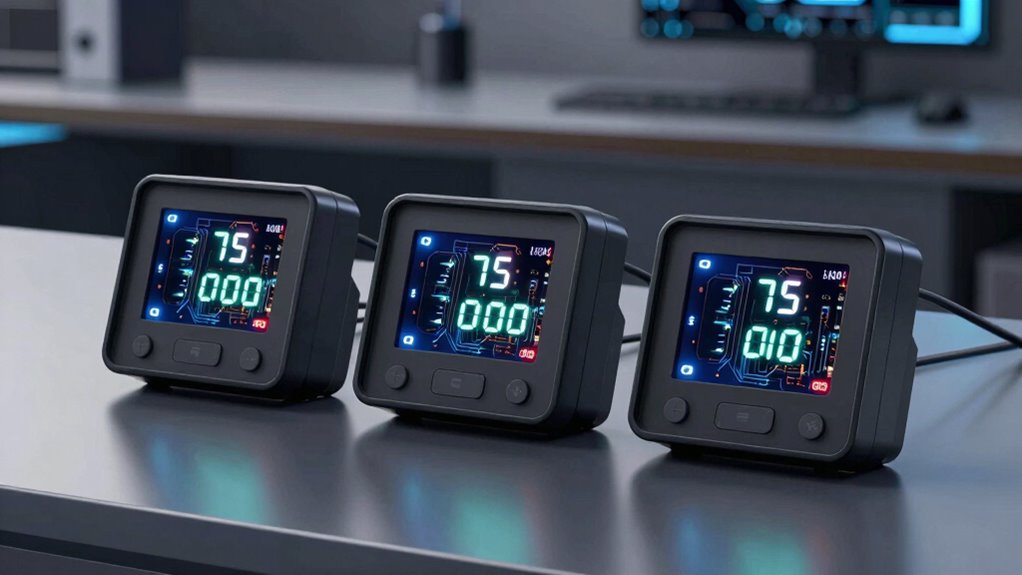
The Multi-Function Power Meter with LCD Display stands out for its large, easy-to-read screen that shows multiple electrical parameters simultaneously, making it ideal for anyone who needs real-time monitoring of their power usage. Its 180° viewing angle ensures visibility from various positions. The device measures voltage, current, frequency, power factor, and active energy, supporting AC voltages from 80V to 260V and currents up to 100A. Installation is simplified with split core current transformers. Plus, the one-button controls toggle the backlight, reset energy, and set alarm limits. It also automatically stores data during power outages, providing reliable monitoring for residential, commercial, and industrial environments.
- Display Type:LCD digital display
- Power Monitoring Range:80-260V
- Socket Type:Not specified (clamp sensors)
- Monitoring Capabilities:Voltage, current, energy, frequency, power factor
- Connectivity:Split core CTs (wired sensors)
- Data Storage/Logging:Automatic data storage
- Additional Feature:Overload alarm with flashing alerts
- Additional Feature:Automatic data storage feature
- Additional Feature:Split core current transformers
eMylo 2-Channel WiFi Power Meter with App Control
For anyone seeking a versatile power meter that integrates seamlessly with smart home setups, the eMylo 2-Channel WiFi Power Meter with App Control stands out. It monitors energy use through 2.4GHz WiFi and works with Alexa, Google Assistant, and the Smart Life/Tuya app. Equipped with dual 80A clamp sensors, it supports 100-240V AC at 50/60Hz, making it perfect for household appliances. You can view real-time data like voltage, current, power factor, and energy consumption over various periods. Installation is straightforward—just plug it in. It allows remote control and automation, enhancing energy management without needing cable modifications.
- Display Type:LCD display
- Power Monitoring Range:100-240V
- Socket Type:Not specified (plug-in, app-controlled)
- Monitoring Capabilities:Voltage, current, power, frequency, power factor, energy
- Connectivity:WiFi (app control)
- Data Storage/Logging:App-based monitoring, no explicit data logging mentioned
- Additional Feature:Compatible with Alexa and Google
- Additional Feature:Supports smart home automation
- Additional Feature:No batteries required
Factors to Consider When Choosing Dual-Sided Power Meters
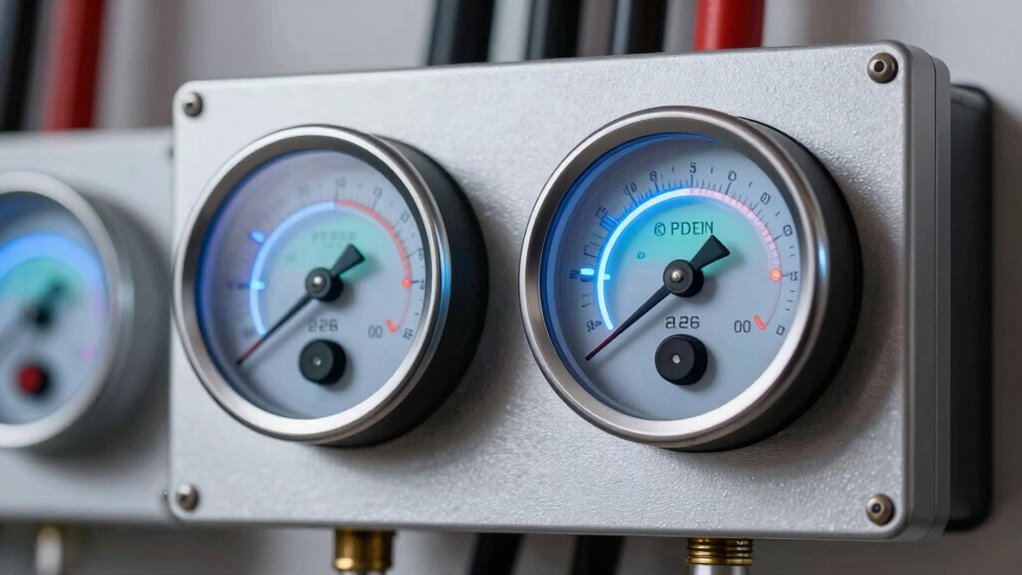
When choosing a dual-sided power meter, I focus on how well it works with my devices and whether it meets accuracy standards. Safety, durability, and ease of installation also matter because I want reliable and long-lasting equipment. Finally, a clear display and user-friendly interface help me monitor energy use effortlessly.
Compatibility With Devices
Choosing a dual-sided power meter requires careful attention to its compatibility with your devices to guarantee safe and accurate monitoring. First, confirm the meter supports the voltage and current ranges your appliances need, like 120V-240V and up to 100A or more for heavy-duty equipment. Check if it fits the type of outlets or connectors you use, such as NEMA 5-15 or 5-20 standards. Also, verify that its communication protocol—WiFi, LCD display, or data logging—matches your monitoring setup and smart home system. Safety certifications like UL or Specification Grade 1.0 are essential for reliable operation. Finally, consider if the design allows easy connection to your specific devices, whether through dual sockets or split-core transformers. Compatibility is key to safe, effective monitoring.
Measurement Accuracy Standards
Measurement accuracy standards are essential to guarantee your dual-sided power meter provides reliable readings. These standards typically follow IEC or UL certifications, ensuring devices meet strict tolerances. The accuracy class, like Class 1.0 or Class 0.5, indicates the maximum measurement error as a percentage of the reading, guiding you on precision levels. Certified power meters undergo calibration and testing before approval, verifying they adhere to industry standards. Keep in mind, measurement accuracy can be affected by factors such as temperature fluctuations, electromagnetic interference, and the quality of internal components. To maintain accuracy over time, regular calibration and maintenance are recommended. Choosing a meter with proven standards ensures dependable data, helping you monitor and optimize power consumption effectively.
Safety and Durability
Safety and durability are crucial factors to contemplate because they guarantee your dual-sided power meter can withstand environmental stresses and operate reliably over time. I look for models with a flame-retardant outer shell, like flame-retardant ABS, to reduce fire risks. UL certification and waterproof connectors are essential to ensure compliance with safety standards and resistance to moisture and dust. Built-in circuit breakers or overload protection safeguard connected devices from electrical faults, which is critical for long-term use. I also prioritize meters rated for high temperatures, up to 50°C, so they perform safely in diverse environments. Durable construction with high-quality materials resists wear, heat, and faults, ensuring the device remains reliable over years of operation. These safety features are non-negotiable to protect both your equipment and your peace of mind.
Display and Interface
Ever wondered how easily you can monitor your electrical parameters with a dual-sided power meter? The display’s clarity is key—look for a crisp, easy-to-read LCD or digital screen that shows multiple parameters at once. Adjustable brightness or backlighting is a must, so you can see data clearly in any lighting condition. Many multi-function meters include icons or indicators that quickly identify active measurements like voltage, current, or energy usage, saving you time. An intuitive interface with straightforward controls makes navigation simple, even if you’re not technically inclined. Plus, a good display shows real-time data alongside historical logs, enhancing your ability to manage energy efficiently. A user-friendly interface guarantees you spend less time figuring out the device and more time analyzing your data.
Installation Ease
When selecting a dual-sided power meter, ease of installation should be a top priority. A model with clearly labeled, accessible connection points makes setup much simpler, saving time and reducing errors. Devices featuring split or snap-on current transformers eliminate the need for complex wiring, streamlining the process further. It’s also important that installation instructions are thorough and include mounting hardware to guarantee secure placement. Compatibility with standard electrical outlets and sockets minimizes integration challenges and allows for quick deployment. Features like plug-and-play design and minimal wiring requirements help you install the meter safely and efficiently. Prioritizing these aspects ensures that installation isn’t an intimidating task, letting you get your system up and running with less hassle and more confidence.
Power Monitoring Features
Have you considered which power monitoring features are essential for your needs? These features give you an all-encompassing view of your energy consumption. Measuring voltage, current, active power, and frequency helps you understand how your devices use energy and if any adjustments are needed. Many dual-sided meters support real-time data display on LCD screens, so you can instantly see electrical parameters at a glance. Data logging is also valuable, allowing you to track historical energy use and spot inefficiencies over time. Safety features like overload and short circuit protection ensure your setup remains secure during high-power demands. Additionally, compatibility with smart home systems and app control can expand your monitoring options and enable remote management, making your energy tracking more flexible and convenient.
Price and Warranty
Choosing a dual-sided power meter involves more than just comparing features; it’s also about evaluating the value and protection you get for your investment. I look at the warranty period because longer warranties usually signal confidence in the product’s durability. It’s important to check if the warranty covers both parts and labor, offering extensive protection against defects or malfunctions. I also review the terms and conditions, like registration requirements or coverage limits, to avoid surprises. Comparing the price with the warranty’s value helps determine if the added protection is worth it. Additionally, I prioritize warranty support that offers easy claim processes and accessible customer service, minimizing downtime and hassle. After all, a good warranty provides peace of mind alongside reliable performance.
Frequently Asked Questions
Are Dual-Sided Power Meters Compatible With Smart Home Systems?
Yes, dual-sided power meters are compatible with many smart home systems. I’ve found that most modern models support Wi-Fi or Zigbee connections, allowing seamless integration with platforms like Alexa, Google Home, or SmartThings. This way, I can monitor energy usage directly from my smart home app. Just make sure to check the specific compatibility features of the meter before purchasing, so it works smoothly with your existing setup.
What Is the Typical Lifespan of a Dual-Sided Power Meter?
Ever wonder how long a dual-sided power meter lasts? Typically, they’re designed to stay reliable for about 10 to 15 years, depending on usage and environmental conditions. I’ve seen some models last even longer with proper maintenance. Do you think investing in a high-quality unit makes a difference? Regular calibration and careful installation definitely help extend their lifespan, ensuring you get accurate readings for years to come.
Can These Meters Handle High-Voltage Appliances Safely?
Yes, most dual-sided power meters are designed to handle high-voltage appliances safely, but you should always verify the specific voltage ratings and safety certifications. I recommend choosing a meter that’s rated for the voltage level you’ll be measuring, and ensure it complies with relevant safety standards. Always follow the manufacturer’s instructions to prevent accidents and ensure accurate measurements when dealing with high-voltage appliances.
Do They Require Professional Installation or Can Users Set Them up Easily?
Most dual-sided power meters are designed for easy installation by users, often featuring plug-and-play setups that don’t require professional help. I’ve found that following the manufacturer’s instructions is usually enough, but I always recommend turning off your power supply first for safety. If you’re unsure or dealing with complex wiring, then professional installation is a safer bet. Overall, these meters are user-friendly and convenient for most household setups.
How Accurate Are Dual-Sided Power Meters Compared to Professional-Grade Equipment?
Dual-sided power meters are quite accurate, often within 1-2% of professional-grade equipment. I’ve found that high-quality models use advanced sensors and calibration to guarantee precise readings, making them reliable for both hobbyists and serious users. While they might not match the absolute accuracy of industrial tools, they offer excellent precision for most applications. I trust them for monitoring energy consumption and optimizing performance without needing costly professional calibration.
Conclusion
Choosing the right dual-sided power meter is like finding the perfect compass for your energy journey. It guides you smoothly through your power usage, helping you avoid potential pitfalls. By considering features and your specific needs, you’ll guarantee your setup remains steady and reliable, much like a well-balanced ship on calm waters. Remember, the right meter doesn’t just measure—it empowers you to navigate your energy landscape with confidence and clarity.