
If you’re seeking the best equatorial mount with belt drive systems for precision astrophotography, I recommend the iEXOS-100-2 PMC-Eight system. It combines high-precision motors, fast slewing, and reliable load capacity, making it ideal for capturing clear, long-exposure images. Its minimal backlash and easy setup help guarantee smooth tracking. Want to discover why this mount stands out and how it can elevate your astrophotography? Keep exploring for all the details.
Key Takeaways
- The mount should feature high motor precision and microstepping for smooth, accurate tracking during long exposures.
- A high load capacity ensures stability and supports heavy imaging equipment without slippage.
- Easy polar alignment tools and minimal backlash improve setup speed and tracking accuracy.
- Compatibility with remote control via WiFi or Bluetooth enhances convenience during astrophotography sessions.
- A reliable belt drive system like the PMC-Eight offers quiet operation and consistent responsiveness for professional results.
iEXOS-100-2 PMC-Eight Astrophotography Tracker System Tripod and Mount


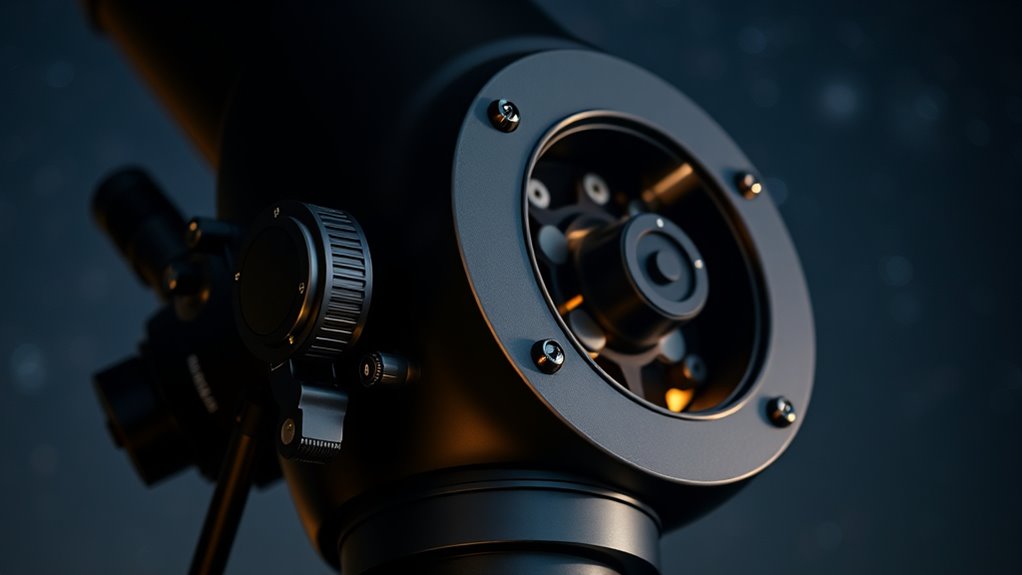
If you’re serious about astrophotography and need a reliable tracker system, the iEXOS-100-2 PMC-Eight offers an impressive combination of advanced technology and precise mechanics. Its integrated PMC-Eight technology uses eight independent CPUs, making it highly responsive, efficient, and reliable. The system features clutched dual-axis worm gears and quiet stepper motor belt drives for smooth, accurate movement. With a polar alignment sight hole and precise altitude control, setup is quick and straightforward. Plus, the intuitive ExploreStars app, compatible with multiple devices, simplifies operation and celestial navigation. WiFi and Bluetooth connectivity make remote control easy, ensuring seamless tracking during your astrophotography sessions.
Best For: serious astrophotographers and astronomers seeking a highly responsive, reliable, and easy-to-use tracking system for precise celestial imaging.
Pros:
- Utilizes advanced PMC-Eight technology with eight independent CPUs for superior responsiveness and reliability
- Features smooth, precise movement with clutched dual-axis worm gears and quiet stepper motor belt drives
- Simplifies setup with a polar alignment sight hole and intuitive ExploreStars app compatible across multiple devices
Cons:
- May be more expensive than basic tracking systems, potentially limiting accessibility for casual users
- Requires familiarity with app-based operation, which might have a learning curve for beginners
- Dependency on WiFi or Bluetooth connectivity could pose issues in areas with limited signal strength
Factors to Consider When Choosing Equatorial Mounts With Belt Drive Systems

When selecting an equatorial mount with belt drive, I consider factors like motor precision and speed to guarantee smooth tracking. Load capacity limits are essential to support your equipment safely, while ease of setup saves you time and frustration. Additionally, compatibility features, portability, and size influence how well the mount fits your needs and travel plans.
Motor Precision and Speed
Motor precision and speed are critical factors that directly impact the performance of an equatorial mount with belt drive systems. High motor precision guarantees smoother tracking, reducing star trailing during astrophotography, and microstepping capabilities further enhance accuracy. Faster motor speeds allow for quick slewing and repositioning, saving valuable setup time. Consistent motor speed is essential for maintaining accurate long-exposure images without drift. When a mount combines high motor precision with adequate speed, it improves responsiveness and stability, making it easier to capture sharp, detailed images. Ultimately, investing in a mount with precise, reliable motors ensures consistent tracking performance, which is fundamental for achieving professional-quality astrophotography results.
Load Capacity Limits
Choosing an equatorial mount with a belt drive system requires careful attention to load capacity limits, as these determine the maximum weight the mount can support without sacrificing stability or tracking accuracy. Exceeding these limits can lead to gear slippage, faster wear on the belts, and inaccurate tracking—especially problematic for astrophotography. It’s essential to select a mount with a capacity that exceeds the combined weight of your heaviest equipment, ensuring long-term reliability. Manufacturers usually specify maximum payloads for both declination and right ascension axes, so consider these figures when planning your setup. Proper weight distribution and balance are also critical to prevent undue stress on the belt drive system and to maintain precise tracking within the mount’s load limits.
Ease of Setup
Setting up an equatorial mount with a belt drive system is generally straightforward, thanks to its design features. Many models feature simplified alignment procedures that reduce setup time, making the process less intimidating for beginners. Belt drives also operate with minimal backlash, which simplifies achieving precise polar alignment during initial setup. Additionally, these mounts tend to be quieter and more comfortable to set up because belt drives decrease mechanical noise. Many models include integrated alignment aids like polar sight scopes or software tools, further streamlining the process. Their lightweight construction also makes transporting and positioning the mount easier. Overall, these features combine to create a setup experience that’s quicker, quieter, and less complicated, allowing you to focus more on your astrophotography rather than on complicated assembly.
Compatibility Features
When selecting an equatorial mount with a belt drive system, it’s crucial to take into account compatibility features that guarantee smooth integration with your gear. First, verify that the mount supports your specific astrophotography equipment, including cameras, guidescopes, and accessories, to prevent setup issues. Check if the belt drive system can handle your gear’s weight within the mount’s load capacity for seamless operation. Make certain the control system and software are compatible with your preferred devices, like tablets or computers, for easy remote operation. Compatibility with your power sources and connectivity options, such as WiFi or Bluetooth, can simplify data transfer and control. Finally, confirm that the mount’s mounting interface and tracking capabilities align with your celestial targets and imaging needs for precise, reliable performance.
Portability and Size
Because portability is often a top priority for astrophotographers on the go, lightweight equatorial mounts with belt drive systems are highly appealing. Their compact design makes them easier to carry, transport, and set up in the field, which is essential for outdoor astrophotography. Belt drives also reduce the overall size of the gear system, resulting in a more streamlined and portable setup. Additionally, smaller mounts are easier to store and pack, perfect for travelers or those with limited space. However, it’s important to balance size and weight with stability and payload capacity, as lightweight mounts may support smaller telescopes. Ultimately, choosing a portable mount involves weighing convenience against the need for stability during precise imaging sessions.
Frequently Asked Questions
How Do Belt Drives Improve Astrophotography Accuracy?
Belt drives improve astrophotography accuracy by reducing gear backlash and minimizing vibrations, which leads to smoother tracking. I’ve noticed that with belt drives, my mount maintains precise alignment longer, allowing for sharper images during long exposures. They also operate more quietly and generate less heat, which helps prevent thermal expansion that could affect tracking accuracy. Overall, belt drives give me the stability I need for high-quality astrophotography results.
What Is the Typical Lifespan of Belt Drive Components?
Ever wonder how long your belt drive components will last? Typically, they can serve you well for around 3 to 5 years, depending on usage and maintenance. I’ve found that proper care, like avoiding excessive tension and keeping them clean, can prolong their lifespan. Isn’t it worth investing a little time to ensure your astrophotography gear stays precise and reliable for years to come?
Are Belt Drive Mounts Suitable for Beginner Astronomers?
Yes, belt drive mounts are great for beginners because they’re usually easier to set up and operate than traditional gear systems. I’ve found that they provide smooth, quiet movements, which makes learning astrophotography less frustrating. Plus, many models are quite affordable and require less maintenance. As you gain experience, these mounts can grow with you, offering excellent precision without the complexity of more advanced setups.
How Noisy Are Belt Drive Systems During Operation?
Belt drive systems are surprisingly quiet during operation, especially compared to gear-driven mounts. I find them to be whisper-quiet, which is great when you’re focusing on delicate astrophotography or observing late at night. The noise level is minimal, usually just a gentle whirring, so you won’t be disturbed or disturb others nearby. Overall, belt drives offer smooth, silent tracking that enhances the observing experience.
Can Belt Drive Systems Handle Heavy Payloads Effectively?
Yes, belt drive systems can handle heavy payloads effectively, especially when designed with high-torque motors and robust belts. I’ve found that quality mounts with reinforced belts provide smooth, stable tracking even with substantial loads. However, it’s crucial to check the manufacturer’s weight limits and guarantee the system is well-maintained. Proper setup and calibration are key to achieving ideal performance with heavier astrophotography gear.
Conclusion
Choosing the right equatorial mount with belt drive systems is like selecting the perfect compass for a night voyage—your ultimate tool for steering the stars with precision. With the right balance of motor accuracy, load capacity, and ease of setup, you’ll transform your astrophotography into a seamless journey through the cosmos. Remember, the right mount is your trusted guide, turning celestial dreams into breathtaking reality.