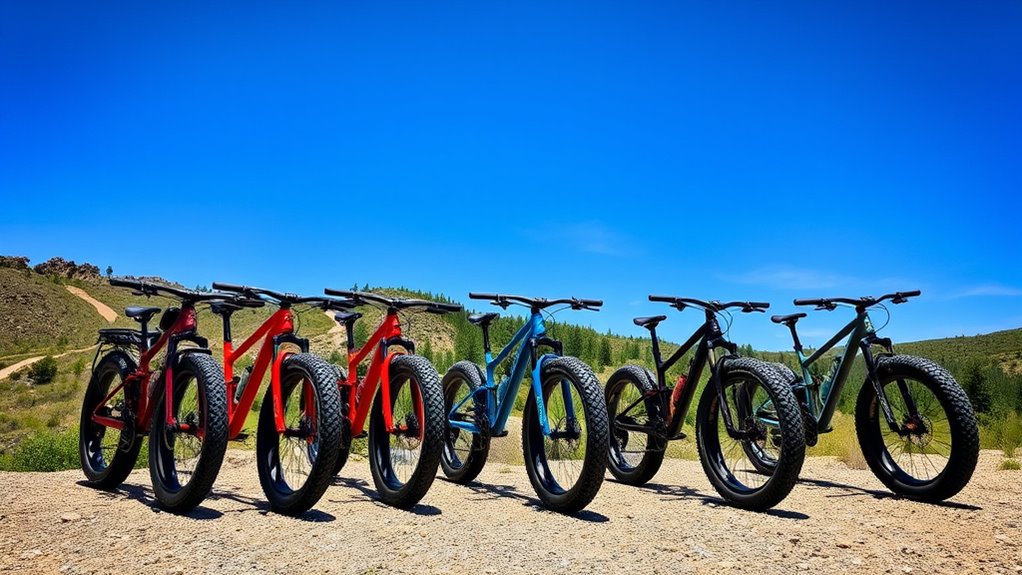

Choosing a fat tire bike for mixed terrain means balancing traction, gearing, weight, and fit—not just looking for the widest tires. I rank the Mongoose Argus Trail first for its range of sizes and frame options, while the Outroad 26-inch stands out for its specified four-inch tires and front suspension. The Mongoose Dolomite is a more straightforward adult trail pick, and the Incbruce offers 21 speeds for riders who want more gearing choices.

Get sports gear delivered free with Prime
- Fast, free delivery on millions of items
- Prime Video, Amazon Music and more included
- Member-only deals all year
These are pedal-powered, rigid or front-suspension mountain bikes, not full-suspension machines. Fat tires help provide a broad contact patch on loose ground, but they do not erase the differences in gearing, frame weight, assembly, and rider fit. I compare those tradeoffs below so you can match a bike to your routes rather than treating “all terrain” as a guarantee of equal performance on snow, sand, pavement, and rough trails.
Complete the kit


Key Takeaways
- Argus Trail is the most adaptable choice: Its listed 20-, 24-, and 26-inch versions and aluminum or steel frame options make it the easiest model here to match to different riders.
- Outroad has the clearest tire-width specification: Its four-inch tires and front suspension suit riders who prioritize loose-surface grip and added comfort at the front.
- Dolomite keeps the drivetrain simple: Its seven speeds reduce gearing complexity, but its listed 52-pound weight is a drawback for lifting and transport.
- Incbruce offers the widest gear range: Its 21-speed setup may be useful across changing slopes, though the high-carbon steel frame is likely less convenient to carry than a lighter build.
- None is a full-suspension bike: Choose based on fit, tire traction, and the amount of rough terrain you expect, not a promise that fat tires alone smooth every ride.
| Mongoose Argus Trail Fat Tire Mountain Bike |  | Best Overall for Size and Frame Choices | Bike type: Mountain bike | Wheel sizes: 20, 24, or 26 inches | Speeds: 7 or 16, depending on version | VIEW ON AMAZON | See Our Full Breakdown |
| Outroad Mountain Bike Fat Tire with 4-Inch Tire |  | Best for Loose Ground and Front-End Comfort | Bike type: Mountain bike | Wheel size: 26 inches | Tire width: 4 inches | VIEW ON AMAZON | See Our Full Breakdown |
| Mongoose Dolomite Fat Tire Men’s Mountain Bike |  | Best for a Simple Adult Trail Setup | Bike type: Mountain bike | Wheel size: 26 inches | Frame size: 17-inch, medium | VIEW ON AMAZON | See Our Full Breakdown |
| Incbruce 26 Inch Fat Tire Mountain Bike |  | Best for Riders Wanting 21 Speeds | Bike type: Mountain bike | Wheel size: 26 inches | Listed size: Small | VIEW ON AMAZON | See Our Full Breakdown |
| fat tire bikes for all terrain | Bike type | Speeds | Suspension | Brakes |
|---|---|---|---|---|
| Mongoose Argus Trail Fat Tire | Mountain bike | 7 or 16, depending on version | Rigid | Mechanical disc |
| Outroad Mountain Bike Fat Tire | Mountain bike | 21 | Front | Double disc |
| Mongoose Dolomite Fat Tire Men | Mountain bike | 7 | Rigid | Disc |
| Incbruce 26 Inch Fat Tire Moun | Mountain bike | 21 | Front | Dual disc |
More Details on Our Top Picks
Mongoose Argus Trail Fat Tire Mountain Bike
I rank the Mongoose Argus Trail first because its range of wheel sizes and frame materials makes it the most adaptable pick in this group. The listing includes 20-, 24-, and 26-inch versions, along with aluminum or steel frames and seven- or 16-speed configurations. That gives buyers more ways to match the bike to rider size and preferred gearing than the single-size options here.
Its intended use includes snow and trails, and the wide-tire format paired with mechanical disc brakes suits rides where surfaces and conditions change. Compared with the Dolomite, the Argus offers more fit and gearing variants; compared with the Outroad, it gives buyers a frame-material choice, though the Outroad specifies four-inch tires and front suspension. The Argus is rigid, so it is not the pick for riders seeking suspension to soften rough, repeated impacts.
There is a key qualification: the listed maximum weight recommendation is 175 pounds, and buyers should confirm that the exact size and configuration they select matches their needs. Assembly may also call for mechanical confidence. I see this as the strongest all-around shortlist option when fit flexibility matters more than front suspension or a clearly stated four-inch tire width.
Pros:- Multiple wheel sizes listed for different rider-fit needs
- Aluminum or steel frame options
- Seven- or 16-speed configurations
- Mechanical disc brakes and stated snow and trail use
Cons:- Rigid frame provides no suspension for rough impacts
- Assembly may require mechanical skill
- Listed maximum weight recommendation is 175 pounds
Best for: Riders who want a fat tire bike with multiple wheel-size and frame-material configurations, especially households comparing options for different rider heights.
Not ideal for: Riders above the listed 175-pound maximum recommendation, or anyone who needs front or rear suspension for sustained rough terrain.
- Bike type:Mountain bike
- Wheel sizes:20, 24, or 26 inches
- Speeds:7 or 16, depending on version
- Frame:Aluminum or steel, depending on version
- Suspension:Rigid
- Brakes:Mechanical disc
- Intended terrain:Snow and unpaved trails
- Maximum weight recommendation:175 pounds
Our verdict“I recommend the Argus Trail as the most adaptable pick, provided its listed rider limit and the chosen configuration suit you.”
Outroad Mountain Bike Fat Tire with 4-Inch Tire
The Outroad is the clearest choice for riders who want a defined tire width on the spec sheet: it lists four-inch tires on 26-inch wheels. That explicit measurement makes it easier to compare with standard mountain bikes than the Incbruce listing, which describes wide tires but does not give their width. The Outroad also adds front suspension, a useful distinction from both rigid Mongoose options.
Its 21-speed drivetrain and double disc brakes offer a familiar setup for varied trails and everyday unpaved riding. Compared with the Incbruce, its listed tire width and suspension details are more specific; compared with the Argus Trail, it has fewer configuration choices and no listed wheel-size range. The steel frame may appeal to riders who prioritize a sturdy build, but no bike weight is supplied, so I would not assume it is easy to lift or transport.
The listing mentions assembly taking 20 to 40 minutes for some users, but the supplied information does not spell out included accessories or component details. Buyers who need a precise fit should verify sizing before ordering. I would choose this model over the rigid Dolomite when front-end comfort and specified tire width matter more than the Dolomite’s stated adult fit range and 52-pound weight disclosure.
Pros:- Four-inch tire width is specified
- Front suspension for added front-end comfort
- 21-speed drivetrain for a broad gear selection
- Double disc brakes
Cons:- Weight and portability details are not provided
- Assembly may take mechanical effort
- Frame and wheel-size choices are not detailed
Best for: Riders seeking a 26-inch fat tire bike with specified four-inch tires, front suspension, and a 21-speed drivetrain for mixed unpaved routes.
Not ideal for: Buyers who need a known bike weight, multiple documented sizes, or detailed information on components and included accessories.
- Bike type:Mountain bike
- Wheel size:26 inches
- Tire width:4 inches
- Speeds:21
- Frame material:High-carbon steel
- Suspension:Front
- Brakes:Double disc
- Intended riding:Off-road trails, urban riding, and unpaved terrain
Our verdict“I would choose the Outroad for its specified four-inch tires and front suspension, while checking fit and weight details before purchase.”
Mongoose Dolomite Fat Tire Men’s Mountain Bike
The Dolomite earns its place for riders who want a straightforward adult fat bike with a clearly stated fit range and fewer gears to manage. It is listed for riders between 5 feet 4 inches and 6 feet tall, with a 17-inch frame, 26-inch wheels, and a seven-speed drivetrain. That smaller gear count is simpler than the 21-speed Incbruce or Outroad, though it gives riders fewer gear choices when gradients change.
Its all-terrain knobby tires, disc brakes, and steel frame point toward trail use, but this is a rigid bike with no suspension. Compared with the Outroad, it gives up front suspension and a specified four-inch tire width; compared with the Argus, it offers less configuration flexibility. On the other hand, its listing states a 52-pound weight and says it arrives 80 percent assembled, giving buyers more practical information than the Outroad supplies.
That weight is a real drawback if you need to carry the bike up stairs, load it into a vehicle, or ride where frequent lifting is required. Its adult fit range also makes it a poor match for smaller riders. I see it as a sensible option for a rider who wants a basic trail-oriented setup and accepts a heavy, rigid frame rather than paying attention to a broad range of sizes or suspension features.
Pros:- Listed fit range helps adult buyers check suitability
- Seven-speed setup keeps gearing straightforward
- Knobby tires and disc brakes are suited to trail use
- Arrives 80 percent assembled, according to the listing
Cons:- Listed weight is 52 pounds
- Rigid design offers no suspension
- Seven speeds provide fewer gear choices than the 21-speed models
Best for: Adult riders within the listed 5-foot-4-inch to 6-foot height range who prefer a simple seven-speed trail bike and can manage its weight.
Not ideal for: Shorter riders, anyone who regularly needs to lift or transport a bike, or riders seeking suspension for rough trails.
- Bike type:Mountain bike
- Wheel size:26 inches
- Frame size:17-inch, medium
- Recommended rider height:5 feet 4 inches to 6 feet
- Speeds:7
- Frame material:Alloy steel
- Suspension:Rigid
- Brakes:Disc
- Item weight:52 pounds
Our verdict“I recommend the Dolomite to in-range adult riders who value a straightforward trail setup more than low weight or suspension.”
Incbruce 26 Inch Fat Tire Mountain Bike
The Incbruce stands out for its 21-speed drivetrain and front suspension, making it a fit for riders who want more gear choices than the Dolomite’s seven-speed setup. Its high-carbon steel frame, 26-inch wheels, and dual disc brakes give it a familiar mountain-bike layout for mixed surfaces. The listing names snow, sand, and muddy trails among its intended terrain, though it does not provide a tire-width measurement.
Compared with the Outroad, the Incbruce offers a similar speed count and front suspension but gives less detail about tire dimensions. Compared with the Argus Trail, it has fewer stated fit and frame options. The listed size is small, so I would put frame fit ahead of the broad terrain claims and check that this size suits the intended rider before choosing it.
Its steel construction may be durable, but the product information flags weight as a drawback and does not state a figure. Assembly may also require mechanical skill despite the included tools. I would shortlist it for riders who value 21 speeds and front suspension, but not for anyone who needs a documented bike weight, a confirmed tire width, or several size choices in the listing.
Pros:- 21-speed gearing offers many gear choices
- Front suspension is specified
- Dual disc brakes
- Listing names snow, sand, and muddy trails as intended terrain
Cons:- Tire width and bike weight are not specified
- High-carbon steel construction may make transport harder
- Assembly may need mechanical skill
Best for: Riders who want a small-size, 26-inch fat tire mountain bike with 21 speeds, front suspension, and dual disc brakes.
Not ideal for: Buyers who need a specified tire width, disclosed weight, easier portability, or multiple listed frame sizes.
- Bike type:Mountain bike
- Wheel size:26 inches
- Listed size:Small
- Speeds:21
- Frame material:High-carbon steel
- Suspension:Front
- Brakes:Dual disc
- Drivetrain:Chain drive
Our verdict“I would pick the Incbruce for its 21 speeds and front suspension only after confirming the small frame fits the rider.”

How We Picked
I ranked these bikes by how clearly their listed features support riding across different surfaces, including dirt, gravel, snow, sand, and unpaved paths. I gave weight to tire information, frame and wheel-size choices, braking, gearing, and any suspension details because these shape a bike’s usefulness beyond smooth pavement.
I also looked for practical limitations that affect ownership. Frame material can influence how manageable a bike is to move, though the supplied specifications do not give a weight for every model. More speeds can offer a broader selection of gears, but they do not automatically mean better components or easier maintenance. Fit matters just as much: the Argus Trail comes in several wheel sizes, while the Dolomite lists a 17-inch frame and a recommended rider-height range.
My order reflects the strength of the available information and the breadth of likely use, not a claim that one bike has been tested against the others. These listings leave some important details unclear, including exact tire width for the Incbruce, Outroad weight, and component-level specifications. I call out those gaps instead of treating unlisted features as advantages.
| fat tire bikes for all terrain | Suspension | Brakes | Frame material |
|---|---|---|---|
| Mongoose Argus Trail Fat Tire | Rigid | Mechanical disc | — |
| Outroad Mountain Bike Fat Tire | Front | Double disc | High-carbon steel |
| Mongoose Dolomite Fat Tire Men | Rigid | Disc | Alloy steel |
| Incbruce 26 Inch Fat Tire Moun | Front | Dual disc | High-carbon steel |
Factors to Consider When Choosing Fat Tire Bikes For All Terrains
Fat tires can help a bike find traction on loose or soft ground, but the right choice depends on more than tire width. I would compare fit, gearing, frame, and suspension against the places you actually ride. The details below help separate these four models without assuming that a fat tire bike performs the same on every surface.
Match tire and terrain
For sand, snow, and loose gravel, a broad tire can spread contact across the surface and help the bike feel more planted. The Outroad is the only model here with a stated four-inch tire width, which gives buyers a clear point of comparison. The Incbruce and Argus are described as fat tire bikes, while the Dolomite lists all-terrain knobby tires, but their exact width is not supplied. A wider tire does not guarantee easy riding: pressure, tread, rider weight, and terrain conditions also affect grip and rolling feel. If tire dimensions are a deciding factor, confirm the exact version before purchase.
Choose gearing for your routes
The Incbruce and Outroad each list 21 speeds, while the Dolomite has seven and the Argus comes in seven- or 16-speed versions. More speeds can give riders more gear choices for changing grades, but the number alone does not tell you how well components shift or how wide the gear range is. A simpler seven-speed setup may suit relatively steady routes and riders who prefer fewer controls. For varied climbs, compare the available gearing on the exact model and consider whether you expect to make frequent gear changes.
Think about weight and frame material
Steel frames are listed on the Incbruce, Outroad, and Dolomite; the Argus offers aluminum or steel depending on version. Frame material is one part of a bike’s overall weight, not a substitute for a published weight figure. The Dolomite is listed at 52 pounds, while the other product details do not provide comparable weights. If you must carry a bike upstairs, load it into a vehicle, or store it in a tight space, get the weight for the exact configuration before buying. The Argus’s aluminum option may be worth comparing, but the listing does not state how much lighter it is.
Suspension changes comfort, not the whole bike
The Incbruce and Outroad list front suspension; the Argus Trail and Dolomite are rigid. A front fork may take the edge off some bumps and help on uneven paths, while a rigid bike has fewer suspension parts and keeps the setup simpler. None of these listings describes a full-suspension design, so riders tackling repeated rough impacts should avoid expecting the plushness of a dedicated full-suspension mountain bike. Fat tires can add some cushion, but they are not a replacement for suspension when the route is especially rocky or deeply rutted.
Check fit and limits before choosing
Fit affects control and comfort on every terrain. The Argus offers multiple wheel sizes, and the Dolomite lists a 17-inch frame for riders from 5 feet 4 inches to 6 feet tall. The Incbruce is listed as small, while the Outroad’s supplied information does not give a comparable fit range. The Argus listing also gives a maximum weight recommendation of 175 pounds. Confirm the size, rider limits, and exact configuration on the product page before ordering; a bike with suitable tires is not a good choice if its fit or stated limits do not work for the rider.
Budget time for assembly and adjustment
These bikes may arrive partly assembled, but initial setup can still involve attaching parts and checking brakes, gears, and wheel alignment. The Dolomite listing says it arrives 80 percent assembled; the Outroad notes that assembly may take 20 to 40 minutes for some users. The Incbruce description mentions included tools, while the Argus listing warns that assembly may need mechanical skill. If you are not comfortable adjusting a drivetrain or checking brake function, plan for help from a qualified bike mechanic before riding on trails.
Frequently Asked Questions
Are fat tire bikes suitable for every kind of terrain?
They can handle a range of surfaces, especially loose or soft ground, but no bike is equally suited to every route. Tire width and tread, gearing, fit, braking, and suspension all shape how a bike feels. These four models are intended for mixed riding, but the rigid Argus and Dolomite may feel less forgiving on rough, repeated impacts than the front-suspension Outroad or Incbruce.
Which bike has the widest tires listed?
The Outroad is the only model in this comparison with a stated tire width: four inches. The other listings use fat-tire or all-terrain descriptions without giving an exact width. If width is central to your choice for sand or snow, check the precise tire specification for the configuration you plan to buy rather than inferring it from the product name.
Which model is easiest to match to different rider sizes?
The Mongoose Argus Trail offers 20-, 24-, and 26-inch wheel-size versions, so it has the broadest listed size range. The Dolomite provides a specific adult height range, while the Incbruce is listed in small and the supplied Outroad details do not describe a comparable range. Wheel size alone does not confirm fit, so check the manufacturer’s sizing information for the exact version.
Is front suspension necessary on a fat tire bike?
Not for every rider or route. Front suspension can help manage bumps on uneven trails, while a rigid bike may suit smoother dirt or gravel and offers a simpler setup. The Outroad and Incbruce list front suspension; the Argus and Dolomite are rigid. Fat tires can provide some cushioning, but they do not replace suspension on consistently rough terrain.
Which bike should I choose if I need to carry it often?
Compare the exact bike weights before deciding. The Dolomite is listed at 52 pounds, and the other listings do not provide a comparable weight, so I cannot rank all four confidently by portability. The Argus has an aluminum-frame option, but its listing does not state the weight difference. If carrying or vehicle loading is a regular task, ask for the configured bike’s weight and consider whether a local shop can help with setup.
Conclusion
For the broadest choice of sizes and frame materials, I would start with the Mongoose Argus Trail, while checking its 175-pound listed maximum recommendation and the exact configuration. If a specified four-inch tire and front suspension are your priorities, the Outroad is the most direct match. Riders who want a simple adult trail bike and are comfortable with a heavy, rigid frame can look at the Dolomite; those seeking 21 speeds and front suspension should compare the Incbruce after confirming its small frame fits. Across all four, I would verify fit, weight, and assembly needs before making a final choice.