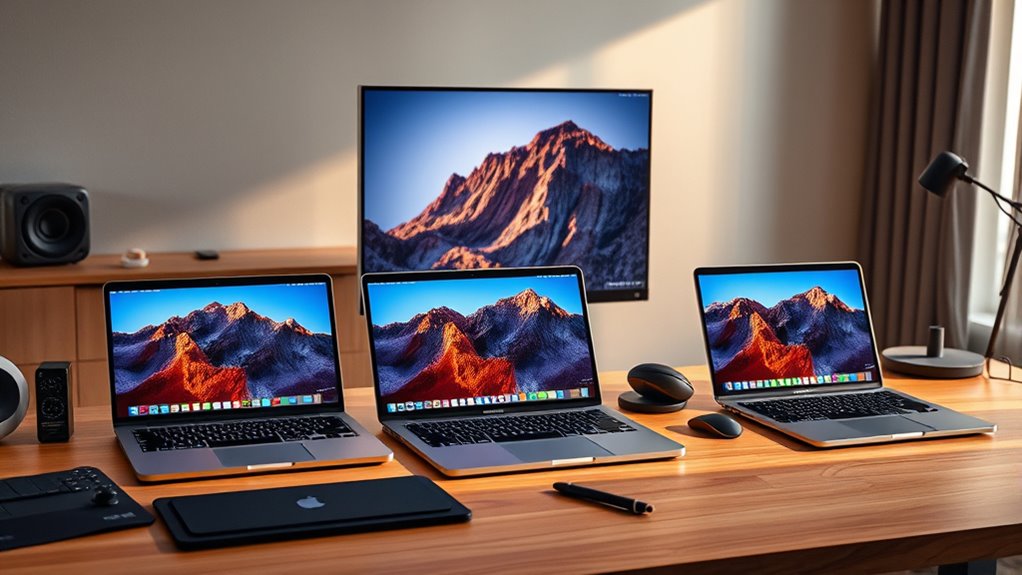

Choosing the right MacBook Pro for demanding 3D modeling and VFX work in 2026 requires balancing raw power, display quality, and portability. The Apple 2026 MacBook Pro with M5 Pro chip and 16.2-inch Liquid Retina XDR stands out for its massive display and extensive connectivity, making it ideal for detailed workflows. Meanwhile, the 14.2-inch version offers a more portable yet powerful option, with slightly lower specs but excellent performance and battery life. Both models deliver advanced AI capabilities and high-end displays, but their tradeoffs include size, weight, and price considerations.

Get sports gear delivered free with Prime
- Fast, free delivery on millions of items
- Prime Video, Amazon Music and more included
- Member-only deals all year
Complete the kit



Key Takeaways
- The 16.2-inch MacBook Pro excels in display size and connectivity, suitable for extensive workspace setups.
- The 14.2-inch MacBook Pro offers a more portable design without sacrificing significant performance for 3D and VFX tasks.
- Both options feature the latest M5 Pro chip, providing substantial processing power and AI features.
- Price and size are key tradeoffs, with larger models demanding a higher budget and more space.
- Compatibility with peripherals and ecosystems influences the choice, especially for professionals working across multiple devices.
| Apple 2026 MacBook Pro Laptop with M5 Pro Chip, 16.2-inch Liquid Retina XDR Display, 48GB RAM, 1TB SSD, Space Black |  | Best Overall for Power and Expandability | Processor: Apple M5 Pro chip with 18-core CPU and 20-core GPU | Display: 16.2-inch Liquid Retina XDR | Memory: 48GB Unified Memory | VIEW ON AMAZON | See Our Full Breakdown |
| Apple 2026 MacBook Pro Laptop with M5 Pro Chip, 14.2-inch Liquid Retina XDR Display, 24GB RAM, 1TB SSD, Wi-Fi 7, Silver |  | Best for Portability and Performance Balance | Processor: Apple M5 Pro chip with 15-core CPU and 16-core GPU | Display: 14.2-inch Liquid Retina XDR | Memory: 24GB Unified Memory | VIEW ON AMAZON | See Our Full Breakdown |
| macbook pro for 3d modeling and vfx | Processor | Display | Memory | Storage |
|---|---|---|---|---|
| Apple 2026 MacBook Pro Laptop | Apple M5 Pro chip with 18-core CPU and 20-core GPU | 16.2-inch Liquid Retina XDR | 48GB Unified Memory | 1TB SSD |
| Apple 2026 MacBook Pro Laptop | Apple M5 Pro chip with 15-core CPU and 16-core GPU | 14.2-inch Liquid Retina XDR | 24GB Unified Memory | 1TB SSD |
More Details on Our Top Picks
Apple 2026 MacBook Pro Laptop with M5 Pro Chip, 16.2-inch Liquid Retina XDR Display, 48GB RAM, 1TB SSD, Space Black
This model stands out for its massive 16.2-inch Liquid Retina XDR display, offering exceptional color accuracy and contrast, essential for detailed 3D and VFX work. The M5 Pro chip with 18-core CPU and 20-core GPU delivers top-tier performance, especially when handling complex renders or AI-driven tasks. Its 48GB of unified memory ensures smooth multitasking, and the extensive connectivity options—including Thunderbolt 5, HDMI, SDXC, and MagSafe—provide flexibility for multiple peripherals and external displays. However, its size and weight make it less portable, and its premium price could be prohibitive for some users. Still, this build is ideal for dedicated professionals needing maximum power and connectivity in one package.
Pros:- Exceptional display quality with Liquid Retina XDR
- Powerful M5 Pro chip with high-core count
- Large 48GB RAM supports heavy multitasking
- Multiple ports including HDMI and SDXC for peripherals
Cons:- Heavy and less portable due to size
- High cost may be a barrier
- Battery life details are limited
Best for: Power users who need a large, high-resolution display and maximum expandability for intensive 3D and VFX workflows.
Not ideal for: Those prioritizing portability, or budget-conscious users who cannot justify the high price.
- Processor:Apple M5 Pro chip with 18-core CPU and 20-core GPU
- Display:16.2-inch Liquid Retina XDR
- Memory:48GB Unified Memory
- Storage:1TB SSD
- Battery Life:All-day
- Connectivity:Wi-Fi 7, Bluetooth 6, Thunderbolt 5, HDMI, SDXC, MagSafe 3
Our verdict“This MacBook Pro is best suited for professionals who need maximum performance and connectivity in a large-screen setup.”
Apple 2026 MacBook Pro Laptop with M5 Pro Chip, 14.2-inch Liquid Retina XDR Display, 24GB RAM, 1TB SSD, Wi-Fi 7, Silver
This version offers a 14.2-inch Liquid Retina XDR display with high brightness and contrast, making it excellent for on-the-go editing and detailed work. Its M5 Pro chip with 15-core CPU and 16-core GPU provides robust performance, capable of handling demanding 3D modeling and VFX tasks without lag. The inclusion of 24GB RAM and fast SSD storage supports multitasking and large project files. Its compact size, lightweight design, and all-day battery life make it ideal for professionals who need power in a portable form. The main tradeoff involves slightly lower display size and fewer ports compared to the larger model, which could limit expandability for some workflows. It’s perfect for mobile professionals or those who value a smaller footprint without sacrificing performance.
Pros:- High-quality Liquid Retina XDR display with high brightness
- Powerful M5 Pro chip with capable GPU
- Compact and lightweight for mobility
- Excellent battery life for portable use
Cons:- Smaller screen size limits workspace
- Limited ports compared to larger model
- Premium price for a mid-size device
Best for: Creative professionals who need a balance of power and portability for mobile 3D and VFX work.
Not ideal for: Users who require maximum screen real estate and extensive connectivity options or those on a tight budget.
- Processor:Apple M5 Pro chip with 15-core CPU and 16-core GPU
- Display:14.2-inch Liquid Retina XDR
- Memory:24GB Unified Memory
- Storage:1TB SSD
- Battery Life:All-day
- Connectivity:Wi-Fi 7, Bluetooth 6, Three Thunderbolt 5, MagSafe 3, HDMI
Our verdict“This MacBook Pro strikes a strong balance for professionals who need performance on the move without sacrificing display quality or battery life.”

How We Picked
Our selection process focused on high-performance components suitable for 3D modeling and VFX, emphasizing the latest Apple silicon chips, high-refresh-rate and color-accurate displays, and ample memory and storage. We compared connectivity options critical for professional workflows, such as multiple Thunderbolt ports and external display support. Portability versus screen real estate was a key factor, along with battery life and overall build quality. We prioritized models that balance raw power with practical usability for creative professionals.
| macbook pro for 3d modeling and vfx | Processor | Connectivity |
|---|---|---|
| Apple 2026 MacBook Pro Laptop | Apple M5 Pro chip with 18-core CPU and 20-core GPU | Wi-Fi 7, Bluetooth 6, Thunderbolt 5, HDMI, SDXC, MagSafe 3 |
| Apple 2026 MacBook Pro Laptop | Apple M5 Pro chip with 15-core CPU and 16-core GPU | Wi-Fi 7, Bluetooth 6, Three Thunderbolt 5, MagSafe 3, HDMI |
Factors to Consider When Choosing Macbook Pro For 3d Modeling And Vfx
When selecting a MacBook Pro for 3D modeling and VFX in 2026, the key is to focus on processing power, display quality, and portability. The right choice depends on your specific workflow needs, workspace constraints, and budget. Here, I break down the main considerations to guide your decision.
Power and Performance
Look for the latest M5 Pro chip with high core counts and a capable GPU. This ensures your software runs smoothly, especially during rendering and real-time previews. More RAM (like 48GB) supports heavy multitasking, large scene files, and complex simulations, making it ideal for intensive 3D and VFX work.
Display Quality and Size
High-resolution, color-accurate displays like Liquid Retina XDR are essential for precise work in 3D modeling and VFX. A larger display (16.2-inch) provides more workspace, but adds weight and reduces portability. The 14.2-inch version balances clarity with mobility, suitable for on-location work or frequent travel.
Portability vs. Expandability
Massive models with extensive ports support multiple peripherals and external displays, but tend to be heavier and less portable. If mobility is a priority, the smaller model offers a lighter footprint but fewer ports. Consider your typical workflow and whether external devices and a larger screen are necessary for your projects.
Battery Life and Price
Both models offer all-day battery life, but larger screens and more powerful configurations can consume more power. Budget considerations also play a role; the high-end models come with a premium price tag, which might be a limiting factor for some buyers. Balance your workflow needs with these factors for a satisfying purchase.
Frequently Asked Questions
How important is display size for 3D modeling and VFX?
Display size directly impacts your workspace, making larger screens like the 16.2-inch model preferable for detailed, multi-window workflows. They allow for better visualization and easier multitasking. However, smaller screens like the 14.2-inch still offer excellent display quality and are more portable, which is beneficial if you work on the move.
Should I prioritize CPU or GPU in a MacBook Pro for 3D tasks?
Both CPU and GPU are critical for 3D modeling and VFX. The CPU handles general processing and scene management, while the GPU accelerates rendering and real-time previews. The M5 Pro chip’s high-core CPU and GPU cores make either model capable, but if your workflow involves complex rendering, a higher GPU core count can offer noticeable improvements.
Is RAM more important than storage for 3D and VFX work?
For demanding creative tasks, RAM impacts how well your system manages large projects and multitasking. 48GB of RAM, as found in the larger model, is beneficial for complex scenes. Storage, while important for saving large files, can be expanded externally if needed, so investing in RAM often yields more immediate performance benefits.
Can these MacBook Pros run all 3D and VFX software?
Both models are equipped with Apple’s latest M5 Pro chips, which provide robust performance for most professional software. However, some niche applications optimized for Windows or requiring specific hardware features might face compatibility issues. For most mainstream 3D and VFX tools like Blender, Cinema 4D, or DaVinci Resolve, these MacBooks are highly capable.
How does portability influence my choice?
If you frequently work on location or need to travel, the 14.2-inch model’s lighter weight and smaller footprint make it a better fit. Conversely, if your studio setup benefits from a larger display and multiple peripherals, the 16.2-inch version provides a more immersive working environment, despite its increased size and weight.
Conclusion
For professionals who prioritize maximum performance and a large workspace, the 16.2-inch MacBook Pro is the ideal choice, especially if you have a dedicated workspace and need extensive connectivity. Those who need a balance of power and portability should consider the 14.2-inch model, particularly if you work remotely or travel frequently. Budget-conscious buyers or those with less demanding workflows might find the smaller, less expensive options more suitable. Ultimately, your decision hinges on your specific work environment and portability needs, but both options deliver the advanced power required for 3D modeling and VFX in 2026.