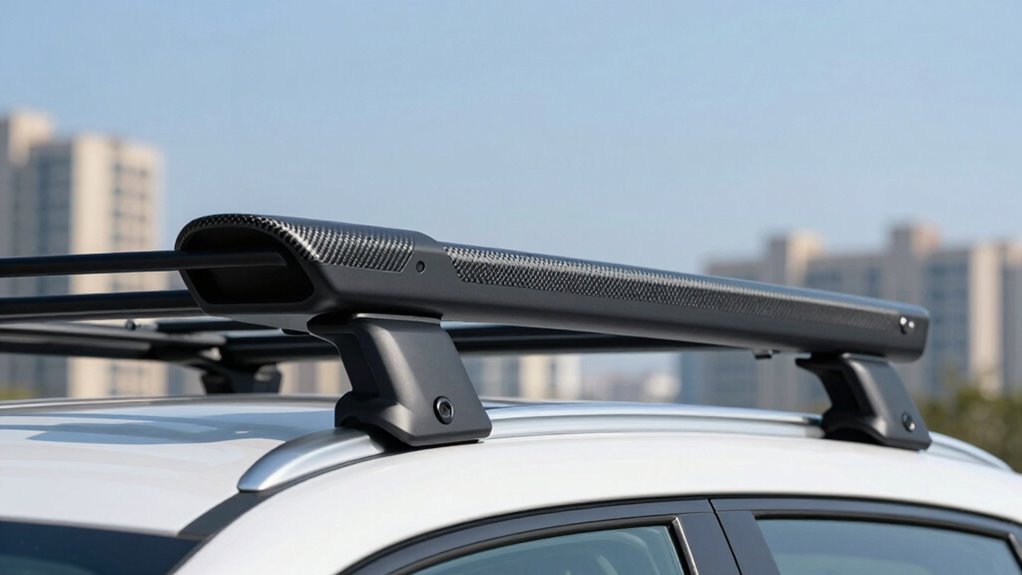

For most riders seeking roof racks for carbon bikes, the Thule UpRide is my best overall pick because its wheel-gripping design avoids clamping the frame. The Yakima ForkLift is a strong alternative for bikes with a compatible removable front wheel, while the Thule FastRide offers a more refined fork-mount option. The main tradeoff is between frame-free wheel or fork attachment, which can ease concerns about carbon tubes, and the speed and simplicity of frame-clamping racks. Fit with your crossbars, bike weight, axle type, and ability to lift a bike overhead matter just as much as the rack itself. Continue reading for the full breakdown of all 14 options and guidance on matching one to your bike and vehicle.

Get sports gear delivered free with Prime
- Fast, free delivery on millions of items
- Prime Video, Amazon Music and more included
- Member-only deals all year
Complete the kit


Key Takeaways
- Frame contact is the key dividing line. The Thule UpRide and Yakima FrontLoader hold the bike at the wheels, while many upright racks use a frame arm whose compatibility needs careful checking with carbon tubes.
- Fork mounts suit riders comfortable removing a wheel. The Yakima ForkLift, Thule FastRide, Thule TopRide, and Swagman Standard Fork Mount use fork attachment, but axle and wheel compatibility vary.
- Premium features do not remove fit checks. Thule and Yakima options may offer more refined interfaces, yet buyers still need to confirm crossbar, axle, tire, and bike-weight compatibility.
- Capacity claims need context. The RYFA‘s stated 75-pound payload and the Kosta‘s 44-pound capacity are product-specific figures, not permission to exceed the vehicle roof or crossbar limits.
- Simple designs can be sensible, but may narrow compatibility. The Swagman Standard Fork Mount is explicitly for 9mm quick-release bikes, while some less-established upright options require extra scrutiny of instructions, fit, and frame contact.
| Swagman Upright Roof Mount Bike Rack |  | Best Lightweight Pick | Bike capacity: 1 bike | Bike loading: Wheels remain on | Maximum bike weight: 35 lb | VIEW ON AMAZON | See Our Full Breakdown |
| Yakima Forklift Fork Mount Bike Carrier for Roof Racks, 1 Bike Capacity |  | Best Fork-Mount Option | Bike capacity: 1 bike | Mounting style: Fork mount | Maximum load: 35 lb | VIEW ON AMAZON | See Our Full Breakdown |
| Roof Bike Rack, Dual-Arm Rooftop Bike Carrier for Car and SUV |  | Best for Frame-Free Support | Bike capacity: 1 bike | Maximum load: 50 lb | Wheel size: Up to 29 in | VIEW ON AMAZON | See Our Full Breakdown |
| Kosta Upright Bike Rack – 44 lb Capacity, Vehicle Mount |  | Best for Pickup Versatility | Bike capacity: 1 bike | Maximum load: 44 lb | Mounting options: Roof crossbars or pickup tonneau cover | VIEW ON AMAZON | See Our Full Breakdown |
| TOOENJOY Rooftop Bike Rack for Car SUV, Upright Roof Mount Bicycle Carrier with 2 Arms |  | Best for Carbon-Frame Clearance | Bike capacity: 1 bike | Maximum load: 44 lb | Wheel size: 18–29 in | VIEW ON AMAZON | See Our Full Breakdown |
| Thule UpRide Roof Bike Rack |  | Best Overall for Frame-Free Carrying | Material: Aluminum | Load capacity: 44 lb | Rack weight: 18.5 lb | VIEW ON AMAZON | See Our Full Breakdown |
| Thule FastRide Roof-Mounted Bike Rack |  | Best for Secure Fork-Mount Carrying | Material: Aluminum | Capacity: 1 bike | Rack weight: 7.3 lb | VIEW ON AMAZON | See Our Full Breakdown |
| TOOENJOY Rooftop Bike Rack for Car/SUV – Upright Roof Mount with 2 Arms (Movable Crossbar) – Carries 2 Bikes |  | Best for Carrying Two Carbon Bikes | Bike capacity: 2 bikes | Load capacity: 88 lb total; 44 lb per bike | Rack weight: 40 lb | VIEW ON AMAZON | See Our Full Breakdown |
| Swagman Standard Fork Mount Roof Bike Rack – Rooftop Bike Carrier for 9mm Quick Release Bikes |  | Best Simple Rack for 9 mm Quick-Release Bikes | Material: Aluminum | Mounting type: Fork mount | Axle compatibility: 9 mm quick release | VIEW ON AMAZON | See Our Full Breakdown |
| Thule TopRide Roof Mounted Bike Rack |  | Best for Guided Loading and Locking | Material: Aluminum | Bike capacity: 1 bike | Rack weight: 7.7 lb | VIEW ON AMAZON | See Our Full Breakdown |
| RYFA Rapid Roof Rack for Bike – Fits 16″ to 29″ Wheels, 75 lb Payload |  | Best for Higher-Capacity Bikes | Payload: 75 lb | Bike wheel size: 16–29 inches | Maximum wheel width: 3 inches | VIEW ON AMAZON | See Our Full Breakdown |
| Yakima FrontLoader Rooftop Bike Rack Mount, Car & SUV Roof Carrier |  | Best for Snap-On Installation | Load capacity: 40 lb | Mounting type: Easy Snap | Vehicle compatibility: Car and SUV | VIEW ON AMAZON | See Our Full Breakdown |
| Thule ProRide XT Roof Bike Rack |  | Best for Frame-Clamp Adjustment | Load capacity: 44 lb | Product weight: 11 lb | Material: Aluminum | VIEW ON AMAZON | See Our Full Breakdown |
| Rhino Rack Bike Roof Rack – Secure Ratcheting Arm, Triple Lock System, Ergonomic Handle, Universal Vehicle Mount (RBC050) |  | Best for Low-Profile Wheel Retention | Capacity: 45 lb | Wheel size compatibility: 20–29 inches | Maximum tire width: 2.7 inches | VIEW ON AMAZON | See Our Full Breakdown |
| roof racks for carbon bike | Rack weight | Material | Bike capacity |
|---|---|---|---|
| Swagman Upright Roof Mount Bik | 5 lb | — | 1 bike |
| Yakima Forklift Fork Mount Bik | 7 lb | Steel | 1 bike |
| Roof Bike Rack | 10.5 kg | Aluminum and steel | 1 bike |
| Kosta Upright Bike Rack | 30 lb | Carbon steel | 1 bike |
| TOOENJOY Rooftop Bike Rack for | 20 lb | Metal | 1 bike |
| Thule UpRide Roof Bike Rack | 18.5 lb | Aluminum | — |
| Thule FastRide Roof-Mounted Bi | 7.3 lb | Aluminum | — |
| TOOENJOY Rooftop Bike Rack for | 40 lb | — | 2 bikes |
| Swagman Standard Fork Mount Ro | 16 oz | Aluminum | 1 bike |
| Thule TopRide Roof Mounted Bik | 7.7 lb | Aluminum | 1 bike |
| RYFA Rapid Roof Rack for Bike | 23 lb | Aluminum | — |
| Yakima FrontLoader Rooftop Bik | 18 lb | — | — |
| Thule ProRide XT Roof Bike Rac | — | Aluminum | — |
| Rhino Rack Bike Roof Rack | — | Powder-coated aluminum | — |
More Details on Our Top Picks
Swagman Upright Roof Mount Bike Rack
At 5 pounds, the Swagman is the lightest option in this group, a practical advantage if you remove your rack between trips or want to keep rooftop weight down. Its upright design carries a bike without removing either wheel, unlike the fork-mounted Yakima Forklift, which requires front-wheel removal. The tradeoff is that the Swagman holds the bike by its downtube, so it is not my first choice for a carbon frame unless the maker explicitly approves clamping at that location and the clamp fits without pressure on vulnerable sections. The 35-pound limit and 2.5-inch tire ceiling also rule out some heavier or wider-tired bikes. Tool-free installation and broad crossbar compatibility make it straightforward, but this is a fit-dependent option rather than a universal carbon-bike solution.
Pros:- Only 5 pounds, making it relatively easy to handle and remove
- Carries a bike without removing the wheels
- Fits square, round, and oval crossbars up to 3 inches wide
- Wheel straps and a lockable downtube clamp add restraint and theft deterrence
Cons:- Downtube clamping can be unsuitable for carbon frames unless the frame maker permits it
- The 35-pound capacity and 2.5-inch tire limit exclude some bikes
- Carries only one bike
Best for: Riders with a compatible, clamp-approved carbon frame who want a light, tool-free rack and do not want to remove the front wheel.
Not ideal for: Owners of carbon frames with oversized or delicate downtubes, bikes over 35 pounds, or tires wider than 2.5 inches.
- Bike capacity:1 bike
- Bike loading:Wheels remain on
- Maximum bike weight:35 lb
- Maximum tire width:2.5 in
- Frame clamp width:1–2 in
- Crossbar compatibility:Square, round, or oval bars up to 3 in wide
- Rack weight:5 lb
- Security:Lockable downtube clamp and wheel straps
Our verdict“Choose the Swagman for low rack weight and no-wheel-removal convenience only if its downtube clamp is approved for your specific carbon frame.”
Yakima Forklift Fork Mount Bike Carrier for Roof Racks, 1 Bike Capacity
The Yakima Forklift avoids the downtube pressure that makes the Swagman Upright a less straightforward match for carbon frames: it secures the bike at the fork, with the front wheel removed. That can suit riders whose frame manufacturer advises against clamping the frame, though the fork and axle interface still need to match the bike. Its 35-pound capacity is a firm limit, and the product data does not specify axle compatibility, so I would verify fit before choosing it for a modern thru-axle bike. Compared with the wheel-gripping dual-arm carrier from TOOENJOY, the Forklift takes more work at loading time but offers a low-profile format. Tool-free mounting and broad crossbar compatibility help; its one-bike capacity and compatibility uncertainty narrow the audience.
Pros:- Fork mounting avoids clamping the carbon frame
- Low-profile design can reduce rooftop bulk
- Tool-free installation is listed
- Compatible with multiple crossbar types
Cons:- Requires front-wheel removal for each trip
- The 35-pound capacity excludes heavier bikes
- Axle compatibility details are not provided in the supplied product data
Best for: Carbon-bike owners whose frame maker discourages frame clamping and whose fork or axle is confirmed compatible with this fork-mount carrier.
Not ideal for: Riders who want to leave both wheels on, have an incompatible or unconfirmed axle setup, or carry a bike heavier than 35 pounds.
- Bike capacity:1 bike
- Mounting style:Fork mount
- Maximum load:35 lb
- Material:Steel
- Rack weight:7 lb
- Installation:Tool-free installation listed
- Vehicle compatibility:Cars, SUVs, and trucks
- Crossbar compatibility:Multiple crossbar types; exact fit depends on rack setup
Our verdict“Pick the Forklift if your carbon bike’s fork setup is confirmed compatible and you prefer fork support over a frame clamp.”
Roof Bike Rack, Dual-Arm Rooftop Bike Carrier for Car and SUV
For a carbon bike, the key distinction here is wheel-based support: the dual pivoting arms hold the wheels rather than squeezing the frame. That makes it a more frame-conscious design than the Swagman Upright, whose downtube clamp needs careful frame-specific approval. The stated 50-pound capacity also exceeds the 35-pound limits of the Swagman and Yakima Forklift, offering more headroom for heavier bikes. The compromises are substantial: at 10.5 kg, it is much heavier than those options, and the listed wheel-size ceiling is 29 inches. Tire clearance reaches 3.1 inches, but buyers must also check crossbar dimensions and bike fit. I would favor this for riders prioritizing no frame contact, not for anyone seeking a light rack to frequently remove.
Pros:- Dual arms support the bike at the wheels rather than the frame
- 50-pound capacity is higher than the Swagman and Yakima Forklift limits
- Fits tires up to 3.1 inches wide
- Foldable arms help reduce storage bulk when the rack is off the vehicle
Cons:- At 10.5 kg, it is considerably heavier than the Swagman or Forklift
- Limited to bikes with wheels up to 29 inches
- Requires crossbars no larger than 3.15 inches wide by 1.6 inches tall
Best for: Carbon-bike owners who want wheel-contact support, carry a bike up to 50 pounds, and can accept a heavy rack.
Not ideal for: Riders with bikes above 29-inch wheel size, those who frequently remove the rack, or anyone whose crossbars exceed the stated dimensions.
- Bike capacity:1 bike
- Maximum load:50 lb
- Wheel size:Up to 29 in
- Maximum tire width:3.1 in
- Maximum crossbar dimensions:3.15 in wide × 1.6 in tall
- Material:Aluminum and steel
- Rack weight:10.5 kg
- Bike contact:Dual pivoting arms support the wheels
Our verdict“Choose this rack when avoiding carbon-frame contact and gaining load capacity matter more than low rack weight.”
Kosta Upright Bike Rack – 44 lb Capacity, Vehicle Mount
The Kosta stands apart from the Swagman and Yakima options by mounting on either roof crossbars or a pickup tonneau cover, giving truck owners another installation route. Its 44-pound capacity is also more generous than their 35-pound limits. For carbon bikes, the rubber contact points and padded clamps are useful protective details, but the description does not clearly state whether the bike is held without frame contact. I would confirm the contact points and clamping method before trusting it with a carbon frame; padding alone does not make every clamp suitable. At 30 pounds, this is the heaviest rack in this batch, so taking it on and off will be less convenient than handling the 5-pound Swagman. It is a sturdy, versatile fit for a compatible vehicle, but not a lightweight choice.
Pros:- Mounts to roof crossbars or a pickup tonneau cover without drilling
- 44-pound capacity exceeds the Swagman and Yakima Forklift
- Rubber contact points and padded clamps are intended to protect surfaces
- Integrated lock secures the bike and rack
Cons:- At 30 pounds, it is much heavier than the other racks in this batch
- The product description does not establish that the bike is held without frame contact
- Carries one bike and is limited to 2.5-inch-wide tires
Best for: Pickup owners with compatible crossbars or a tonneau cover who need a 44-pound capacity and want a rack that can serve either mounting location.
Not ideal for: Riders seeking a lightweight removable rack or carbon-bike owners who have not confirmed that the clamp contact is safe for their frame.
- Bike capacity:1 bike
- Maximum load:44 lb
- Mounting options:Roof crossbars or pickup tonneau cover
- Material:Carbon steel
- Rack weight:30 lb
- Wheel size:20–29 in
- Maximum tire width:2.5 in
- Security:Integrated bike and rack lock system
Our verdict“Consider the Kosta for a pickup-based setup and a heavier bike, but verify carbon-frame contact and be ready to handle a 30-pound rack.”
TOOENJOY Rooftop Bike Rack for Car SUV, Upright Roof Mount Bicycle Carrier with 2 Arms
The TOOENJOY uses two rotatable arms to hold the bike without touching its frame, a useful distinction from the Swagman’s downtube clamp for carbon owners wary of frame pressure. It supports up to 44 pounds and fits 18–29-inch wheels, giving it more load capacity and a wider stated wheel-size range than the 35-pound Swagman and Yakima Forklift. The tradeoff is a heavier, longer assembly: at 20 pounds and 59 inches long, it is less appealing to remove and store than the compact Swagman. Its 3.1-inch maximum width and U-bolt mounting also call for careful crossbar and tire checks. The recommended travel speed under 60 mph is a meaningful limitation for highway trips, so I would choose this for frame-free support only when that restriction suits the route.
Pros:- Rotatable arms hold the bike without frame contact
- 44-pound capacity exceeds the Swagman and Yakima Forklift limits
- Fits 18–29-inch wheels and tires up to 3.1 inches wide
- Adjustable design supports a broad range of bike sizes
Cons:- Manufacturer recommends travel under 60 mph
- At 20 pounds and 59 inches long, it is bulky to handle and store
- U-bolt installation requires suitable crossbar spacing and secure fastening
Best for: Carbon-bike riders who want wheel-gripping arms, need capacity up to 44 pounds, and travel at or below the stated speed recommendation.
Not ideal for: Frequent highway drivers, riders needing more than one bike, or anyone with crossbars that cannot accept the U-bolt mounting setup.
- Bike capacity:1 bike
- Maximum load:44 lb
- Wheel size:18–29 in
- Maximum width:3.1 in
- Mounting type:U-bolt
- Material:Metal
- Rack weight:20 lb
- Dimensions:59 × 6.3 × 5.9 in
- Travel guidance:Recommended speed under 60 mph
Our verdict“Choose the TOOENJOY for frame-free support and a 44-pound load limit if its speed recommendation and bulky build fit your travel habits.”
Thule UpRide Roof Bike Rack
For a carbon bike owner who wants to avoid clamping the frame, the Thule UpRide is the strongest all-around fit in this group. Its wheel-contact design holds the bike without touching the frame, which also suits unusual frame shapes and rear-suspension bikes. Compared with the Thule FastRide, it avoids removing the front wheel, though it is heavier and takes up more roof space. The ratcheting wheel strap makes securing the bike straightforward, and the rack can move to either side of the vehicle. Its 44-pound limit and tire clearance up to 3 inches cover many road and mountain bikes; wider tires need a separately sold adapter. Locks are also extra, so this is less appealing if you want security accessories included.
Pros:- Holds the bike by its wheels, avoiding contact with a carbon frame.
- Works with 20–29-inch wheels and many non-traditional frame designs.
- Ratcheting wheel strap simplifies securing the bike.
- Can be mounted on either side of the vehicle.
Cons:- Bike and rack locks are sold separately.
- Tires wider than 3 inches require a separate adapter.
- At 18.5 pounds, it is heavier than the FastRide and TopRide.
Best for: Carbon-bike owners with varied frame shapes who want to load the bike with both wheels attached and keep clamps off the frame.
Not ideal for: Riders with tires wider than 3 inches who do not want to buy an adapter, or buyers seeking a light, compact rack with included locks.
- Material:Aluminum
- Load capacity:44 lb
- Rack weight:18.5 lb
- Wheel compatibility:20–29 in
- Tire width compatibility:Up to 3 in; up to 5 in with adapter
- Dimensions:64 × 13 × 4.3 in
- Warranty:Limited Lifetime
Our verdict“Choose the UpRide if frame-free carrying and keeping both wheels on matter more than low weight or included locks.”
Thule FastRide Roof-Mounted Bike Rack
The Thule FastRide suits carbon-bike owners who prefer a fork-mounted carrier and want a clear cue when the bike is secured. Its AcuTight torque limiter signals when the mounting force is reached, while an integrated steel cable lock adds a layer of bike security. Unlike the Thule UpRide, it requires the front wheel to come off, so loading involves a little more handling; in return, the 7.3-pound rack is much lighter. It accepts standard quick-release bikes out of the box and can handle many thru-axle setups with separate adapters. That makes it a flexible choice for riders with compatible forks, but less convenient for anyone changing bikes or axle standards often. It carries one bike, and lock cores and adapters are not included.
Pros:- AcuTight torque limiter gives a clear indication when mounting torque is reached.
- Integrated steel cable lock secures the bike to the rack.
- Lightweight aluminum construction weighs 7.3 pounds.
- Convertible design mounts on either side of the vehicle.
Cons:- Front wheel must be removed before loading.
- Adapters for many thru-axle standards and lock cores are sold separately.
- Each rack carries only one bike.
Best for: Carbon-bike owners with a compatible fork who want a lightweight rack, a torque cue, and an integrated cable lock.
Not ideal for: Riders who want to leave the front wheel on, need to carry multiple bikes on one rack, or do not want to source axle adapters.
- Material:Aluminum
- Capacity:1 bike
- Rack weight:7.3 lb
- Dimensions:46.55 × 8.51 × 5.27 in
- Axle compatibility:Quick release; most thru-axles with optional adapters
- Integrated security:Steel cable lock
- Warranty:Limited Lifetime
Our verdict“Pick the FastRide if you want a light fork-mount rack with a torque cue and can accommodate front-wheel removal.”
TOOENJOY Rooftop Bike Rack for Car/SUV – Upright Roof Mount with 2 Arms (Movable Crossbar) – Carries 2 Bikes
Among these five options, the TOOENJOY two-bike rack is the pick for carrying two bikes while keeping clamps off their frames. Its rotatable arms grip the wheels, a useful distinction from the fork-mounted Swagman Standard, which takes one bike and requires a 9 mm quick-release fork. The TOOENJOY supports up to 44 pounds per bike and fits 18–29-inch wheels, but its 40-pound rack weight makes installation and removal less convenient than the lightweight Thule FastRide. The two-bike layout also asks more of the roof: crossbars need precise 29.76-inch spacing, and the bikes must be staggered. Its recommended speed limit under 60 mph is a serious constraint for regular highway travel. I’d choose it for local trips with two compatible bikes, not as a high-speed touring solution.
Pros:- Carries two bikes with up to 44 pounds of capacity per bike.
- Wheel-gripping arms avoid contact with carbon frames.
- Fits 18–29-inch wheels.
- Single-hand ratchet system supports quick loading and removal.
Cons:- Recommended speed limit under 60 mph restricts highway use.
- Requires 29.76-inch crossbar spacing and staggered bike positioning.
- At 40 pounds, the rack is substantially heavier than the Thule FastRide.
Best for: Drivers carrying two bikes with wheel-compatible setups who can meet the crossbar spacing and speed requirements.
Not ideal for: Frequent highway travelers, solo-bike owners, or anyone unable to fit crossbars at the specified spacing and stagger the bikes.
- Bike capacity:2 bikes
- Load capacity:88 lb total; 44 lb per bike
- Rack weight:40 lb
- Wheel compatibility:18–29 in
- Mounting type:U-bolt
- Crossbar spacing:29.76 in
- Warranty:6 months
Our verdict“Choose this TOOENJOY if two-bike, frame-free carrying matters more than light handling or unrestricted highway speeds.”
Swagman Standard Fork Mount Roof Bike Rack – Rooftop Bike Carrier for 9mm Quick Release Bikes
The Swagman Standard is a straightforward choice for a carbon bike with a 9 mm quick-release fork: remove the front wheel, secure the fork, and carry one bike. That simple, narrow compatibility is also its main limitation. Compared with the Thule FastRide, it lacks an integrated cable lock and the torque-limiter cue, but it weighs just 16 ounces and fits roof bars up to 3 inches wide. Fork mounting avoids clamping the frame, a good match for carbon, provided the fork and axle are compatible. It does not offer the UpRide’s wheel-on convenience or broad wheel-size fit, and its 35-pound capacity is lower than the Thule racks’ 44-pound limit. I’d keep it on the shortlist for a basic, light setup, but skip it if your bike uses a thru-axle.
Pros:- Fork mount keeps the carrier off the carbon frame.
- Very light at 16 ounces.
- Fits most roof bars up to 3 inches wide.
- Designed for quick setup without tools.
Cons:- Limited to bikes with 9 mm quick-release skewers.
- 35-pound capacity is lower than the 44-pound Thule UpRide and FastRide limits.
- No included lock for added security.
Best for: Owners of a single carbon bike with a 9 mm quick-release fork who want a lightweight, uncomplicated roof carrier.
Not ideal for: Thru-axle bike owners, riders who want to load without removing the front wheel, or anyone needing an included lock.
- Material:Aluminum
- Mounting type:Fork mount
- Axle compatibility:9 mm quick release
- Load capacity:35 lb
- Rack weight:16 oz
- Roof bar compatibility:Bars up to 3 in wide
- Bike capacity:1 bike
Our verdict“Choose the Swagman Standard for a compatible 9 mm quick-release bike when low weight and simplicity outweigh broader fit and built-in security.”
Thule TopRide Roof Mounted Bike Rack
The Thule TopRide is aimed at riders who want guided loading and built-in bike security in a lightweight, one-bike carrier. Its audible click and visual indicators help show when the bike is seated correctly, while the integrated locking system adds reassurance without relying on the frame-contact approach some carbon owners avoid. Compared with the Thule FastRide, it has similar quick-release and thru-axle versatility and can mount on either side, but the supplied details do not specify a torque limiter or rack weight as low as the FastRide’s 7.3 pounds. Some thru-axle sizes need separate adapters, and the listed information says locks are sold separately, so buyers should confirm exactly which lock components are included. Like the Swagman Standard, it carries one bike; its broader axle compatibility makes it the more flexible option for changing bike setups.
Pros:- Compatible with quick-release and thru-axle bikes, with adapters for some axle sizes.
- Audible click and visual indicators help confirm loading.
- Integrated locking system adds bike security.
- Can be mounted on either side of the vehicle.
Cons:- Adapters are required for certain thru-axle sizes.
- Lock components are listed as sold separately, so the included security setup may require confirmation.
- Carries only one bike.
Best for: Carbon-bike owners who want loading indicators and a versatile single-bike carrier for quick-release or adapted thru-axle setups.
Not ideal for: Riders seeking a confirmed all-in-one locking package, a multi-bike carrier, or a rack with clearly specified axle adapters included.
- Material:Aluminum
- Bike capacity:1 bike
- Rack weight:7.7 lb
- Dimensions:47 × 9 × 8 in
- Axle compatibility:Quick release and thru-axle; adapters needed for some sizes
- Mounting position:Either side of vehicle
- Loading indicators:Audible click and visual indicators
Our verdict“Pick the TopRide if loading cues and broad axle compatibility matter more than carrying multiple bikes or having adapter details settled upfront.”
RYFA Rapid Roof Rack for Bike – Fits 16″ to 29″ Wheels, 75 lb Payload
For carbon-bike owners prioritizing a high stated load limit, the RYFA Rapid stands apart from the Thule ProRide XT and Yakima FrontLoader: its listed capacity is 75 lb, compared with 44 lb and 40 lb, respectively. Its ratcheting wheel arms hold the bike by its wheels rather than clamping the frame, a useful approach for avoiding direct pressure on a carbon frame. The broad 16-to-29-inch wheel range also suits more bike sizes than the Rhino Rack RBC050, which starts at 20 inches.
The tradeoff is fit: tire width is capped at 3 inches, and the 23 lb rack is heavier than the ProRide XT. It also needs compatible roof mounting points, with no hardware supplied for every vehicle. I would verify the rack’s fit and mounting instructions for both the vehicle and bike before buying.
Pros:- 75 lb listed payload exceeds the capacities provided for the other racks in this batch.
- Wheel-gripping ratcheting arms avoid clamping the carbon frame.
- Fits wheel sizes from 16 to 29 inches.
- Aluminum construction and anti-theft features are specified.
Cons:- Maximum tire width is 3 inches, ruling out some fat-bike tires.
- At 23 lb, it is heavier than the Thule ProRide XT and Yakima FrontLoader.
- Requires compatible roof mounting points, and hardware is not included for all vehicle types.
Best for: Carbon-bike owners with a heavier bike, roof mounting points already in place, and tires no wider than 3 inches.
Not ideal for: Riders with fat tires wider than 3 inches or vehicles lacking compatible roof mounting points and installation hardware.
- Payload:75 lb
- Bike wheel size:16–29 inches
- Maximum wheel width:3 inches
- Material:Aluminum
- Rack weight:23 lb
- Dimensions:57 x 7 x 8 inches
- Vehicle compatibility:Passenger vehicle and RV/travel trailer
Our verdict“Choose the RYFA if its roof fit and 3-inch tire limit work for your vehicle and bike and its higher stated capacity is your priority.”
Yakima FrontLoader Rooftop Bike Rack Mount, Car & SUV Roof Carrier
The Yakima FrontLoader is the pick here for buyers who value a snap-on mounting approach for a car or SUV. Its 40 lb load capacity is the lowest among the four products in this batch, so I would check the bike’s fully equipped weight rather than assume it suits every build. It is listed for mountain and fat-tire bikes, but the supplied specs do not give a maximum tire width; that makes a fit check especially important for wider tires.
Compared with the Thule ProRide XT, the FrontLoader is heavier at 18 lb and has a lower stated capacity, while the Thule is 11 lb and rated to 44 lb. The Yakima’s appeal is its described easy-snap mounting, not a clear payload advantage. It suits riders who want a roof carrier and can confirm both bike and vehicle fit; buyers seeking the highest capacity in this group should look at the RYFA instead.
Pros:- Easy-snap mounting is described as straightforward to install.
- Listed for mountain bikes and fat-tire bikes.
- Universal-fit designation for cars and SUVs.
- At 18 lb, it is lighter than the RYFA in this batch.
Cons:- 40 lb capacity is lower than the listed capacities of the other three products here.
- The supplied specifications do not state a maximum tire width or detailed bike-size range.
- At 18 lb, it is heavier than the 11 lb Thule ProRide XT.
Best for: Car and SUV owners seeking a snap-on roof-rack mounting style who can verify their bike weighs no more than 40 lb and fits the carrier.
Not ideal for: Owners of bikes over 40 lb or riders who need confirmed tire-width compatibility before purchase, since the provided specs do not state a maximum.
- Load capacity:40 lb
- Mounting type:Easy Snap
- Vehicle compatibility:Car and SUV
- Material type:Carbon fiber
- Rack weight:18 lb
- Dimensions:56 x 7 x 7.5 inches
- Additional feature:Universal fit
Our verdict“Pick the FrontLoader if snap-on installation suits your car or SUV and your bike is within its 40 lb limit and confirmed fit range.”
Thule ProRide XT Roof Bike Rack
The Thule ProRide XT is the most compelling choice here for riders who want a torque limiter dial to guide frame-clamp pressure. That feature offers a useful cue when mounting a carbon bike, but it does not replace checking Thule’s compatibility guidance for the particular frame: riders who prefer no frame contact may favor the RYFA or Rhino Rack, both of which secure the bike at the wheels. The ProRide XT also adds soft claw pads and diagonal wheel straps to help stabilize the bike in transit.
At 11 lb, it is the lightest of these four, and its 44 lb capacity is above the Yakima FrontLoader’s 40 lb rating but well below the RYFA’s 75 lb. It fits Thule systems and most factory racks, though it still depends on compatible crossbars. The bike and carrier lock is not included, so security upgrades require a separate purchase.
Pros:- Torque limiter dial helps guide frame-clamp tightening.
- Soft claw pads and diagonal straps add contact cushioning and wheel stability.
- At 11 lb, it is lighter than the other racks in this batch.
- Compatible with all Thule rack systems and most factory racks.
Cons:- The frame clamp may not suit carbon-bike owners who prefer wheel-only retention.
- Maximum bike weight is 44 lb, below the RYFA’s listed 75 lb capacity.
- Locks are sold separately, and installation requires a compatible roof rack system.
Best for: Carbon-bike owners who want a lightweight rack with a torque-limited frame clamp and already have compatible Thule or factory crossbars.
Not ideal for: Riders who want to avoid frame contact, have a bike over 44 lb, or expect a lock to be included.
- Load capacity:44 lb
- Product weight:11 lb
- Material:Aluminum
- Mounting system:Roof rack
- Compatibility:All Thule rack systems and most factory racks
- Locking:Lockable; locks sold separately
- Size:One size
Our verdict“Choose the ProRide XT if you want a light rack with guided clamp adjustment and your carbon frame is approved for its clamping system.”
Rhino Rack Bike Roof Rack – Secure Ratcheting Arm, Triple Lock System, Ergonomic Handle, Universal Vehicle Mount (RBC050)
The Rhino Rack RBC050 earns its place for carbon-bike riders who want wheel-based retention and a carrier that folds flat when unloaded. Its ratcheting arm avoids frame clamping, a meaningful distinction from the Thule ProRide XT, whose design includes a frame clamp. The triple-lock system is another security-focused feature, although buyers should confirm what is included and compatible with their setup before relying on it as a complete theft solution.
Its 45 lb capacity sits just above the ProRide XT’s 44 lb and Yakima FrontLoader’s 40 lb, but far below the RYFA’s 75 lb. The Rhino Rack fits 20-to-29-inch wheels and tires up to 2.7 inches wide, so it gives up the RYFA’s broader wheel range and 3-inch width limit. Crossbars must be spaced 21 to 39 inches apart, and first-time installation may take patience.
Pros:- Ratcheting arm secures the bike without a frame clamp.
- Triple-lock system is designed to secure the bike and carrier.
- Fold-down design creates a low profile when not carrying a bike.
- 45 lb capacity edges the Thule ProRide XT and Yakima FrontLoader ratings.
Cons:- 2.7-inch maximum tire width is narrower than the RYFA’s 3-inch limit.
- Requires crossbars spaced 21 to 39 inches apart.
- First-time installation may take longer than a simpler mounting setup.
Best for: Carbon-bike owners with 20-to-29-inch wheels and tires up to 2.7 inches who want wheel-based retention and a fold-flat rack.
Not ideal for: Riders with wider tires, wheels under 20 inches, or roof bars outside the 21-to-39-inch spacing range.
- Capacity:45 lb
- Wheel size compatibility:20–29 inches
- Maximum tire width:2.7 inches
- Crossbar spacing:21–39 inches
- Tray length:64 inches
- Material:Powder-coated aluminum
- Model number:RBC050
Our verdict“Choose the Rhino Rack if your bike fits its narrower wheel and tire limits and you want frame-free retention with a fold-flat profile.”

How We Picked
I ranked these racks around the needs of carbon-bike owners: how the bike is held, what parts of the bike touch the rack, compatibility requirements, loading effort, stated capacity, and the clarity of the mounting system. Wheel-gripping and fork-mount designs generally rank ahead of frame-arm styles for this audience because they can avoid clamping carbon tubes, though neither approach is automatically compatible with every bike. A frame-contact design can still make sense when its contact point and the bike maker’s guidance permit it.
Within those groups, I favored recognizable designs with clearly stated use cases and useful adjustment or locking features, while accounting for the added steps of removing a wheel or lifting a bike onto the roof. The Thule UpRide leads for its wheel-contact approach and broad appeal; the Yakima FrontLoader and premium fork-mount options fill more specific needs. Products with less detail in their names or narrower stated compatibility rank lower because buyers may need to verify more before purchase. I did not treat listed payload figures as proof of carbon-frame compatibility or a substitute for vehicle roof limits.
| roof racks for carbon bike | Material |
|---|---|
| Swagman Upright Roof Mount Bik | — |
| Yakima Forklift Fork Mount Bik | Steel |
| Roof Bike Rack | Aluminum and steel |
| Kosta Upright Bike Rack | Carbon steel |
| TOOENJOY Rooftop Bike Rack for | Metal |
| Thule UpRide Roof Bike Rack | Aluminum |
| Thule FastRide Roof-Mounted Bi | Aluminum |
| TOOENJOY Rooftop Bike Rack for | — |
| Swagman Standard Fork Mount Ro | Aluminum |
| Thule TopRide Roof Mounted Bik | Aluminum |
| RYFA Rapid Roof Rack for Bike | Aluminum |
| Yakima FrontLoader Rooftop Bik | — |
| Thule ProRide XT Roof Bike Rac | Aluminum |
| Rhino Rack Bike Roof Rack | Powder-coated aluminum |
Factors to Consider When Choosing Roof Racks For Carbon Bikes
Choosing among roof racks for carbon bikes starts with your bike’s construction and your vehicle’s roof setup, not the rack’s feature count. I would check the bike maker’s guidance, rack instructions, and vehicle limits together before choosing a mounting style. These broader checks can prevent a rack that appears suitable from becoming a poor match in practice.
Choose the Contact Point Before the Convenience Features
Decide whether you prefer the rack to grip the wheels, secure the fork, or contact the frame. A wheel-gripping design can avoid direct pressure on carbon tubes, while a fork mount avoids frame clamping but requires front-wheel removal and a compatible fork interface. Frame-arm racks can load quickly, but the shape and permitted clamping points matter for carbon bikes. Check the bicycle manufacturer’s instructions rather than assuming that a padded arm is safe for every frame. Also look for contact with cables, hoses, fenders, or unusual frame shapes. A good match is the one whose contact method your bike maker allows and that you can use correctly every trip.
Match Axles, Wheels, and Tires to the Rack
Rack descriptions may refer to quick-release forks, thru-axles, wheel sizes, or tire widths, and those details determine whether your bike can mount securely. Do not infer axle compatibility from a brand name or from the fact that a rack holds one bike. Check the exact axle standard and whether adapters are included or sold separately. For a fork mount, confirm what happens to the removed front wheel during the trip; some setups may call for a separate wheel carrier. For wheel-gripping racks, compare your tire and wheel dimensions with the rack’s stated range. If you own multiple bikes, prioritize compatibility with the least-standard bike rather than the one that is easiest to fit.
Treat Roof and Crossbar Limits as Separate Numbers
A rack’s stated capacity is only one part of the load calculation. The vehicle roof, crossbars, mounting feet, rack, and bike each have limits, and the lowest applicable limit governs the setup. Include the rack’s own weight when checking the roof’s allowable load, and check whether the vehicle limit changes while driving. A rack advertising a high payload does not raise the vehicle’s roof rating. Buyers often overlook this distinction when comparing a 75-pound rack claim with a lighter-rated roof system. Consult the vehicle and crossbar documentation before loading a carbon bike, especially when carrying more than one bicycle.
Plan for the Lift, Not Just the Drive
Roof racks ask you to lift a bike above shoulder height, which can be awkward with a heavy bike, a tall SUV, or a sloped driveway. A fork mount adds the task of removing and storing the front wheel; an upright rack may avoid that step but can require careful handling near the frame or wheels. Consider where you will stand, whether you can reach the clamps, and how you will check that the bike is secure. Loading difficulty matters more when you travel alone or carry bikes often. A setup that saves a minute on installation may be frustrating if every loading session feels unstable. If overhead lifting is a regular concern, compare roof mounting with a hitch-mounted alternative before buying.
Check Crossbar Fit and Locking Separately
“Universal” fit language does not guarantee compatibility with every crossbar shape, spacing, or vehicle roof system. Confirm the rack’s mounting hardware supports your bars and that the bar spacing falls within the permitted range. Check whether the locks secure the bike to the rack, the rack to the bars, or both; those are different theft-deterrence jobs. A lock can discourage opportunistic removal but is not a substitute for choosing a safe parking location. If you switch vehicles or crossbars, verify fit again rather than assuming the rack transfers unchanged. Keep the assembly instructions available so you can check fastener placement and tightening steps.
Pay More for the Feature You Will Use
Higher-end racks may justify their cost through easier adjustments, useful locking features, or broader compatibility, but added features cannot fix a mismatch with your frame or roof. If you carry one compatible quick-release bike occasionally, a simpler fork mount may be enough. Frequent riders may value a faster loading process or a design that avoids frame contact. Owners of several bikes should compare how each rack handles different axle and wheel standards before buying multiple units. Avoid paying extra for capacity your vehicle cannot use or features that do not solve your specific loading problem. The best value is the rack that fits your actual bike and roof with the fewest workarounds.
Frequently Asked Questions
Can I use a frame-clamping roof rack with a carbon bike?
It depends on the bike maker’s instructions, the rack’s contact design, and the location and force of the clamp. Carbon frames can have limits on clamping pressure, and a rack arm that seems padded may still press an unsuitable tube or interfere with cables. Check the bike manufacturer’s guidance before using any frame-contact rack. If that guidance rules out clamping, choose a rack that holds the wheels or attaches at the fork, after confirming compatibility. Never tighten a frame arm beyond the rack maker’s instructions.
Is a wheel-gripping rack safer for carbon than a fork mount?
Neither mounting style is automatically safer for every bike. Wheel-gripping racks can avoid direct frame contact, while fork mounts also avoid clamping the frame but require a compatible fork attachment and front-wheel removal. The bike’s fork, axle, wheel, and rack instructions all matter. Check whether the rack contacts the tire or rim and whether that contact is approved for your wheel setup. Choose the style that matches the bike maker’s guidance and that you can secure consistently.
Do I need an adapter for my thru-axle bike?
Possibly, but the answer depends on the exact rack and axle standard. Some fork-mount systems support certain thru-axle sizes directly or through adapters, while a rack specified for 9mm quick release may not fit without a compatible solution. Check the axle diameter, length, thread details, and rack documentation rather than relying on a general compatibility claim. Also verify that the adapter is approved for the rack and bike. If the information is unclear, confirm with the rack maker before buying.
Can I carry two carbon bikes on my roof?
Yes, if each rack position fits its bike and the combined load stays within the limits for the vehicle roof and crossbars. Add the weight of both racks and bikes, then compare the total with the lowest applicable capacity rating. Check bar spacing, door and hatch clearance, and whether the bikes can be loaded without hitting each other. Different bikes may need different rack styles because their axles or frames vary. Do not assume a two-bike product listing overrides your vehicle’s roof limit.
What should I check before driving with a roof-mounted carbon bike?
Follow the rack and vehicle instructions for mounting, tightening, and any speed restrictions. Confirm the bike is secured at every required point, the rack is firmly attached to the crossbars, and loose parts such as a removed front wheel are stored safely. Recheck the load after a short drive and stop if you hear movement or notice a change in handling. Account for added vehicle height at garages, drive-throughs, and low clearances. Remove the rack or bike when not needed if the setup affects access or is exposed to theft.
Conclusion
For most carbon-bike owners, I would start with the Thule UpRide as best overall, since its wheel-gripping approach avoids frame clamping while keeping the front wheel on the bike. The best value depends on your fit: the Swagman Standard Fork Mount is a straightforward option for compatible 9mm quick-release bikes, while buyers with other axle standards should verify the Yakima ForkLift or another fork mount carefully. For a best premium choice, compare the Thule FastRide and TopRide against your axle and crossbar setup; their extra refinement matters most to frequent riders who accept fork-mount steps. Beginners who want to avoid frame contact and front-wheel removal should look first at the UpRide or Yakima FrontLoader, then confirm bike and bar fit. For a specific need, choose a fork mount if your bike’s axle matches and you want to keep pressure off the frame; choose an upright frame-arm design only when your bike maker permits its contact method. Before ordering, match the rack to your vehicle limits and exact bike standards.