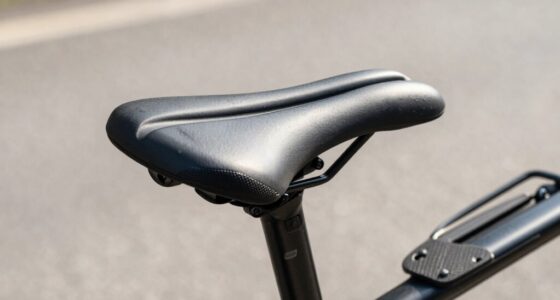
When choosing a dropper post, you’ll want to contemplate both travel and diameter to match your riding style and bike. Travel ranges from about 125mm for cross-country to 200mm for aggressive downhill riding, helping you adjust your saddle height for better control. Diameter sizes such as 27.2mm, 30.9mm, or 34.9mm must fit your bike’s seat tube. Selecting the right options boosts stability and performance—if you keep exploring, you’ll find out how to pick the best for your ride.

Get sports gear delivered free — and shop member deals
- Fast, free delivery on millions of items
- Access to Prime Big Deal Days deals on October 6–7
- Prime Video, Amazon Music and more included
Key Takeaways
- Dropper post travel ranges from approximately 125mm to 200mm, suitable for different riding styles and terrain demands.
- Longer travel (150mm–200mm) improves control on steep descents and technical terrain; shorter travel is better for cross-country riding.
- Common dropper post diameters include 27.2mm, 30.9mm, and 34.9mm, matching specific bike frame seat tube sizes.
- Diameter compatibility depends on bike frame specifications and routing options, ensuring safety and optimal performance.
- Larger diameters provide increased stability and stiffness, while smaller diameters are lighter and easier to install.
Ever wondered how mountain bikers effortlessly navigate tricky descents and technical sections? The secret often lies in their equipment, especially their dropper posts, which allow quick saddle height adjustments on the fly. When choosing a dropper post, understanding travel and diameter is paramount to maximize performance and comfort. Travel refers to how much the saddle can drop or rise, which directly impacts your ability to shift positions quickly and handle challenging terrain. Generally, longer travel—say, 150mm to 200mm—gives you more range for aggressive descents and technical maneuvers, whereas shorter travel, around 125mm, offers a more subtle adjustment suited for cross-country riding or less aggressive styles.
Selecting the right travel depends on your riding style, bike type, and the terrain you prefer. If you often tackle steep descents and technical descents, opting for a dropper post with more travel ensures you can get low enough to improve stability and control. Conversely, if your rides are mostly on smoother trails or climbs, a shorter travel post might suffice, reducing weight and complexity. It’s essential to match the post’s travel to your riding needs; too much travel on a bike not designed for it can feel sluggish, while too little may limit your ability to optimize your riding position.
Now, when considering the diameter, you’re fundamentally choosing the size of the post that fits into your bike’s seat tube. The most common diameters are 27.2mm, 30.9mm, and 34.9mm. You must verify your bike’s seat tube diameter before purchasing because a post that’s too big won’t fit, and one that’s too small can be unsafe or unstable. Many mountain bikes use a 30.9mm diameter, but always double-check your frame’s specifications. Some models feature internal routing, which can influence the diameter and the length of the post you can install. The choice of diameter affects not only compatibility but also the stiffness and weight of the post. Larger diameters tend to offer more stability and less flex, which is beneficial for aggressive riding, while smaller diameters can be lighter and easier to install. Additionally, selecting the correct quinoa preparation can ensure your performance is optimized, much like choosing the appropriate dropper travel and diameter.
In essence, understanding the interplay between travel and diameter helps you fine-tune your riding setup, giving you confidence to push your limits. Your suspension design, including the dropper post, is a key part of your mountain biking arsenal. It allows you to adapt your saddle height quickly, maintain better control, and tackle technical sections with ease. Whether you’re descending steep trails or climbing rugged terrain, selecting the right travel and diameter ensures your bike performs at its best, providing the comfort and control you need to ride more confidently and efficiently.
mountain bike dropper post 150mm
As an affiliate, we earn on qualifying purchases.
As an affiliate, we earn on qualifying purchases.
Frequently Asked Questions
How Do I Measure My Bike Frame for Dropper Post Compatibility?
To measure your bike frame for dropper post compatibility, start by checking the seat tube diameter to verify the post fits. Measure your saddle height from the center of the bottom bracket to the top of the saddle, then compare this with your dropper post’s travel to ensure it can fully extend without interference. Accurate measurements help you select a dropper post that matches your frame and riding needs.
Can I Install a Dropper Post Myself or Need Professional Help?
You can definitely try a DIY installation of your dropper post, but don’t hesitate to seek professional assistance if you’re unsure. Many bike shops offer expert help, ensuring proper fit and safety. While installing yourself saves money, a professional ensures your dropper post functions smoothly and avoids damage. If you’re comfortable with bike maintenance, follow the instructions carefully. Otherwise, professional help guarantees a hassle-free, secure upgrade.
What Are the Maintenance Requirements for Different Travel Sizes?
You should regularly check and maintain your dropper post’s travel size by inspecting the suspension fluid and internal seals. For longer travel posts, like 125mm or more, you’ll need to change suspension fluid more often to prevent stiction and guarantee smooth operation. Also, examine internal seals for wear and replace them as needed to keep dirt out and maintain proper function. Proper maintenance ensures your dropper post performs reliably across all travel sizes.
How Does Travel Length Affect Riding Performance?
When you choose a longer travel dropper post, you’ll notice improved suspension responsiveness, allowing better absorption of rough terrain. This enhances rider comfort, especially on technical descents or challenging trails. However, longer travel can add weight and may reduce pedaling efficiency on climbs. Shorter travel posts offer quicker adjustments and a more responsive feel, ideal for smoother rides. Pick the travel length that matches your riding style for ideal performance and comfort.
Are There Weight Differences Between Various Dropper Post Diameters?
Think of dropper post diameters as different sizes of shoes—some fit better, some are lighter. Generally, larger diameters like 30.9mm or 34.9mm tend to weigh more due to extra material, but advancements have reduced weight differences. Your choice depends on diameter compatibility with your bike, and while weight varies slightly, it usually won’t impact your ride considerably. Focus on fitting your bike and riding style for the best performance.
Conclusion
Choosing the right dropper post with the perfect travel and diameter can transform your riding experience entirely. It’s like giving your bike a superpower—unlocking agility, control, and confidence you never knew you had. Don’t settle for less; your ride deserves the best. When you select the ideal dropper, you’ll feel unstoppable, conquering trails with the precision of a hero. Gear up and make that leap—your epic adventure awaits, and this upgrade could change everything!
NFL season / tailgating Picks
team gear
As an affiliate, we earn on qualifying purchases.