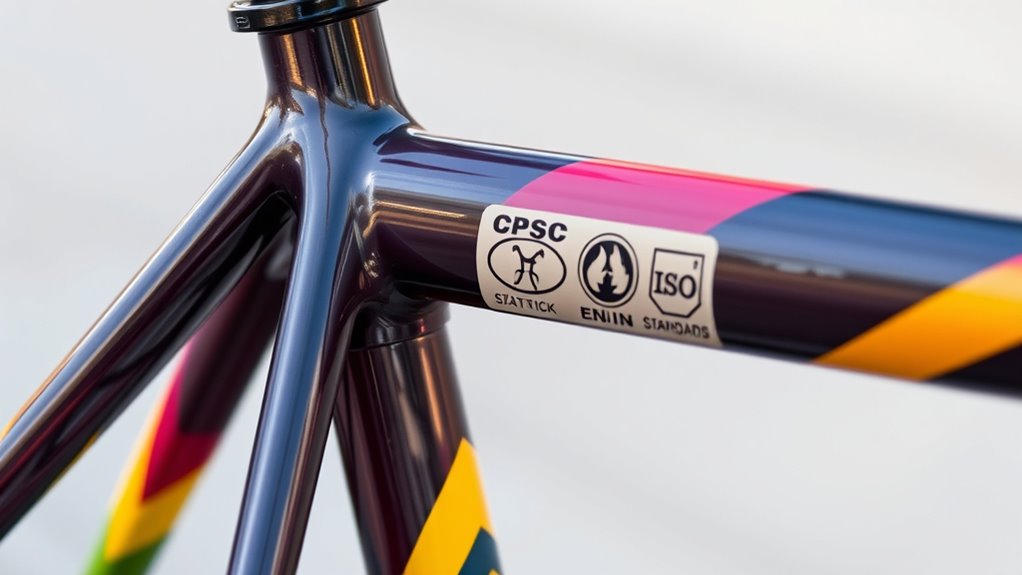

When choosing bike equipment, look for safety standards like CPSC (USA), EN 1078 (Europe), or ISO certifications, which guarantee helmets and frames meet strict impact absorption, durability, and safety tests. Certified gear reduces your risk of injury and guarantees quality. Always check for certification labels before buying, and regularly inspect your equipment for damage. Staying informed helps you make safer choices—continue to learn more about how these standards protect you every ride.

Get sports gear delivered free — and shop member deals
- Fast, free delivery on millions of items
- Access to Prime Big Deal Days deals on October 6–7
- Prime Video, Amazon Music and more included
Key Takeaways
- CPSC (USA) and EN 1078 (Europe) set safety standards for bicycle helmets, ensuring impact absorption and strap strength.
- ISO standards specify minimum requirements for bicycle frame materials’ strength, flexibility, and fatigue resistance.
- Certified helmets display labels confirming compliance with recognized safety certifications like CPSC or EN 1078.
- Durable bike frames meet ISO standards, verifying resistance to cracks, bends, and damage during rides.
- Regular inspection and adherence to these standards enhance rider safety and equipment reliability.
Ensuring your bike meets safety standards is essential for a safe and enjoyable ride. When you ride, you’re responsible for adhering to helmet laws that protect your head in case of falls or collisions. These laws vary by region but generally require you to wear a helmet that complies with safety standards set by recognized organizations. A good helmet should fit snugly, be lightweight, and meet certifications like CPSC or EN standards. These certifications guarantee that the helmet has undergone rigorous testing for impact absorption, strap strength, and overall durability. By choosing a helmet that meets these standards, you considerably reduce the risk of head injuries, making your rides safer and more confident.
Wear a helmet that meets safety standards to protect your head and ensure safe riding.
Another important aspect of bike safety involves the frame’s durability. A sturdy frame not only supports your weight but also withstands the stresses of regular riding and unavoidable impacts. When considering a bike, you want to verify that the frame is made from high-quality materials—such as aluminum, carbon fiber, or steel—that meet industry standards like ISO. ISO standards specify the minimum requirements for strength, flexibility, and resistance to fatigue, ensuring your bike can handle various terrains without compromising safety. A durable frame resists cracks, bends, or breaks, keeping you safe even during rough rides or minor accidents.
To make sure your bike aligns with safety standards, always check for certification labels or markings indicating compliance. For helmets, look for the CPSC mark if you’re in the United States or the EN 1078 certification if you’re in Europe. These labels confirm the helmet has passed standardized safety tests. For frames, look for ISO certification or manufacturer specifications that detail compliance with durability standards. It’s also wise to purchase from reputable brands known for quality and safety, as they are more likely to adhere to strict standards.
Beyond certifications, regular inspections are critical. Make it a habit to examine your helmet for cracks or damage and replace it if it shows signs of wear. Similarly, inspect your bike’s frame for rust, dents, or bends after rides, especially if you’ve encountered rough terrain or minor crashes. Proper maintenance and adherence to safety standards not only extend the lifespan of your equipment but also guarantee your safety every time you head out. Additionally, staying informed about emerging safety innovations, such as advanced impact protection materials, can further enhance your riding safety.
Frequently Asked Questions
How Often Are Bike Safety Standards Updated?
Bike safety standards typically get updated every few years, but the exact update frequency varies by organization. You should stay informed about changes through official sources. Compliance verification methods include testing against current standards, reviewing certification labels, and guaranteeing your bike meets the latest guidelines. Regularly checking for updates helps you maintain safety and assures your bike remains compliant with the newest requirements.
Do All Countries Follow the Same Bike Safety Standards?
Imagine a world where bike safety standards are a patchwork quilt—beautiful but inconsistent. Not all countries follow the same rules; some embrace international harmonization, while others stick to local safety certification processes. This can make your ride riskier and complicate manufacturing for brands. While global efforts aim for uniformity, differences still exist, so always check the standards in your country before hitting the road.
Are There Different Standards for Electric Bikes?
Yes, electric bikes have different standards mainly due to battery regulations and design certifications. You’ll find stricter requirements on battery safety, charging systems, and electrical components to guarantee user safety and prevent hazards. Manufacturers must obtain specific design certifications for e-bikes, which often include testing for electrical safety, durability, and environmental impact. These standards vary by country, so it’s important to verify local regulations before purchasing or riding an e-bike.
How Can Consumers Verify a Bike’s Compliance With Safety Standards?
You can verify a bike’s compliance by checking for manufacturer labels and certification marks on the frame or documentation. These labels indicate the bike has met safety standards. Always look for recognizable certification marks from reputable agencies. If you’re unsure, contact the manufacturer directly or visit their website to confirm that their bikes have passed relevant safety tests. This helps ensure you’re choosing a safe, compliant bike.
What Are the Penalties for Non-Compliance With Bike Safety Standards?
When you fail to meet bike safety standards, penalty enforcement can be strict, including hefty fines, product recalls, or even legal action. Safety violations threaten rider safety, so authorities prioritize enforcement to deter non-compliance. If manufacturers ignore regulations, they risk damaging their reputation and facing costly penalties. Staying compliant protects you and others, ensuring safer cycling experiences and avoiding severe consequences from safety violations.
Conclusion
Think of safety standards as the guiding stars in your cycling journey, illuminating the path through a night sky of regulations. CPSC, EN, and ISO act like vigilant guardians, steering you clear of hazards and ensuring your ride is smooth and secure. Embrace these standards as your trusted compass, helping you navigate the road with confidence. With their steady light, you’ll always find your way, turning every ride into a safe and joyful adventure.
Halloween Picks
halloween
As an affiliate, we earn on qualifying purchases.