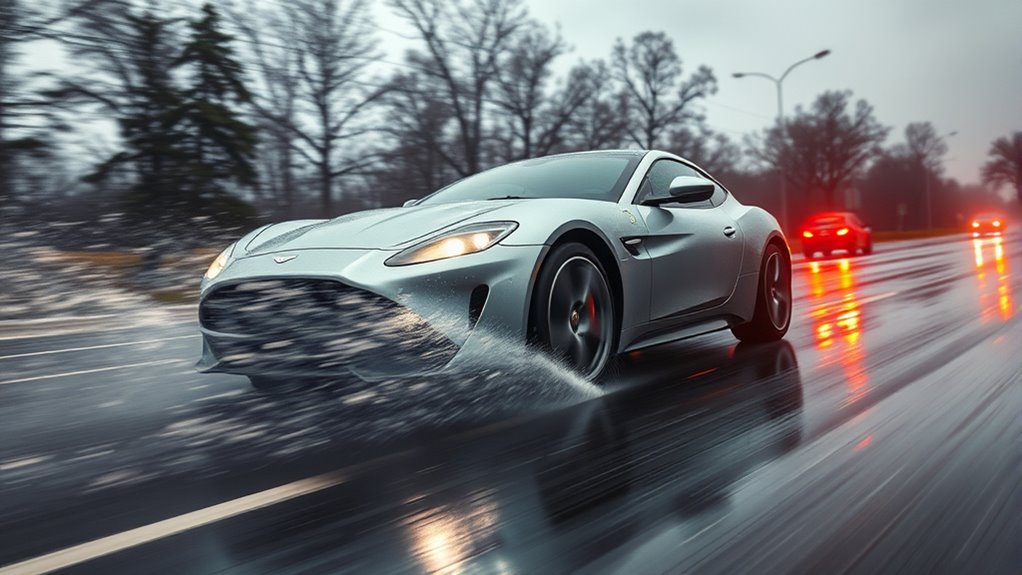
Braking physics show that stopping distance depends on your vehicle’s speed, brake efficiency, and the grip between your tires and the road. Higher speeds increase kinetic energy, making it harder to stop quickly. Good brakes and dry roads provide maximum friction, shortening your stopping distance. Worn brakes or wet conditions reduce friction, lengthening it. To understand how all these factors work together for safer braking, keep exploring these concepts further.
Key Takeaways
- Stopping distance increases exponentially with vehicle speed due to higher kinetic energy that must be dissipated.
- Higher friction coefficient between brake pads and rotors reduces stopping distance by improving braking force.
- Brake efficiency determines how effectively pedal force converts to deceleration, influencing overall stopping performance.
- Road conditions, tire grip, and vehicle weight significantly impact the distance needed to stop safely.
- Proper maintenance and high-quality brake components maximize friction and efficiency, minimizing stopping distance.
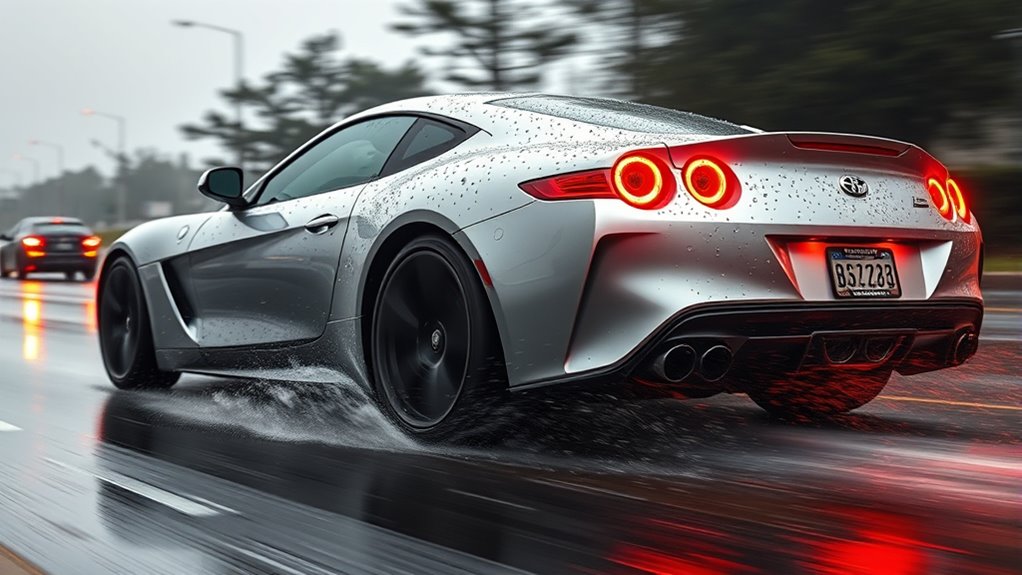
Braking physics explains how and why your vehicle slows down when you press the brake pedal. When you step on the brakes, you activate a system designed to convert the vehicle’s kinetic energy into heat, reducing your speed quickly and safely. At the core of this process are the brakes and the friction they generate against the wheels. The key to effective braking lies in understanding how the friction coefficient and brake efficiency influence your stopping distance. The friction coefficient measures how much grip exists between the brake pads and the rotors or drums. A higher friction coefficient means more grip, allowing your brakes to slow the vehicle more effectively. Conversely, if the coefficient is low—perhaps due to wet, icy, or worn brake pads—the brakes won’t be as efficient, and your stopping distance increases.
Brake efficiency refers to how well your braking system converts the force applied on the pedal into a decelerating force on the wheels. When brake efficiency is high, a small amount of pedal pressure results in significant slowing, thanks to the most suitable interaction between brake pads and rotors. If the system is less efficient—possibly from poor maintenance or worn components—you’ll need to press harder to achieve the same deceleration, leading to a longer stopping distance. The overall braking performance depends heavily on these two factors working together. When conditions are ideal—dry roads, good brake maintenance, and high-quality brake pads—the friction coefficient is maximized, and brake efficiency is at its peak, minimizing your stopping distance. Additionally, the contrast ratio of the braking system can influence the clarity and effectiveness of braking performance under varying light conditions.
Your vehicle’s stopping distance isn’t just about how hard you press the brake pedal; it’s also about how quickly the brakes can generate enough friction to overcome your vehicle’s momentum. As your speed increases, the kinetic energy that needs to be dissipated grows exponentially. As a result, even a slight decrease in the friction coefficient or brake efficiency can cause a noticeable increase in stopping distance, especially at high speeds. Additionally, other factors like tire grip, road conditions, and vehicle weight play roles, but the fundamental physics boil down to the interaction between brake components and the road surface. Maintaining high-quality brakes and ensuring proper tire traction helps maximize the friction coefficient and brake efficiency, keeping your stopping distances as short as possible and your journeys safer.

Bendix Premium SBC1363 Ceramic Front Brake Pads for select Cadillac Escalade, ESV, EXT, XTS, Chevrolet Avalanche, Cheyenne, Express 1500, Silverado, Suburban, Tahoe, GMC Savana, Sierra Classic, Yukon
OE REPLACEMENT: Designed and engineered to OE specifications for fit, form, and function. OEM Equivalent Part Number: 22742382
As an affiliate, we earn on qualifying purchases.
As an affiliate, we earn on qualifying purchases.
Frequently Asked Questions
How Does Tire Condition Affect Stopping Distance?
Your tire condition considerably affects stopping distance. Worn tire tread reduces grip, making it harder to stop quickly, especially on wet or slippery surfaces. Additionally, poor tire condition can contribute to brake fade, where brakes lose effectiveness due to heat buildup. When your tires are in good condition, with adequate tread, you get better traction and shorter stopping distances. Conversely, worn tires and brake fade increase the risk of accidents.
Do Different Vehicle Weights Change Braking Efficiency?
Different vehicle weights do impact braking efficiency. When you carry a heavier vehicle load, your braking force must work harder to slow down or stop. Conversely, a lighter load requires less braking force. You’ll notice that increased weight can extend stopping distances because the brakes need to counteract more momentum. So, whether you’re loaded down or empty, your vehicle’s weight influences how effectively it can stop, affecting overall safety.
How Does Road Incline Impact Braking Performance?
When driving on an inclined road, your braking distance increases because gravity pulls the vehicle downhill, making it harder to stop quickly. Uphill, your braking distance decreases as gravity helps slow the vehicle. Always adjust your braking based on the road incline; steeper inclines require more distance to stop safely. Recognizing how the road incline impacts braking performance helps you maintain control and avoid accidents.
What Role Does Driver Reaction Time Play?
You might think reaction time isn’t vital, but it actually plays a big role in stopping distance. When you’re alert, you react faster, reducing your overall stopping distance. Distractions or fatigue slow you down, increasing that distance and risking accidents. Staying attentive and focused helps you respond promptly, giving you essential seconds to brake effectively. So, your driver alertness directly impacts how quickly and safely you can come to a halt.
How Do Weather Conditions Influence Braking Physics?
Weather conditions considerably impact braking physics by altering traction limits and visibility hazards. Rain, snow, or ice reduce your tires’ grip on the road, increasing your stopping distance. Poor visibility from fog or heavy rain makes it harder to judge distances and react in time. You should slow down and increase your following distance in bad weather, giving yourself more time to stop safely despite these challenging conditions.

Getanye Anti lock Brake Pump ABS Motor 44510-48061 Replacement for 2006-2009 Toyota Highlander Lexus RX400h 44510-48060 4451048060 4451048061
2006 2007 2008 2009 High-lander RX400h Anti-lock Braking System ABS Pump Motor
As an affiliate, we earn on qualifying purchases.
As an affiliate, we earn on qualifying purchases.
Conclusion
As you grip the steering wheel, remember that every second counts when braking. Picture the road ahead as a race against time, your tires gripping the pavement like claws slowing you down. The closer you get to stopping, the more vital it becomes to understand the physics beneath your feet. By mastering braking, you turn a simple stop into a confident pause, ensuring you and your loved ones arrive safely—because every journey deserves a smooth, controlled ending.

YxpBrake Front Rear Brake Disc Rotors & Ceramic Brake Pads Kit Fit for BMW X3 2011 2012 2013 2014 2015 2016 2017, X4 2015 All 2017-2018 xDrive28i, Replacement 12.9 inch & 12.98 inch Rotor
Brake Rotors & Ceramic Pads Kit For BMW X3 2011-2017 All Models, BMW X4 2015 All Models, BMW…
As an affiliate, we earn on qualifying purchases.
As an affiliate, we earn on qualifying purchases.

Orion Motor Tech 24pc Brake Caliper Compression Tool Set, Heavy Duty Brake Piston Compressor Tool and Wind Back Tool Kit for Brake Pad Replacement, Universal Disc Brake Caliper Tool Set with Blue Case
Complete Tool Set: Orion Motor Tech's 24-piece brake caliper compression tool set includes 2 retaining plates, 2 thrust…
As an affiliate, we earn on qualifying purchases.
As an affiliate, we earn on qualifying purchases.