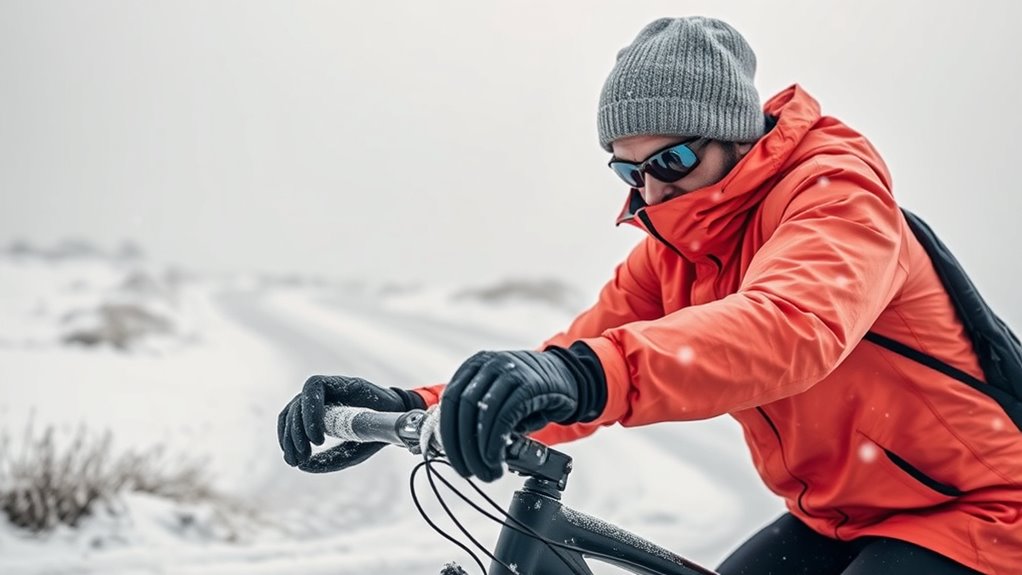

To stay safe and comfortable during winter riding, layering is key. Start with a moisture-wicking base layer to keep sweat away from your skin, add an insulating mid-layer for warmth, and top with a windproof, waterproof outer layer. Wear reflective gear, lights, and bright clothing to boost visibility. Plan your route carefully, avoid icy surfaces, and adjust your speed in bad conditions. Keep these strategies in mind, and you’ll be more prepared for winter cycling challenges.
Key Takeaways
- Layer clothing with moisture-wicking base, insulating middle, and windproof outer layers to stay warm and dry.
- Wear reflective and bright gear to enhance visibility and safety during winter rides.
- Choose well-lit, familiar routes with less traffic and avoid icy or snow-covered areas.
- Use thermal gloves, proper helmet ventilation, and eye protection to stay comfortable and alert.
- Adjust riding speed and increase following distance to navigate safely through winter road conditions.
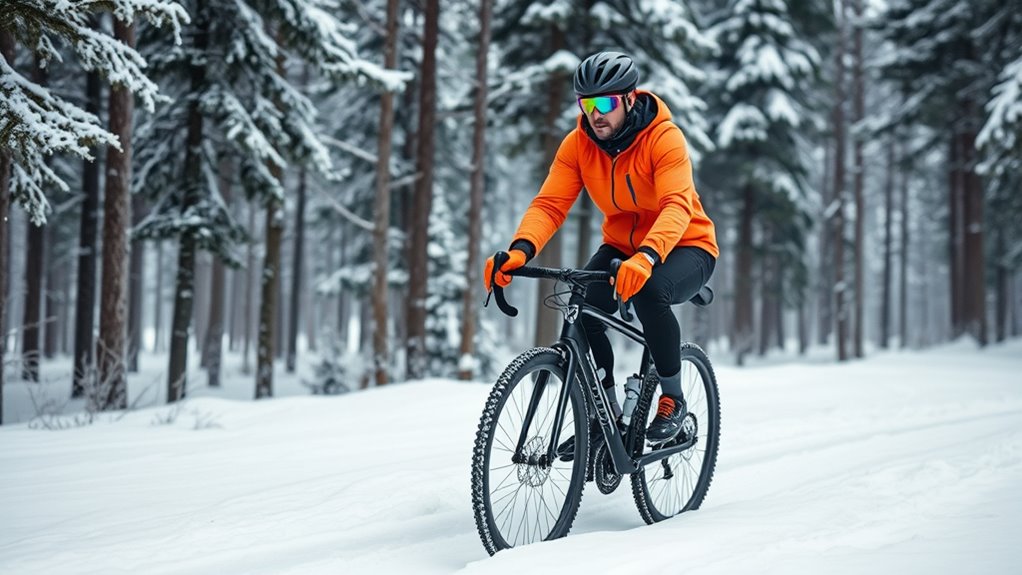
Have you ever wondered how to enjoy riding during the colder months? The key is to invest in the right cycling gear and develop a strategic approach to winter riding. Layering becomes your best friend, helping you stay warm without overheating, and it also plays a critical role in maintaining road safety. When you start planning your ride, think about clothing that insulates well but also wicks moisture away from your skin. A moisture-wicking base layer keeps sweat from chilling you, while an insulating middle layer adds warmth. Top it off with a windproof and waterproof jacket to shield you from the elements. Proper cycling gear isn’t just about comfort; it’s about safety, too. When you’re dressed appropriately, you can see and react better to road hazards, and you won’t be distracted by cold and discomfort. Reflective elements on your gear and bike are essential, especially since winter days tend to be shorter and visibility can drop quickly. Bright, reflective clothing and accessories help ensure you’re seen by drivers, cyclists, and pedestrians alike, reducing the risk of accidents.
In addition to clothing, your helmet and gloves should be suited for winter conditions. Consider thermal gloves that provide dexterity without sacrificing warmth, and use a helmet with good ventilation to prevent overheating during exertion. Clear, anti-fog glasses or goggles protect your eyes from cold wind and debris, while also improving your sightline. When it comes to road safety, always plan your route carefully. Stick to well-lit, familiar roads with less traffic whenever possible. Check weather reports before heading out, and avoid riding in icy or snow-covered areas that could cause slips or loss of control. Be extra cautious at intersections and turns, where slick patches may be hidden under snow or slush. Slowing down and increasing your following distance also gives you more time to react to unexpected hazards. Incorporating proper equipment such as high-visibility gear and reliable tires enhances safety and performance in winter conditions.
Winter riding demands a strategic mindset, combining the right gear and awareness of your environment. Properly layered cycling gear keeps you warm and dry, which directly impacts your ability to stay alert and responsive, essential for road safety. Remember, the goal isn’t just to survive winter rides but to enjoy them while staying safe. With thoughtful preparation, you’ll find that winter cycling can be a rewarding, invigorating experience rather than a challenge to endure.
Frequently Asked Questions
How Do I Prevent Frostbite During Winter Rides?
To prevent frostbite during winter rides, you should wear insulated, moisture-wicking clothing that covers all exposed skin. Prioritize wind chill protection by wearing a windproof jacket and face mask. Keep moving to boost circulation, and take breaks in warm areas. Remember, hypothermia prevention is essential, so stay dry and avoid sweating too much. Staying vigilant and layering appropriately will help you stay safe and comfortable in cold conditions.
What Are the Best Materials for Winter Cycling Gloves?
Think of your gloves as a warm embrace for your hands. Opt for gloves made with advanced insulation technology to trap heat, keeping your fingers toasty. Breathable fabrics are essential, allowing moisture to escape and preventing damp cold that chills you to the bone. Materials like Thinsulate or PrimaLoft offer excellent warmth without bulk, ensuring your hands stay warm, dry, and comfortable even on the coldest rides.
How Should I Adjust Tire Pressure for Winter Conditions?
You should lower your tire pressure slightly for winter conditions to improve traction on snow and ice. Check your tire tread regularly and use pressure monitoring to avoid over-inflation. Softer tires grip better on slippery surfaces, but don’t go too low to prevent pinch flats. Adjust your pressure based on road conditions, and remember that colder temperatures can cause pressure drops, so recheck your tires often for ideal safety and performance.
Is It Safe to Ride in Snow or Icy Conditions?
Is riding in snow or icy conditions safe? It can be, if you take proper precautions. You should be aware that road salt can affect your bike’s components, and snow traction might be limited, making slipping more likely. Use tires with good tread and consider studded tires for extra grip. Ride slowly, stay alert, and avoid sudden movements to keep yourself safe in winter’s tricky conditions.
How Can I Improve Visibility During Winter Rides?
To enhance visibility during winter rides, you should wear bright clothing that stands out in low light. Adding reflective gear, like vests, ankle bands, or helmet stickers, boosts your visibility to drivers and other riders. Keep your bike equipped with front and rear lights, especially during dawn, dusk, or overcast days. These measures ensure you’re seen clearly, helping you stay safe in winter conditions.
Conclusion
As you gear up for winter rides, remember that layers are your armor and strategy is your compass through the icy wilderness. Embrace the cold as a test of resilience, where each layer you add symbolizes your determination to conquer the elements. With the right mindset and preparation, you become a beacon of warmth and perseverance, guiding yourself safely through winter’s silent, snowy trails—turning the season’s chill into a symbol of your strength and adventure.