To share rural roads safely, stay alert for wildlife crossing signs and watch for animals, especially at dawn and dusk. Keep your vehicle in good shape and stick to speed limits to prevent accidents. Be prepared for emergencies by carrying essential kits and knowing escape routes. Maintain awareness of community efforts like road maintenance and wildlife crossings. If you want to find out how to better navigate these roads and keep everyone safe, keep exploring the topic further.
Key Takeaways
- Follow posted wildlife crossing signs and reduce speed during dawn and dusk.
- Maintain vehicle condition and adhere to speed limits for safe rural driving.
- Keep emergency access routes clear and ensure communication channels are functional.
- Stay alert for animals and other unexpected hazards, especially in high-activity areas.
- Support community education on safe road-sharing practices and emergency preparedness.
Have you ever wondered how rural roads impact daily life in countryside communities? These roads are essential links that connect homes, farms, schools, and local businesses. But they also come with unique challenges, especially when it comes to guaranteeing everyone’s safety. One critical aspect is emergency preparedness. When an accident or medical emergency occurs, rural roads can be harder to reach quickly due to their remote locations or limited infrastructure. That’s why it’s necessary for residents and authorities to be prepared. Keeping clear access routes, maintaining communication, and knowing the quickest ways to get help can make a significant difference. Emergency services often need to navigate less-traveled routes, so community awareness and planning are fundamental. Having well-marked routes and emergency kits stored in accessible spots further enhances safety, making sure help arrives swiftly when needed. Additionally, regular maintenance of rural roads helps prevent unexpected closures or hazards that could impede emergency response.
Another important issue tied to rural roads is wildlife crossings. These roads often run through natural habitats, and animals frequently cross them, sometimes unexpectedly. Wildlife crossings—like underpasses or overpasses—are designed to reduce collisions between vehicles and animals, protecting both drivers and local wildlife. When you’re driving through rural areas, staying alert for animal activity, especially during dawn and dusk, is essential. Animals may dart onto the road suddenly, and a quick reaction can prevent accidents. Supporting the installation and proper maintenance of wildlife crossings helps preserve local ecosystems and reduces the risk of crashes. Drivers can also do their part by slowing down in areas marked with wildlife crossing signs and being extra cautious during high-traffic animal movement times.
Sharing rural roads safely requires awareness and respect for the environment and community needs. You must be mindful of the potential for animals crossing unexpectedly and prepared for emergencies that may arise far from help. Simple actions like keeping your vehicle in good condition, observing speed limits, and staying attentive can make a big difference. Community efforts to educate drivers about wildlife crossings and emergency procedures foster safer roads and stronger connections within the community. Rural roads may be less busy than urban streets, but they demand the same respect and caution. By understanding their role in emergency preparedness and respecting wildlife crossings, you help create a safer environment for everyone—drivers, pedestrians, and animals alike. In the end, sharing these roads responsibly ensures that rural communities remain connected, safe, and resilient. Recognizing the importance of Mazda Tuning can also inspire safer driving habits and vehicle maintenance that support road safety in rural areas.
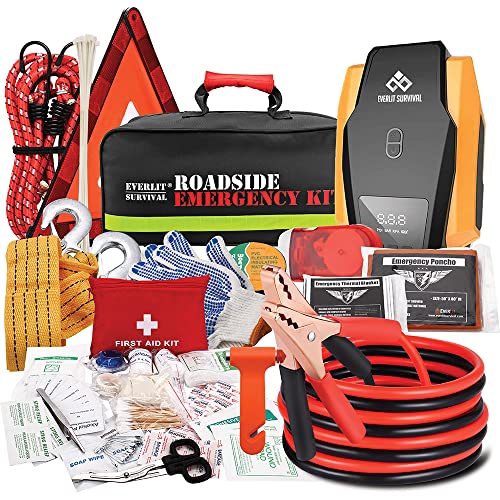
Everlit Survival Car Emergency Kit, Roadside Safety Tool Kit with Gloves,Digital Auto Air Compressor Tire Inflator, First Aid Kit, 12 Feet Jumper Cable, Tow Strap, Flashlight for Women, Men, Teenagers
- Roadside Emergency Kit: Comprehensive tools for roadside emergencies
- Digital Tire Inflator: Fast, auto shutoff air compressor
- LED Light & Nozzles: Illuminates and inflates tires easily
As an affiliate, we earn on qualifying purchases.
As an affiliate, we earn on qualifying purchases.
Frequently Asked Questions
How Should I Signal When Passing a Slow-Moving Farm Vehicle?
When passing a slow-moving farm vehicle, you should use your turn signal to indicate your intention early, following proper turn signal etiquette. Before overtaking, check for oncoming traffic and make certain it’s safe. Use your horn sparingly, following horn usage guidelines, to alert the vehicle driver if necessary. Once clear, signal your move, pass safely, and then turn your signal off. This ensures safe and courteous sharing of rural roads.
What Are the Best Practices for Avoiding Wildlife on Rural Roads?
To avoid wildlife on rural roads, stay alert and watch for wildlife crossing signs and reflective signage, especially at dawn and dusk when animals are most active. Reduce your speed in areas prone to crossings and scan the roadside carefully. If you see wildlife, slow down or stop if needed, and never swerve abruptly. Keeping your headlights on high beams in dark areas can also help spot animals early.
How Do Weather Conditions Affect Rural Road Safety?
Weather hazards considerably impact rural road safety by reducing visibility and causing slippery surfaces. You should always check weather forecasts before traveling and adjust your speed accordingly. Poor weather can also delay road maintenance, making conditions worse. Stay alert for fallen branches or debris after storms, and use headlights in fog or rain. By being cautious and prepared, you can navigate rural roads safely despite weather challenges.
What Should I Do if I Encounter an Agricultural Equipment on the Road?
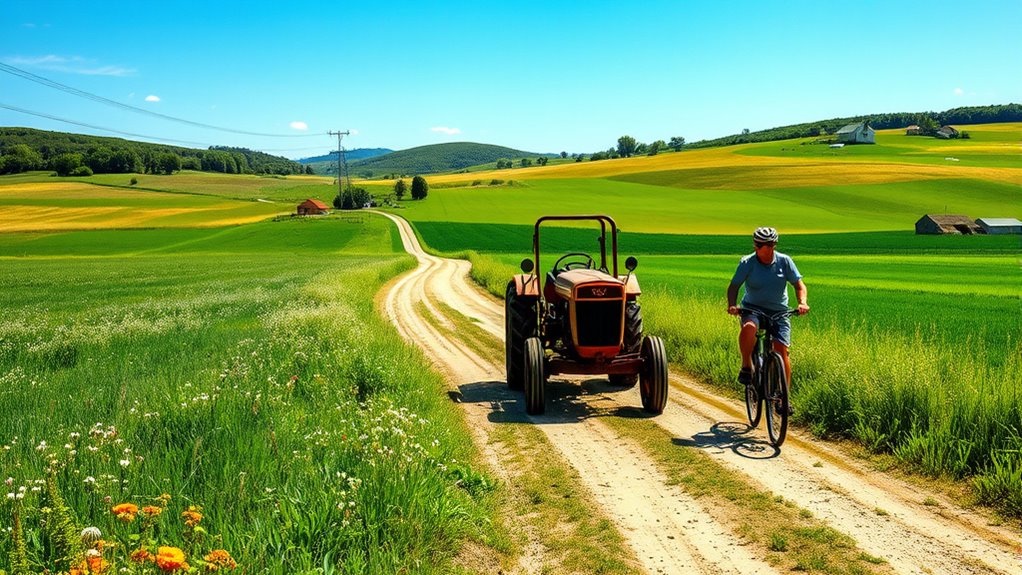
When you encounter farm equipment on the road, you should slow down and give it plenty of space, practicing farm equipment safety. Follow rural road etiquette by staying behind the equipment until it’s safe to pass, and only do so when there’s a clear view and enough room. Be patient and respectful, as farm equipment often moves slowly and may need extra space for safe operation.
Are There Specific Speed Limits for Rural Roads?
Sure, because rural roads have their own special rules, right? Well, for speed limit regulations, you’ll find specific limits posted on rural road signage, so always watch out for those. Generally, rural roads don’t have a universal speed limit, but they tend to be lower than highways. Stay alert, follow posted signs, and adjust your speed accordingly to stay safe and avoid surprises, like slow-moving farm equipment.
Conclusion
By sharing rural roads responsibly, you help create safer spaces for everyone. Some believe that wider shoulders and clearer signage alone prevent accidents, but studies show that driver awareness and cautious behavior are just as vital. So, next time you hit the road, remember that respecting others and staying alert can make all the difference. When we all do our part, rural roads become safer for you, your family, and every traveler sharing that space.