For cycling, I put traffic awareness, secure fit, and usable controls ahead of maximum isolation: no pair of headphones makes a ride safe, but open-ear designs can leave your ear canals unobstructed. My best overall pick is the Shokz OpenRun Pro 2, whose bone-conduction design and ear hooks make it a focused choice for riding. The Shokz OpenFit Pro suits riders who want more playback endurance and richer features, while the Bose Sport Open Earbuds favor a clip-on fit. The tradeoff is clear: open designs help preserve awareness, but they cannot block wind or traffic noise, and louder playback can mask the very sounds cyclists need to hear.

Get sports gear delivered free with Prime
- Fast, free delivery on millions of items
- Prime Video, Amazon Music and more included
- Member-only deals all year
I ranked these five around cycling use rather than sound alone. Fit security and open-ear placement carry the most weight, followed by weather protection, battery life, and practical sound features. The list also includes a lighter-value alternative and an all-day open-ear option, but each comes with compromises that matter on a bike.
Complete the kit


Key Takeaways
- OpenRun Pro 2 is my strongest cycling-first choice: bone conduction, a secure frame, IP55 protection, and 12-hour battery life.
- OpenFit Pro offers the longest stated total battery life, but its active noise reduction cuts per-charge playback to about six hours and deserves restraint outdoors.
- Bose Sport Open uses a clip-on design for a distinct fit, but its seven-hour playback is the shortest standalone runtime here.
- Gavhaio JY-B2 is the lightest listed option at 25 g and carries IP65 protection, though bass depth and brand information are less compelling than Shokz or Bose.
- OpenFit 2 has strong earbud endurance and 48-hour case capacity, but the case figure is not a single-ride playback estimate and it still relies on open-air sound.


| premium earbuds for cycling safety | Battery life | Water resistance | Driver type | Connectivity |
|---|---|---|---|---|
| Shokz OpenRun Pro 2 Bone Condu | Up to 12 hours | IP55 | Bone conduction with air-conduction bass | Bluetooth |
| Shokz OpenFit Pro Open-Ear Ear | Up to 12 hours with noise reduction off; up to 6 hours on | IP55 | — | — |
| Bose Sport Open Earbuds | Up to 7 hours | IP54 | — | Wireless |
| Shokz OpenFit 2 Open-Ear Bluet | Up to 11 hours per earbud charge | IP55 | Hybrid driver | — |
| Gavhaio Bone Conduction Headph | Up to 10 hours | IP65 | Bone conduction | Dual-device connection |
More Details on Our Top Picks
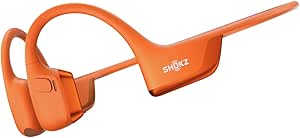
Shokz OpenRun Pro 2 Bone Conduction Bluetooth Sport Headphones (Orange)
The OpenRun Pro 2 is my first choice for a rider who wants music without placing an earbud over the canal. Its bone-conduction drivers sit against the head, while the open-ear arrangement leaves the ears unobstructed; that is a more direct cycling fit than a conventional sealed earbud. The Ni-Ti frame and ergonomic ear hooks are also designed to hold position through movement, a useful distinction from separate clip-on buds whose fit depends more on placement.
Battery life is listed at up to 12 hours, which gives this model a stronger single-charge case than the Bose Sport Open’s seven hours. IP55 resistance covers sweat and exposure to water jets, but I would not treat it as swim gear or assume that the rating removes the need to dry it after a wet ride. The dual wind-resistant microphones with AI noise reduction are a practical extra for calls, although taking calls while moving can still distract from riding.
The compromise is sound leakage: at higher volume, people nearby may hear what is playing. Bone conduction also cannot deliver the same sealed, bass-heavy presentation as in-ear models, and wind or passing traffic may make quieter details harder to hear. I prefer the OpenRun Pro 2 for riders who put fit and ear openness ahead of isolation; someone seeking private listening or the longest case-assisted battery total should compare it with OpenFit Pro or OpenFit 2 instead.
Pros:- Bone-conduction design leaves the ear canals unobstructed.
- Ni-Ti frame and ear hooks are designed to stay secure during movement.
- Up to 12 hours of stated playback on a charge.
- IP55 protection and dual wind-resistant microphones.
Cons:- Sound can leak at higher listening levels.
- Open-air listening offers no noise isolation, and road or wind noise can mask audio.
- Not intended for swimming or full submersion.
Best for: Cyclists who want a secure, open-ear frame and long single-charge playback for road or path rides.
Not ideal for: Riders who need private listening, deep bass, or audio that remains clear at low volume in heavy wind and traffic.
- Driver type:Bone conduction with air-conduction bass
- Battery life:Up to 12 hours
- Water resistance:IP55
- Frame material:Nickel-titanium alloy, plastic, and silicone
- Microphones:Dual wind-resistant microphones with AI noise reduction
- Connectivity:Bluetooth
- Sensitivity:98 dB
Our verdict“I rank the OpenRun Pro 2 first for its cycling-oriented fit, open-ear design, and useful single-charge endurance, provided the rider keeps playback modest.”
Shokz OpenFit Pro Open-Ear Earbuds with Noise Reduction and Dolby Atmos (White)
The OpenFit Pro is the feature-heavy option in this group: open-ear placement, Dolby Atmos with head tracking, physical buttons, and stated total battery life of up to 50 hours with the case. Its flexible nickel-titanium ear hooks echo the secure-fit idea behind the OpenRun Pro 2, but the separate-earbud format may appeal more to listeners who want a less connected frame. I would choose it for mixed riding and everyday listening when the extra sound features matter as much as cycling use.
Its headline endurance needs context. The earbuds are rated for up to 12 hours with noise reduction off, but only up to six hours with it on. The case total can help between rides, yet it does not mean a rider gets 50 hours continuously without charging the buds. IP55 protection is a sensible match for sweat and rain exposure, and the listed quick charge provides four hours of playback after ten minutes, according to the supplied specifications.
For cycling, active noise reduction is the central caveat, even though the product describes it as open-ear noise reduction. I would keep it off or restrained when road awareness matters and avoid turning the volume up to compensate for wind. Compared with the OpenRun Pro 2, this model offers more immersive playback features and a larger case-assisted total, but the OpenRun’s simpler bone-conduction setup is my clearer cycling-first choice. The OpenFit Pro makes more sense when one premium pair must cover rides and off-bike listening.
Pros:- Open-ear design leaves the ear canal unsealed.
- Up to 50 hours stated total playback with the charging case.
- Physical buttons and flexible nickel-titanium ear hooks.
- IP55 resistance and a listed quick-charge feature.
Cons:- Playback is rated at up to six hours with noise reduction active.
- Noise-reduction features may be a poor match for riders prioritizing traffic awareness.
- The 50-hour figure includes case recharges, not continuous playback from one charge.
Best for: Riders who also want a feature-rich open-ear pair for daily listening and value case-assisted battery capacity.
Not ideal for: Cyclists who want the simplest awareness-focused setup or who expect to use noise reduction throughout long rides.
- Driver:11 × 20 mm dual-diaphragm
- Battery life:Up to 12 hours with noise reduction off; up to 6 hours on
- Total battery life:Up to 50 hours with case
- Water resistance:IP55
- Bluetooth:Version 6.1
- Controls:Physical buttons
- Quick charge:10 minutes provides up to 4 hours of playback
- Warranty:2 years
Our verdict“I recommend the OpenFit Pro to riders who want premium sound features and case endurance, but not as my simplest choice for traffic-focused cycling.”
Bose Sport Open Earbuds – Wireless, Clip-On, IP54 Waterproof, 22 Hrs Battery, Sweat Resistant, Microphones for Calls, Black
The Bose Sport Open stands apart through its clip-on design. That gives it a different fit strategy from the OpenRun Pro 2’s connecting frame and the hooked Shokz earbuds: it sits at the ear rather than sealing the canal. For cyclists who dislike a band around the back of the head or want an open design that is easy to pair with other gear, this is the most distinctive alternative in the lineup.
Bose lists up to seven hours of playback, plus additional battery in the case for a stated 22-hour total. That is less standalone runtime than the 12-hour OpenRun Pro 2 or OpenFit Pro with noise reduction off. IP54 offers protection against dust and water splashes, a lower stated level than the IP55 ratings on the Shokz picks and the IP65 rating on the Gavhaio. Wireless charging is convenient off the bike, but the product details do not specify its weight, which makes helmet compatibility and comfort harder to judge from the available information.
Open placement supports awareness but also leaves sound exposed to wind and surrounding noise; the design cannot isolate a rider from either. The claimed secure clip-on fit may be appealing during exercise, but I would check the fit with a helmet and glasses before relying on it for a long ride. Compared with OpenFit 2, Bose gives a more unusual clip-on form, while the Shokz options offer stronger stated weather ratings or longer earbud runtime. Pick it for fit preference and open placement, not battery leadership.
Pros:- Clip-on form avoids a sealed in-ear fit.
- Open-ear design supports awareness of nearby sounds.
- Wireless charging is listed.
- Up to 22 hours stated total battery life with case.
Cons:- Seven-hour standalone playback is the shortest listed in this roundup.
- IP54 is a lower stated water-resistance rating than the IP55 and IP65 alternatives.
- Weight and size details are not provided.
Best for: Cyclists who prefer a clip-on open-ear design and want wireless charging for use away from the bike.
Not ideal for: Riders who need long uninterrupted playback, a clearly documented lightweight fit, or the stronger stated weather rating of IP55 or IP65 models.
- Design:Open-ear, clip-on
- Battery life:Up to 7 hours
- Total battery life:Up to 22 hours with case
- Water resistance:IP54
- Charging:Wireless charging
- Connectivity:Wireless
- Microphones:Included for calls
Our verdict“I would choose the Bose Sport Open for its clip-on fit, but the shorter earbud runtime and limited fit details place it behind the stronger cycling-focused Shokz options.”
Shokz OpenFit 2 Open-Ear Bluetooth Earbuds, Black, 48H Playtime
The Shokz OpenFit 2 is a practical pick for riders who want separate open-ear buds and long intervals between charging the case. The earbuds are rated for 11 hours, with up to 48 hours total including the case; that is a stronger earbud runtime than the Bose Sport Open’s seven hours, though below the OpenRun Pro 2’s 12-hour rating. Bluetooth 5.4 and IP55 protection add useful everyday credentials without making the product a specialized cycling headset.
Its open-ear air-conduction design avoids sealing the ear canal, but it does not make traffic audible in every situation. Sound is still competing with wind and road noise, and the open construction provides little isolation. That makes cautious volume more relevant than the model’s powerful-bass claim. The lightweight 9.4 g figure is listed for the earbuds, and the case capacity is useful for commuting or back-to-back days, but riders should not mistake the 48-hour total for a single-charge estimate.
Compared with the OpenRun Pro 2, OpenFit 2 is easier to frame as a daily-use earbud with cycling as one use, while OpenRun Pro 2 has a more explicitly sport-oriented frame and bone conduction. Compared with the OpenFit Pro, the OpenFit 2 avoids the stated active noise reduction runtime penalty, but its total battery figure is lower. I would pick it for frequent short rides and everyday wear, not for anyone seeking the most secure head-worn cycling fit or an isolated soundstage.
Pros:- Up to 11 hours of playback from the earbuds.
- Up to 48 hours total stated battery life with the case.
- IP55 resistance and Bluetooth 5.4.
- Lightweight listed earbud weight of 9.4 g.
Cons:- Open-air sound offers limited noise isolation.
- The 48-hour figure includes case recharging rather than one continuous charge.
- Bluetooth connection and playback can have latency issues according to the supplied description.
Best for: Commuters and frequent riders who want lightweight open-ear earbuds with substantial case-assisted battery capacity.
Not ideal for: Cyclists who want a bone-conduction frame, strong wind isolation, or a single-charge runtime above 11 hours.
- Model:SHOKZ T920
- Driver type:Hybrid driver
- Battery life:Up to 11 hours per earbud charge
- Total battery life:Up to 48 hours with case
- Water resistance:IP55
- Bluetooth:Version 5.4; listed range 33 feet
- Weight:9.4 g
- Charging time:About 1 hour for earbuds and case
Our verdict“I see the OpenFit 2 as a versatile everyday option with useful case capacity, while the OpenRun Pro 2 remains the more purpose-built cycling pick.”
Gavhaio Bone Conduction Headphones Bluetooth 6.0 Open Ear Earbuds with Mic, Premium Sound, 3 EQ Modes, 10h Playtime, 25g Lightweight, IP65 Waterproof Sports Headphones for Running Cycling Hiking
The Gavhaio JY-B2 offers a compact bone-conduction alternative for buyers who want low weight and a higher stated water-resistance rating. At 25 g, it is the lightest option here with a supplied overall weight, and its IP65 rating exceeds the IP55 ratings on the Shokz models. That combination suits riders who value a lightweight sports headset and expect sweat or wet-weather exposure, although IP65 is not a claim of suitability for swimming or full submersion.
Its 10-hour battery estimate is respectable, but falls short of the OpenRun Pro 2’s 12 hours and OpenFit Pro’s 12-hour rating with noise reduction off. Bluetooth 6.0 and dual-device connectivity may help people who switch between a phone and another device, while three EQ modes allow some sound adjustment. Those features are useful for general sports listening, but they do not change the main cycling constraint: bone-conduction audio stays exposed to wind and traffic, and the product description warns that bass may be less deep than with traditional in-ear headphones.
I place it below Shokz because the OpenRun Pro 2 gives a longer stated runtime and a more clearly specified Ni-Ti frame and microphone arrangement. The Gavhaio is still the better fit for shoppers who prioritize 25 g weight, IP65, and EQ choices over brand-specific fit details or extended playback. Its product information is less complete on materials and durability beyond the rating, so I would not choose it solely on the Bluetooth version or waterproof wording.
Pros:- Lightweight listed weight of 25 g.
- IP65 rating for dust and water-jet exposure.
- Up to 10 hours of stated playback.
- Three EQ modes and dual-device connectivity.
Cons:- Stated playback is shorter than the OpenRun Pro 2’s 12 hours.
- Bone conduction may provide less deep bass than in-ear headphones.
- IP65 does not mean swimming or full-submersion protection.
Best for: Riders who want a 25 g bone-conduction headset, IP65 resistance, and selectable EQ modes.
Not ideal for: Cyclists who want the longest listed single-charge runtime, deeper bass, or more complete fit and build specifications.
- Driver type:Bone conduction
- Weight:25 g
- Battery life:Up to 10 hours
- Water resistance:IP65
- Bluetooth:Version 6.0
- Connectivity:Dual-device connection
- Audio modes:Three EQ modes
- Charging time:About 1.5 hours
Our verdict“I recommend the Gavhaio as a lightweight, weather-conscious alternative, while riders wanting longer runtime and clearer fit details should favor the OpenRun Pro 2.”

How We Picked
I ranked these options for premium earbuds for cycling safety, not for isolated listening or noise cancellation. I favored designs that leave the ear canal open, can stay put through movement, and have enough stated water resistance for sweat and ordinary rain exposure. Battery figures matter on longer rides, but I distinguish between playback from the earbuds and a total figure that includes a charging case.
My order also reflects how directly each model fits a cycling use case. The OpenRun Pro 2 leads because its bone-conduction approach, lightweight frame, ear hooks, and 12-hour rating form a coherent outdoor package. OpenFit Pro follows for its long total battery claim and feature set, though active noise reduction creates a more complicated safety tradeoff. Bose earns a place for its clip-on stability, while OpenFit 2 and Gavhaio offer different priorities: extended case capacity versus low weight and stronger stated water resistance.
I do not treat an open-ear label, an IP rating, or a manufacturer battery estimate as a safety guarantee. Wind, speed, road conditions, fit, playback volume, and local rules all affect whether audio is appropriate. Product descriptions also provide limited details on visibility, controls while gloved, and how reliably each pair stays positioned under a helmet. I flag those gaps rather than filling them with assumptions.
| premium earbuds for cycling safety | Driver type | Battery life | Water resistance | Connectivity |
|---|---|---|---|---|
| Shokz OpenRun Pro 2 Bone Condu | Bone conduction with air-conduction bass | Up to 12 hours | IP55 | Bluetooth |
| Shokz OpenFit Pro Open-Ear Ear | — | Up to 12 hours with noise reduction off; up to 6 hours on | IP55 | — |
| Bose Sport Open Earbuds | — | Up to 7 hours | IP54 | Wireless |
| Shokz OpenFit 2 Open-Ear Bluet | Hybrid driver | Up to 11 hours per earbud charge | IP55 | — |
| Gavhaio Bone Conduction Headph | Bone conduction | Up to 10 hours | IP65 | Dual-device connection |
Factors to Consider When Choosing Premium Earbuds For Cycling Safety
For cycling, I would choose by ear openness and stable fit first, then compare battery and weather ratings. The most impressive audio feature is not necessarily the feature that helps on the bike. A useful shortlist starts with your route, helmet fit, ride length, and willingness to hear music while competing with traffic and wind.
Open ear is a design choice, not a safety guarantee
Bone-conduction models such as the OpenRun Pro 2 and Gavhaio leave the ear canal unobstructed, while the OpenFit and Bose products place sound near the ear without an in-ear seal. Both approaches differ from noise-isolating earbuds, but neither guarantees that you will hear every car, bell, or warning. Wind noise, traffic, playback volume, and the position of the device all matter. I would keep audio low enough that outside sounds remain easy to notice, and pause it in complex junctions or other situations that demand full attention.
Check fit with your helmet and glasses
A fit that feels secure indoors may press against helmet straps or shift when you turn your head. The OpenRun Pro 2 uses a connecting frame and ear hooks; the OpenFit models use separate hooked earbuds; Bose uses a clip-on arrangement. The Gavhaio is lightweight, but its supplied details give less about frame construction. I would check contact points with my actual helmet and glasses before committing to longer rides, paying attention to comfort and whether a control can be reached without losing attention from the road.
Read battery claims as per-charge and total figures
Battery numbers are easiest to compare when they describe the same thing. OpenRun Pro 2 lists 12 hours per charge, while OpenFit 2 lists 11 hours for the earbuds and 48 hours including its case. OpenFit Pro lists up to 12 hours with noise reduction off but up to six hours with it on. Bose lists seven hours of earbud playback and 22 hours total with its case. For long rides, focus on the earbud figure; case capacity helps between outings but cannot extend one continuous charge while you ride.
Match water resistance to your actual exposure
IP55 appears on the Shokz models, Bose lists IP54, and Gavhaio lists IP65. These ratings describe different levels of protection from dust and water exposure; they are not a promise that a headset can be submerged or used for swimming. For cycling, the ratings can help compare tolerance for sweat and rain, but care after a wet ride still matters. If your rides regularly involve heavy rain, check the maker’s care guidance and avoid assuming that a higher number covers every kind of water exposure.
Choose sound features with awareness in mind
Dolby Atmos, EQ modes, and bass tuning can improve listening away from traffic, but they do not automatically improve cycling suitability. The OpenFit Pro’s noise reduction is the most notable tension: it may reduce distractions, yet a rider who wants outside sounds should be cautious about using it. Gavhaio’s EQ modes offer sound adjustment without a stated noise-reduction feature, and OpenRun Pro 2 emphasizes a clear open-ear setup. I would give priority to comfortable low-volume listening over features that encourage a more immersive or isolated experience.
Consider calls and controls as secondary features
Wind-resistant microphones can help with calls, but a clear call feature is not a reason to hold a conversation while riding in traffic. The OpenRun Pro 2 lists dual wind-resistant microphones with AI noise reduction, while the OpenFit Pro lists physical buttons. Button placement and glove use are not fully detailed across these products, so I would check whether basic playback controls are easy to manage before a ride. If a control requires prolonged attention or frequent phone handling, that convenience can become a distraction.
Frequently Asked Questions
Are open-ear headphones safer for cycling than in-ear earbuds?
Open-ear designs leave the ear canal unsealed, which can make it easier to hear surrounding sounds than with noise-isolating earbuds. That does not make them automatically safe: high playback volume, wind, road noise, and route conditions can still mask important sounds. I would keep audio low, remain attentive, and follow local rules on headphone use while cycling.
Which option is my best starting point for road cycling?
I would start with the Shokz OpenRun Pro 2 because it combines bone conduction, a frame with ear hooks, IP55 resistance, and a stated 12-hour battery life. It is not a substitute for listening to traffic, and its open design can leak sound, but its design and runtime make it the most directly cycling-focused choice in this lineup.
Does a 48-hour or 50-hour battery claim mean continuous playback?
No. The OpenFit 2’s 48-hour and OpenFit Pro’s 50-hour figures include charging from their cases. Compare the per-charge earbud figures for a continuous ride: OpenFit 2 lists up to 11 hours, while OpenFit Pro lists up to 12 hours with noise reduction off and six hours with it active. Actual playback can vary with settings and use.
Can I use these headphones in heavy rain or while swimming?
The listed IP ratings can help compare resistance to sweat, dust, and water exposure, but they do not establish that these models are suitable for swimming or full submersion. The Gavhaio description explicitly rules out swimming despite its IP65 rating. For wet rides, I would check each maker’s care instructions and dry the headphones after use rather than treating any rating as unlimited waterproofing.
Should I use noise reduction while riding?
I would be cautious with any feature designed to reduce surrounding noise on a bicycle. The OpenFit Pro is listed with noise reduction, and its playback estimate drops when that feature is active; for traffic-focused rides, I would leave it off or use the least intrusive setting available. Keep audio low and stop playback when you need full attention to nearby sounds.
Conclusion
For most riders, I recommend the Shokz OpenRun Pro 2: its bone-conduction format, secure frame, IP55 rating, and 12-hour stated runtime make it the most balanced cycling-first option. Choose the OpenFit Pro if you want a more feature-rich pair for both rides and everyday listening, while keeping its noise-reduction tradeoff in view. The Bose Sport Open is for buyers who prefer a clip-on fit and accept shorter standalone playback. I would choose OpenFit 2 for daily use and case-assisted endurance, and the Gavhaio for a lightweight 25 g build and IP65 rating. Whichever pair you select, keep playback modest, check the fit with your helmet, and treat awareness as a riding habit rather than a headphone feature.
NFL season / tailgating Picks
team gear
As an affiliate, we earn on qualifying purchases.