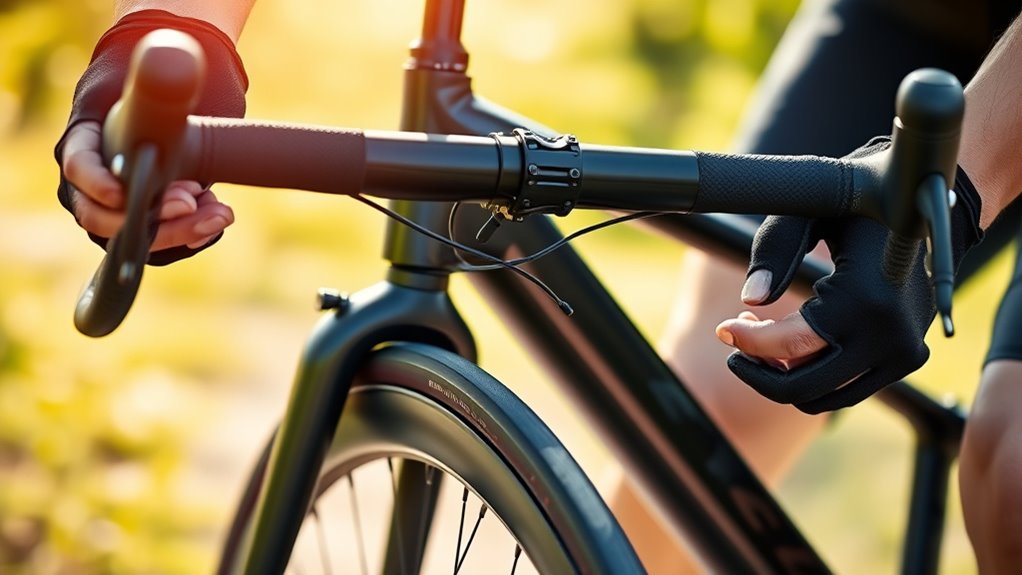

Before riding, do a quick pre-ride check to make certain your bike is safe and ready. Start by inspecting tire pressure with a gauge and adjust if needed, making sure tires are cold for accuracy. Check brake function by squeezing levers and pedals, and look for fluid levels and wear. Verify all lights work and mirrors are clean and properly adjusted. Conduct a brief visual of the overall condition. Keep going to discover more essential steps for a smooth ride.
Key Takeaways
- Check tire pressure with a gauge, ensuring proper inflation for optimal grip and safety.
- Verify brake responsiveness by squeezing levers and inspecting brake fluid and pad wear.
- Test all lights and signals for proper functioning to ensure visibility and compliance.
- Inspect the drive system, including chain tension and lubrication, and top off essential fluids.
- Conduct a quick visual review of the bike’s overall condition, including mirrors and brake components.

Before hitting the road, performing a Pre-Ride M-Check guarantees your motorcycle is safe and ready to ride. This quick inspection isn’t just about peace of mind; it’s vital for your safety and the longevity of your bike. Start by checking the tire pressure. Properly inflated tires ensure maximum grip, better handling, and even tire wear. Use a reliable pressure gauge and compare your readings to the manufacturer’s recommended PSI, usually found on the sidewall or in your owner’s manual. Under-inflated tires can cause sluggish handling and increase the risk of a blowout, especially at high speeds. Over-inflation, on the other hand, reduces traction and makes the ride less smooth. Adjust the pressure accordingly by adding or releasing air. Remember, cold tires will read lower, so check the pressure when the tires are cold for an accurate measurement.
Next, focus on the brake function, which is fundamental for safe stopping. Before riding, squeeze the brake lever and pedal to ensure they feel firm and responsive. If the brake lever feels spongy or sinks to the handlebar, it could indicate air in the brake lines or low brake fluid levels. Check the brake fluid reservoir—if it’s below the minimum mark, top it up with the correct type of brake fluid specified in your manual. Make sure the brake pads have enough thickness; if they’re worn down, replace them before riding. Test the brakes by gently rolling forward and applying pressure to see if they stop the bike smoothly and effectively. Noisy or uneven braking can signal issues like warped rotors or contaminated brake pads, which need addressing before hitting the road.
While these two checks are the most vital, don’t forget other essentials during your M-Check. Inspect your lights—headlights, taillights, and turn signals—to ensure they’re working properly. Verify that your chain or drive belt is properly tensioned and lubricated. Check your oil level and coolant, especially if your ride will be long or in hot weather. Also, ensure your mirrors are clean and correctly adjusted for maximum visibility. Performing this quick but thorough pre-ride inspection can save you from unexpected breakdowns or accidents. It only takes a few minutes but provides peace of mind, ensuring your motorcycle is in top condition for a safe and enjoyable ride. Stay vigilant, and make the M-Check part of your routine every time you ride.
Frequently Asked Questions
How Often Should I Perform a Pre-Ride M-Check?
You should perform a pre-ride M-check every time you plan to ride your bike. This quick safety checklist helps guarantee your bike’s brakes, tires, chain, and gears are in good condition, reducing the risk of accidents. Regular bike maintenance keeps your ride smooth and safe. Make it a habit to do this brief inspection before each ride, especially if you’ve been riding frequently or over rough terrain.
Can I Do the M-Check on Any Bike Model?
Yes, you can do the M‑Check on any bike model. It’s a simple bike maintenance and safety inspection that helps confirm your bike’s critical components are in good shape. Just follow the steps to check brakes, tires, chain, and gears, regardless of your bike type. Regularly performing this check keeps you safe, extends your bike’s lifespan, and boosts your confidence on every ride.
What Tools Are Needed for an M-Check?
Think of your bike as a finely tuned orchestra; every instrument needs to be verified before the performance. For an M-check, you’ll need basic tools like a Allen wrench, tire pressure gauge, and a pump. Good tool selection makes bike maintenance smooth and efficient, helping you catch issues early. Keep these essentials handy, and you’ll ensure your bike is in top shape for every ride, no matter the model.
How Long Does a Typical Pre-Ride M-Check Take?
A typical pre-ride M-check takes about 5 to 10 minutes, giving you enough time to make certain your bike’s safety and proper functioning. You’ll quickly inspect the maintenance checklist, checking tire pressure, brake response, chain tension, and gear operation. This brief routine helps prevent accidents, keeps your bike in top shape, and guarantees a safe ride. Taking this time shows you care about bike safety and reduces the risk of breakdowns.
What Are Signs of an Urgent Bike Repair During the Check?
You might notice brake warning signs like squeaking or a spongy feel, which signal urgent repair. Tire damage indicators, such as cuts or embedded debris, also require immediate attention. Don’t ignore these signs; riding with compromised brakes or damaged tires risks accidents. Address these issues before your ride to stay safe. Recognizing these urgent signs ensures you can fix problems promptly, preventing bigger issues down the line.
Conclusion
Think of the pre-ride M-Check as your bike’s morning coffee—it kickstarts everything into gear. Taking a few moments to inspect your bike guarantees you’re riding safe and smooth, avoiding surprises along the way. Just like a well-prepared athlete, your bike needs this quick warm-up to perform at its best. So, before you hit the road, give it a quick glance—your ride is ready to roll, and you’re set for a great adventure ahead.