To set up clipless pedals for beginners, start by choosing compatible pedals and cleats for your shoes. Install the cleats slightly forward, positioning the ball of your foot over the pedal axle, then sit on your bike and clip in to test comfort. Adjust the cleat angle and fore-aft position for natural foot alignment. Next, set the tension to a comfortable level so clipping in and out feels smooth. Keep fine-tuning your setup to guarantee safety and comfort as you go, and if you keep exploring, you’ll discover more tips to optimize your ride.
Listen free for 30 days with Audible
Thousands of audiobooks and originals — cancel anytime.
As an affiliate, we earn on qualifying purchases.
Key Takeaways
- Verify pedal and shoe compatibility before installation to ensure proper engagement and safety.
- Position cleats so the ball of your foot is over the pedal axle for optimal power transfer.
- Adjust cleat angle and fore-aft position gradually, testing comfort and knee alignment during short rides.
- Set pedal tension to a level that allows easy clipping in and out, especially for beginners.
- Regularly check and fine-tune your setup based on comfort, performance, and any knee or foot discomfort.

Have you ever wondered how to guarantee your clipless pedals are set up correctly for a safe and efficient ride? The key starts with understanding pedal compatibility and proper cleat positioning. Not all pedals work with every shoe, so double-check that your pedals are compatible with your cycling shoes. Most clipless pedal systems, like Shimano SPD or Look Keo, have specific cleat types designed to fit their pedal mechanisms. Using incompatible pedals can lead to improper engagement, difficulty clipping in or out, and even safety risks. Ensure that your shoes have the correct cleat mounts for the pedal system you’ve chosen, and confirm that the cleats are compatible with your pedals before installation.
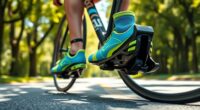
Once you’ve confirmed pedal compatibility, focus on cleat positioning. Proper cleat placement is essential for comfort, efficiency, and injury prevention. When installing your cleats, start by positioning them so that the ball of your foot is aligned directly over the pedal axle. This alignment helps distribute power evenly and reduces strain on your knees. To get this right, place the cleats on your shoes and clamp them into the pedals without tightening fully. Sit on your bike, clip into the pedals, and gently pedal backward. Pay attention to how your feet feel; if you notice your knees tracking inward or outward, or if you experience discomfort, adjust the cleats accordingly.
Proper cleat placement over the pedal axle ensures comfort, efficiency, and reduces knee strain during rides.
Adjusting cleat position isn’t just about fore-aft placement but also about angle. The cleats should be set so that your feet are in a natural, comfortable position when clipped in. Typically, this means aligning the cleat’s mounting holes to match the natural angle of your foot. Many cleats have multiple mounting holes to fine-tune this angle. Start with the cleats straight and make small adjustments until your feet feel stable and comfortable during pedaling. Remember to tighten the screws securely once you find the ideal position.
It’s also important to check the tension settings on your pedals, as they control how easy or difficult it is to clip in and out. Beginners often prefer a lower tension for easier engagement. After installation, take your bike for a short ride to test the setup. If you find yourself struggling to clip out or if your knees feel strained, revisit your cleat positioning and tension settings. Proper setup isn’t a one-time task; it’s an ongoing process to ensure your ride remains safe, comfortable, and efficient.
Shimano SPD clipless pedals for beginners
As an affiliate, we earn on qualifying purchases.
As an affiliate, we earn on qualifying purchases.
Frequently Asked Questions
How Tight Should Clipless Pedals Be Adjusted?
You should adjust your clipless pedals’ tension so that it’s firm enough to keep your foot secure but easy enough to release quickly if needed. Use the adjustment techniques provided by your pedal model to turn the tension screw gradually, testing each time. Find a balance where you feel confident riding without risking difficulty releasing your foot. Regularly check and fine-tune your pedal tension for comfort and safety.
Can I Ride Clipless Pedals With Regular Shoes?
You can ride clipless pedals with regular shoes, but it’s like trying to fit a square peg in a round hole. Most pedal types require specific shoe compatibility, typically cycling shoes with cleats. Regular shoes lack the stiff sole and cleat mounts, making clipping in tricky and unsafe. For a smooth ride, invest in proper cycling shoes designed for your pedal type—your feet and performance will thank you.
How Do I Prevent Accidental Unclipping?
To prevent accidental unclipping, you should carefully adjust the pedal engagement and release tension. Start by setting the release tension slightly higher so it takes more force to unclip, giving you better control. Practice clipping in and out in a safe environment until you’re comfortable with the pedal engagement. Consistently maintaining the correct tension and practicing proper release techniques will help you stay clipped in securely during rides.
Are Clipless Pedals Suitable for Mountain Biking?
Absolutely, clipless pedals are perfect for mountain biking—who needs free-range feet anyway? The clipless pedal benefits include improved control, power transfer, and a more secure ride. Plus, they boost mountain biking safety by reducing foot slips on tricky descents. So, if you’re ready to conquer rugged trails with confidence and a little style, give clipless pedals a shot. Just remember, staying clipped in keeps you upright and crushing those uphill battles.
What’s the Best Practice for Releasing From Pedals Quickly?
To release quickly from clipless pedals, practice pedal engagement and quick release techniques regularly. Start by unclipping your dominant foot first, then the other, focusing on smooth, controlled movements. Use your heel to pivot outward, and avoid jerking or sudden movements. Consistent practice helps you develop muscle memory, making it easier to disengage swiftly in tricky situations. Remember, confidence and familiarity are key to mastering quick releases.
Conclusion
Remember, mastering clipless pedals is like learning to dance; it takes patience and practice. At first, it might feel unnatural, but with persistence, you’ll find your rhythm and flow. Just as a well-tuned instrument produces beautiful music, your bike setup will help you enjoy smoother, more confident rides. Embrace the journey, knowing that every pedal stroke brings you closer to harmony on two wheels. Keep at it, and you’ll soon ride with effortless grace.
Flea & tick season Picks
flea and tick prevention
As an affiliate, we earn on qualifying purchases.