
When deciding between wheel trueing and tensioning, remember both are essential for a strong, smooth ride. Trueing keeps your wheel straight, preventing wobbles and ensuring proper alignment, while tensioning evenly distributes spoke stress for durability. Focusing only on trueing might solve visible wobbles but won’t fix underlying tension issues. To really keep your wheel in top shape, you need a balanced approach. If you want to master the details, there’s more to discover below.
Key Takeaways
- Trueing ensures the wheel spins straight, preventing wobbles and side deviations that affect ride quality.
- Proper tension distributes spoke stress evenly, maintaining wheel strength and preventing loosening or distortions.
- Both trueing and tensioning are interconnected; imbalance in one can compromise overall wheel integrity.
- Wheel tension is crucial for durability, while trueing maintains alignment; both are essential for optimal performance.
- Regular maintenance of both trueing and tensioning prolongs wheel lifespan and ensures consistent ride quality.
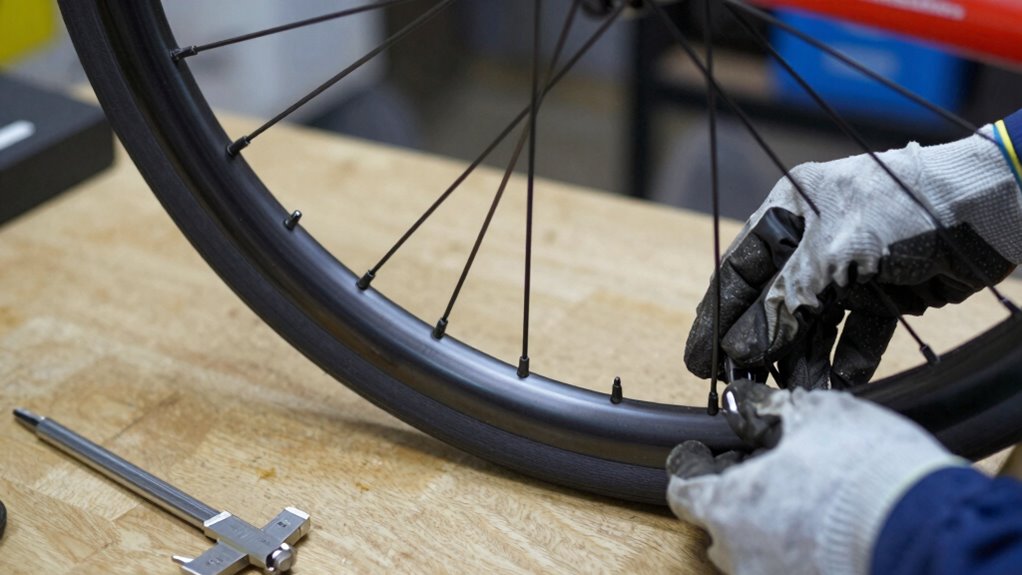
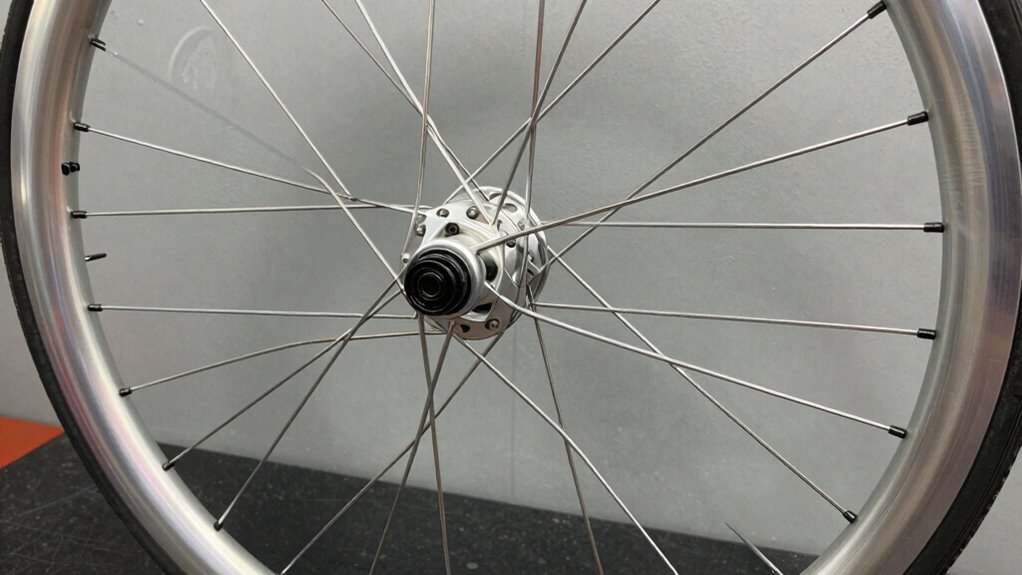
Have you ever wondered whether wheel trueing or wheel tensioning is more important for your bike’s performance? It’s a common question among cyclists seeking the best ride quality. While both aspects are vital, understanding their roles helps you focus on what truly makes a difference. Wheel trueing involves adjusting the rim so it spins perfectly straight, eliminating wobbles and side-to-side deviations. Wheel tensioning, on the other hand, refers to evenly distributing spoke tension around the wheel, creating a stable and durable structure. Both influence ride quality, but their significance varies depending on your riding style and goals.
Balancing wheel trueing and tensioning ensures optimal ride quality and durability.
When it comes to performance, many overlook tire pressure and spoke count, yet these factors are closely connected to wheel health. Proper tire pressure ensures that your wheel’s contact patch is ideal, providing better grip, comfort, and efficiency. If your tire pressure is too low or too high, it can cause uneven stress on the wheel, leading to potential misalignment or spoke tension issues over time. For example, under-inflated tires increase the load on certain spokes, which can cause the wheel to go out of true or develop uneven tension. Conversely, over-inflation can make the wheel more susceptible to impacts and distortions, affecting its true alignment.
Spoke count also plays a role in how well your wheel maintains tension and trueing. A wheel with a higher spoke count generally offers more stability and can better distribute tension evenly. This allows for easier maintenance of true alignment because the spokes can be adjusted more precisely and evenly. Wheels with fewer spokes are lighter but may be more prone to tension imbalances and misalignment if not built or maintained properly. Whether you’re riding on rough terrain or smooth pavement, the right spoke count combined with proper tensioning helps your wheel stay true longer and resist distortions caused by impacts or stress.
Additionally, using high-quality components like spokes and nipples can improve the longevity and stability of your wheel, making trueing and tensioning more effective over time. Ultimately, both wheel trueing and tensioning matter, but they’re interconnected. You can have a perfectly trued wheel, but if the tension isn’t balanced, it will loosen or develop issues over time. Likewise, having well-tensioned spokes doesn’t guarantee a perfectly true wheel if it hasn’t been properly trued. Paying attention to tire pressure and spoke count during maintenance can make a significant difference. Properly inflated tires reduce unnecessary strain, and a suitable spoke count ensures your wheel remains resilient and true over countless rides. So, instead of focusing solely on one aspect, aim for a balanced approach—keep your wheels true, tension your spokes evenly, and maintain ideal tire pressure for the best ride possible.

DONNGYZ Bicycle Wheel Truing Stand for 16-29 Inch – Bike Rim Maintenance Tool with Spoke Wrench, Wheel Calibration Wheel Alignment Rim Truing Tool for MTB, Road
- Compatibility Note: Not compatible with thru-axles without adapter
- Removable Metal Structure: Made from durable, corrosion-resistant aluminum alloy
- Lightweight Design: Weighs only 7.3 lbs for easy portability
As an affiliate, we earn on qualifying purchases.
As an affiliate, we earn on qualifying purchases.
Frequently Asked Questions
How Often Should I Check Wheel True and Tension?
You should check your wheel true and tension every 1 to 3 months as part of regular bike care. Regular wheel maintenance helps prevent issues like spoke loosening or misalignment, which can affect ride quality and safety. If you ride frequently, especially on rough terrain, check more often. Keep an eye out for wobbles or uneven tension, and address these issues promptly to make sure your bike stays in top shape.
Can Improper Tension Cause Wheel Truing Issues?
Yes, improper tension can cause wheel truing issues. When spoke tension is uneven, it affects rim alignment, making it difficult to maintain a true wheel. Too loose or too tight spokes create imbalances that lead to wobbling or misalignment over time. Regularly checking and adjusting spoke tension guarantees your wheel remains true, providing a smoother ride and preventing costly repairs caused by rim misalignment.
Does Rim Material Affect the Importance of True or Tension?
Sure, rim material totally dictates whether true or tension matters more—because who wouldn’t want their wheels to wobble like a wobbly jello mold? In reality, rim stiffness and material compatibility are key. You need a strong, compatible rim that maintains true tension without flexing or cracking. So, focus on matching materials and ensuring proper tension, rather than obsessing over minor truing tweaks. Your bike will thank you—probably.
Which Is More Critical for Wheel Durability: True or Tension?
You should prioritize proper tension over perfect trueness for wheel durability. When your wheel has balanced spoke tension, it maintains its shape and can withstand impacts better. While wheel alignment and a consistent spoke pattern help, tension guarantees the wheel’s strength and longevity. A well-tensioned wheel resists warping and deformation, making it more durable over time. True wheels are important, but tension plays a more critical role in durability.
Are There Specific Tools Recommended for Measuring True and Tension?
You need the ultimate tools to master your wheel setup! Get a spoke tension gauge for precise tension measurements and a truing stand to perfectly align your wheel. These tools are essential—without them, you’re flying blind in a storm. With a tension gauge, you’ll know exactly how tight your spokes are, and a truing stand helps you fix wobbliness instantly. Invest in these, and your wheels will stay true forever!
Conclusion
So, next time you’re fussing over wheel true or tension, remember—it’s the little things that often don’t matter as much as you think. Ironically, obsessing over perfect trueness might do more harm than good, while a bit of tension slack can still roll smoothly. In the end, maybe it’s not about finding the perfect balance, but about enjoying the ride—flaws and all. After all, a wheel’s true test is how you keep moving forward.