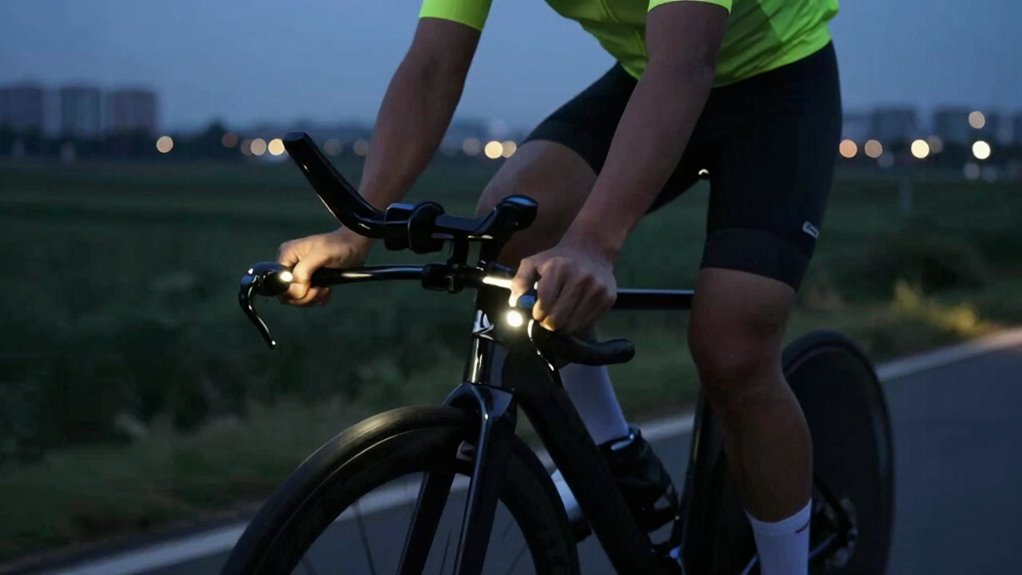

To prevent your bike lights from failing mid-ride, make sure you fully charge batteries before each use and avoid letting them completely drain. Regularly inspect lights for flickering or dimming, and replace old batteries promptly. Store batteries in cool, dry places to slow degradation. Using modern LED lights with built-in indicators helps catch low power early. Keep these tips in mind—more strategies can help you stay safely lit throughout your journey.

Get sports gear delivered free — and shop member deals
- Fast, free delivery on millions of items
- Access to Prime Big Deal Days deals on October 6–7
- Prime Video, Amazon Music and more included
Key Takeaways
- Fully charge batteries before rides and avoid complete depletion to maintain optimal capacity.
- Regularly inspect lights for dimming or flickering signs indicating battery degradation.
- Use modern LED lights with built-in battery indicators to monitor power levels during rides.
- Store batteries in cool, dry environments and replace aging ones proactively.
- Carry spare batteries or portable chargers to ensure continuous lighting in case of failure.
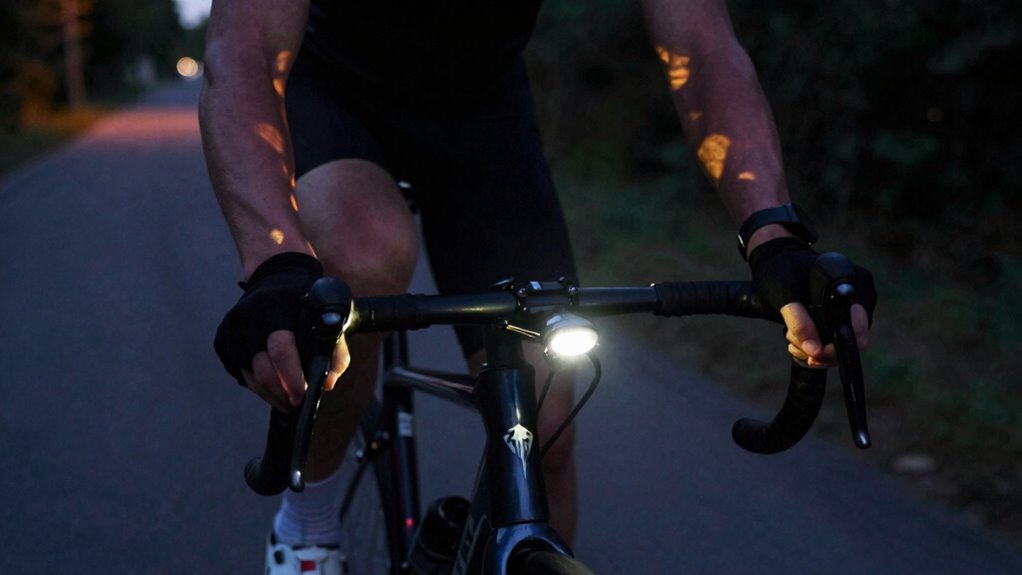
Nothing disrupts a ride quite like your bike’s lights suddenly failing in the middle of the night. It’s a jarring experience, especially when you’re relying on those lights to see the road and stay visible to others. The key to avoiding this nightmare lies in proper battery maintenance and understanding how lighting technology evolves. If you’re neglecting your batteries or ignoring advances in lighting tech, you’re playing a risky game every time you hit the road.
Avoid riding in darkness by maintaining batteries and staying updated on lighting tech advancements.
First, take a close look at your battery maintenance habits. Many riders forget that batteries aren’t set-it-and-forget-it devices. They require regular checks and proper storage to stay reliable. For rechargeable batteries, ensure they are fully charged before every ride and avoid letting them deplete completely, which can shorten their lifespan. If you notice a decrease in brightness or the light flickers, it’s a sign the battery might be losing its capacity. Swapping out old batteries or charging them properly can prevent sudden outages. For disposable batteries, replace them as recommended, especially before long rides, and keep spare batteries handy. Properly storing batteries in a cool, dry place also makes a difference; heat and moisture accelerate battery degradation, increasing the chance of failure mid-ride. Additionally, selecting batteries with higher capacity and longevity can significantly improve your riding experience.
Lighting technology itself has advanced considerably in recent years, offering more reliable and efficient options. Modern LED lights, for example, use less power and last longer than traditional halogen or incandescent bulbs. They’re also more resistant to vibrations and shocks, which are common in cycling. Investing in high-quality lighting technology means you benefit from longer-lasting batteries and more stable illumination, reducing the risk of sudden failure. Some newer lights feature built-in battery indicators, so you’re warned well before power runs out. Others have smart charging capabilities, ensuring batteries are always topped off without overcharging. By choosing lights with the latest tech, you’re less likely to find yourself plunged into darkness unexpectedly.
In addition to proper maintenance and choosing the right technology, consider having backup power sources. Carrying spare batteries or a portable charger for rechargeable lights ensures you’re covered if your primary light runs out mid-ride. Regularly checking your lights before heading out and replacing batteries at the first sign of weakness can save you a lot of trouble later on. Staying informed about lighting technology updates and investing in quality gear also helps protect your rides from unexpected failures, keeping you safe and visible no matter the conditions.
bike LED front light with battery indicator
As an affiliate, we earn on qualifying purchases.
As an affiliate, we earn on qualifying purchases.
Frequently Asked Questions
How Often Should I Replace My Bike Battery?
You should replace your bike battery every 2 to 4 years, depending on usage and maintenance. Regular battery maintenance and proper charging routines help extend its lifespan. Keep your battery charged consistently, avoid deep discharges, and store it in a cool, dry place. If you notice reduced performance or difficulty holding a charge, it’s time to substitute it. Proper care ensures your lights stay reliable during every ride.
Can Environmental Factors Affect Battery Performance During Rides?
Just like a sailor trusts the unpredictable sea, you should know weather impact and temperature effects can influence your bike battery during rides. Extreme cold saps power, causing lights to flicker or fail, while heat accelerates battery wear. You can safeguard your battery by storing it properly and avoiding sudden temperature swings. Being mindful of environmental factors helps ensure your lights stay bright, no matter how the weather turns.
What Are Signs My Battery Is About to Fail?
You’ll notice your battery’s capacity decreasing, meaning lights dim or flicker sooner than usual. Your charging habits also matter—if you frequently let the battery drain completely or overcharge, it can weaken performance. Keep an eye on how long your lights stay bright and avoid extreme charging behaviors. Regularly charging your device to full and maintaining a consistent routine helps preserve battery health and prevents mid-ride failures.
Are There Specific Batteries Better for Long-Distance Riding?
You’re likely to find lithium-ion batteries ideal for long-distance riding, thanks to their superior battery chemistry and larger capacity. They’ve become a coincidence of innovation and necessity, offering longer-lasting power when you need it most. These batteries provide higher capacity, so your lights stay bright and reliable over extended rides. Investing in a high-capacity lithium-ion battery guarantees you’ll enjoy a smoother, safer journey without the worry of mid-ride failures.
How Do I Properly Store Batteries When Not in Use?
When you’re not using your batteries, store them in a cool, dry place with a stable storage temperature, ideally between 50-77°F (10-25°C). Always partially charge batteries to around 50-70% before storing, and avoid extreme heat or cold. Remember to recycle old or damaged batteries properly, following local battery recycling guidelines. This helps prevent capacity loss and guarantees your batteries stay ready for your next ride.
Conclusion
So, here’s the irony—you set out with shiny, fully charged lights, only to have them die mid-ride. It’s like trusting your bike’s battery to be forever reliable, only to be left in the dark when you need it most. Proper habits could’ve kept you illuminated, but instead, you learned the hard way that neglecting your battery can turn a smooth ride into a surprise blackout. Sometimes, the simplest care makes all the difference—and saves you from the dark side.
Fall Picks
fall essentials
As an affiliate, we earn on qualifying purchases.