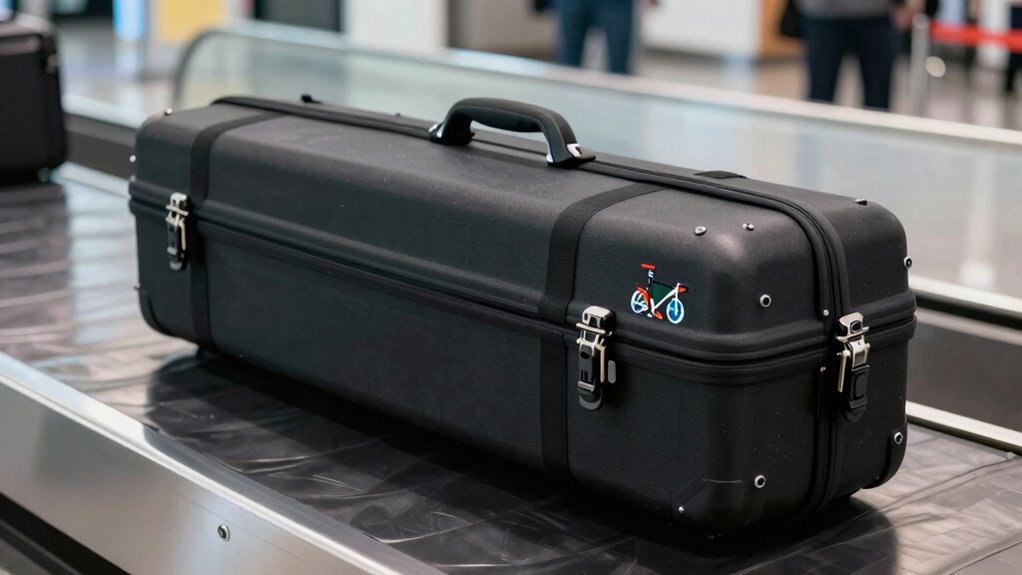

To avoid cracking your bike frame at the airport, make certain you use high-quality padding like foam or bubble wrap around vulnerable parts, especially the frame, fork, and derailleur, and secure it tightly inside a sturdy, airline-approved case. Double-check the case’s condition, and confirm it meets airline size and weight restrictions before departure. Properly padding and inspecting your case can make all the difference in arriving with your bike intact—keep going to learn even more expert tips.

Get sports gear delivered free — and shop member deals
- Fast, free delivery on millions of items
- Access to Prime Big Deal Days deals on October 6–7
- Prime Video, Amazon Music and more included
Key Takeaways
- Use high-density foam or bubble wrap to securely pad delicate frame parts and prevent cracking during transit.
- Double-check the case’s condition and reinforcement to ensure it can withstand handling at the airport.
- Remove or secure loose components and accessories separately to avoid damage or shifting.
- Measure and weigh the packed case to confirm compliance with airline size and weight restrictions.
- Seal all zippers, straps, and locks tightly to prevent accidental openings and protect your bike frame.
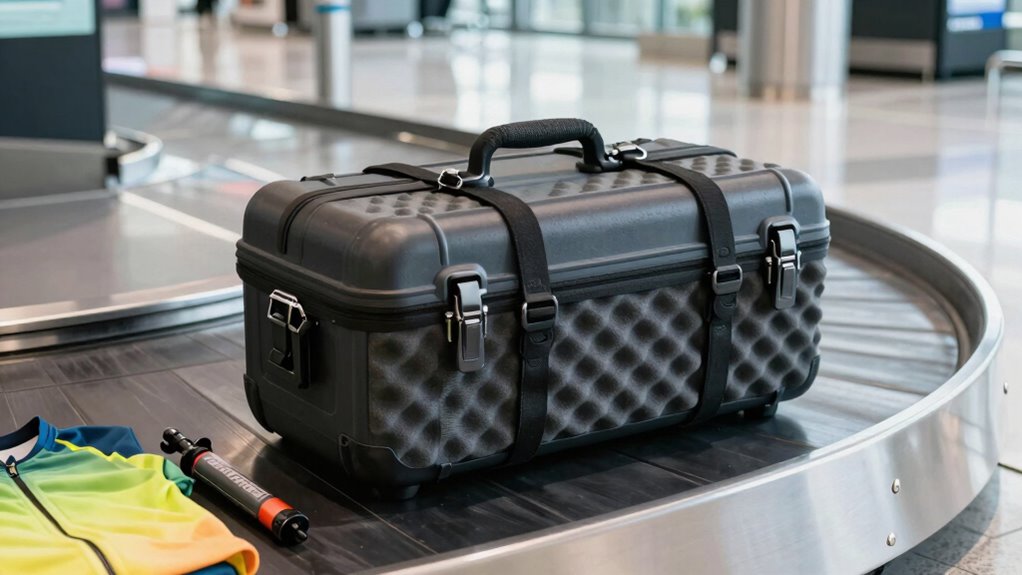
Preparing your bike travel case is essential to guarantee your bike arrives safely and ready to ride. The first step is making certain your bike case padding is sufficient. Proper padding cushions your bike during transit, absorbing shocks and preventing damage from rough handling. Use high-density foam, bubble wrap, or specialized bike padding inserts to wrap delicate components like the frame, fork, and derailleur. Secure these protectors tightly so they don’t shift during transport. Pay special attention to vulnerable areas such as the dropouts and derailleur, which are prone to cracking if jolted. Don’t skimp on padding—more is better when it comes to safeguarding your bike. Additionally, inspecting your bike case for any signs of wear or damage before packing can help prevent issues during transit.
Ensure your bike case is well-padded with foam or bubble wrap to prevent damage during transit.
Next, you need to think about airline restrictions regarding bike cases. Airlines often have specific rules regarding size, weight, and packaging for sports equipment, including bikes. Check your airline’s website well in advance to understand their policies. Many airlines require bikes to be packed within a certain size limit, often around 62 linear inches (length + width + height), and weight restrictions may range from 50 to 70 pounds. Failure to comply can lead to additional fees or even having to repack your bike at the airport. Some airlines also have specific guidelines about how the bike case should be sealed and labeled. It’s wise to measure your packed bike case beforehand and ensure it fits within these restrictions to avoid surprises at check-in.
Another thing to take into account is whether your bike case is airline-approved. Hard-shell cases tend to offer better protection and are often accepted without issue, but soft cases can be lighter and more flexible for storage. Whichever you choose, make sure it’s sturdy, lockable, and clearly labeled with your contact details. When packing, remove any loose accessories or tools that could damage the case or get damaged themselves. Use the bike case padding to secure these items separately. Ensuring your case has adequate padding and protection is crucial for avoiding damage during transit.
Finally, before heading to the airport, double-check all straps, zippers, and locks on your bike case. Make sure everything is tightly secured and that the case is sealed properly. This not only prevents accidental openings but also reassures airline staff that you’ve taken the necessary precautions. Preparing your bike case properly with adequate padding and understanding airline restrictions will help you avoid costly damages and ensure your bike arrives at your destination in perfect condition, ready to hit the trails or roads.
As an affiliate, we earn on qualifying purchases.
Frequently Asked Questions
How Much Does a Typical Bike Travel Case Weigh?
A typical bike travel case weighs around 15 to 30 pounds, depending on its bike case dimensions and materials. You should check the weight limits specified by airlines to avoid extra fees or hassle. Lightweight cases made from durable materials help protect your bike without adding too much weight. Make sure your case is within the airline’s weight limits to ensure smooth travel and avoid damaging your bike frame at the airport.
Can I Carry Extra Bike Accessories in the Case?
Did you know that nearly 60% of travelers pack extra accessories? Yes, you can carry extra bike accessories in your case. Use bike case padding to protect your frame, and utilize accessory storage options like small compartments or mesh pockets. Just be sure not to overload, so your gear stays secure and your bike stays safe during transit. Packing smart keeps everything protected and accessible.
Are There Size Restrictions for Bike Cases on Airlines?
Yes, there are size restrictions for bike cases based on airline baggage policies. You need to verify your airline’s specific bike case dimensions, as most airlines have maximum length, width, and height limits, often around 62 linear inches. Exceeding these dimensions may result in extra fees or the need for special arrangements. Always confirm your airline’s baggage policies beforehand to avoid surprises and ensure your bike case fits within their size restrictions.
How Long Does It Usually Take to Pack a Bike Properly?
Packing your bike takes about an hour if you follow a thorough packing checklist. You’ll want to allocate time to carefully wrap your frame with case padding, ensuring it’s snug as a bug in a rug. Start early to avoid rushing, and double-check each step. Proper packing transforms your bike into a well-protected treasure, ready for travel without the risk of cracks or damage.
Is Insurance Recommended for Transporting Bikes?
Yes, insurance is highly recommended when transporting bikes. Bike insurance offers damage coverage, giving you peace of mind if your bike gets damaged or lost during transit. Airports and carriers can be unpredictable, and insurance helps safeguard your investment. Before traveling, check your policy to ensure it covers bike damage, and consider purchasing additional coverage if needed. This way, you avoid costly repairs and enjoy your trip stress-free.
Conclusion
Now that you’re ready to conquer the skies with your bike, remember, a well-packed case is your shield against the chaos of travel. Think of your bike as a delicate treasure, not just a piece of gear—treat it like fragile glass on a rollercoaster. With proper prep, you’ll glide through the airport like a smooth rider on a perfect trail, avoiding cracks and surprises. Safe travels, and may your ride stay pristine from takeoff to touchdown!
NFL season / tailgating Picks
team gear
As an affiliate, we earn on qualifying purchases.