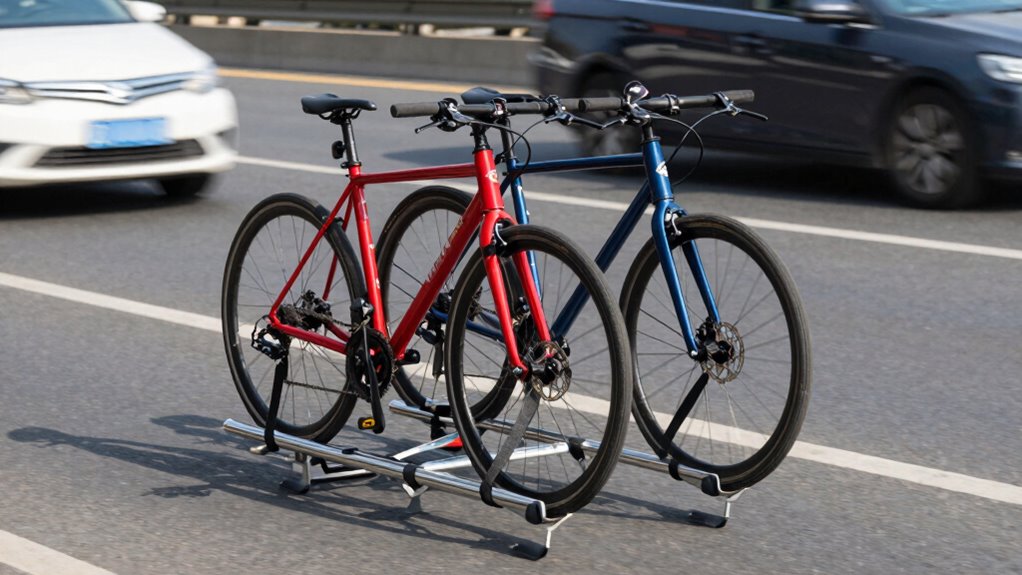

To keep your bikes secure at highway speeds, make certain they’re properly strapped using the correct securing methods for your rack type. Tighten all straps, including those over the top tube, around wheels, and through frames, until there’s no slack or wobbling. Balance the bikes evenly on your rack to prevent shifting, and double-check all points before hitting the road. Staying vigilant during transit helps prevent movement—learn more about perfecting your securing techniques.

Get sports gear delivered free with Prime
- Fast, free delivery on millions of items
- Prime Video, Amazon Music and more included
- Member-only deals all year
Key Takeaways
- Use high-quality, compatible straps or ratchets designed for bike racks and ensure they are tightened firmly without slack.
- Secure the bike’s frame, wheels, and handlebars to multiple points on the rack to prevent movement.
- Double-check all securing straps and fastenings before departure, ensuring no loose or wobbly parts remain.
- Pad contact points with foam or bike pads to prevent scratches and cushion vibrations during transit.
- Periodically inspect and tighten straps during long trips, especially after initial miles or rough terrain.
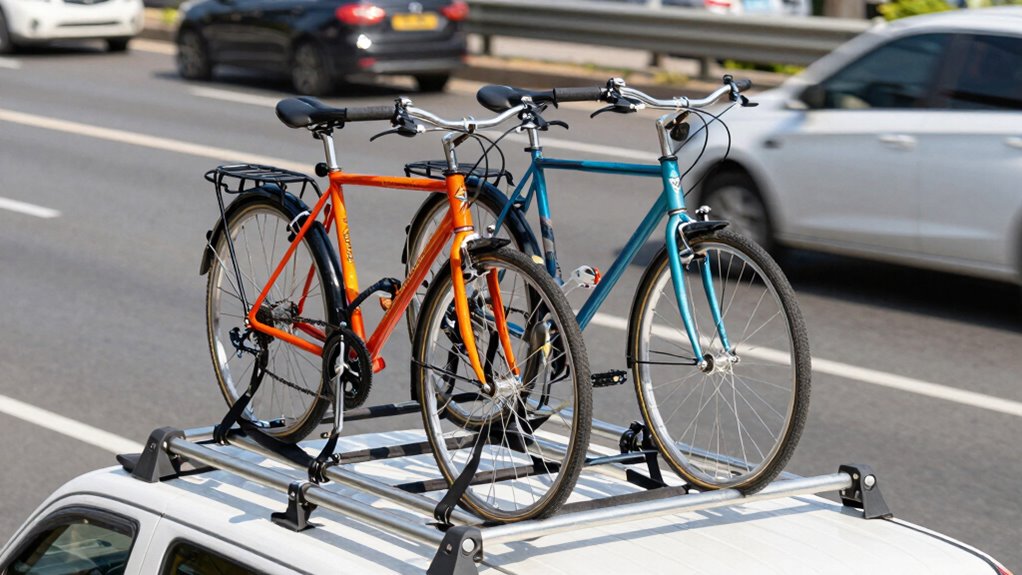
Transporting your bike safely starts with knowing how to strap it to a rack properly. The first step is understanding the different bike rack types available, as each offers unique securing methods suited for various needs. Whether you’re using a hitch-mounted rack, a trunk-mounted one, or a roof rack, each has specific features that influence how you should secure your bike. Hitch-mounted racks tend to be the most stable and easiest to load, especially for heavier bikes, while trunk-mounted racks are more portable but can be less secure at higher speeds. Roof racks require lifting your bike overhead, which can be tricky but provide excellent clearance and security when set up correctly.
Regardless of the type you choose, the key to safe transport is making certain your bike is tightly secured so nothing shifts or falls off during highway speeds. Start by positioning your bike on the rack so that it’s balanced evenly, with the weight distributed properly. Use the securing methods recommended for your specific rack type—this could include straps, ratchets, or clamps. For hitch-mounted racks, you’ll typically use straps that go over the top tube or around the frame, tightening them until there’s no wiggle. On trunk-mounted racks, straps are often secured to the car’s trunk or hatch, so double-check that they’re anchored to sturdy points and tightened securely. Roof racks often involve straps that loop through the bike’s frame or wheels, with additional tie-downs for stability. Make sure all straps are snug and free of slack; loose straps invite movement, which can cause damage or accidents at high speeds.
To enhance safety, consider properly distributing weight across your rack to prevent imbalance and ensure stability during transit. It’s essential to double-check your securing methods before hitting the road. Give your bike a gentle shake to confirm everything is tight—any movement indicates you need to tighten the straps further. Pay close attention to the frame, wheels, and handlebars, as these are the most vulnerable points for shifting or loosening. Use padding or foam blocks if needed to prevent scratches and cushion the bike during transit, especially on rough roads. Regularly inspect the straps en route, particularly after the first few miles, to ensure they haven’t loosened due to vibrations. Remember, the goal is to keep your bike immobile, stable, and secure so that nothing moves at highway speeds. When done correctly, your bike will stay firmly in place, arriving at your destination safely and ready to ride.
As an affiliate, we earn on qualifying purchases.
Frequently Asked Questions
What Are the Best Types of Straps for High-Speed Stability?
For high-speed stability, you should choose straps with strong strap tension and durable strap material like nylon or polyester. These materials resist stretching and provide reliable grip. Use straps with secure buckles or ratchets to tighten thoroughly, ensuring minimal movement. Always check the tension regularly during your trip and tighten as needed. Properly tensioned straps and quality materials keep your bike stable and safe at highway speeds.
How Do I Prevent Bike Theft During Long Trips?
Imagine your bike as a treasure chest, worth guarding fiercely. Use sturdy bike lock types like U-locks or heavy-duty chains to secure it. Lock the frame and wheels to a solid, immovable object, and avoid leaving it in poorly lit, isolated areas. Theft prevention tips also include removing accessories and registering your bike. These steps help protect your ride, keeping it safe while you’re away on your adventure.
Can I Secure Multiple Bikes on One Rack Safely?
You can securely carry multiple bikes on one rack by choosing a durable rack designed for multiple bikes. Use high-quality straps to firmly fasten each bike, ensuring they don’t sway or loosen during travel. This minimizes the risk of bike theft and damage. Always check the rack’s durability and stability before hitting the road, and double-check strap tightness periodically. Properly secured bikes stay safe and intact, even at highway speeds.
What Maintenance Is Needed for Rack Straps Over Time?
Did you know that over 60% of rack strap failures are due to wear and tear? You should regularly inspect your straps for signs of fraying, cracking, or weakening. To guarantee strap durability, replace straps every 1-2 years or sooner if you notice any damage. Keeping your straps in good condition prevents accidents and keeps your bikes secure during highway trips. Regular maintenance is key to safe, long-lasting rack setups.
Are There Specific Racks Designed for High-Speed Travel?
Yes, there are bike racks specifically designed for high-speed travel. You should look for racks with a higher weight capacity and durable strap materials like reinforced nylon or polyester, which can withstand vibrations and weather conditions. These racks often feature secure locking mechanisms and adjustable straps to keep your bike stable at highway speeds. Ensuring the rack’s weight capacity matches your bike and using high-quality straps will help prevent movement and damage during your trip.
Conclusion
Remember, a job worth doing is worth doing right. When you strap your bikes securely to the rack, you prevent damage and guarantee a safe trip. Don’t take shortcuts—tighten those straps and double-check everything before hitting the highway. It’s better to spend a few extra minutes now than deal with costly repairs or lost bikes later. Keep safety in mind, and your adventures will stay smooth and worry-free, just like the saying goes, “Better safe than sorry.”
Columbus Day / Indigenous Peoples' Day Picks
long weekend sales
As an affiliate, we earn on qualifying purchases.