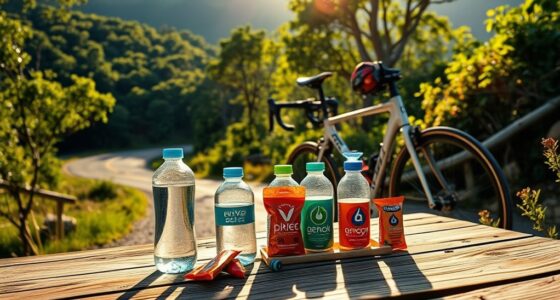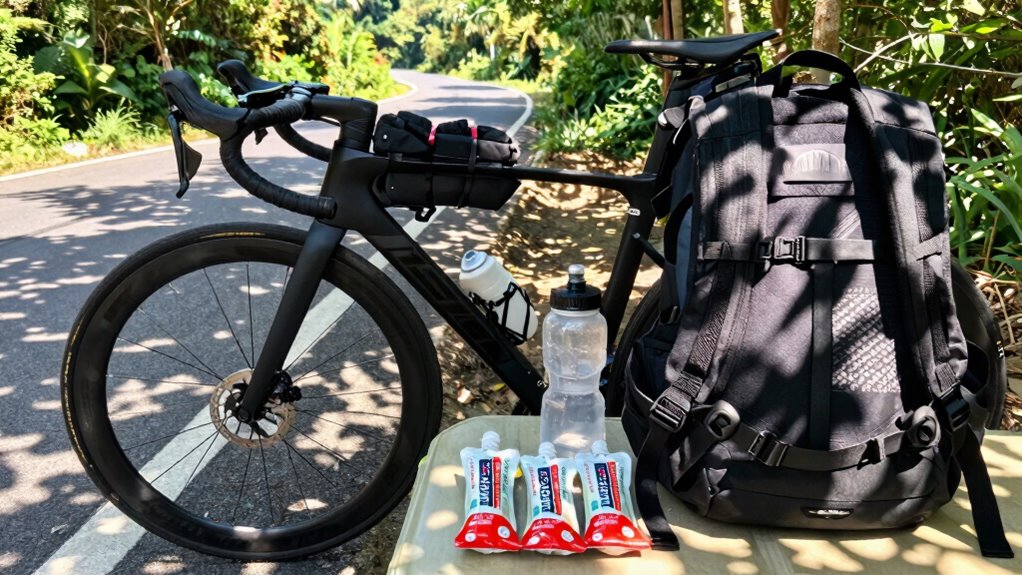

To fuel back-to-back ride days, focus on consuming balanced meals within an hour after riding, combining carbs, lean proteins, and healthy fats to replenish glycogen, repair muscles, and reduce inflammation. Stay hydrated by drinking plenty of water and electrolytes, especially during intense sessions. Prioritize whole foods and maintain consistent nutrition throughout the day, including gentle recovery practices like stretching and sleep. Continuing this approach can help you optimize recovery and keep performance high.

Get sports gear delivered free — and shop member deals
- Fast, free delivery on millions of items
- Access to Prime Big Deal Days deals on October 6–7
- Prime Video, Amazon Music and more included
Key Takeaways
- Consume balanced, carbohydrate-rich meals within an hour post-ride for glycogen replenishment and muscle repair.
- Stay consistently hydrated with water and electrolytes, especially during intense back-to-back riding days.
- Prioritize whole, minimally processed foods to support immune health and reduce inflammation.
- Incorporate gentle stretching, foam rolling, and quality sleep to enhance recovery and reduce soreness.
- Maintain regular, small meals throughout the day to sustain energy levels and prevent fatigue.
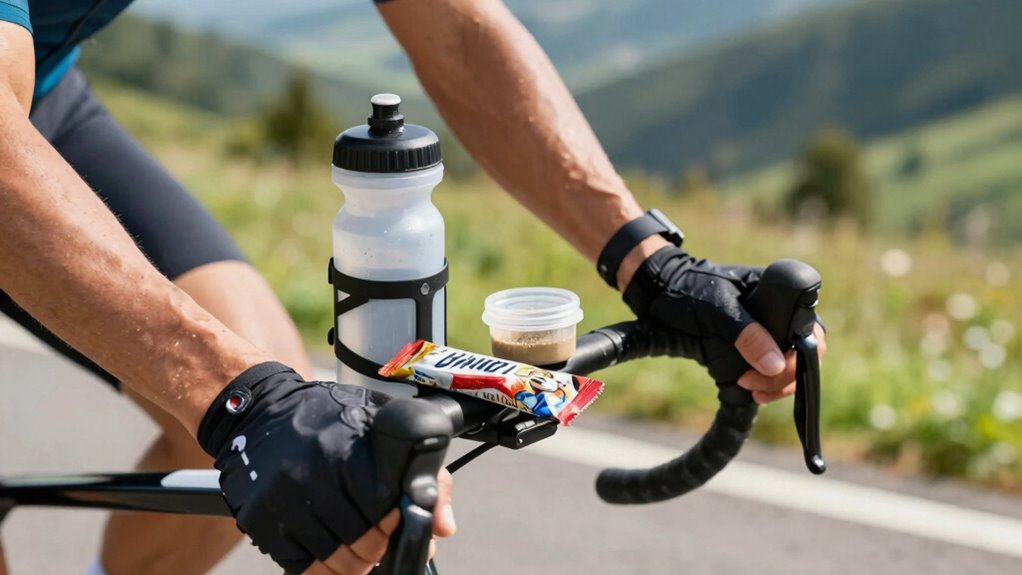
After a long day of back-to-back ride days, your body needs proper fueling to recover and perform at its best. This is where effective nutrition strategies come into play. You want to prioritize replenishing glycogen stores, repairing muscle tissue, and staying hydrated. Start by consuming a balanced meal within an hour of finishing your ride—think carbs, protein, and healthy fats. Carbohydrates are essential for restoring energy, so include foods like rice, potatoes, or whole-grain bread. Pair these with lean proteins such as chicken, fish, or plant-based options to kickstart muscle recovery. Don’t forget healthy fats from sources like avocados or nuts, which support inflammation reduction and overall recovery. During the rest of the day, keep up with frequent, smaller meals to maintain energy levels and prevent fatigue. Incorporate snacks like yogurt, fruit, or energy bars that offer quick-digesting carbs and some protein. Staying hydrated is equally important; drink plenty of water throughout the day, and consider adding electrolyte drinks if you’ve sweated heavily. Proper hydration helps prevent cramps and keeps your muscles functioning at their best. Incorporating nutrient timing can further optimize your recovery process by ensuring your body receives what it needs when it’s most receptive. Additionally, paying attention to whole, minimally processed foods can provide your body with the necessary vitamins and minerals that aid recovery and immune function. Consuming macronutrients in appropriate amounts supports sustained energy and recovery, especially during intensive riding periods. Recovery techniques solidify your efforts by reducing soreness and accelerating healing. Gentle stretching or foam rolling after each ride can loosen tight muscles and improve blood flow, which delivers essential nutrients faster to fatigued tissues. Prioritize quality sleep, as it’s when your body repairs itself most effectively. Creating a cool, dark, and quiet sleeping environment helps you get restorative rest. Post-ride massages or compression gear can also support recovery by reducing swelling and enhancing circulation. As you plan your nutrition strategies, remember that consistent intake of nutrient-rich foods and hydration throughout your back-to-back riding schedule is essential. Avoid skipping meals or relying heavily on processed foods, as these can impair recovery and leave you feeling sluggish. Instead, opt for whole, minimally processed foods that supply essential vitamins and minerals, aiding your immune system and reducing inflammation. Incorporating balanced nutrition can make a significant difference in how quickly and effectively you recover for your next ride.
As an affiliate, we earn on qualifying purchases.
Frequently Asked Questions
What Are the Best Snacks for Quick Energy?
You should grab quick energy snacks like energy gels, which provide fast carbs for immediate fuel. Incorporate healthy fats from nuts or nut butters to sustain your energy levels longer. Dried fruits like dates or apricots also work well because they’re lightweight and packed with natural sugars. Combining these options helps you stay energized during back-to-back ride days, ensuring you recover faster and maintain your performance without feeling sluggish.
How Much Water Should I Drink Before Riding?
For pre-ride hydration, aim to drink about 16 to 20 ounces of water 2-3 hours before your ride. Follow that with another 8 ounces about 30 minutes prior. Hydration strategies like sipping small amounts regularly help you stay ahead of dehydration. Listen to your body, and if it’s hot or humid, increase your intake slightly. Proper hydration guarantees you feel energized and perform your best during back-to-back riding days.
Should I Take Supplements During Back-To-Back Days?
Taking supplements during back-to-back ride days can boost your performance, especially since studies show that maintaining electrolyte balance reduces cramping by up to 50%. You should consider electrolyte-rich supplements and carbohydrate loading to replenish lost nutrients and energy. This helps prevent fatigue and dehydration, ensuring you stay strong throughout consecutive rides. Just make sure to choose supplements tailored to your needs and listen to your body’s signals.
How Do I Prevent Muscle Cramps During Long Rides?
To prevent muscle cramps during long rides, focus on maintaining electrolyte balance by drinking electrolyte-rich fluids. Incorporate stretching routines before and during breaks to keep muscles flexible and reduce tension. Stay hydrated, avoid overexertion, and listen to your body’s signals. By keeping your electrolytes in check and regularly stretching, you’ll minimize cramping and enhance your endurance, ensuring a smoother, more comfortable ride.
What Signs Indicate I Need a Rest Day?
When your legs feel like they’re made of lead, and every pedal stroke feels like pushing against a hurricane, it’s time for a rest day. Signs include persistent fatigue, soreness that won’t quit, and mental burnout. Prioritize recovery techniques like gentle stretching and sleep optimization to recharge. Ignoring these signs risks injury and burnout, so listen to your body—rest now, ride stronger tomorrow.
Conclusion
Think of your body as a car, and each ride as a journey through rugged terrain. Proper fueling is your fuel station, replenishing what’s been used and prepping you for the next adventure. When you nourish yourself well, you’re fueling a resilient engine that can conquer any trail. Keep refueling with intention, and you’ll keep riding strong, turning each back-to-back day into a smooth, unstoppable ride. Your journey’s only just beginning.
NFL season / tailgating Picks
team gear
As an affiliate, we earn on qualifying purchases.