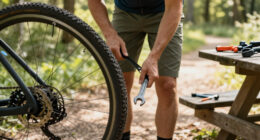
To bleed hydraulic brakes, start by filling the reservoir and attaching a clear tube to the bleed screw. Have a helper press the brake pedal slowly while you open the screw to release air and old fluid. Close the screw before they release the pedal, and repeat until the fluid flows steady and bubble-free. Keep the reservoir topped up throughout. Following these steps guarantees a safe, effective brake system—if you want more detailed guidance, keep exploring the process.
Key Takeaways
- Use a clear tube attached to the bleed screw, submerged in brake fluid, to catch air and fluid during bleeding.
- Have a helper press and hold the brake pedal steadily while you open and close the bleed screw.
- Keep the brake fluid reservoir topped up to prevent introducing new air into the system.
- Tighten the bleed screw securely after each bleed to prevent air entry and fluid leaks.
- Test the brake pedal for firmness and repeat the process if it feels soft or spongy.

Bleeding hydraulic brakes is a essential maintenance step to guarantee your braking system works effectively and safely. Over time, brake fluid can become contaminated or absorb moisture, which can impair braking performance. Additionally, air bubbles may form within the brake lines, leading to a spongy pedal feel and reduced stopping power. When you bleed your brakes, you’re removing these air bubbles and replacing old or contaminated brake fluid with fresh fluid, ensuring that your braking system responds reliably when you need it most.
Bleeding brakes removes air bubbles and refreshes brake fluid for safer, more reliable stopping.
The process begins by locating the brake caliper or wheel cylinder, depending on your vehicle, and ensuring you have the right tools—typically a wrench, a clear tube, and a container to catch the old fluid. Before starting, make sure the vehicle is securely lifted if necessary, and the brake fluid reservoir is filled to the maximum level. This prevents introducing air into the system during the bleeding process. It’s important to use the correct type of brake fluid specified by your vehicle manufacturer, as mixing different types can cause damage and compromise safety.
To bleed your brakes, attach one end of the clear tube to the bleed screw on the caliper or wheel cylinder, and submerge the other end into a container filled with brake fluid. Have a helper press the brake pedal slowly and steadily several times, then hold it down. While the pedal is held, open the bleed screw to allow brake fluid and air bubbles to escape. Close the screw before your helper releases the pedal to prevent air from being drawn back into the system. Repeat this process until you notice a steady stream of brake fluid without air bubbles flowing through the tube. Throughout, keep an eye on the brake fluid reservoir, topping it up as needed to prevent introducing new air bubbles into the system. Properly bleeding your brakes helps ensure a consistent brake pedal feel and safe stopping performance.
Patience is key. You want to ensure all air bubbles are expelled, and the brake fluid runs clear without visible bubbles. Once you’re satisfied with the bleed, tighten the bleed screw properly and test the brake pedal for firmness. If the pedal still feels soft or sponge-like, repeat the process. Bleeding hydraulic brakes might seem straightforward, but it’s essential to do it meticulously. This way, you’ll restore the integrity of your braking system, improve safety, and enjoy confident stopping power every time you hit the pedal.

CHUMXINY Brake Bleed Kit for SHIMANO, TEKTRO Hydraulic Disc Brakes, Including High Performance Mineral Brake Fluid (120ml)
- Includes Mineral Brake Fluid: Two 60ml bottles of mineral oil
- Complete Bleed Kit: Gloves, fasteners, adapters, funnel, injectors
- Universal Compatibility: Suitable for brake models from 2000 to 2021
As an affiliate, we earn on qualifying purchases.
As an affiliate, we earn on qualifying purchases.
Frequently Asked Questions
Can I Bleed Hydraulic Brakes Without Professional Tools?
Yes, you can bleed hydraulic brakes without professional tools by using a simple bleeding sequence and the correct brake fluid types. Start by checking your vehicle’s manual to identify the proper brake fluid and follow the bleeding sequence carefully. Use a clear tube and a container to catch old fluid, and keep the reservoir topped up. This straightforward process helps remove air and maintains brake efficiency without needing specialized equipment.
How Often Should Hydraulic Brakes Be Bled?
You should bleed your hydraulic brakes anytime you notice a spongy feel or reduced braking performance, usually every 1-2 years. Use the correct brake fluid type, like DOT 3, DOT 4, or DOT 5.1, and follow the bleed process tips—keep the reservoir topped up and work in a clean environment. Regular bleeding maintains ideal brake function and safety.
What Are Signs of Air in Hydraulic Brake Lines?
Air in your brake lines is like gravel in a gear system—causing trouble. If you notice spongy or soft brake feel, or if your brake noise increases, air bubbles might be lurking. These signs indicate that your hydraulic brakes aren’t working efficiently. You’ll want to bleed the brakes to remove the air, restoring firm, responsive stopping power and eliminating annoying noises caused by trapped air.
Is It Necessary to Replace Brake Fluid When Bleeding?
Yes, you should replace the brake fluid when bleeding your brakes. Over time, brake fluid absorbs moisture, which can reduce braking performance and damage components. As part of your maintenance schedule, it’s crucial to flush and replace the brake fluid regularly to guarantee ideal function. During bleeding, fresh brake fluid is added to replace the old, contaminated fluid, helping maintain brake efficiency and safety.
Can I Bleed Brakes on All Bike Types Equally?
You can’t treat all bike types equally when bleeding brakes, but don’t worry—most bikes follow similar steps. Just check the brake fluid compatibility because using the wrong fluid can cause brake failure! Always prioritize brake bleeding safety by following the manufacturer’s instructions. Whether you’ve got disc or rim brakes, understanding your bike’s specific system helps you avoid disasters—think of it as the secret to stopping on a dime!
Conclusion
Now that you’ve bled your hydraulic brakes, imagine the smooth ride ahead, like a river flowing effortlessly over rocks. Your careful work clears the path for perfect stopping power, just as clear water flows freely without obstruction. Every squeeze of the brake lever now feels confident and precise, like a steady heartbeat. Remember, maintaining this flow keeps your bike safe and reliable, turning every ride into a journey of control and trust—ready to tackle whatever lies ahead.