Many cyclists add strength equipment at home to boost their performance, prevent injuries, and target muscles not fully engaged during cycling. It allows you to customize exercises for your specific weaknesses, improve biomechanics, and maintain consistent workouts regardless of weather or gym hours. Strength training also helps with recovery and muscular balance, leading to better endurance and efficiency on the bike. If you keep exploring, you’ll discover even more ways to make your indoor training even more effective.
Key Takeaways
- To improve overall power, endurance, and cycling efficiency through targeted muscle strengthening.
- For convenience, enabling quick, focused workouts regardless of weather or gym hours.
- To prevent injuries by addressing muscular imbalances and strengthening core stability.
- To enhance biomechanics and pedaling technique for better performance.
- To support recovery and maintain consistent training routines at home.
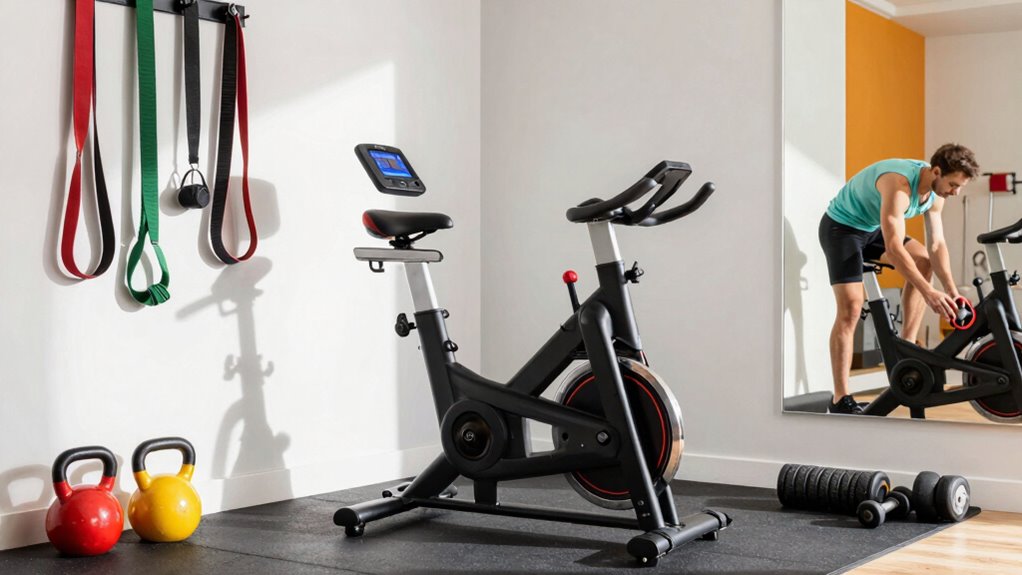
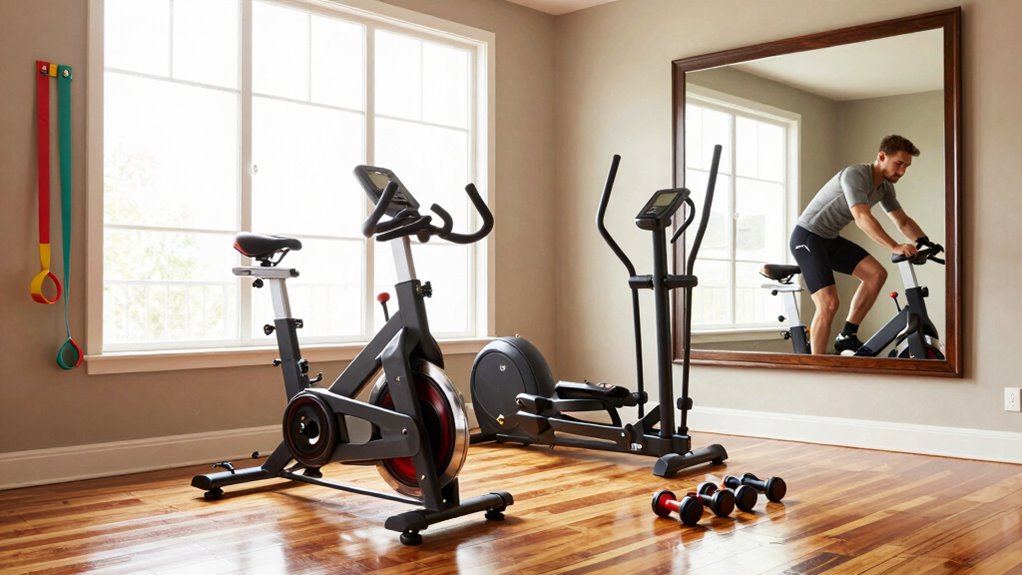
Many cyclists are turning to strength equipment at home because it offers a convenient way to enhance their performance and prevent injuries. Instead of relying solely on outdoor rides or group training sessions, you can incorporate indoor training with strength exercises that complement your cycling routine. This approach allows you to work on specific muscle groups that cycling alone may not target effectively, leading to improved overall power and endurance.
Cyclists are using home strength equipment to boost performance and prevent injuries through targeted indoor exercises.
By adding strength equipment to your home setup, you gain control over your training schedule. You’re no longer limited by weather conditions or gym hours. You can do quick, focused sessions whenever it fits into your day, making training consistency easier to maintain. This flexibility helps you stay committed to your training plan, ultimately translating into better performance on the bike. Plus, indoor training with strength equipment enables you to diversify your workouts, targeting areas like your core, glutes, and legs—crucial muscles for cycling efficiency and stability.
One significant benefit of strength training at home is its positive impact on muscle recovery. After long rides or intense interval sessions, your muscles need time to repair and rebuild. Strength equipment allows you to perform gentle recovery exercises that promote blood flow and reduce soreness, aiding faster muscle recovery. Instead of skipping recovery days or risking injury by overtraining, you can use resistance bands or light weights to perform low-impact routines that help your muscles heal and strengthen. This balanced approach prevents burnout and keeps you on track for consistent improvement. Additionally, home workout equipment can be tailored to fit your specific needs, making recovery routines more effective. Incorporating proper recovery techniques can further optimize your results and prevent overuse injuries.
Indoor training with strength equipment also helps you identify and address weak spots that could lead to injury or performance plateaus. For example, weak core muscles can cause poor posture on the bike, leading to discomfort or pain over time. By incorporating core workouts with stability balls or resistance bands, you strengthen these areas, making your ride smoother and reducing fatigue. Targeted strength work improves your biomechanics, making every pedal stroke more efficient and reducing the risk of overuse injuries. Additionally, strength training can improve your overall muscular balance, which is essential for long-term cycling health.
resistance bands for strength training
As an affiliate, we earn on qualifying purchases.
As an affiliate, we earn on qualifying purchases.
Frequently Asked Questions
What Types of Strength Equipment Are Best for Cyclists?
You should prioritize resistance bands and core exercises, as they effectively build strength without taking up much space. Resistance bands help improve muscle stability and power, essential for cycling performance. Core exercises like planks and Russian twists strengthen your midsection, boosting your balance and efficiency on the bike. Combining these tools allows you to target key muscle groups, enhance endurance, and prevent injuries—all from the comfort of your home.
How Much Space Is Needed for Home Strength Training?
You’ll need around 25 to 50 square feet for a basic home strength training setup. Opt for compact equipment with good storage solutions to keep your space organized. Prioritize durable gear that can withstand regular use, ensuring it lasts over time. Clear floor space for movement and exercises is essential, so choose versatile, space-efficient options like resistance bands, dumbbells, or compact weight machines to maximize your area.
Can Strength Training Improve Cycling Performance?
Yes, strength training can considerably improve your cycling performance. While endurance rides boost your stamina, strength exercises enhance muscle endurance and power, making climbs easier and sprints faster. Building strength also aids in injury prevention by stabilizing muscles and joints. This dual approach deepens your overall fitness, allowing you to ride longer and harder with less risk of setbacks, making your cycling more efficient and resilient.
How Often Should Cyclists Train With Strength Equipment?
You should train with strength equipment 2-3 times a week, balancing workouts with proper nutrition planning and recovery strategies. This frequency allows you to build muscle and improve endurance without overtraining. Focus on exercises targeting key muscle groups used in cycling, and make certain you include rest days for recovery. Maintaining this routine helps boost performance, prevent injuries, and enhances your overall cycling efficiency.
Are There Safety Concerns With At-Home Strength Training?
Are you aware of the safety concerns with at-home strength training? While it’s convenient, you need to prioritize injury prevention and equipment safety. Proper form, appropriate weights, and secure equipment reduce risks of strains or accidents. Do you have enough space and knowledge to set up your equipment safely? Regularly inspect your gear and consider consulting a trainer to guarantee safe, effective workouts that keep you injury-free.
Conclusion
Adding strength equipment at home is like planting seeds for better cycling performance—you nurture your muscles, and they grow stronger over time. It’s convenient, cost-effective, and keeps you consistent, even when the weather isn’t cooperating. By embracing this balance, you’re building a foundation as sturdy as a mountain. Keep pushing, stay committed, and watch your cycling journey elevate to new heights, just like a cyclist soaring up a steep climb with confidence.