For bike computers under $500, I’d start with the Garmin Edge 1050 as the best overall pick for riders who want a feature-rich, premium unit, while the Bryton Rider S810 stands out for its large touchscreen and sensor bundle. The iGPSPORT BSC200S is a more straightforward choice if you want route navigation without moving to a larger, more involved computer. The main tradeoff is between richer maps and color touchscreens on one hand, and simpler controls, compact displays, or basic ride data on the other. Battery life, sensor compatibility, and whether you need turn-by-turn guidance can matter more than screen size alone. Read on for the full breakdown and recommendations by rider type.

Get sports gear delivered free with Prime
- Fast, free delivery on millions of items
- Prime Video, Amazon Music and more included
- Member-only deals all year
Complete the kit


Key Takeaways
- The premium tier is about richer interaction, not just recording rides: the Garmin Edge 1050 and Bryton Rider S810 offer large color touchscreens, while smaller units favor compactness and simpler operation.
- Sensor bundles can change the value equation: the Bryton Rider 650 and Rider S810 include sensors, which may suit riders building a complete data setup better than buying a computer alone.
- iGPSPORT offers several distinct step-up options: the BSC200S is the more compact navigation-focused pick, while the BSC200 Pro and BSC500 add larger touch displays and voice guidance.
- Basic wireless and wired models serve a different purpose: Cateye’s wired and Urban Wireless computers suit riders who want essential ride metrics without GPS mapping or app-based route features.
- Product naming and spec sheets do not tell the whole story: listed display size, waterproof rating, and battery capacity are useful clues, but buyers should also check included accessories, map behavior, and device compatibility.
| iGPSPORT BSC200S GPS Bike Computer |  | Best Balanced Navigation Pick | Display: 2.4-inch color | Dimensions: 82 × 53 × 14.1 mm | Weight: 66 g | VIEW ON AMAZON | See Our Full Breakdown |
| Bryton Rider 650 Sensor Bundle | 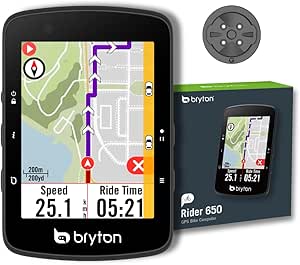 | Best for Map-Focused Long Rides | Display: 2.8-inch color LCD touchscreen | Battery life: Up to 33 hours | Connectivity: ANT and Bluetooth | VIEW ON AMAZON | See Our Full Breakdown |
| CYCPLUS GPS Wireless Bike Computer, 2.8-inch |  | Best Battery Life | Model: M3 | Display: 2.8-inch FSTN | Battery capacity: 1500 mAh | VIEW ON AMAZON | See Our Full Breakdown |
| CYCPLUS Wireless GPS Bike Computer G1 | 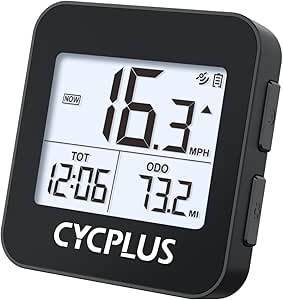 | Best Compact Basic Computer | Display: 2-inch LED | Battery capacity: 1200 mAh | Battery life: 50 hours | VIEW ON AMAZON | See Our Full Breakdown |
| iGPSPORT BSC500 GPS Bike Computer |  | Best Large-Screen Navigation | Display: 3.3-inch touchscreen | Controls: Touchscreen and buttons | Navigation: Voice navigation and turn reminders | VIEW ON AMAZON | See Our Full Breakdown |
| iGPSPORT BSC200 Pro GPS Bike Computer |  | Best for Clear, Voice-Guided Navigation | Display: 3-inch color touchscreen | Native resolution: 320 × 240 | Battery life: Up to 25 hours | VIEW ON AMAZON | See Our Full Breakdown |
| Garmin Edge 1050 Premium Cycling Computer |  | Best Premium Feature Set | Screen: 3.5-inch color touchscreen | Display type: LCD | Battery life: Up to 20 hours in demanding use; up to 60 hours in battery-saver mode | VIEW ON AMAZON | See Our Full Breakdown |
| Bryton Rider S810 Sensor Bundle |  | Best for Long-Distance and Remote Rides | Screen: 3.5-inch color touchscreen | Display type: LCD capacitive | Battery life: Up to 50 hours | VIEW ON AMAZON | See Our Full Breakdown |
| Wireless GPS Bike Computer with Bluetooth, 2.4-inch Display |  | Best Compact Wireless Pick | Display: 2.4-inch LCD | Battery life: Up to 28 hours | Weight: 50 g | VIEW ON AMAZON | See Our Full Breakdown |
| Cateye Velo 7 Wired Bike Computer |  | Best for Simple, Set-and-Forget Ride Stats | Display: 2.17-inch LCD | Battery life: Up to 3 years | Sensor: Speed sensor | VIEW ON AMAZON | See Our Full Breakdown |
| Wireless GPS Bike Computer, 2.4-inch Screen, Green Backlight, IPX7 Waterproof, 28H Runtime |  | Best for Long, Sensor-Free Rides | Display: 2.4-inch LCD | Battery life: Up to 28 hours | Sensors: GPS, motion, barometric altimeter, speed | VIEW ON AMAZON | See Our Full Breakdown |
| CATEYE Urban Wireless Bike Computer |  | Best for Simple City Commuting | Display: LCD | Battery life: 1 year | Sensor: Analog wireless speed sensor | VIEW ON AMAZON | See Our Full Breakdown |
| Wireless GPS Bike Computer, 12 Languages, Bluetooth App |  | Best for App and Strava Sync | Display: 2.4-inch LCD | Battery life: Up to 28 hours | Sensors: GPS, motion sensor, barometric altimeter, speed sensor | VIEW ON AMAZON | See Our Full Breakdown |
| bike computers under 500 | Battery life | Display | Weight | Connectivity |
|---|---|---|---|---|
| iGPSPORT BSC200S GPS Bike Comp | Up to 25 hours | 2.4-inch color | 66 g | Bluetooth and ANT+ |
| Bryton Rider 650 Sensor Bundle | Up to 33 hours | 2.8-inch color LCD touchscreen | 92 g | ANT and Bluetooth |
| CYCPLUS GPS Wireless Bike Comp | Up to 100 hours | 2.8-inch FSTN | 0.14 kg | ANT+ and Bluetooth |
| CYCPLUS Wireless GPS Bike Comp | 50 hours | 2-inch LED | 70 g | Wireless |
| iGPSPORT BSC500 GPS Bike Compu | — | 3.3-inch touchscreen | 107 g | — |
| iGPSPORT BSC200 Pro GPS Bike C | Up to 25 hours | 3-inch color touchscreen | 0.1 kg | Bluetooth |
| Garmin Edge 1050 Premium Cycli | Up to 20 hours in demanding use; up to 60 hours in battery-saver mode | — | — | Bluetooth, USB, and Wi-Fi |
| Bryton Rider S810 Sensor Bundl | Up to 50 hours | — | — | Bluetooth and ANT+ |
| Wireless GPS Bike Computer wit | Up to 28 hours | 2.4-inch LCD | 50 g | Bluetooth |
| Cateye Velo 7 Wired Bike Compu | Up to 3 years | 2.17-inch LCD | 1.12 ounces | Wired |
| Wireless GPS Bike Computer | Up to 28 hours | 2.4-inch LCD | 50 g | — |
| CATEYE Urban Wireless Bike Com | 1 year | LCD | 1.12 ounces | Wireless |
| Wireless GPS Bike Computer | Up to 28 hours | 2.4-inch LCD | 50 g | Bluetooth |
More Details on Our Top Picks
iGPSPORT BSC200S GPS Bike Computer
The iGPSPORT BSC200S balances route guidance, sensor support, and a practical 25-hour battery in a compact unit. Its 2.4-inch color display gives route and ride data more room than the basic CYCPLUS G1, while its smaller screen keeps it lighter and less bulky than the Bryton Rider 650. It can import routes from services such as Strava and Komoot, but route customization and data management rely on a smartphone app, so riders who prefer to set everything up on the device may find that limiting. Support for speed, cadence, heart-rate, power, and compatible lights gives it room to grow with a training setup. I’d choose it for varied rides, not for the largest map view or the longest stated battery life in this group.
Pros:- 2.4-inch color display is a useful upgrade over the compact CYCPLUS G1 screen.
- Imports routes from third-party apps including Strava and Komoot.
- Supports speed, cadence, heart-rate, power, and compatible light sensors.
- Stated 25-hour battery life suits long rides.
Cons:- Route customization and data management require the smartphone app.
- Handlebar mounting may not suit every bike setup.
- A Type-C cable is not included.
Best for: Riders who want color-screen route guidance, broad sensor compatibility, and enough battery for long day rides without a larger computer.
Not ideal for: Cyclists who want to plan and manage routes entirely on the device, or need a mounting option beyond the handlebar mount.
- Display:2.4-inch color
- Dimensions:82 × 53 × 14.1 mm
- Weight:66 g
- Battery life:Up to 25 hours
- Connectivity:Bluetooth and ANT+
- Data storage:400 hours of riding data
- Compatible sensors:Speed, cadence, heart rate, power meter, front light, and radar light
Our verdict“Choose the BSC200S for a compact, sensor-ready GPS computer with route support, and pick the Bryton Rider 650 instead if a larger screen and preloaded maps matter more.”
Bryton Rider 650 Sensor Bundle
The Bryton Rider 650 is the map-focused choice here: its 2.8-inch color touchscreen and preloaded USA map offer a larger navigation view than the iGPSPORT BSC200S, while the included sensor bundle reduces the need to assemble a setup piece by piece. Its stated 33-hour battery life also exceeds the BSC200S’s 25 hours, making it better suited to extended outings between charges. Live tracking and rear-view radar support add safety-oriented features, though the supplied description does not detail the exact sensor-bundle contents or radar compatibility requirements. The tradeoff is complexity: riders new to GPS devices may face more setup and menus than with the simpler CYCPLUS G1, which is aimed at basic ride data. I’d pick the Bryton for riders who value maps and a fuller connected setup over simplicity.
Pros:- 2.8-inch color touchscreen provides more map and data viewing area than the iGPSPORT BSC200S.
- Preloaded USA maps support navigation without relying solely on imported routes.
- Stated 33-hour battery life is suited to extended rides.
- Bundle description includes sensors and safety features such as live tracking and rear-view radar.
Cons:- The interface and feature set may take time for GPS-computer beginners to learn.
- The provided product details do not specify the exact included sensor suite or radar requirements.
- Handlebar mounting is the listed mounting option.
Best for: Long-distance riders who want a larger touchscreen map, preloaded USA maps, and a sensor bundle for performance tracking.
Not ideal for: New cyclists seeking a simple display and minimal setup, or riders who need map coverage outside the stated USA maps.
- Display:2.8-inch color LCD touchscreen
- Battery life:Up to 33 hours
- Connectivity:ANT and Bluetooth
- Sensors:Altimeter, GPS, speed sensor, and cadence sensor
- Navigation:Preloaded USA map
- Weight:92 g
- Mounting:Handlebar mount
- Battery type:Lithium-ion
Our verdict“Choose the Rider 650 if you want a large map view, long battery life, and bundled tracking features; choose the CYCPLUS G1 for a simpler computer with longer stated runtime.”
CYCPLUS GPS Wireless Bike Computer, 2.8-inch
The standout reason to choose this CYCPLUS GPS computer is its stated up to 100-hour battery life, far beyond the 33 hours listed for the Bryton Rider 650 and the 25 hours of the iGPSPORT BSC200S. That makes it a strong fit for bikepacking, frequent long rides, or riders who dislike charging between outings. Its 2.8-inch sunlight-readable screen, IPX7 water resistance, and ANT+ and Bluetooth support cover the core needs for ride tracking and sensor pairing. The tradeoff is that its FSTN display is not described as a color touchscreen, so it gives up the richer map presentation of the Bryton. A first GPS fix can also take three to five minutes outdoors, and full customization and syncing depend on a phone app. I’d favor it for endurance and data flexibility over polished on-device navigation.
Pros:- Stated battery life of up to 100 hours exceeds the other listed computers in this batch.
- 2.8-inch sunlight-readable display gives data more space than the CYCPLUS G1.
- ANT+ and Bluetooth support a range of compatible sensors.
- IPX7 water resistance suits wet-weather riding.
Cons:- First GPS fix may take three to five minutes outdoors.
- Full data customization and syncing require the smartphone app.
- FSTN display lacks the color touchscreen navigation experience offered by the Bryton Rider 650.
Best for: Bikepackers and endurance riders who prioritize infrequent charging, sensor pairing, and customizable ride data.
Not ideal for: Riders who want color touchscreen maps, quick first-use GPS readiness, or customization without a smartphone app.
- Model:M3
- Display:2.8-inch FSTN
- Battery capacity:1500 mAh
- Battery life:Up to 100 hours
- Connectivity:ANT+ and Bluetooth
- Water resistance:IPX7
- Weight:0.14 kg
- Compatible sensors:Speed, cadence, heart rate, GPS, and barometric altimeter
Our verdict“Choose this CYCPLUS for exceptional stated battery life and sensor flexibility, but opt for the Bryton Rider 650 if a color touchscreen map is a higher priority.”
CYCPLUS Wireless GPS Bike Computer G1
The CYCPLUS G1 is the straightforward pick for riders who want core ride information without the larger display and broader navigation ambitions of the iGPSPORT BSC200S or Bryton Rider 650. Its 2-inch screen keeps the unit compact, while GPS tracks distance, time, and altitude; an automatic backlight helps keep the display readable when light fades. The listed 50-hour battery life is ample for regular riding, though it falls short of the 100 hours stated for the larger CYCPLUS model. That simpler approach also means fewer advanced capabilities: the product details do not list ANT+ or Bluetooth sensor connectivity, and it lacks a touchscreen. I’d choose it for a lean setup focused on ride basics, but skip it if route guidance, sensor expansion, or a large map view is part of the plan.
Pros:- Compact 2-inch display and 70 g weight suit riders seeking a small handlebar unit.
- Tracks core ride data including distance, time, and altitude.
- Automatic backlight helps with visibility in changing light.
- Listed 50-hour battery life exceeds the iGPSPORT BSC200S’s 25 hours.
Cons:- Basic tracking offers less capability than the route and sensor features of the iGPSPORT BSC200S.
- No touchscreen interface.
- The provided specifications do not list ANT+ or Bluetooth sensor connectivity.
Best for: Riders who want a compact GPS unit for distance, time, and altitude tracking with a long stated battery life.
Not ideal for: Training-focused cyclists who need listed ANT+ or Bluetooth sensor pairing, advanced navigation, or a larger touchscreen.
- Display:2-inch LED
- Battery capacity:1200 mAh
- Battery life:50 hours
- Battery type:Lithium polymer
- Connectivity:Wireless
- Weight:70 g
- Mounting:Handlebar mount
Our verdict“Choose the G1 for compact, basic GPS ride tracking, and move to the CYCPLUS 2.8-inch model if you need sensor connectivity and much longer stated battery life.”
iGPSPORT BSC500 GPS Bike Computer
The iGPSPORT BSC500 has the largest screen in this batch at 3.3 inches, making it the clearest choice for riders who want to read route cues and data without squinting at a smaller display. Touch and button operation offer a useful alternative when touch controls are inconvenient, while voice navigation and turn reminders can reduce the need to keep checking the screen. Compared with the 2.8-inch Bryton Rider 650, the BSC500 gives up some documented detail: the supplied specifications do not state battery life, and its product information describes smartphone-based route planning. It supports multiple satellite systems and route imports from Strava and Komoot, but riders seeking fully documented endurance or bundled sensors may prefer the Bryton. I’d choose this model for screen-first navigation, provided its limited published specifications fit your buying needs.
Pros:- 3.3-inch screen is larger than the Bryton Rider 650’s 2.8-inch display.
- Touch and button operation give riders more than one way to control the computer.
- Voice navigation and turn reminders can reduce frequent screen checks.
- Imports routes from services including Strava and Komoot.
Cons:- Battery life is not specified in the provided product details.
- Route planning requires a smartphone app.
- Provided specifications list cadence sensor type but do not detail broader sensor compatibility.
Best for: Riders who prioritize a large, easy-to-read display, turn reminders, and voice-guided route navigation.
Not ideal for: Cyclists who need a clearly stated battery runtime, detailed sensor compatibility, or route planning directly on the device.
- Display:3.3-inch touchscreen
- Controls:Touchscreen and buttons
- Navigation:Voice navigation and turn reminders
- Satellite support:Multiple satellite systems
- Route import:Strava and Komoot
- Sensor type:Cadence sensor
- Battery type:Lithium-ion
- Weight:107 g
Our verdict“Choose the BSC500 for its large screen and voice-guided navigation, but pick the Bryton Rider 650 if stated battery life and a more fully described sensor bundle matter more.”
iGPSPORT BSC200 Pro GPS Bike Computer
The BSC200 Pro earns its place for riders who want a generous map-and-data view without stepping up to the Garmin Edge 1050’s larger feature set. Its 3-inch color touchscreen and voice guidance make routes easier to follow while riding, while customizable route colors help keep the display legible. With up to 25 hours of battery life and support for more than 100 cycling metrics, it can cover regular training as well as long outings. Bluetooth sensor connections add useful data, but the listed connectivity is limited to Bluetooth; the Bryton Rider S810 adds ANT+ and offline maps for riders who need broader sensor support or remote-area navigation. The BSC200 Pro also relies on compatible sensors for some measurements, and its many data options may take time to configure.
Pros:- 3-inch color touchscreen provides room for maps and ride data
- Voice navigation helps riders follow routes without constantly checking the screen
- Up to 25 hours of battery life suits long rides
- More than 100 cycling metrics support detailed training data
Cons:- Bluetooth-only connectivity limits compatibility compared with computers that also support ANT+
- Some functions depend on compatible sensors, which may require additional equipment
- The extensive data and settings can feel complex to configure at first
Best for: Road and gravel riders who want a large touchscreen, voice route prompts, and extensive ride metrics for training and long rides.
Not ideal for: Riders using ANT+-only sensors or seeking offline maps and broader connectivity; the Bryton Rider S810 is a better match for those needs.
- Display:3-inch color touchscreen
- Native resolution:320 × 240
- Battery life:Up to 25 hours
- Connectivity:Bluetooth
- Metrics:More than 100 cycling data metrics supported
- Battery type:Lithium-ion
- Mounting:Handlebar mount
- Weight:0.1 kg
Our verdict“Choose the BSC200 Pro if you want voice-guided routes and a large color display, but look to the Bryton Rider S810 for ANT+ and offline maps.”
Garmin Edge 1050 Premium Cycling Computer
The Edge 1050 is the choice here for riders who want navigation, training tools, and connected ride features in one flagship-style computer. Its 3.5-inch color touchscreen, 64 GB of storage, and GPS, GLONASS, and Galileo support give it a broader navigation and data platform than the simpler Wireless GPS Bike Computer. Garmin Pay, hazard alerts, in-ride messaging, and personalized coaching add value for cyclists who will use more than basic route guidance. The tradeoff is complexity: its many features take more setup and attention than the Cateye Velo 7’s straightforward speed-and-distance display. Battery life reaches up to 20 hours in demanding use, or up to 60 hours in battery-saver mode, so intensive use may call for more frequent charging than the Bryton Rider S810’s stated 50-hour runtime.
Pros:- Large 3.5-inch color touchscreen gives maps and ride data ample display space
- GPS, GLONASS, and Galileo support a broad satellite-navigation setup
- Includes connected tools such as hazard alerts, in-ride messaging, and Garmin Pay
- 64 GB of storage supports extensive onboard data
Cons:- Feature-rich menus can take time to learn and configure
- Up to 20 hours in demanding use is less than the Bryton Rider S810’s stated 50 hours
- Advanced functions may be unnecessary for riders who only need basic ride statistics
Best for: Committed cyclists who want advanced navigation, performance tracking, smartphone-connected features, and broad satellite support in one device.
Not ideal for: Casual riders who mainly need speed and distance, or cyclists who prefer a simple interface and long runtime without frequent charging.
- Screen:3.5-inch color touchscreen
- Display type:LCD
- Battery life:Up to 20 hours in demanding use; up to 60 hours in battery-saver mode
- Storage:64 GB
- Connectivity:Bluetooth, USB, and Wi-Fi
- Satellite navigation:GPS, GLONASS, and Galileo
- Mounting:Handlebar mount
- Compatible device:Smartphone
Our verdict“Pick the Edge 1050 for an expansive connected training and navigation toolkit, but choose a simpler computer if you will not use its added features.”
Bryton Rider S810 Sensor Bundle
For riders who put long runtime and route independence ahead of an elaborate connected feature set, the Rider S810 has a clear advantage: up to 50 hours of battery life and offline maps. Its 3.5-inch touchscreen is paired with tactile buttons, giving riders another way to control the computer when touch input is inconvenient. Bluetooth and ANT+ support also make it a stronger fit for mixed sensor setups than the Bluetooth-only iGPSPORT BSC200 Pro. Offline maps and turn-by-turn guidance help when a ride leaves dependable phone coverage, while trainer integration extends its role into indoor sessions. The tradeoff is a feature set that may take time to learn, and riders who want Garmin’s in-ride messaging, hazard alerts, and payment features should look at the Edge 1050 instead.
Pros:- Up to 50 hours of battery life suits multi-day and extended rides
- Offline maps and turn-by-turn navigation support routes away from phone coverage
- Bluetooth and ANT+ provide broad sensor compatibility
- Tactile buttons complement the touchscreen for on-bike control
Cons:- The range of navigation and training features can take time to learn
- Its advanced capabilities may be more than casual riders need
- The listed display type is LCD rather than a specified higher-resolution panel
Best for: Touring, endurance, and gravel riders who need offline navigation, long battery life, and support for both Bluetooth and ANT+ sensors.
Not ideal for: New cyclists seeking a simple, basic-stat display, or riders who prioritize Garmin’s connected alerts, messaging, and coaching features.
- Screen:3.5-inch color touchscreen
- Display type:LCD capacitive
- Battery life:Up to 50 hours
- Connectivity:Bluetooth and ANT+
- Maps:Offline maps; North America and worldwide map types listed
- Navigation:Turn-by-turn
- Mounting:Handlebar mount
- Water protection:Waterproof
Our verdict“Choose the Rider S810 for long rides that call for offline maps and extended battery life; choose the Edge 1050 if connected alerts and coaching matter more.”
Wireless GPS Bike Computer with Bluetooth, 2.4-inch Display
This compact GPS computer makes more sense for riders who want recorded ride basics without a large touchscreen or a complex training platform. At 50 g, it keeps handlebar weight low, while its 2.4-inch LCD displays speed, distance, altitude, and temperature. The listed GPS, motion sensor, barometric altimeter, and speed sensor support a broader set of basic ride readings than the Cateye Velo 7, which relies on a wired speed sensor. Its up to 28-hour battery life also suits long outings, and Bluetooth links it with the BIKEVEE app and Strava for ride management. The compromise is a smaller display and a simpler feature set than the iGPSPORT BSC200 Pro; riders seeking extensive training metrics or a larger color navigation screen should choose that model instead.
Pros:- Lightweight 50 g design adds little weight to the handlebar
- Tracks speed, distance, altitude, and temperature
- Up to 28 hours of battery life supports long rides
- Bluetooth app connection supports BIKEVEE and Strava ride management
Cons:- The 2.4-inch LCD is smaller than the BSC200 Pro and the larger touchscreen models
- Basic ride-data focus lacks the extensive metrics offered by the iGPSPORT BSC200 Pro
- Bluetooth connection is needed for full app-related functionality
Best for: Weight-conscious recreational riders who want GPS-based speed, distance, altitude, and temperature data with app and Strava support.
Not ideal for: Cyclists who need a large color map display, advanced training metrics, or extensive sensor connectivity beyond Bluetooth.
- Display:2.4-inch LCD
- Battery life:Up to 28 hours
- Weight:50 g
- Connectivity:Bluetooth
- Sensors:GPS, motion sensor, barometric altimeter, and speed sensor
- Battery type:Lithium-ion
- Mounting:Handlebar mount
- Dimensions:2.76 × 1.77 × 0.63 inches
Our verdict“Choose this computer for lightweight GPS ride tracking and app syncing, but pick the BSC200 Pro if you want a larger screen and deeper data tools.”
Cateye Velo 7 Wired Bike Computer
The Cateye Velo 7 is the simplest pick in this group: it tracks essential speed, distance, elapsed time, and clock data without asking riders to manage GPS routes, apps, or wireless sensors. Its wired speed sensor keeps the setup focused on basic ride readings, while auto start/stop removes the need to remember to begin and end each trip manually. Cateye lists battery life of up to three years, a major contrast with the rechargeable GPS computers here, including the 28-hour Wireless GPS Bike Computer. That simplicity also sets a firm limit: the Velo 7 has no listed GPS navigation, altitude data, or advanced training metrics. Choose it over the Garmin Edge 1050 if a basic handlebar display is all you need; skip it if route recording or connected features are part of your riding routine.
Pros:- Straightforward display covers essential speed, distance, time, and clock readings
- Auto start/stop reduces manual operation during rides
- Listed battery life of up to three years avoids frequent recharging
- Compact, light unit is suited to a basic handlebar setup
Cons:- Wired sensor setup is less convenient than the wireless GPS computers in this roundup
- No listed GPS tracking, route navigation, or altitude readings
- Limited to essential ride data rather than advanced training metrics
Best for: New or casual riders who want current, average, and maximum speed plus trip distance and time without GPS or app setup.
Not ideal for: Riders who need GPS route tracking, navigation, altitude data, wireless sensor pairing, or advanced training metrics.
- Display:2.17-inch LCD
- Battery life:Up to 3 years
- Sensor:Speed sensor
- Connectivity:Wired
- Battery type:Alkaline
- Mounting:Handlebar mount
- Weight:1.12 ounces
- Color:Black
Our verdict“Choose the Velo 7 for dependable basic ride statistics and minimal charging, but select a GPS computer for route tracking or connected training features.”
Wireless GPS Bike Computer, 2.4-inch Screen, Green Backlight, IPX7 Waterproof, 28H Runtime
This computer suits riders who want GPS-based ride data without adding a separate speed sensor. Its 2.4-inch LCD shows speed, distance, ride time, altitude, gradient, and ascent, while the automatic green backlight helps keep the display readable when light changes. The 28-hour battery life is a practical advantage for long outings or several commutes between charges. Compared with the CATEYE Urban Wireless Bike Computer, it tracks more terrain data and does not rely on a wheel sensor, but the Cateye offers auto-pause and a simpler urban-focused setup. This model keeps to basic GPS tracking: it lacks the route-navigation and app-connected features found on the iGPSPORT BSC200S. Its non-touch display and handlebar-only mounting also limit flexibility.
Pros:- GPS-based tracking covers speed, distance, time, altitude, gradient, and ascent without a separate sensor.
- Automatic backlight supports viewing in changing light.
- Up to 28 hours of battery life suits long rides and less frequent charging.
- IPX7 waterproof protection is suited to wet-weather riding.
Cons:- Basic GPS tracking lacks the route-navigation and connectivity features available on the iGPSPORT BSC200S.
- No touchscreen interface.
- Handlebar mounting may not suit every cockpit setup.
Best for: Commuters and recreational riders who want GPS speed and elevation data, a readable display, and long battery life without installing a separate speed sensor.
Not ideal for: Riders who need route guidance, Bluetooth ride syncing, or touchscreen controls; the listed features focus on basic tracking.
- Display:2.4-inch LCD
- Battery life:Up to 28 hours
- Sensors:GPS, motion, barometric altimeter, speed
- Water protection:IPX7
- Mounting:Handlebar mount
- Weight:50 g
- Battery type:Lithium-ion
- Color:Black
Our verdict“Choose this for long rides and everyday cycling when sensor-free GPS data matters more than navigation or app features.”
CATEYE Urban Wireless Bike Computer
The CATEYE Urban is a straightforward pick for riders who want core ride metrics without a GPS computer’s broader feature set. It records speed, distance, elapsed time, and calories, and its auto start/stop pauses tracking at traffic lights—useful for urban rides with frequent stops. The FlexTight bracket is designed for easy installation and adjustment, while the included wheel magnet and wireless sensor provide the speed data. Compared with the 28-hour GPS model in this roundup, the Cateye has no stated GPS or elevation tracking and requires sensor placement, but its listed one-year battery life reduces charging chores. It is better suited to simple commutes than route-based riding: there is no listed Bluetooth syncing or navigation, and its handlebar-only mounting can restrict placement.
Pros:- Auto start/stop pauses tracking during traffic stops.
- FlexTight mount is designed for straightforward installation and adjustment.
- Tracks core urban ride metrics, including speed, distance, elapsed time, and calories.
- One-year stated battery life means less frequent battery attention.
Cons:- Wheel magnet and wireless speed sensor require setup, unlike the sensor-free GPS option in this roundup.
- No listed GPS, elevation tracking, or route navigation.
- Handlebar mounting limits placement options.
Best for: City commuters who want speed, distance, elapsed time, and stop-aware tracking from a simple wireless computer with a long stated battery life.
Not ideal for: Touring and training riders who want GPS routes, elevation data, or app syncing; this model relies on a wheel sensor and lists no GPS or Bluetooth connectivity.
- Display:LCD
- Battery life:1 year
- Sensor:Analog wireless speed sensor
- Connectivity:Wireless
- Mounting:Handlebar mount with FlexTight bracket
- Weight:1.12 ounces
- Included components:Computer, analog wireless sensor, FlexTight mount kit, universal wheel magnet
- Warranty:2 years
Our verdict“Pick the CATEYE Urban for uncomplicated city commutes if core metrics and auto-pause matter more than GPS or ride syncing.”
Wireless GPS Bike Computer, 12 Languages, Bluetooth App
The Bikevee is the strongest fit here for riders who want a compact GPS computer that also sends ride records to an app. Bluetooth connectivity supports ride management and Strava syncing, while the 2.4-inch display presents speed, distance, altitude, and temperature. Support for 12 interface languages makes it more adaptable for multilingual households or riders who prefer a different display language. Like the other 28-hour GPS model in this batch, it pairs a 50 g build with IPX7 protection and long stated battery life; its key distinction is app connectivity, not a larger screen or advanced navigation. Compared with the more feature-rich iGPSPORT BSC200S, the supplied details do not list route guidance or ANT+ support. Full app use also depends on a smartphone, and there are no indoor-cycling features listed.
Pros:- Bluetooth supports app-based ride-record management and Strava syncing.
- Twelve interface languages offer flexibility for multilingual users.
- Tracks speed, distance, altitude, and temperature.
- Lightweight 50 g design, IPX7 protection, and up to 28 hours of battery life suit regular outdoor riding.
Cons:- Full app functionality requires a smartphone.
- No indoor-cycling features are listed.
- Route navigation and ANT+ support are not listed, unlike the broader feature set of the iGPSPORT BSC200S.
Best for: Outdoor riders who want GPS ride metrics and Bluetooth syncing to manage records or send activities to Strava, especially those who value a multilingual interface.
Not ideal for: Riders seeking indoor-training support, route navigation, or app use without a smartphone; those capabilities are not listed for this model.
- Display:2.4-inch LCD
- Battery life:Up to 28 hours
- Sensors:GPS, motion sensor, barometric altimeter, speed sensor
- Connectivity:Bluetooth
- Water protection:IPX7
- Mounting:Handlebar mount
- Weight:50 g
- Languages:12
- Battery type:Lithium-ion
Our verdict“Choose the Bikevee if Bluetooth and Strava syncing matter more than route guidance or indoor-training features.”

How We Picked
I ranked these 13 bike computers under $500 by how well their stated features serve distinct riding needs, rather than treating the longest feature list as an automatic win. My main criteria were navigation capability, display readability and controls, sensor connectivity, battery and water-resistance details, setup demands, and how much riding data each unit appears designed to support. I also separated GPS computers from simpler wired or wireless cycle computers, since they solve different problems and are not direct substitutes.
The Garmin Edge 1050 leads for its premium feature set and broad appeal to data-focused riders; the Bryton touchscreen models follow for riders who value large displays and bundled sensors. iGPSPORT’s range ranks well for accessible navigation choices at different sizes, while the CYCPLUS and generic GPS units make more sense for buyers prioritizing basic tracking or a particular screen-and-battery combination. Cateye’s simpler computers rank as focused alternatives, not weaker versions of GPS units. Since the supplied product details vary in depth, I avoid assuming unlisted functions and recommend checking the exact bundle and compatibility before buying.
| bike computers under 500 | Mounting | Battery type |
|---|---|---|
| iGPSPORT BSC200S GPS Bike Comp | — | — |
| Bryton Rider 650 Sensor Bundle | Handlebar mount | Lithium-ion |
| CYCPLUS GPS Wireless Bike Comp | — | — |
| CYCPLUS Wireless GPS Bike Comp | Handlebar mount | Lithium polymer |
| iGPSPORT BSC500 GPS Bike Compu | — | Lithium-ion |
| iGPSPORT BSC200 Pro GPS Bike C | Handlebar mount | Lithium-ion |
| Garmin Edge 1050 Premium Cycli | Handlebar mount | — |
| Bryton Rider S810 Sensor Bundl | Handlebar mount | — |
| Wireless GPS Bike Computer wit | Handlebar mount | Lithium-ion |
| Cateye Velo 7 Wired Bike Compu | Handlebar mount | Alkaline |
| Wireless GPS Bike Computer | Handlebar mount | Lithium-ion |
| CATEYE Urban Wireless Bike Com | Handlebar mount with FlexTight bracket | — |
| Wireless GPS Bike Computer | Handlebar mount | Lithium-ion |
Factors to Consider When Choosing Bike Computers Under 500
Before choosing, decide what job the computer needs to do. A unit for following unfamiliar routes has different demands from one that simply records speed and distance. These factors can prevent paying for features you will not use or choosing a basic model that cannot support your riding plans.
Choose GPS Navigation or Basic Ride Tracking
GPS computers can record routes and, depending on the model, guide you along them; wired and basic wireless computers focus on ride metrics such as speed and distance. The common mistake is assuming every device called a bike computer includes mapping or turn prompts. If you regularly ride unfamiliar roads, check whether the unit supports route creation, map display, and rerouting rather than relying on the word “navigation” alone. For familiar commutes and simple fitness tracking, a Cateye-style basic computer may be easier to set up and use. Pick based on the rides you actually do, not a feature list you may never open.
Match the Screen to Your Riding Conditions
A larger color touchscreen can make maps and several data fields easier to read, but it can also add bulk and may be less convenient with gloves or in wet conditions. Compact displays can be a better fit on crowded handlebars and may keep the interface focused on essential metrics. Think about viewing distance, sunlight, mounting position, and how often you expect to interact with the screen while riding. Riders who mostly glance at speed may not benefit much from a large display. Before paying for a touchscreen, check whether its controls remain practical in the weather and riding gear you use.
Check Sensor Compatibility and Bundle Contents
ANT+ and Bluetooth support can let a computer connect with sensors such as heart-rate monitors, cadence sensors, and power meters, but support differs by device and sensor. A bundle can save setup steps if it includes the sensors you need; it can be poor value if the included hardware duplicates equipment you already own. Confirm the exact contents, connection standards, and whether the computer can pair with your existing accessories. Also think ahead: a basic speed-and-cadence setup may be enough now, while structured training could call for power-meter support later. Compatibility is more useful than a long list of connectivity terms when the devices do not work together.
Read Battery Claims in the Context of Your Rides
Battery capacity and advertised runtime are not directly comparable unless the manufacturer gives the conditions behind the figures. Bright screens, navigation, frequent backlight use, and connected sensors can all affect how long a charge lasts. Compare the stated runtime with your longest typical ride, then leave a margin for cold weather, aging batteries, and route changes. A large display is appealing, but it may not be the best choice for long days if charging access is limited. For short commutes, charging frequency may matter less than quick setup and clear data.
Treat Water Resistance as One Part of Durability
IP ratings indicate resistance under defined test conditions, not immunity to every form of water exposure or rough handling. A higher rating can offer reassurance for wet rides, but it does not replace secure mounting, careful port-cover use, or sensible cleaning. Check the rating stated for the exact model rather than comparing products by appearance or brand alone. Riders in frequent rain should also consider screen readability, button operation, and whether the mount stays secure on rough roads. Durability is the whole setup, not one number on a product page.
Pay for Features You Will Use, Not Just a Premium Tier
Higher-end computers make the most sense when maps, training data, touchscreen controls, or a broader ride ecosystem will see regular use. If your needs are limited to speed, distance, and time, a simpler unit may reduce setup and charging demands while still doing the job. One frequent buying mistake is choosing the most advanced model before deciding whether route guidance or sensor data will change how you ride. At the other extreme, a basic computer can become limiting if you soon want to follow courses or connect training sensors. Set your near-term needs first, then pay extra only for capabilities you expect to use often.
Frequently Asked Questions
Is a basic wireless computer enough if I mainly ride to work?
It can be, if your main goals are tracking speed, distance, and ride time on familiar roads. A basic wireless unit avoids the route setup and charging routine that comes with many GPS computers. GPS can still be useful if you want recorded ride files or plan to explore new routes, but it is not necessary for every commute. Check whether the computer’s display shows the metrics you care about at a glance. If turn-by-turn guidance is a requirement, choose a model with explicitly stated route features instead.
Should I choose the Garmin Edge 1050 or a Bryton touchscreen model?
Start with the functions you will use, then compare the exact included bundle and device compatibility. The Edge 1050 is the premium choice in this lineup for riders seeking a broad, feature-rich computer, while the Bryton Rider S810 is notable for its large color touchscreen and sensor bundle. The Rider 650 offers another Bryton route with a smaller display and bundled sensors. A larger touchscreen is not automatically the better fit if you prefer physical controls or want a more compact setup. Check current specifications and bundle contents before deciding, since those details can vary by listing.
Do I need ANT+ and Bluetooth if I do not own sensors yet?
You do not need to buy sensors just because a computer supports ANT+ or Bluetooth. Connectivity matters if you plan to add heart-rate, cadence, or power data later, or if you already have compatible accessories. If you only want basic route or ride recording, these connections may not affect your day-to-day use. Check which protocols the computer supports and whether each planned sensor uses the same one. Choosing a computer with suitable connectivity can leave room to expand without requiring you to purchase extra gear now.
Can a computer with voice guidance replace checking a map?
Voice guidance can make turn prompts easier to follow without repeatedly looking down, but it should not be treated as a substitute for confirming the route. How useful it is depends on the model’s route handling, audio setup, and the roads you ride. Before relying on it, check how routes are loaded and whether the device provides a visible map or only prompts. Riders heading into unfamiliar areas may want both clear visual information and audible cues. A route feature’s name alone does not tell you how it behaves after a missed turn.
What should I verify before buying a computer with a sensor bundle?
Confirm which sensors are actually included and whether they measure the data you want, since “sensor bundle” can refer to different combinations. Then check that the computer supports those sensors’ connection protocols and that any existing equipment will pair with it. Consider mounting hardware and installation needs as well, especially if you have multiple bikes. A bundle may be less useful if it duplicates a sensor you already own or lacks the one you need for training. Read the listing for the exact model and package rather than relying on a product-family name.
Conclusion
For a single premium pick, I’d choose the Garmin Edge 1050 if you want a feature-rich computer and expect to use its broader capabilities. The Bryton Rider S810 is my alternative for riders who want a large touchscreen and included sensors, while the BSC200S is a more compact navigation-focused option. For value, compare the CYCPLUS GPS models and the smaller iGPSPORT options against the features you will use; the simplest choice is not always the one with the most specifications. Beginners who mainly want ride basics may be better served by the Cateye Wired or Cateye Urban Wireless than by a touchscreen GPS unit. For specific needs, look to the Bryton Rider 650 or S810 for sensor bundles, the iGPSPORT BSC500 or BSC200 Pro for touchscreen and voice-guidance features, and compact or long-runtime-listed generic GPS models only after confirming their exact specifications and support.