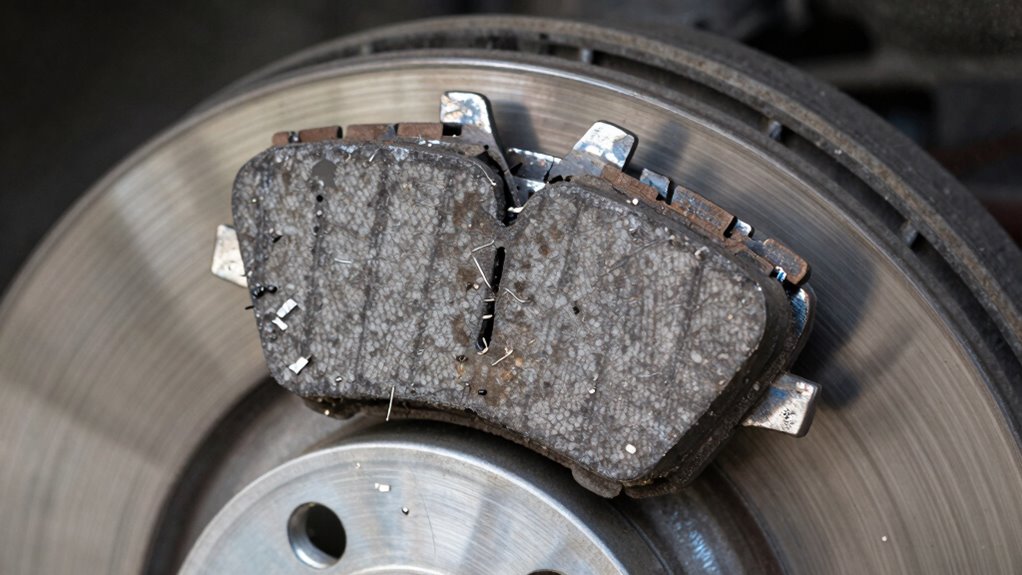

Premature brake pad wear happens when you frequently brake hard, ride downhill aggressively, or brake suddenly, causing extra heat and stress on the pads. Poor driving habits, like brake riding or aggressive acceleration followed by sharp stops, accelerate the process. Carrying heavy loads or towing also increases brake stress. Neglecting regular maintenance or ignoring warning signs can worsen wear. If you want to understand better how to prevent this, keep exploring the factors that impact brake lifespan.

Get sports gear delivered free — and shop member deals
- Fast, free delivery on millions of items
- Access to Prime Big Deal Days deals on October 6–7
- Prime Video, Amazon Music and more included
Key Takeaways
- Abrupt or hard braking generates excessive heat and friction, accelerating pad wear.
- Driving habits like frequent stop-and-go traffic increase brake pad deterioration.
- Carrying heavy loads or towing amplifies brake system stress and wear.
- Using incompatible or low-quality brake pads can lead to premature deterioration.
- Lack of regular brake system maintenance and inspections accelerates wear and damage.
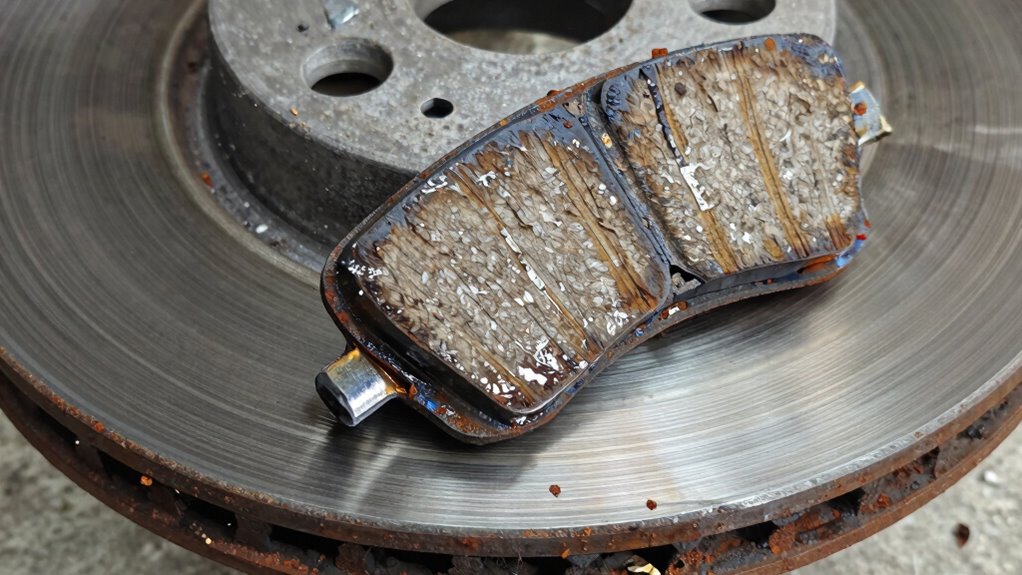
Premature brake pad wear can catch you off guard and lead to costly repairs if you’re not aware of the underlying causes. One major factor is the type of brake pad materials you choose. Different materials wear at different rates and behave uniquely under various driving conditions. For example, organic brake pads tend to wear out faster than ceramic ones, especially if you frequently brake hard or ride the brakes often. Semi-metallic pads, while more durable, can generate more heat, which can accelerate wear if you don’t maintain your braking system properly. Choosing the right brake pad material for your driving style and vehicle can significantly influence how quickly your brake pads wear out.
Your driving habits also play a crucial role in premature brake pad wear. If you often brake abruptly or ride the brakes downhill, you subject your brake pads to excessive stress and heat. Hard braking causes more friction and accelerates the wearing process, especially if you tend to brake late or slam on the brakes frequently. Conversely, smooth, gradual braking can extend the lifespan of your brake pads. Additionally, frequent stop-and-go driving in urban areas puts constant pressure on your braking system, leading to faster wear. If you tend to ignore warning signs like squealing or reduced braking performance, you risk further damage to your brake system, which can compound the wear issue.
Other driving habits, such as carrying heavy loads or towing, increase the workload on your brakes. The added weight causes your brake pads to work harder, generating more heat and wearing out sooner. Accelerating rapidly and then braking sharply repeatedly also contribute to quicker pad deterioration. If you’re not mindful of your driving style, you might be unknowingly speeding up the wear process. Regularly inspecting your brake system and adapting your driving habits can make a big difference in extending the life of your brake pads. Additionally, neglecting brake system maintenance can further accelerate premature wear and lead to costly repairs. Being aware of driving habits and their impact on brake wear can help you take proactive steps to preserve your braking system’s longevity. Maintaining proper brake system health and understanding how different factors influence wear can help prevent unnecessary replacements. Paying attention to brake pad materials can also help you choose the right type for your needs and driving style. Regularly monitoring brake temperature can also prevent overheating and excessive wear.
As an affiliate, we earn on qualifying purchases.
Frequently Asked Questions
Can Driving Habits Impact Brake Pad Lifespan?
Yes, your driving habits can impact brake pad lifespan. If you frequently experience driving distractions, you might brake suddenly, causing more wear. Also, poor road conditions like steep hills or rough terrain force you to brake harder and more often. Smooth, attentive driving helps you avoid unnecessary braking, which extends brake pad life. Staying focused and adapting to road conditions can markedly reduce premature brake pad wear.
How Does Brake Pad Material Affect Wear Rate?
Think of brake pad material as armor; stronger armor means better wear resistance. Softer materials, like organic compounds, wear faster, needing more frequent replacements. Harder materials, such as ceramic or semi-metallic, offer superior wear resistance and durability, reducing premature wear. Your choice of brake material directly influences how quickly your brake pads degrade, so select options suited to your driving style and conditions for longer-lasting performance and safer stops.
Is It Normal for Brake Pads to Wear Unevenly?
It’s not normal for brake pads to wear unevenly. Poor brake pad alignment often causes uneven wear, leading to faster deterioration on one side. Additionally, rotor condition effects, like warping or uneven surfaces, can worsen this issue. Regularly check your brake system, verify proper alignment, and keep rotors smooth to promote even wear. Addressing these factors promptly helps extend your brake pad lifespan and maintains braking performance.
Do Climate Conditions Influence Brake Pad Wear?
Climate effects, like a relentless tide, definitely influence brake pad wear. Weather impact varies with conditions—hot, humid days can cause brake components to degrade faster, while cold, icy weather might affect braking efficiency. You might notice your brake pads wearing unevenly or prematurely if you frequently drive in extreme temperatures or harsh weather. Proper maintenance and adapting your driving to climate conditions can help prolong your brake pad lifespan and ensure safer stops.
How Often Should Brake System Inspections Be Performed?
You should have your brake system inspected at least once a year or every 12,000 miles, whichever comes first. During these inspections, guarantee brake pad replacement is considered if pads are worn down, and check brake rotor compatibility to prevent uneven wear. Regular inspections help catch issues early, prolonging your brake system’s lifespan and maintaining safety. Don’t wait until brake problems become serious; proactive checks save you money and keep you safe.
Conclusion
Understanding what causes premature brake pad wear helps you maintain your vehicle better. Regular inspections and timely replacements can save you money and improve safety. Did you know that improper driving habits, like frequent hard braking, can reduce brake pad lifespan by up to 50%? Staying aware of these factors and addressing issues early ensures your brakes perform effectively, keeping you safe on the road and extending the life of your brake system.
Halloween Picks
halloween
As an affiliate, we earn on qualifying purchases.