For a daily commuter, tubeless tires are a great choice because they offer better durability, fewer flats, and easier repairs with sealant. They tend to last longer and handle rough roads better, saving you money over time, despite higher upfront costs. Tubed tires are cheaper and simpler to install but prone to flats and quicker wear, especially on challenging routes. If you want to make a confident choice, keep exploring the details that can help you pick the best option.
Key Takeaways
- Tubeless tires offer better flat resistance and durability, reducing maintenance during daily commuting.
- Initial costs for tubeless setups are higher, but they save money over time with fewer repairs.
- Tubed tires are cheaper upfront and easier to install, suitable for budget-conscious commuters.
- Regular maintenance, including sealant replenishment, is essential for tubeless tires to perform well.
- Environments with rough roads or debris favor tubeless tires for longer lifespan and fewer flats.
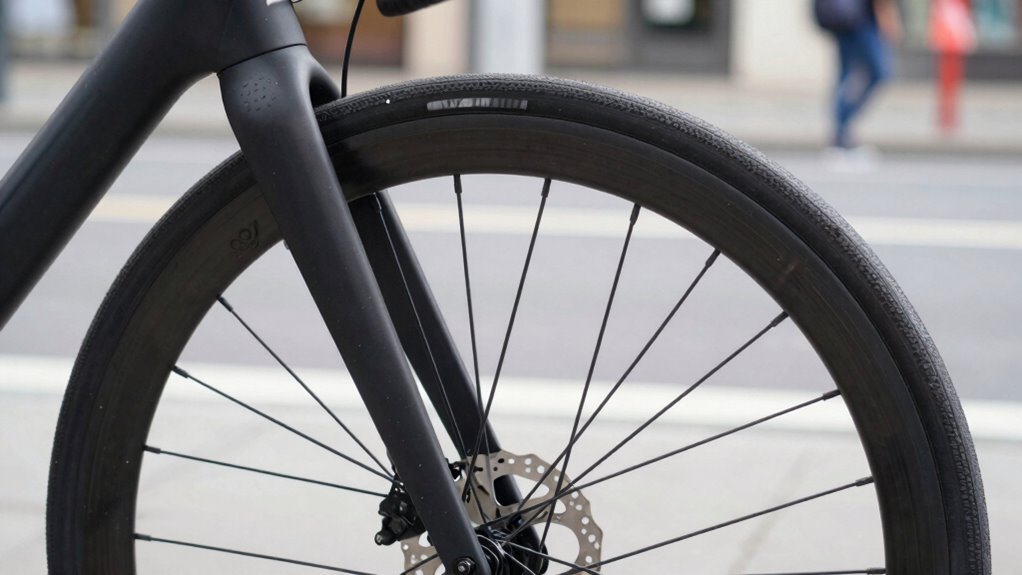
Choosing between tubeless tires and tubes is an important decision for daily commuters, as it directly impacts your bike’s performance, ease of maintenance, and overall riding experience. One of the key factors to ponder is tire durability. Tubeless tires often offer better durability because they have fewer parts that can fail or puncture, and the sealant inside helps quickly seal small punctures, preventing flats. This means you spend less time fixing flats and more time on your commute. Tubed tires, on the other hand, are more prone to flats, especially if you encounter debris or sharp objects on your route. While tubes are simpler to replace, they tend to wear out faster in certain conditions, especially if the tube is repeatedly punctured or if the tire isn’t kept properly inflated. So, if you’re looking for tires that last longer under daily stress, tubeless options might be more reliable. Additionally, tubeless tires often require specialized rims, which can be an additional consideration for your upgrade or initial purchase. Properly maintaining tire pressure is also crucial for maximizing tire lifespan and performance. Moreover, the sealant used in tubeless tires not only helps prevent flats but also contributes to longer-lasting tires by reducing internal wear. Regularly checking and replenishing the sealant can further extend the benefits of a tubeless setup. Incorporating proper maintenance routines can significantly improve the longevity and performance of tubeless tires, ensuring a smoother ride over time.
Cost comparison is another important aspect. Tubeless setups generally have a higher initial cost. You’ll need compatible rims, tubeless-ready tires, and sealant, which can add up. Plus, installation might require more time or professional help. Tubed tires, by contrast, are usually cheaper upfront. You can buy tubes and tires at a lower price, and installation is straightforward—just replace the tube when it’s punctured. Over time, though, the cost difference might balance out. Tubeless tires, with their greater puncture resistance, tend to save you money on frequent replacements and repairs. Tubes may be cheaper initially but can become more costly if you experience frequent flats and need ongoing replacements. If you’re budget-conscious, tubes might seem appealing at first, but consider the long-term expenses and inconvenience. The decision often hinges on riding environment, as different conditions can significantly influence the cost-effectiveness of each option.
When you evaluate tire durability and cost comparison, think about your typical riding environment. If your commute involves rough roads or debris-filled paths, investing in tubeless tires could save you time and money over the long haul. They’re more resistant to flats and tend to last longer, which means fewer interruptions. However, if your route is relatively clean and your budget is tight, traditional tubes might serve you well enough, especially if you’re comfortable with occasional repairs. Ultimately, your choice should match your riding habits, terrain, and how much you’re willing to invest initially versus over time. Both options have their pros and cons, but understanding these key factors helps you make an informed decision that enhances your daily riding experience.
tubeless bike tires for daily commuting
As an affiliate, we earn on qualifying purchases.
As an affiliate, we earn on qualifying purchases.
Frequently Asked Questions
How Do Tubeless and Tube Tires Compare in Cost?
You’ll find tubeless tires generally cost more upfront than tube tires, mainly due to the need for special rims and sealant. However, they might save you money long-term through better puncture resistance and easier tire inflation, reducing frequent repairs. Tube tires are cheaper initially but may require more frequent replacements and repairs, especially if you get punctures often. Consider your budget and riding habits to choose the best option.
Are Tubeless Tires Easier to Repair Than Tube Tires?
Yes, tubeless tires are generally easier to repair than tube tires. When you get a puncture, you can quickly seal small holes with tubeless sealant, which is highly effective for puncture repair. The sealant’s effectiveness means you often don’t need to remove the tire or patch it. This makes tubeless tires more convenient for daily commuters who want quick, reliable fixes without complicated tools or extra steps.
Which Option Offers Better Performance in Wet Conditions?
A stitch in time saves nine, and when it comes to wet conditions, tubeless tires offer better performance. You’ll notice improved tire grip and wet traction because they maintain consistent pressure and can be run at lower pressures for increased contact with the road. This enhances stability and reduces slipping. Overall, tubeless tires give you more confidence in rainy weather, making your ride safer and more reliable.
How Do Maintenance Requirements Differ Between Tubeless and Tube Tires?
You’ll find that maintenance differs between tubeless and tube tires mainly in tire installation and air pressure checks. Tubeless tires require a proper sealant and careful installation to prevent leaks, but they generally hold air longer, reducing frequent checks. Tubes need regular air pressure adjustments and occasional tube replacements. Overall, tubeless tires demand a bit more initial setup but tend to need less ongoing maintenance than traditional tube tires.
What Is the Typical Lifespan of Each Tire Type?
You can expect tubeless tires to last around 3,000 to 5,000 miles, thanks to their better puncture resistance and lower maintenance, leading to longer tire durability. Tubes generally need more frequent replacements, often every 1,500 to 3,000 miles, due to higher vulnerability to punctures and wear. Your riding style and terrain also influence how often you’ll need to replace each type, but overall, tubeless tires tend to have a longer lifespan.
Conclusion
So, whether you choose tubeless or tubes, remember: your bike’s just a fancy paperweight without tires. Opt for tubeless if you love fewer flats and more bragging rights, or stick with tubes if you enjoy the nostalgic charm of predictable punctures. Either way, you’ll be rolling — just hopefully not on a flat. After all, in the world of commuting, it’s not about the ride, but how quickly you can pretend it’s smooth sailing. Happy pedaling!