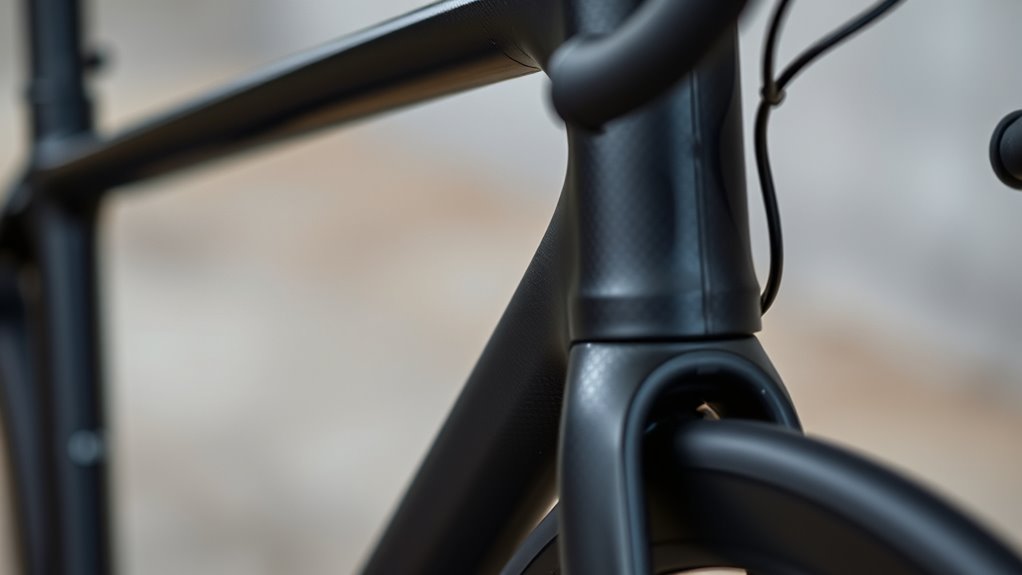

Understanding seatpost and frame flex helps you ride more comfortably and efficiently. Flex impacts how your bike absorbs shocks and responds to pedaling, influenced by materials, manufacturing tolerances, and how they wear over time. Proper flex can improve comfort, while too much may cause instability or fatigue. Keep an eye on how these components behave as they age. Stay with us to discover how to optimize your bike’s flex for better performance and longevity.

Get sports gear delivered free — and shop member deals
- Fast, free delivery on millions of items
- Access to Prime Big Deal Days deals on October 6–7
- Prime Video, Amazon Music and more included
Key Takeaways
- Flex in seatposts and frames affects ride comfort and shock absorption, influenced by material choice and design.
- Material fatigue from repeated stress reduces flexibility and can lead to component failure over time.
- Manufacturing tolerances impact how much flex is transmitted, affecting ride quality and stability.
- Environmental factors like temperature and corrosion can alter the flex characteristics of components.
- Monitoring flex and fatigue helps prevent sudden failures and ensures optimal long-term performance.

Understanding how your seatpost and frame flex is essential for a smooth and comfortable ride. When you’re out on the road or trail, the way your bike responds to your pedaling and terrain directly impacts your comfort and efficiency. Flex in these components isn’t just about feeling some give; it’s rooted in the materials used and how precisely those materials are manufactured. Recognizing the influences of material fatigue and manufacturing tolerances helps you choose the right setup and maintain ideal performance over time.
Material fatigue is a key factor in how your seatpost and frame behave under stress. Over countless rides, repeated loading and unloading cause microscopic changes in the metal or composite fibers, weakening the structure. This fatigue can lead to increased flex or, worse, sudden failure if not monitored. For example, aluminum and carbon fiber components are susceptible to different fatigue characteristics. Aluminum might develop microcracks after extensive use, subtly altering its flex pattern and reducing its ability to absorb shocks. Carbon fiber, while initially stiff and lightweight, can also suffer from fatigue if impacted repeatedly or loaded beyond design limits. Understanding this helps you anticipate when components might start to feel less responsive or become unsafe, prompting timely inspections or replacements.
Manufacturing tolerances also play a significant role in how your bike’s flex feels. Every seatpost and frame is manufactured within specific dimensional limits, and slight variations can influence how much flex you experience. If tolerances are too tight, the parts might feel overly stiff, transmitting more shocks to your body. Conversely, looser tolerances can cause excessive movement, making your ride feel vague or unstable. When you select components, paying attention to these tolerances ensures a better match to your riding style and weight. Manufacturers aim to keep tolerances tight enough for consistency but not so tight that they compromise comfort. Over time, manufacturing inconsistencies can also emerge, especially if the components are subjected to environmental factors like temperature fluctuations or corrosion, which can alter their flex characteristics. Additionally, understanding material fatigue helps in predicting when replacements might be necessary to maintain optimal performance.
As an affiliate, we earn on qualifying purchases.
Frequently Asked Questions
How Does Seatpost Material Affect Overall Bike Compliance?
Your seatpost material considerably influences overall bike compliance. Carbon fiber seatposts provide excellent vibration damping, making your ride smoother, while titanium alloy seatposts offer a good balance of flexibility and durability. Choosing carbon fiber enhances comfort on rough terrain, whereas titanium alloy adds resilience and a slight flex that absorbs shocks. Your selection impacts how comfortably you ride, especially over long distances or uneven surfaces.
Can Frame Flex Influence Climbing Efficiency?
Think of your bike as a dancer, where every move counts. Frame flex can markedly influence your climbing efficiency, especially depending on the frame material and suspension design. A stiffer frame made from carbon or aluminum transmits power directly, helping you climb with less energy loss. Conversely, flexible frames absorb shocks, which might slow you down but increase comfort. So, choosing the right frame material and suspension design can make your climbs feel smoother or more powerful.
What’s the Best Seatpost for Absorbing Road Vibrations?
You should choose a seatpost designed for vibration absorption, like one with built-in elastomers or a flexible design. It works best when paired with a saddle padding that cushions your sit bones, and a handlebar design that reduces hand fatigue. This combination helps smooth out road vibrations, making your ride more comfortable and efficient. Look for options with adjustable damping features to customize the level of absorption to your preference.
How Do Different Frame Geometries Impact Flex and Comfort?
Your frame geometry considerably impacts flex and comfort, depending on the material and your weight. A relaxed geometry with longer wheelbases offers more compliance, absorbing bumps better, especially if your frame is made of steel or carbon. If you’re a heavier rider, a sturdier, less flexible frame helps maintain stability, but you might prefer slightly more relaxed angles for added comfort. Adjusting geometry and choosing the right material can optimize your ride’s comfort level.
Is There a Trade-Off Between Frame Stiffness and Ride Comfort?
You might find that increasing frame stiffness boosts aero performance, but it often reduces ride comfort. About 65% of riders notice a stiffer frame feels more responsive, yet less forgiving on rough roads. This trade-off impacts frame durability, as stiffer frames tend to absorb less shock. To balance both, choose a frame with optimized stiffness for your riding style, ensuring durability without sacrificing too much comfort.
Conclusion
So, next time you hit the trail, remember that your bike’s flexibility isn’t just about comfort — it’s about what’s beneath the surface. That subtle give in your seatpost or frame could be the difference between a smooth ride and a unexpected jolt. Keep an eye on those details; they might hold the key to releasing your best ride yet. Sometimes, the smallest flexes reveal the biggest secrets. Are you ready to discover what’s truly at stake?
NFL season / tailgating Picks
team gear
As an affiliate, we earn on qualifying purchases.