
If you want your bike bags to stay secure on rough roads, focus on ones with low-profile, aerodynamic shapes that hug your bike tightly. Reinforced straps and secure buckles keep the bag firmly attached, even when rides get bumpy. Proper placement low on your frame or integrated into the bike improves stability and handles uneven terrain better. When design and attachment systems work together, they prevent shifting, making your ride smoother and safer. Keep exploring to find out how to optimize your bike bag’s stability.

Get sports gear delivered free with Prime
- Fast, free delivery on millions of items
- Prime Video, Amazon Music and more included
- Member-only deals all year
Key Takeaways
- Low-profile, aerodynamic designs reduce wind resistance and prevent shifting during rough terrain.
- Reinforced straps and secure buckles ensure bags stay firmly attached despite sudden movements.
- Proper placement, such as low on the frame or integrated into the structure, maintains balance on uneven surfaces.
- Flexible, durable materials hug the bike frame tightly, minimizing bouncing and shifting.
- An optimized combination of design and attachment systems enhances stability across different terrains.
When riding on rough roads, the stability of your bike bags can make a significant difference in your overall comfort and safety. Whether you’re navigating rugged mountain biking trails or weaving through busy urban cycling streets, a stable bag prevents shifting and swaying that can throw you off balance. In mountain biking, where terrain can be unpredictable, secure storage is crucial to maintain control and avoid accidents. Similarly, in urban cycling, a well-stabilized bag ensures your gear stays put amid sudden stops and tight turns. The key factors that determine a bag’s stability are design features, attachment systems, and placement on your bike.
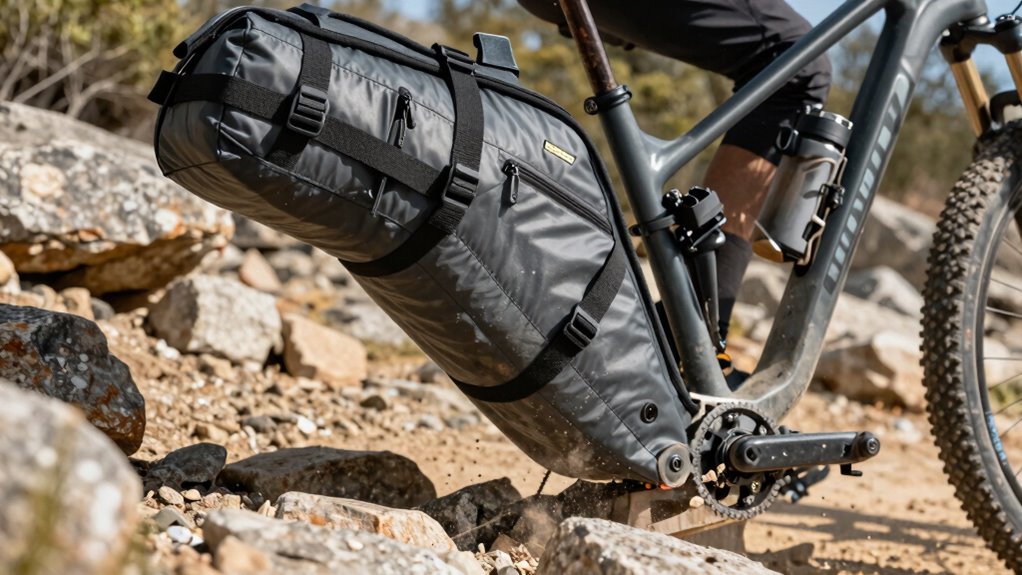
Good stability starts with the bag’s design. Bags specifically built for mountain biking often feature a low profile and aerodynamic shape, reducing wind resistance and minimizing movement. They’re constructed with durable, flexible materials that hug your frame tightly. This tight fit prevents bouncing and shifting, critical when handling uneven terrain. Urban cycling bags, on the other hand, tend to focus on compactness and ease of access, but those with reinforced straps and secure buckles also offer better stability against sudden stops or rapid acceleration. Look for bags with a streamlined shape that contours your bike, avoiding loose flaps or protrusions that can catch on obstacles or cause imbalance. Additionally, proper weight distribution can significantly enhance overall stability, especially on rough terrains. Using appropriate gear placement can also help maintain balance and prevent the bag from affecting your handling. Proper attachment systems further ensure that the bag remains firmly secured during your ride, regardless of terrain. Incorporating adjustable straps can allow for a more customized fit, increasing stability further.
Low-profile, aerodynamic bags with durable materials ensure stability and reduce bouncing on uneven terrain.
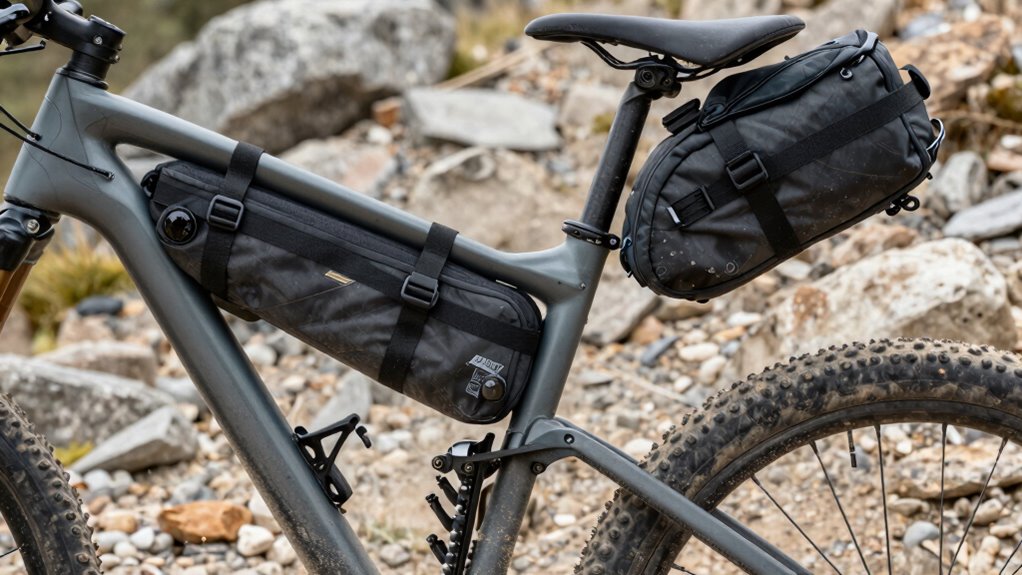
Placement also influences stability. In mountain biking, bags mounted low on the frame or integrated into the bike’s structure keep the center of gravity low, enhancing balance. For urban cyclists, bags attached to the rear rack or integrated into the frame reduce sway, especially when riding through crowded streets or over uneven pavement. Proper positioning minimizes pendulum motion, making your ride smoother and safer. When choosing a bike bag, consider how its placement and attachment system complement your riding style. The right combination of design, secure mounting, and placement ensures your gear stays stable, no matter the terrain or riding conditions.
As an affiliate, we earn on qualifying purchases.
Frequently Asked Questions
Do Different Bike Frame Types Affect Bag Stability?
Yes, different bike frame types affect bag stability. For example, bikes with sturdy frame geometry provide a solid foundation, preventing excessive movement. The frame shape influences how securely you can attach your bag, with some frames offering better attachment points. If your bike has a more complex or irregular frame, it might be harder to keep the bag stable, especially on rough roads, making proper attachment essential for maintaining balance.
How Does Rider Weight Influence Bag Movement?
Your rider weight acts like the keel of a boat, balancing stability. When you maintain good rider balance, your bike bag stays more secure, even on rough roads. If you apply consistent pedal pressure, you help keep the bike steady, reducing bag movement. Heavy riders often stabilize the load better, while lighter riders might experience more sway. Adjust your riding posture and pedal pressure to keep your bag from bouncing around.
Are There Specific Materials That Enhance Bag Stability?
Certain materials enhance bike bag stability, especially on rough roads. Look for bags made from durable, weather-resistant fabrics like nylon or polyester with reinforced stitching. These durability factors prevent tearing and shifting, keeping the bag securely in place. Weather resistance guarantees your gear stays dry and stable despite rain or mud. Choosing high-quality materials with these features helps your bike bag stay more stable, even during bumpy rides.
Does the Bike’s Suspension System Impact Bag Security?
Your bike’s suspension system greatly impacts bag security. For example, if your suspension isn’t compatible with your bag’s attachment system, it can cause instability on rough roads. Proper suspension compatibility guarantees the bag remains secure, absorbing shocks and vibrations. When choosing a bag, look for those with versatile attachment options that adapt to your suspension setup. This keeps your gear stable, even on bumpy trails, enhancing overall ride safety.
Can Bag Placement Change Reduce Wobbling on Rough Terrain?
Yes, changing your bag placement can markedly reduce wobbling on rough terrain. When you move bags closer to the bike’s center or lower on the frame, you improve stability, especially considering weather impact and road surface. Proper placement helps maintain balanced weight distribution, reducing sway caused by uneven surfaces or wind. Experiment with positioning to find what best minimizes wobbling, giving you a smoother, safer ride on challenging roads.
Conclusion
So, when you choose a bike bag with secure straps, balanced weight, and durable materials, you’re like a sailor steadying their ship against choppy waters. These features keep your bag stable on rough roads, preventing unwanted sway or noise. Think of it as riding a mountain trail in a sturdy, well-built vehicle — smooth and confident. By picking the right bag, you’ll enjoy a smoother ride and keep your gear safe, no matter how bumpy the journey gets.
Halloween Picks
halloween
As an affiliate, we earn on qualifying purchases.