

To use simple post-ride notes effectively, focus on recording key details like your physical feel, equipment performance, safety concerns, and any issues encountered. Track your progress over time and identify patterns, such as frequent flats or discomfort, to help plan better training and maintenance. Reflect on safety and gear, and set goals based on your notes. Keep notes consistent, and you’ll gain insights to push your cycling improvements faster—if you stick with it, you’ll discover even more ways to improve.

Get sports gear delivered free with Prime
- Fast, free delivery on millions of items
- Prime Video, Amazon Music and more included
- Member-only deals all year
Key Takeaways
- Consistently record ride details to identify patterns and track progress over time.
- Note safety issues and equipment performance to prevent future incidents and improve reliability.
- Document physical sensations and discomfort to tailor training and enhance endurance gradually.
- Use notes to set specific, measurable goals based on observed strengths and weaknesses.
- Regularly review and analyze your notes to adjust training strategies and prioritize necessary maintenance.
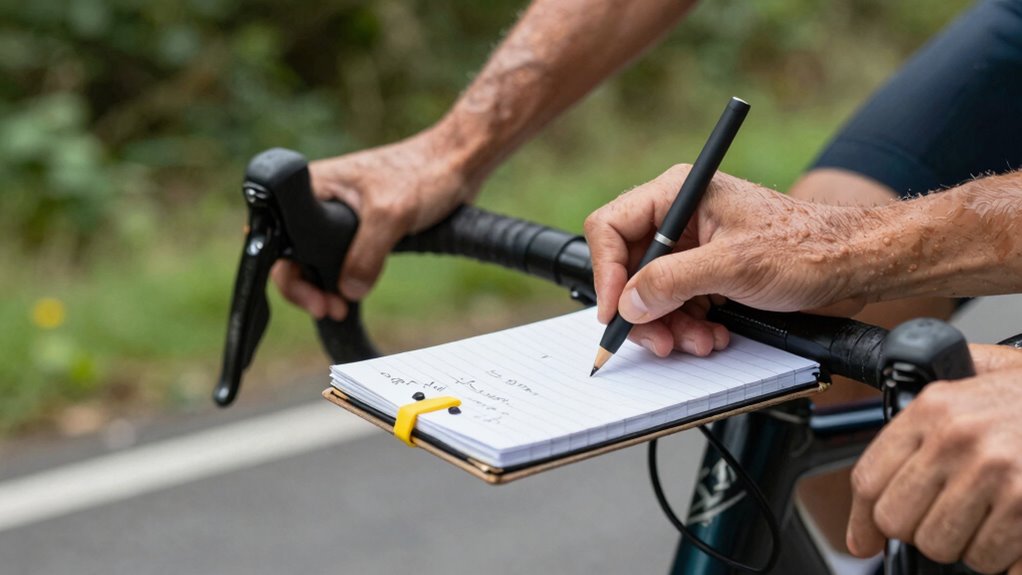
After you finish a ride, taking a few minutes to jot down post-ride notes can considerably improve your training and recovery. This simple habit helps you track your progress, identify issues, and plan for future rides. As you reflect on your ride, consider how your cycling safety was maintained throughout—did you stay alert, follow traffic laws, and wear your helmet properly? Noting any safety concerns or risky situations can help you become more aware and improve your habits for next time. Additionally, pay attention to your gear maintenance. Did your brakes respond smoothly? Were your tires properly inflated? Did you notice any unusual sounds or wear on your chain or gears? Recording these details ensures you catch small problems before they turn into major repairs, saving you time and money in the long run.
When you jot down your notes, focus on both your physical performance and your equipment. Track how you felt during the ride—your energy levels, any discomfort, or fatigue—so you can tailor your training plans accordingly. If you experienced any pain or soreness, note where and when, so you can adjust your posture or seek professional advice if needed. Also, record how your bike performed: were your gears shifting smoothly? Was your braking responsive? These details help you identify when your bike maintenance routines need to be more thorough or if certain parts require replacement or adjustment. Regularly updating these notes makes it easier to notice patterns, such as frequent flats or braking issues, enabling you to troubleshoot more effectively. Recognizing common cycling problems early can prevent minor setbacks from becoming major disruptions, keeping you on track with your riding goals.
Furthermore, reviewing your notes periodically can reveal performance trends, helping you set realistic goals for future rides. In addition to technical details, use your post-ride notes to set goals for the next ride. If you struggled with a particular hill or sprint, plan to incorporate specific training to improve those areas. If you noticed any safety concerns, like poor visibility or hazardous road conditions, include strategies to avoid or mitigate them in the future. Incorporating preventative maintenance into your routine can reduce the likelihood of equipment failure during rides. Over time, these notes become a personalized training log, guiding your development as a cyclist while helping to prioritize cycling safety and gear maintenance. They remind you to inspect your bike regularly, check tire pressure, and ensure all components are functioning properly before hitting the road again.
Products Worth Considering

Theragun Therabody Relief Massage Gun – 3 Speed, Black

Coleman Classic 3-Burner Propane Stove

Solo Stove Pi Prime Propane Pizza Oven
As an affiliate, we earn on qualifying purchases.
Frequently Asked Questions
What Tools or Apps Are Best for Jotting Post-Ride Notes?
You should try apps like Strava or Komoot for jotting post-ride notes, as they let you easily log gear maintenance needs and track nutrition details. These tools help you quickly record what went well or what needs fixing, so you can improve faster. Their user-friendly interfaces make it simple to add notes immediately after your ride, keeping your focus on progress rather than complicated entry processes.
How Soon After a Ride Should Notes Be Written?
You should write your post-ride notes as soon as possible, ideally immediately after finishing your ride. This helps you remember details about bike maintenance needs, nutrition tips, and performance insights before they fade. Delays can lead to missed observations, affecting your progress. Quick notes guarantee you capture accurate reflections, making it easier to plan repairs or adjust nutrition strategies for your next ride, boosting overall improvement.
Can Post-Ride Notes Help Prevent Future Mistakes?
Yes, post-ride notes can help prevent future mistakes by reinforcing your rider mindset and highlighting areas needing bike maintenance. When you jot down what went well and what didn’t, you become more aware of potential issues, like worn brakes or flat tires. This proactive approach allows you to address bike maintenance promptly and refine your skills, reducing errors and boosting your confidence on the road.
How Detailed Should My Post-Ride Notes Be?
Your post-ride notes should be detailed enough to capture key insights without becoming overwhelming. Think of noting bike maintenance needs or mental recovery cues—like any sensations or issues you experienced. For example, jot down a specific squeak or a mental fatigue level. This balance helps you identify patterns over time, preventing future mistakes, and guarantees you’re optimizing both your bike’s performance and your mental recovery for better rides ahead.
Should I Review Past Notes Regularly?
Yes, you should review your past notes regularly. Doing so helps reinforce your memory retention and strengthens habit formation around your riding improvements. By revisiting earlier notes, you can identify patterns, track progress, and adjust your training plan effectively. Making this a routine guarantees you stay focused on your goals, builds consistency, and accelerates your development as a rider. Consistent review turns insights into lasting habits, boosting your overall performance.
Conclusion
By incorporating simple post-ride notes, you boost your progress and stay focused on improvement. Research shows riders who review their notes are 30% more likely to reach their goals faster. Keep it brief, highlight key moments, and reflect on what went well or what to improve. Over time, these notes become a powerful tool, helping you identify patterns and ride smarter. Make post-ride notes a habit, and watch your skills accelerate more quickly than you thought possible.