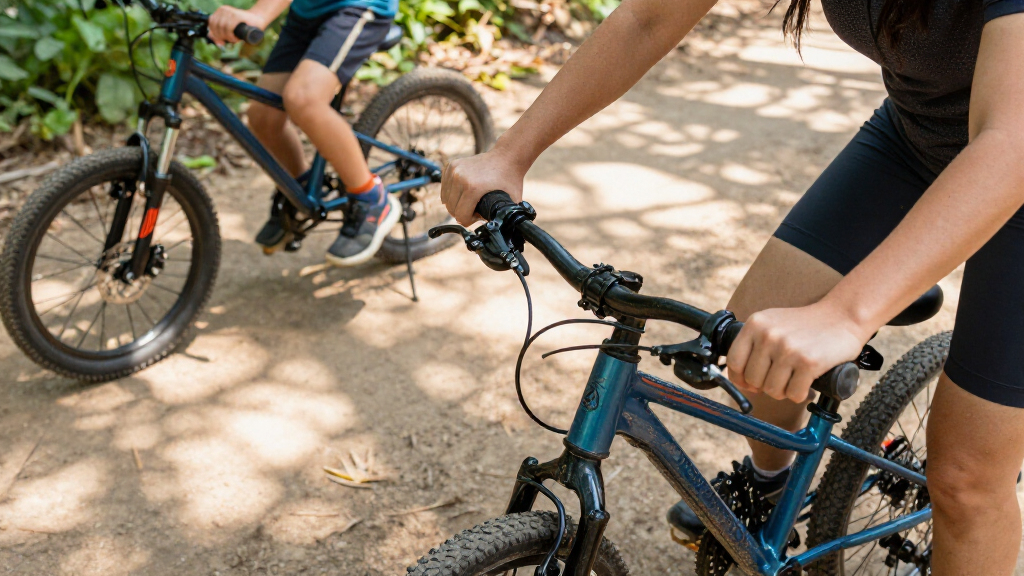
The best kids’ bikes with gears pair a frame your child can control with gearing that helps on the routes they actually ride. I’d put the woom Explore 5 at the top for a capable 24-inch all-terrain option with disc brakes, while the Glerc Mesa is a more straightforward 7-speed pick and the Retrospec Dart suits families seeking a hybrid style. The main tradeoffs are fit and weight, simpler gearing versus a wider range, and trail-focused equipment versus easier everyday handling. A gear count alone won’t tell you whether shifting will be manageable for a new rider. Read on for how these nine options compare and which type of rider each one fits best.

Get sports gear delivered free — and shop member deals
- Fast, free delivery on millions of items
- Access to Prime Big Deal Days deals on October 6–7
- Prime Video, Amazon Music and more included
Complete the kit


Key Takeaways
- The woom Explore 5 stands out for all-terrain use: its 24-inch format and disc brakes give it a more trail-ready role than the simpler 7-speed options.
- The Glerc Mesa is a direct 7-speed choice: it offers a clear alternative to mountain-bike styling when you want gears without prioritizing a high-spec trail setup.
- The Retrospec Dart fills the hybrid niche: its positioning makes it a candidate for mixed everyday riding rather than committed off-road use.
- Size options are not interchangeable: several WEIZE and Glerc models span wheel sizes, so matching the specific size and fit matters more than the brand name.
- The woom GO 4 targets a different stage: its 20-inch, 7-speed setup gives newer or smaller riders an alternative to the larger Explore 5.
| WEIZE Kids Mountain Bike, 20/24 Inch Youth Bicycle for Boys and Girls |  | Best for Rougher Neighborhood Routes | Wheel sizes: 20 and 24 inches | Recommended height: 20-inch: 48–55 inches; 24-inch: 52–66 inches | Drivetrain: 6-speed (20-inch); 18-speed (24-inch) | VIEW LATEST PRICE | See Our Full Breakdown |
| Kids Mountain Bike with Front Suspension and Disc Brakes |  | Best for Disc-Brake Control | Wheel sizes: 20 and 24 inches | Recommended height: 20-inch: approximately 48–62 inches; 24-inch: approximately 4’8″–5’8″ | Drivetrain: 7-speed (20-inch); 21-speed (24-inch) | VIEW LATEST PRICE | See Our Full Breakdown |
| Glerc Mesa 20-Inch Kids’ Bike, 7-Speed |  | Best for Smaller Riders Learning Gears | Wheel size: 20 inches | Recommended age: 6–12 years | Recommended height: 45–55 inches | VIEW LATEST PRICE | See Our Full Breakdown |
| WEIZE 20- or 24-Inch Mountain Bike for Girls |  | Best for Adjustable Fit Across Two Sizes | Wheel sizes: 20 and 24 inches | Recommended age: 20-inch: 6–11 years; 24-inch: 8–14 years | Recommended height: 20-inch: 42–56 inches; 24-inch: 54–66 inches | VIEW LATEST PRICE | See Our Full Breakdown |
| Glerc Kids Mountain Bike, 20, 24, or 26 Inch |  | Best for Maximum Gear Range | Available wheel sizes: 20, 24, and 26 inches | Frame: High-carbon steel | Drivetrain: 21-speed | VIEW LATEST PRICE | See Our Full Breakdown |
| woom Explore 5 Kids All-Terrain Bike, 24-Inch, Ages 7-11, Disc Brakes |  | Best Premium All-Terrain Pick | Wheel Size: 24 inches | Recommended Age: 7-11 years | Gears: 8-speed microSHIFT Acolyte | VIEW LATEST PRICE | See Our Full Breakdown |
| Retrospec Dart 7-Speed Kids Hybrid Bike |  | Best for Growing Riders | Bike Type: Hybrid | Gears: 7-speed | Wheel Sizes: 20 and 24 inches | VIEW LATEST PRICE | See Our Full Breakdown |
| CYBIC 20-Inch Kids Mountain Bike, 7-Speed |  | Best Budget Beginner Pick | Bike Type: Kids mountain bike | Wheel Size: 20 inches | Number of Speeds: 7 | VIEW LATEST PRICE | See Our Full Breakdown |
| woom GO 4 Kids Bike, 20-Inch, 7-Speed |  | Best Lightweight First Geared Bike | Wheel Size: 20 inches | Number of Speeds: 7 | Frame Material: Aluminum | VIEW LATEST PRICE | See Our Full Breakdown |
| kids’ bikes with gear | Brakes |
|---|---|
| WEIZE Kids Mountain Bike | Front and rear V-brakes |
| Kids Mountain Bike with Front | Front and rear disc brakes |
| Glerc Mesa 20-Inch Kids’ Bike | Front and rear V-brakes |
| WEIZE 20- or 24-Inch Mountain | Front and rear caliper brakes |
| Glerc Kids Mountain Bike | Disc brakes |
| woom Explore 5 Kids All-Terrai | Hydraulic flat mount disc, 160mm/140mm rotors |
| Retrospec Dart 7-Speed Kids Hy | V-brakes with adjustable-reach levers |
| CYBIC 20-Inch Kids Mountain Bi | Front and rear cable-actuated disc brakes |
| woom GO 4 Kids Bike | — |
More Details on Our Top Picks
WEIZE Kids Mountain Bike, 20/24 Inch Youth Bicycle for Boys and Girls
The WEIZE stands out for riders who want rear suspension as well as a front fork. That setup can take the sting out of uneven paths and park trails, while the wide 2.125-inch tires add grip across mixed surfaces. Its 20-inch model has 6 speeds and the 24-inch model has 18, giving older or taller riders more gear choices than the Glerc Mesa 20-Inch offers. The tradeoff is weight: the high-carbon steel frame is heavier than an aluminum option, which may be harder for a child to maneuver or carry. Plastic wheels also give me pause for frequent rough use. I’d choose it for light trails and bumpy paths, not demanding mountain-bike terrain.
Pros:- Two wheel sizes cover a range of rider heights
- Front and rear suspension can soften bumps on uneven paths
- Wide 2.125-inch tires provide grip across mixed surfaces
- Twist-grip shifting and V-brakes offer straightforward controls
Cons:- High-carbon steel frame is heavier than an aluminum alternative
- Plastic wheels may be less durable
- Designed for light trails rather than serious mountain biking
Best for: Families choosing between 20- and 24-inch sizes for a child riding neighborhood paths and occasional light trails
Not ideal for: Children who need a light bike to lift or maneuver, or riders planning demanding mountain-bike trails
- Wheel sizes:20 and 24 inches
- Recommended height:20-inch: 48–55 inches; 24-inch: 52–66 inches
- Drivetrain:6-speed (20-inch); 18-speed (24-inch)
- Suspension:Front fork and rear shock
- Frame:High-carbon steel (alloy steel)
- Brakes:Front and rear V-brakes
- Tire width:2.125 inches
- Shifter:Twist grip
- Warranty:1 year
Our verdict“Pick the WEIZE if comfort over bumpy everyday routes matters more than keeping the bike light.”
Kids Mountain Bike with Front Suspension and Disc Brakes
For families prioritizing braking control, this bike pairs front and rear disc brakes with a suspension fork and two size choices. Its 7-speed 20-inch and 21-speed 24-inch configurations give riders more gearing range than the 20-inch Glerc Mesa, which has 7 speeds and V-brakes. The magnesium alloy mag wheels are another point of distinction, though the supplied details don’t establish how they compare in weight or durability. It arrives 85% assembled, so expect to finish the setup before the first ride. The bike is intended for everyday use and light trails; I wouldn’t choose it on the assumption that its disc brakes or suspension make it suitable for demanding off-road riding.
Pros:- Front and rear disc brakes provide a distinct braking setup from V-brake alternatives
- Two sizes offer 7-speed or 21-speed gearing options
- Front suspension fork can soften bumps on light trails
- Kickstand and reflectors are included
Cons:- Requires some assembly despite arriving 85% pre-assembled
- Intended for light trails and everyday riding
- Product details do not provide a bike weight
Best for: Families seeking a 20- or 24-inch bike with disc brakes for everyday riding and occasional light trails
Not ideal for: Buyers looking for a ready-to-ride bike or a model specified for demanding mountain trails
- Wheel sizes:20 and 24 inches
- Recommended height:20-inch: approximately 48–62 inches; 24-inch: approximately 4’8″–5’8″
- Drivetrain:7-speed (20-inch); 21-speed (24-inch)
- Suspension:Front suspension fork
- Brakes:Front and rear disc brakes
- Wheels:Magnesium alloy mag wheels
- Assembly:85% pre-assembled; approximately 20 minutes
- Warranty:1-year limited
Our verdict“Choose this model if disc brakes are your priority and you’re comfortable completing the assembly.”
Glerc Mesa 20-Inch Kids’ Bike, 7-Speed
The Glerc Mesa is the most focused choice here for a child ready to learn shifting on a 20-inch, 7-speed bike. Its recommended height of 45–55 inches reaches shorter riders than the WEIZE models’ stated 20-inch range of 48–55 inches. That fit distinction may matter more than an extra gear range for families sizing a first geared bike. The Mesa keeps the setup simple with front and rear V-brakes, while the WEIZE with disc brakes offers a different braking system and more size choices. At 28 pounds, though, this steel-framed bike is substantial for a child to lift, and some assembly is required. It suits varied everyday terrain better than a single-speed starter, but its weight is a real compromise.
Pros:- 7-speed drivetrain gives a young rider several gear choices
- Recommended height range starts at 45 inches
- Front and rear V-brakes provide braking at both wheels
- Assembly tools are included
Cons:- At 28 pounds, it may be difficult for some children to lift
- Requires some assembly
- Only the 20-inch model is specified in this product data
Best for: Families with a 45–55-inch-tall child who wants a straightforward first bike with multiple gears
Not ideal for: Children who need a lightweight bike to carry or riders who specifically want disc brakes
- Wheel size:20 inches
- Recommended age:6–12 years
- Recommended height:45–55 inches
- Recommended inseam:21–25 inches
- Drivetrain:7-speed derailleur
- Frame:High-tensile steel
- Brakes:Front and rear V-brakes
- Weight:28 lbs
- Assembly:85% pre-assembled; tools included
Our verdict“The Mesa fits smaller riders learning to shift, provided its 28-pound weight is manageable.”
WEIZE 20- or 24-Inch Mountain Bike for Girls
This WEIZE makes the sizing details its strongest selling point: the 20-inch and 24-inch models list separate rider-height and saddle-height ranges, helping families narrow down fit as a child grows. That makes it more sizing-specific than the Glerc Mesa, whose supplied measurements cover only its 20-inch model. The front suspension fork adds comfort on uneven paths, but the product data does not list a drivetrain or gear count. For a roundup focused on bikes with gears, that omission makes this a less certain pick than the Mesa or the 21-speed Glerc mountain bike. Its caliper brakes and steel frame keep the setup straightforward, while assembly is still required. I’d shortlist it only after confirming the gearing for the exact version being considered.
Pros:- Two wheel sizes are paired with separate height and saddle-height ranges
- Adjustable saddle can accommodate growth within the fit range
- Front suspension fork can absorb some bumps
- Assembly instructions and a video are included
Cons:- The provided product details do not specify a gear count or drivetrain
- High-carbon steel frame may be heavier than an aluminum alternative
- Requires some assembly
Best for: Families comparing 20- and 24-inch fit options who can confirm the specific model’s gearing before buying
Not ideal for: Buyers who need verified gear counts or want disc brakes for varied terrain
- Wheel sizes:20 and 24 inches
- Recommended age:20-inch: 6–11 years; 24-inch: 8–14 years
- Recommended height:20-inch: 42–56 inches; 24-inch: 54–66 inches
- Saddle height:20-inch: 63–71 cm; 24-inch: 69–84 cm
- Frame:High-carbon steel
- Suspension:Front suspension fork
- Brakes:Front and rear caliper brakes
- Assembly:85% pre-installed; about 20 minutes
Our verdict“Consider this WEIZE for its detailed fit ranges, but verify the gearing of the chosen version first.”
Glerc Kids Mountain Bike, 20, 24, or 26 Inch
The Glerc offers the broadest stated drivetrain here: its 21-speed gearing and disc brakes give it a more feature-heavy setup than the 7-speed Glerc Mesa. That range can help a rider choose smaller steps between gears as routes vary, though younger children may not need so many choices. The tradeoff is heft: the 20-inch model weighs 30 pounds, two pounds more than the Mesa, which may make handling and lifting harder for a child. It comes in 20-, 24-, and 26-inch sizes, but the listed age, height, and inseam figures apply only to the 20-inch model. I’d look at this for a growing rider who wants many gears and disc brakes, while checking fit carefully for larger sizes.
Pros:- 21-speed drivetrain provides a wide range of gear choices
- Disc brakes offer a different stopping setup from the Mesa’s V-brakes
- Suspension fork helps absorb bumps
- Available in 20-, 24-, and 26-inch sizes
Cons:- The 20-inch version weighs 30 pounds
- Listed sizing details apply only to the 20-inch model
- A 21-speed setup may be more shifting complexity than some children need
Best for: Older or experienced young riders who want a 21-speed bike and disc brakes across several wheel-size options
Not ideal for: Younger riders who would benefit from a lighter, simpler bike, or families who need confirmed fit measurements for the 24- or 26-inch model
- Available wheel sizes:20, 24, and 26 inches
- Frame:High-carbon steel
- Drivetrain:21-speed
- Brakes:Disc brakes
- Fork:Suspension fork
- 20-inch model age range:6–12 years
- 20-inch model recommended height:45–55 inches
- 20-inch model weight:30 lbs
Our verdict“Choose the Glerc for its 21-speed range and disc brakes if your child can manage the heavier frame and you can confirm the fit.”
woom Explore 5 Kids All-Terrain Bike, 24-Inch, Ages 7-11, Disc Brakes
The woom Explore 5 sits at the top of this lineup for families who take riding seriously. At 20.8 lbs, it’s dramatically lighter than the steel-framed CYBIC 20-Inch Mountain Bike, which matters most on climbs and when a tired seven-year-old needs to be carried home. The hydraulic disc brakes with 160mm/140mm rotors outclass the cable-actuated discs and V-brakes elsewhere in this guide, giving consistent stopping power in wet or muddy conditions. Its 8-speed microSHIFT Acolyte trigger shifter is also a step up from the twist shifters on the woom GO 4 and CYBIC — trigger shifters are easier for small hands to modulate precisely on rolling terrain.
The tradeoffs are real: the knobby all-terrain tires feel sluggish on school-run pavement, and hydraulic brakes demand more careful maintenance than the simple rim brakes on the woom GO 4. The fit range is narrow, so check inseam carefully before committing.
Pros:- Lightweight 20.8 lb aluminum frame makes hills and handling far easier than steel rivals
- Hydraulic disc brakes deliver strong, consistent stopping in all conditions
- 8-speed microSHIFT trigger shifter is precise and manageable for small hands
- Kid-optimized geometry and ergonomic touchpoints support all-day comfort
Cons:- All-terrain tires feel slow and draggy on smooth pavement
- Hydraulic brakes require more careful maintenance than rim brakes or cable discs
- Narrow rider height and inseam range limits how long a child can grow into it
Best for: Riders ages 7-11 who mix genuine trail riding, gravel paths, and longer adventures and need light weight plus reliable wet-weather braking
Not ideal for: Budget-conscious families or kids who mostly ride smooth neighborhood pavement — the premium build and draggy tires are wasted there
- Wheel Size:24 inches
- Recommended Age:7-11 years
- Gears:8-speed microSHIFT Acolyte
- Brakes:Hydraulic flat mount disc, 160mm/140mm rotors
- Frame Material:Aluminum
- Bike Weight:20.8 lbs
- Rider Weight Limit:155 lbs
- Recommended Rider Height:49″ – 57″
Our verdict“If your child rides beyond the cul-de-sac and budget allows, this is the most capable and safest geared bike in the roundup.”
Retrospec Dart 7-Speed Kids Hybrid Bike
Where the woom Explore 5 is built around a fixed, narrow fit window, the Retrospec Dart takes the opposite approach: adjustable seat height and handlebar positioning let the bike grow with your child across the 6-11 age range. That flexibility makes it a smart middle pick between an outgrown 20-inch model and a full 24-inch trail bike. Its hybrid design with deep-groove all-terrain tires and shock-absorbing suspension handles the mixed pavement-and-gravel riding most kids actually do, where the pavement-focused woom GO 4 would feel beaten up on rougher paths.
The kid-sized V-brakes with adjustable-reach levers are easier to service than the CYBIC’s disc brakes, though they give up stopping power in mud. The biggest frustration is fit clarity: the listing covers both 20 and 24 inch wheel sizes without clearly matching each to a rider height, so you’ll need to confirm sizing before ordering.
Pros:- Adjustable seat and handlebar positioning extends usable life across growth spurts
- 7-speed drivetrain handles varied terrain without overwhelming beginners
- Suspension smooths bumpy paths for more comfortable longer rides
- Adjustable-reach V-brake levers fit small hands and are easy to maintain
Cons:- Sizing between the 20-inch and 24-inch versions is unclear in the listing
- No published weight, making it hard to gauge handling for younger riders
- V-brakes lack the wet-weather power of disc brakes on rival models
Best for: Parents who want one bike to span several growth spurts and a mix of neighborhood pavement and light gravel paths
Not ideal for: Families who need precise fit guidance up front or serious trail performance — the hybrid build and vague sizing specs won’t satisfy either
- Bike Type:Hybrid
- Gears:7-speed
- Wheel Sizes:20 and 24 inches
- Age Range:6-11 years
- Brakes:V-brakes with adjustable-reach levers
- Tires:All-terrain with deep grooves
- Suspension:Shock-absorbing
Our verdict“A sensible grow-into-it hybrid for mixed-terrain family rides, provided you confirm the correct wheel size before buying.”
CYBIC 20-Inch Kids Mountain Bike, 7-Speed
The CYBIC 20-Inch Mountain Bike earns its spot as the value entry for first-time geared riders. It checks the boxes that matter at this stage — a twist-grip 7-speed shifter, front and rear disc brakes, and a front suspension fork — at a price point well below the woom Explore 5. Compared with the similarly positioned WEIZE kids mountain bikes in this guide, the CYBIC’s inclusion of a tool kit and 85% pre-assembly makes the out-of-box experience friendlier for parents who aren’t mechanically inclined.
The catch is weight: its high-carbon steel frame is noticeably heavier than the aluminum woom GO 4 at 17.2 lbs, and that heft becomes obvious on hills or when a six-year-old tips it over. The cable-actuated discs also need adjustment more often than hydraulic brakes, and the twist shifter is less precise than the woom Explore 5’s trigger setup. As a low-risk way to test whether your child even wants gears, though, it’s a rational first purchase.
Pros:- Front and rear disc brakes provide strong stopping power for the price
- Twist-grip 7-speed shifter is intuitive for kids new to gears
- 85% pre-assembled with an included tool kit for easier setup
- Front suspension fork smooths rough sidewalks and dirt paths
Cons:- Steel frame is heavy for young riders to handle and pedal uphill
- Requires some assembly and periodic adjustment
- Cable disc brakes demand more maintenance than hydraulic or rim setups
Best for: First-time geared-bike riders ages 6-10 whose parents want an affordable, mostly pre-assembled entry point before investing more
Not ideal for: Small or timid riders who will struggle with the heavy steel frame, and anyone wanting low-maintenance brakes
- Bike Type:Kids mountain bike
- Wheel Size:20 inches
- Number of Speeds:7
- Frame Material:High-carbon steel
- Brakes:Front and rear cable-actuated disc brakes
- Tire Size:20 x 2.125 inches
- Recommended Age:6-10 years
- Recommended Rider Height:4’1″-4’9″ (125-145 cm)
- Warranty:1 year
Our verdict“A sensible budget gateway to geared riding, as long as your child can manage the extra weight.”
woom GO 4 Kids Bike, 20-Inch, 7-Speed
At 17.2 lbs, the woom GO 4 is the lightest bike in this batch, and that single number changes everything for a six-year-old learning to shift. Lighter bikes are easier to start, steer, and control, which is why this model makes more sense than the CYBIC for smaller riders graduating to their first gears — the CYBIC’s steel frame simply outweighs what many six-year-olds can manage confidently. Its twist shifter and mini V-brake levers are deliberately sized for small hands, and the adjustable saddle (22.4-28.7 inches) buys a couple of growth seasons.
Where it diverges from its sibling, the woom Explore 5, is terrain: the GO 4’s rigid frame and rim brakes are tuned for pavement, urban paths, and gentle unpaved trails, not rocky descents. There’s no suspension to absorb chatter, so rough trails will feel harsh. Think of it as the pavement-first counterpart to the Explore 5 — same design philosophy, lighter price and spec, narrower mission.
Pros:- Featherweight 17.2 lb aluminum frame is the easiest in this batch for small riders to control
- Twist shifter and mini V-brake levers are purpose-built for small hands
- Adjustable saddle height accommodates growth over multiple seasons
- Rim brakes are simple and inexpensive to maintain compared with disc setups
Cons:- Rigid frame with no suspension feels harsh on rough or rocky terrain
- Rim brakes lose stopping power in wet or muddy conditions
- Fit range is narrow, so verify rider height and inseam before buying
Best for: Riders ages 6-8 (45-51 inches tall) learning gears mostly on pavement, parks, and smooth paths where low weight builds confidence
Not ideal for: Kids who regularly ride rocky or rough trails — the rigid frame and rim brakes aren’t built for that abuse
- Wheel Size:20 inches
- Number of Speeds:7
- Frame Material:Aluminum
- Weight:17.2 lbs without pedals or kickstand
- Brake Style:Rim brakes (mini V-brakes)
- Gear Shifter:Twist grip
- Recommended Rider Age:6-8 years
- Recommended Rider Height:45-51 inches
- Weight Capacity:155 lbs
Our verdict“The best first geared bike for lightweight, pavement-focused riders who will outgrow rougher trail ambitions quickly.”
How We Picked
I compared these bikes on the factors that affect a child’s confidence and a family’s day-to-day use: fit and wheel-size choice, how useful the gearing is for likely routes, braking equipment, terrain suitability, and expected setup and maintenance demands. A bike that fits well and has controls a child can operate matters more than a larger gear count on paper. I also considered whether the design points toward pavement, mixed paths, or rougher trails, since extra trail equipment can add weight and upkeep.
The ranking gives the lead to the woom Explore 5 because it combines a clear 24-inch all-terrain role with disc brakes. The Glerc Mesa and Retrospec Dart follow as more focused choices for 7-speed riding and hybrid use, while the woom GO 4 earns a distinct place for 20-inch riders. The remaining mountain-bike options offer varied size ranges or trail-oriented features, but buyers should compare the exact configuration and fit before choosing; broad product names alone do not establish component quality or a child’s readiness to shift.
Factors to Consider When Choosing Best Kids’ Bikes With Gears
Before choosing a geared bike, I’d start with the child and the route, then check whether the bike’s controls and maintenance needs suit your household. These decisions help prevent buying a bike that looks capable but is awkward to ride.
Fit the bike to the rider, not the age label
Age ranges and wheel sizes are rough guides, not substitutes for checking fit. A child should be able to start, stop, and put a foot down with confidence, while reaching the brake levers without stretching. A bike that is too large can make shifting and steering feel harder, even if the child is expected to grow into it. Compare the maker’s height or inseam guidance with the child’s measurements, then check the return and assembly terms before ordering. When a model comes in several wheel sizes, confirm which exact size is being sold. A smaller, well-controlled bike is usually a better starting point than extra room that compromises handling today.
Match the gearing to the route and the rider
Gears are most useful when the route changes enough to make a single speed tiring, such as on hills or longer rides. For flat neighborhood trips, a large range may add controls the child rarely needs. A new rider may benefit from practicing shifts on quiet ground before tackling busy streets or steep climbs. Check whether the child can reach and operate the shifter, and ask how clearly the bike indicates which gear is selected. Avoid treating the number of speeds as a direct measure of climbing ability; gearing range and the child’s cadence habits matter too. If the bike will mostly stay on level paths, simple operation may be worth more than extra ratios.
Choose equipment for real terrain
Mountain-bike tires, suspension, and disc brakes can make sense on rough paths, but they may be unnecessary for paved commutes and park loops. Suspension adds moving parts and weight, and a child may not be heavy enough to benefit much from a basic fork. Wider, knobbier tires can grip loose ground but roll more slowly on pavement. Disc brakes can offer useful stopping power in wet or gritty conditions, though families should be ready to check pad wear and keep the system in good working order. Decide which surfaces your child will ride most often, not which surfaces the bike might encounter once. Mixed routes call for a practical balance rather than the most trail-focused setup available.
Account for weight and control
A child has less leverage than an adult, so a heavy bike can be harder to start, steer, lift, and recover after a wobble. This can affect confidence more than a small difference in advertised gearing. Ask for the complete bike weight and compare it with the child’s size and strength, particularly if they will carry the bike up steps or load it into a car. Accessories and heavy tires also add mass beyond the frame. Do not assume that a rugged-looking frame is automatically better for a young rider. On smooth routes, lighter and simpler equipment may make each ride easier.
Plan for setup and maintenance
Many shipped bikes need assembly and adjustment before a child rides them. Check what arrives preassembled, whether the gears and brakes need tuning, and whether a nearby shop can service the specific parts. A gear system that shifts poorly can discourage a child from using it, so regular checks matter. Parents should expect to keep tires inflated, inspect brake function, and watch for a stretched or dirty chain. If that routine feels like a burden, a less complicated bike may be a better fit for family life. Include the availability of replacement parts and local service in your choice, especially if the bike will see regular trail use.
Frequently Asked Questions
Is a 7-speed bike enough for a child who rides hills?
Seven speeds can cover ordinary neighborhood hills, but the number alone does not show whether the easiest gear is low enough for your child. Look for information about the gear range and consider the steepness and length of the routes. A child who struggles to pedal uphill may also need time to learn when to shift, rather than a bike with more gears. Try a gentle climb before committing to regular steep rides. If hills are a major part of every trip, prioritize a usable low gear and accessible controls over the speed count.
Should I choose a mountain bike or a hybrid for mixed family rides?
Start with the surface you ride most often. A hybrid-style bike such as the Retrospec Dart is positioned for everyday and mixed use, while mountain-bike models are aimed more at rougher paths and trail equipment. Knobby tires and suspension can help on loose or uneven ground, but they can add weight and slow pavement riding. For mostly paved routes with occasional park paths, a simpler setup may be easier for a child to manage. If the outings regularly include roots, gravel, or rough trails, the mountain-bike category is a stronger match.
Are disc brakes necessary on a kids’ bike?
Disc brakes can be useful when a child rides in wet conditions or on demanding trails, where reliable stopping is especially important. They also add components that need inspection and service. For ordinary dry pavement, a properly adjusted simpler brake system may be adequate, depending on the bike and the child’s ability to use the levers. Check that the child can reach and squeeze the brakes comfortably; brake type cannot compensate for poor fit or maintenance. Treat disc brakes as a terrain-driven feature rather than a must-have on every geared bike.
When should I move my child from a 20-inch bike to a 24-inch bike?
Use the manufacturer’s height and inseam guidance, then check the child’s reach and control on the exact bike. A 24-inch wheel is not automatically the right next step because frame geometry and saddle range vary. Your child should be able to start, stop, steer, and operate the brakes without straining. A test ride, if available, can reveal handling issues that measurements miss. Moving up before the child can control the larger frame can make learning and everyday riding less comfortable.
Does a child need gears if most rides are on flat paths?
Not necessarily. Gears can help with headwinds, small hills, and longer rides, but they also require the child to learn shifting and add maintenance. For short, flat trips, a simpler bike may be easier to use. If you expect routes to change or the child to join longer family rides, gears can offer useful flexibility. Consider the child’s interest in learning the controls and the actual terrain before paying for a system they may rarely use.
Conclusion
For a child riding mixed terrain who is ready for a 24-inch bike, I’d choose the woom Explore 5 as best overall. The Glerc Mesa is my best value-style pick for families seeking a straightforward 7-speed option, while the woom GO 4 is best for beginners or smaller riders who fit its 20-inch size. For mostly everyday rides, the Retrospec Dart is the best hybrid fit; for rougher paths, compare the mountain-bike models against the child’s strength and the exact component setup. Choose by fit and route first, then use the gearing and brake features to narrow the field.
Fall Picks
fall essentials
As an affiliate, we earn on qualifying purchases.