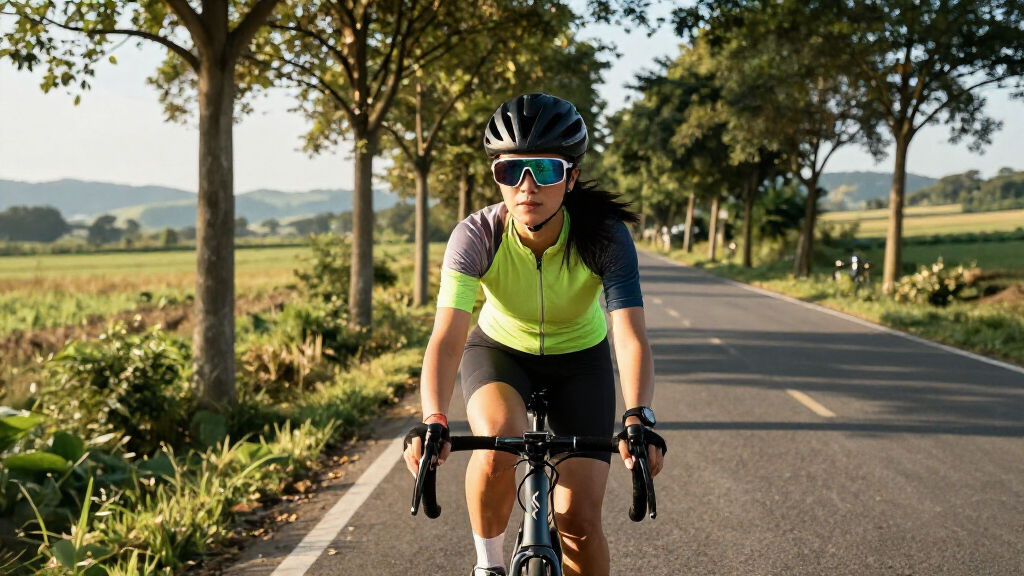
The best cycling sunglasses balance secure fit, useful coverage, and lenses suited to the light you actually ride in. My best overall pick is the KAPVOE K63 Photochromic Cycling Sunglasses for riders who want one pair that adapts as conditions change; the Tifosi Vogel SL Shield stands out as a more polished sports-focused option, while the Banglong Polarized Sunglasses offer several interchangeable lenses for riders who want to match tint to conditions. The main tradeoffs are photochromic convenience versus predictable fixed tints, and broad coverage versus ventilation and fit preferences. I compare all 14 options by their riding use, lens approach, comfort cues, and flexibility. Read on for the full breakdown and guidance on choosing a pair that suits your routes.

Get sports gear delivered free with Prime
- Fast, free delivery on millions of items
- Prime Video, Amazon Music and more included
- Member-only deals all year
Complete the kit


Key Takeaways
Photochromic lenses lead for changing light: The KAPVOE K63 and ROCKBROS photochromic models suit riders moving between open roads, shade, and variable weather without swapping lenses.
Interchangeable-lens kits favor customization: Banglong and ROCKBROS multi-lens options offer more control over tint choice, but carrying and changing spare lenses adds handling and storage needs.
Fit and weight are separate buying questions: The listed 22 g and 24 g Lamicall models call attention to weight, while wraparound and shield designs prioritize coverage; neither spec alone predicts comfort on your face.
Prescription needs narrow the field: The ROCKBROS wraparound model with a myopia frame is the most directly relevant option for riders seeking an insert-based approach, though fit compatibility still needs checking.
Multipacks trade simplicity for flexibility: Foliful’s four-pack may suit riders who want several pairs or backups, while a single purpose-built cycling model is a more focused choice for regular rides.
| KAPVOE K63 Photochromic Cycling Sunglasses |  | Best for Changing Light | Lens material: PC | Lens type: Photochromic, fixed | Lens category: CAT.0–CAT.2 | VIEW LATEST PRICE | See Our Full Breakdown |
| goodr Bolt G Polarized Running Sunglasses |  | Best for Glare-Prone Road Rides | Lens: Polarized gradient wrap lens | UV protection: UV400; blocks 100% of UVA and UVB rays as stated | Frame: Hyper-flexible, pro-grade | VIEW LATEST PRICE | See Our Full Breakdown |
| Foliful Polarized Sports Sunglasses, 4-Pack |  | Best Backup Set | Lens type: Polarized | UV protection: UVA and UVB protection stated; rating not specified | Frame style: Wrap-around | VIEW LATEST PRICE | See Our Full Breakdown |
| Lamicall Polarized Sports Sunglasses, 22 g, Gray Lens |  | Best for Fit Adjustability | Frame material: TR90 plastic | Lens material: TAC | Lens type and color: Polarized, gray | VIEW LATEST PRICE | See Our Full Breakdown |
| Lamicall Polarized Sports Sunglasses with UV400 Protection |  | Best for Everyday Multi-Sport Use | Model: BCPE07 | Frame material: TR90 plastic | Lens material and color: TAC, gray | VIEW LATEST PRICE | See Our Full Breakdown |
| ROCKBROS Photochromic Sports Sunglasses with Removable Elastic Band |  | Best for a More Secure Fit | Lens type: Photochromic | Lens material: Polycarbonate | Frame material: Composite | VIEW LATEST PRICE | See Our Full Breakdown |
| Banglong Polarized Sports Sunglasses with 5 Interchangeable Lenses |  | Best for Prescription-Lens Versatility | Frame material: TR90 | Lens types: Polarized gray, light blue, yellow night vision, transparent, and one additional interchangeable lens | Lens height: 1.88 inches | VIEW LATEST PRICE | See Our Full Breakdown |
| ROCKBROS Polarized Sports Sunglasses with 4 Replaceable Lenses |  | Best for Swappable-Lens Flexibility | Lens count: Four interchangeable lenses | Polarized lens: Black lens only | UV protection: UV400 | VIEW LATEST PRICE | See Our Full Breakdown |
| ROCKBROS Polarized Sports Sunglasses | 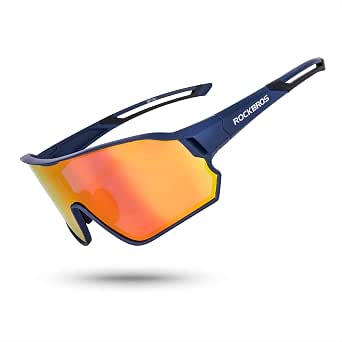 | Best for Simple Glare Control | Lens type: Polarized | Lens protection: UV400; blocks 100% of UVA and UVB rays | Frame material: Polycarbonate | VIEW LATEST PRICE | See Our Full Breakdown |
| ROCKBROS Photochromic Wraparound Sports Sunglasses with Myopia Frame |  | Best for Prescription Riders in Changing Light | Lens type: Photochromic | Light transmittance: 83% to 16% | Lens material: Polycarbonate | VIEW LATEST PRICE | See Our Full Breakdown |
| Lamicall 24 g Polarized Sports Sunglasses |  | Best for Adjustable Fit | Frame material: TR90 | Lens material: TAC | Lens coating: Polarized | VIEW LATEST PRICE | See Our Full Breakdown |
| Tifosi Vogel SL Shield Sunglasses for Sports |  | Best for Sweat-Prone Rides | Lens color: Smoke with bright blue mirror | Lens material: Shatterproof polycarbonate | UV protection: 100% UVA/UVB | VIEW LATEST PRICE | See Our Full Breakdown |
| ROCKBROS Photochromic Sports Sunglasses, 22 g |  | Best for Changing Light | Weight: 22 g per pair | Lens: Thickened polycarbonate, photochromic | Lens protection: UV400 | VIEW LATEST PRICE | See Our Full Breakdown |
| Tifosi Vogel XC Rimless Sunglasses – Running, Baseball, Cycling & Golf |  | Best for Bright Full-Sun Rides | Lens color: Smoke with sky-blue mirror | Light transmission: 13% | Fit: Small to medium | VIEW LATEST PRICE | See Our Full Breakdown |
| cycling sunglasse | UV protection | Frame material | Weight |
|---|---|---|---|
| KAPVOE K63 Photochromic Cyclin | UV400; stated 99.99% UVA/UVB filtering | TR90 | — |
| goodr Bolt G Polarized Running | UV400; blocks 100% of UVA and UVB rays as stated | — | — |
| Foliful Polarized Sports Sungl | UVA and UVB protection stated; rating not specified | — | — |
| Lamicall Polarized Sports Sung | UV400; blocks 99.9% of UVA and UVB rays as stated | TR90 plastic | 22 g |
| Lamicall Polarized Sports Sung | UV400; blocks 99.9% of UVA/UVB rays as stated | TR90 plastic | 22 g |
| ROCKBROS Photochromic Sports S | Yes | Composite | 30 g |
| Banglong Polarized Sports Sung | — | TR90 | — |
| ROCKBROS Polarized Sports Sung | UV400 | TR90 | 27.22 g |
| ROCKBROS Polarized Sports Sung | — | Polycarbonate | 25 g |
| ROCKBROS Photochromic Wraparou | UV400 | Plastic | — |
| Lamicall 24 g Polarized Sports | UV400 | TR90 | 24 g |
| Tifosi Vogel SL Shield Sunglas | 100% UVA/UVB | Grilamid TR-90 | 26 g |
| ROCKBROS Photochromic Sports S | — | — | 22 g per pair |
| Tifosi Vogel XC Rimless Sungla | 100% UVA/UVB | Grilamid TR-90 | 24 g |
More Details on Our Top Picks
KAPVOE K63 Photochromic Cycling Sunglasses
The KAPVOE K63 earns its place for cyclists whose rides move between shade and open sun. Its CAT.0–CAT.2 photochromic lens shifts from clear toward gray as UV exposure changes, so it can be more convenient than the fixed gray lenses on the Lamicall Polarized Sports Sunglasses, 22 g, Gray Lens. UV400 protection and lens vents add practical coverage and airflow, while the flexible TR90 frame and soft nose pad support longer rides.
The tradeoff is versatility: the lens is fixed, not interchangeable, and its CAT.0–CAT.2 range is not a substitute for a darker lens in intense sun. Unlike the Foliful four-pair set, this is a single-purpose option rather than a supply of backups. The included inner frame accessory also comes without lenses, so buyers should not assume it is ready for prescription use.
Pros:- Photochromic CAT.0–CAT.2 lens responds to changing UV exposure
- UV400 protection with stated 99.99% UVA/UVB filtering
- Flexible TR90 frame and soft rubber nose pad support a comfortable fit
- Lens vents promote airflow and may help reduce fog buildup
Cons:- Fixed lens cannot be swapped for a darker or task-specific tint
- CAT.0–CAT.2 range may not provide enough tint for intense direct sun
- Included inner frame accessory does not include lenses
Best for: Cyclists who often ride through wooded routes, changing cloud cover, or mixed shade and daylight and want one lens to adapt.
Not ideal for: Riders who need a dark lens for bright, exposed routes, want interchangeable lens options, or expect the included inner frame accessory to come with lenses.
- Lens material:PC
- Lens type:Photochromic, fixed
- Lens category:CAT.0–CAT.2
- UV protection:UV400; stated 99.99% UVA/UVB filtering
- Frame material:TR90
- Fit feature:Soft rubber nose pad
- Ventilation:Lens vent openings
- Included accessory:Inner frame accessory; lenses not included
Our verdict“Choose the KAPVOE K63 for mixed-light rides where an adapting lens matters more than interchangeable tints or strong sun shading.”
goodr Bolt G Polarized Running Sunglasses
For cyclists who spend most of their time in bright conditions, the goodr Bolt G offers a different advantage from the KAPVOE K63: its polarized gradient wrap lens is designed to reduce glare rather than adapt as light changes. The wraparound coverage and UV400 protection suit exposed roads, while a ventilated lens can help manage heat and moisture during hard efforts. A flexible frame, temple grips, no-slip coating, and adjustable nose piece are aimed at keeping the glasses secure through movement.
That fit adjustability is useful, but it may take some fiddling to get the nose piece comfortable. Unlike the Lamicall 22 g model, this listing does not provide a stated weight or detailed dimensions, making fit harder to predict. Polarization can also be a drawback for riders who prefer an unpolarized view of screens or certain reflective surfaces. Its sporty shape is less discreet than everyday eyewear.
Pros:- Polarized gradient wrap lens reduces glare
- UV400 protection blocks 100% of UVA and UVB rays as stated
- No-slip coating, temple grips, and adjustable nose piece support a secure fit
- Ventilated, scratch- and impact-resistant lens
Cons:- Adjustable nose piece may need fitting to reach a comfortable position
- Wraparound sport styling will not suit every preference
- No product weight or lens dimensions are provided in the supplied specs
Best for: Road cyclists riding in bright, glare-heavy conditions who want a secure wraparound fit and polarized lenses.
Not ideal for: Riders who need a lens that adjusts to changing light, prefer understated frames, or want published weight and sizing details before choosing.
- Lens:Polarized gradient wrap lens
- UV protection:UV400; blocks 100% of UVA and UVB rays as stated
- Frame:Hyper-flexible, pro-grade
- Fit features:Adjustable nose piece, temple grips, no-slip coating
- Lens features:Ventilated, scratch-resistant, impact-resistant
- Origin:Imported
Our verdict“Pick the goodr Bolt G for bright, glare-prone cycling if you value a grippy polarized fit over photochromic adaptability.”
Foliful Polarized Sports Sunglasses, 4-Pack
The Foliful set suits riders who want spare pairs ready for a car, gear bag, or fellow riders. Rather than offering the light adaptation of the KAPVOE K63 or the more individually specified construction of the Lamicall 22 g model, it focuses on quantity: four pairs, four retention straps, and four cleaning cloths. Polarized lenses reduce glare, and the wraparound frames add wind and dust coverage, which can be useful on open roads and recreational rides.
The main compromise is predictability. The colors are assorted, so buyers have limited control over the look, and one wraparound shape may not fit every face well. The supplied details also do not state a UV protection rating, lens material, or weight, making it harder to compare protection claims and fit with the more fully specified options. It is a practical backup bundle, not the strongest choice for a carefully tailored primary pair.
Pros:- Four pairs provide backups or options for multiple riders
- Polarized lenses reduce glare from roads and other reflective surfaces
- Wraparound frames help shield eyes from wind and dust
- Set includes four retention straps and four microfiber cleaning cloths
Cons:- Assorted colors may not match every buyer’s preference
- Wraparound fit may not suit every face shape
- Supplied specs do not state a UV rating, lens material, or product weight
Best for: Casual cyclists, families, or riding groups who want multiple pairs and straps for shared use or backups.
Not ideal for: Riders seeking a precisely fitted primary pair, a specific frame color, or detailed lens and UV specifications before buying.
- Lens type:Polarized
- UV protection:UVA and UVB protection stated; rating not specified
- Frame style:Wrap-around
- Nose pads:Ventilated silicone
- Set includes:4 pairs of sunglasses
- Included accessories:4 retention straps and 4 microfiber cleaning cloths
- Origin:Imported
Our verdict“Choose the Foliful pack when spare pairs and included straps matter more than precise fit details or a single refined primary pair.”
Lamicall Polarized Sports Sunglasses, 22 g, Gray Lens
The Lamicall 22 g model is a strong pick for cyclists who want a lightweight, glare-cutting pair with several fit adjustments. Its polarized gray TAC lens and UV400 protection suit bright daytime rides, while the flexible TR90 frame, silicone nose pads, and adjustable temple tips offer more ways to tune the fit than the fixed-fit Foliful bundle. At 22 g, it is also a clearly specified lightweight option, and the hard case with clip gives riders a practical way to carry it between rides.
The half-frame wraparound shape is less full-coverage than some shield-style designs, and the 6.9 cm lens width may not suit narrower faces. Compared with the KAPVOE K63, it does not adapt to changing light; its gray tint is fixed. The included accessories are useful, though they do not change that this is best suited to bright conditions rather than variable-light routes.
Pros:- 22 g weight keeps the frame light for extended wear
- Polarized gray TAC lens reduces glare
- UV400 protection blocks 99.9% of UVA and UVB rays as stated
- Silicone nose pads and adjustable temple tips help tune the fit
Cons:- Half-frame wraparound design may not suit every style or coverage preference
- 6.9 cm lens width may be too wide for some faces
- Fixed gray lens does not adapt to changing light like the KAPVOE K63
Best for: Cyclists who want a lightweight polarized pair with adjustable nose and temple contact points for a more tailored fit.
Not ideal for: Riders with narrower faces who may find the 6.9 cm lens width too broad, or those who need a photochromic lens for changing light.
- Frame material:TR90 plastic
- Lens material:TAC
- Lens type and color:Polarized, gray
- UV protection:UV400; blocks 99.9% of UVA and UVB rays as stated
- Weight:22 g
- Lens width:6.9 cm
- Size:141 mm
- Included accessories:Hard protective case with clip, microfiber cleaning cloth, storage bag, instructions, polarization test card
Our verdict“Choose this Lamicall model for a lightweight, adjustable polarized fit on bright rides, provided its broad lens shape suits your face.”
Lamicall Polarized Sports Sunglasses with UV400 Protection
This Lamicall pair is aimed at riders who want cycling sunglasses they can also use for driving, running, fishing, or travel. Its 22 g TR90 frame, polarized gray TAC lenses, and UV400 protection make it a straightforward bright-light option, while the adjustable silicone nose pads and temple tips help secure the wraparound fit. Compared with the Foliful four-pack, this is a single pair with a more defined feature set and a hard case; compared with the KAPVOE K63, it favors glare reduction over adapting to shifts in light.
The supplied details do not give lens dimensions or prescription compatibility, so buyers who need a precise fit or optical setup have less to go on. Its wraparound shape may also feel too broad for some faces. The feature set closely overlaps the other Lamicall 22 g model in this lineup, so the choice between them comes down to the listed design details and included case accessories rather than a different lens approach.
Pros:- Polarized gray TAC lenses reduce glare
- UV400 protection blocks 99.9% of UVA and UVB rays as stated
- Lightweight 22 g TR90 frame is suited to extended wear
- Adjustable silicone nose pads and temple tips support a more secure fit
Cons:- Wraparound fit may not suit every face shape
- Lens dimensions are not specified
- Prescription compatibility is not specified
Best for: Active buyers who want one lightweight, polarized pair for cycling and other outdoor activities in bright conditions.
Not ideal for: Cyclists who need photochromic lenses, prescription compatibility, or published lens dimensions to confirm fit before buying.
- Model:BCPE07
- Frame material:TR90 plastic
- Lens material and color:TAC, gray
- Lens type:Polarized
- UV protection:UV400; blocks 99.9% of UVA/UVB rays as stated
- Weight:22 g
- Fit:Adjustable wraparound
- Included accessories:Hard case with hook, cleaning cloth, storage bag, instructions, test card
Our verdict“Pick this Lamicall pair if you want one lightweight polarized option for cycling and other bright-weather activities and do not need prescription details.”
ROCKBROS Photochromic Sports Sunglasses with Removable Elastic Band
The removable elastic band sets this ROCKBROS pair apart for riders who want extra hold on rough roads or during active changes in pace. Its photochromic polycarbonate lenses adjust to changing light, making them more adaptable across shaded routes than the fixed polarized lenses on the ROCKBROS Polarized Sports Sunglasses. Non-slip nose pads and a 30 g composite frame add to the practical, multi-sport design.
The tradeoff is that these lenses are not polarized, so they do not offer the same glare reduction as polarized alternatives. The one-size fit may also feel less secure for some face shapes, even with the band attached. I’d choose this model for riders who value adaptable tint and added retention over glare control or a more tailored fit.
Pros:- Photochromic lenses adapt to changing light conditions.
- Removable elastic band adds retention for active riding.
- Non-slip nose pads support a steadier fit.
- Scratch-resistant polycarbonate lenses provide UV protection.
Cons:- Non-polarized lenses do not reduce glare like the ROCKBROS Polarized Sports Sunglasses.
- One-size sizing may not fit every face comfortably.
- At 30 g, it is heavier than the 25 g ROCKBROS Polarized Sports Sunglasses.
Best for: Cyclists riding mixed sun and shade who want photochromic lenses and an elastic band for extra retention.
Not ideal for: Riders who prioritize polarized glare reduction or need a fit tailored to a particular face shape.
- Lens type:Photochromic
- Lens material:Polycarbonate
- Frame material:Composite
- Weight:30 g
- UV protection:Yes
- Polarization:Non-polarized
- Fit:Unisex, one size
- Band:Removable elastic band
Our verdict“Choose this pair if changing light and extra hold matter more to you than polarization or a customized fit.”
Banglong Polarized Sports Sunglasses with 5 Interchangeable Lenses
Five interchangeable lenses give the Banglong more lighting options than the four-lens ROCKBROS Polarized Sports Sunglasses, including a polarized gray lens and a yellow lens intended for night use. Its detachable prescription insert is the bigger distinction for cyclists who need corrective lenses: the insert can accommodate a prescription, though the prescription lenses themselves are not included. The flexible TR90 frame and soft rubber nose pads round out a setup built for changing conditions and different users.
This versatility brings extra parts to manage and swap, so it is less convenient than the single-lens ROCKBROS Polarized Sports Sunglasses. The clear lens is described as protection from objects, but no impact rating is provided; I would not treat it as certified protective eyewear based on the supplied details. This is a useful choice for riders who need lens options and a prescription insert, but not for anyone seeking a simple, clearly rated protective setup.
Pros:- Five interchangeable lenses cover a range of lighting conditions.
- Polarized gray lens is included to reduce glare.
- Detachable insert frame can hold prescription lenses.
- TR90 frame, soft nose pads, case, pouch, and lanyard support a flexible kit.
Cons:- Prescription lenses for the insert are not included.
- The clear lens has no specified impact rating.
- Swapping and storing several lenses is less convenient than using a single-lens pair.
Best for: Prescription-wearing cyclists who want interchangeable lenses for varied light and weather conditions.
Not ideal for: Riders who prefer a simple single-lens setup or require a stated impact rating for protective eyewear.
- Frame material:TR90
- Lens types:Polarized gray, light blue, yellow night vision, transparent, and one additional interchangeable lens
- Lens height:1.88 inches
- Temple length:5.82 inches
- Nose bridge:0.78 inches
- Frame width:5.98 inches
- Prescription insert:Detachable inner frame; prescription lenses not included
- Included accessories:Cleaning cloth, glasses box, myopia inner frame, protection pouch, lanyard, polarizing test card
Our verdict“Pick the Banglong if you need a prescription insert and multiple lens choices, and can manage the extra components.”
ROCKBROS Polarized Sports Sunglasses with 4 Replaceable Lenses
Four replaceable lenses make this ROCKBROS a practical pick for cyclists who want to adjust their eyewear to different conditions without buying separate glasses. The black lens is the only polarized option; the other lenses offer additional choices, but should not be assumed to provide the same glare reduction. Compared with the Banglong Polarized Sports Sunglasses, this model has one fewer lens and no prescription insert, while its full-frame wraparound shape, airflow vents, and adjustable nose pads focus more directly on riding comfort.
At 27.22 g, it is lightweight, and UV400 protection is specified. Still, switching lenses takes more effort than riding with a single photochromic pair such as the ROCKBROS Photochromic Sports Sunglasses with Removable Elastic Band. Universal sizing can also miss the mark for some faces. I’d favor it for riders who value lens selection and wraparound coverage over an automatic tint change.
Pros:- Four interchangeable lenses offer options for different lighting conditions.
- Black lens is polarized, with UV400 protection specified for the lenses.
- Wraparound design and airflow vents help limit wind exposure and fogging.
- Lightweight TR90 frame has adjustable anti-slip nose pads.
Cons:- Only the black lens is polarized.
- Universal fit may not suit every face shape.
- Changing lenses is less convenient than using photochromic lenses.
Best for: Cyclists who ride in varied light and want interchangeable lenses, wraparound coverage, and adjustable nose pads.
Not ideal for: Riders who want every lens polarized, prefer automatic tint adjustment, or have trouble with universal-fit eyewear.
- Lens count:Four interchangeable lenses
- Polarized lens:Black lens only
- UV protection:UV400
- Frame material:TR90
- Weight:27.22 g
- Frame design:Full-frame, wraparound
- Fit:Universal; adult, unisex
- Fit features:Airflow vents and adjustable anti-slip nose pads
Our verdict“Choose this model if you want wraparound coverage and lens-swapping flexibility, and are comfortable with only one polarized lens.”
ROCKBROS Polarized Sports Sunglasses
Polarized lenses and UV400 protection make this the straightforward choice in the group for riders who want glare reduction without carrying spare lenses. The curved shape offers a wide field of vision and wind protection, while adjustable rubber nose and ear pads help keep the glasses in place. Compared with the ROCKBROS Polarized Sports Sunglasses with 4 Replaceable Lenses, this pair gives up lens-swapping options but avoids the extra pieces and the limitation of having only one polarized lens in that kit.
Its 25 g polycarbonate frame is the lightest of the ROCKBROS options in this batch, but the supplied details do not specify a photochromic tint or alternate lenses. That makes it less adaptable to changing light than the ROCKBROS Photochromic Sports Sunglasses with Removable Elastic Band. I’d pick this model for consistent glare control and a simple setup, not for riders who need different tints across a long route.
Pros:- Polarized lenses reduce glare and improve clarity and contrast.
- UV400 lenses are specified to block 100% of UVA and UVB rays.
- Curved lenses offer a wide field of vision and wind protection.
- 25 g frame has adjustable rubber nose and ear pads.
Cons:- No interchangeable or photochromic lens options are specified.
- A single-lens setup is less adaptable than the ROCKBROS four-lens model.
- No prescription insert or accommodation is specified.
Best for: Road cyclists who want a lightweight, single-lens pair for glare reduction and UV protection.
Not ideal for: Riders who need photochromic tint adjustment, interchangeable lenses, or prescription-lens compatibility.
- Lens type:Polarized
- Lens protection:UV400; blocks 100% of UVA and UVB rays
- Frame material:Polycarbonate
- Weight:25 g
- Fit features:Rubber nose pads and adjustable rubber ear pads
- Lens shape:Curved
- Care instructions:Clean with a glasses cloth
Our verdict“Choose this pair for lightweight, uncomplicated glare control, but look elsewhere if your rides span sharply changing light.”
ROCKBROS Photochromic Wraparound Sports Sunglasses with Myopia Frame
Photochromic lenses with a stated 83% to 16% light-transmittance range make this ROCKBROS the strongest fit here for riders who want one pair for shifting light and need a prescription insert. The included myopia frame is designed to accommodate prescription lenses, with recommended limits below 400° myopia and below 200° astigmatism; those lenses are not included. Compared with the Banglong Polarized Sports Sunglasses, this model has fewer interchangeable-lens options but combines a changing tint with a wraparound, half-frame design.
UV400 protection and a wide field of view suit cycling, but the lenses are not polarized, so riders seeking glare reduction may prefer the polarized ROCKBROS model. The prescription limits also narrow who can use the insert, and adding prescription lenses requires a separate step. I’d choose this pair when adaptable tint and prescription compatibility matter more than polarization or instant lens swaps.
Pros:- Photochromic lenses shift from 83% to 16% light transmittance.
- UV400 protection is specified.
- Wraparound half-frame design offers a wide field of view.
- Included myopia frame accommodates separately purchased prescription lenses.
Cons:- Lenses are non-polarized.
- Prescription lenses are not included.
- Recommended prescription limits may exclude some riders.
Best for: Cyclists with prescriptions within the stated limits who want photochromic lenses and wraparound coverage.
Not ideal for: Riders who need polarized glare reduction, fall outside the insert’s prescription limits, or want prescription lenses included.
- Lens type:Photochromic
- Light transmittance:83% to 16%
- Lens material:Polycarbonate
- Frame material:Plastic
- UV protection:UV400
- Frame style:Wraparound, half frame
- Polarization:Non-polarized
- Prescription limits:Myopia below 400° and astigmatism below 200°
- Included accessories:Hard case, cleaning cloth, glasses pouch, myopia frame, polarization test card, certificate
Our verdict“Choose this pair if you need a prescription insert and adaptable tint, and do not require polarized lenses.”
Lamicall 24 g Polarized Sports Sunglasses
Adjustable nose pads and a light 24 g frame make these a flexible choice for cyclists who struggle to get a secure fit from fixed-fit sunglasses. The polarized TAC lenses cut glare, while UV400 protection addresses ultraviolet exposure on outdoor rides. Ventilation holes are intended to reduce fogging, a useful touch on slower climbs or stop-start commutes. Compared with the ROCKBROS Photochromic Sports Sunglasses, this Lamicall prioritizes glare reduction rather than adapting to changes in light, so it may suit steady, bright conditions better than routes that move between sun and shade. The semi-rimless design can leave less lens coverage than a full shield, and its care guidance calls for avoiding high heat and direct sunlight during storage. The included hard-shell case also makes protection between rides easier.
Pros:- Lightweight 24 g TR90 frame
- Polarized TAC lenses with UV400 protection
- Adjustable nose pads and silicone temple tips help tailor the fit
- Lens vents are designed to reduce fogging
Cons:- Semi-rimless construction may provide less coverage than a full shield
- Care instructions advise avoiding high heat and direct sunlight
Best for: Cyclists who want polarized glare reduction and need adjustable nose pads to fine-tune the fit.
Not ideal for: Riders who want maximum wraparound lens coverage or lenses that adapt as light changes.
- Frame material:TR90
- Lens material:TAC
- Lens coating:Polarized
- UV protection:UV400
- Frame type:Semi-rimless
- Weight:24 g
- Fit features:Adjustable nose pads; silicone temple tips
- Lens design:Cylindrical with ventilation holes
Our verdict“Choose this Lamicall for a customizable fit and polarized glare control, but look elsewhere if full shield coverage is your priority.”
Tifosi Vogel SL Shield Sunglasses for Sports
The Vogel SL’s hydrophilic rubber nose and earpads are its clearest cycling advantage: the grip is designed to increase with sweat, which can help keep a rimless shield steady during hard efforts. Its 26 g Grilamid TR-90 frame stays relatively light, while shatterproof polycarbonate lenses offer 100% UVA/UVB protection and a water-repellent coating. Compared with the Tifosi Vogel XC Rimless Sunglasses, this model is a little heavier and its listed details do not give a light-transmission figure, so the XC is the more clearly specified pick for bright full-sun rides. The SL’s rimless shield styling may not appeal to riders who prefer a more framed look, and the lens care instructions call for careful cleaning and storage. It makes the strongest case for riders who value grip and water repellency over a stated tint level.
Pros:- Hydrophilic rubber nose and earpads are designed to improve grip with sweat
- Shatterproof polycarbonate lenses repel water
- 100% UVA/UVB protection
- Lightweight 26 g Grilamid TR-90 frame
Cons:- Rimless shield styling will not suit every rider
- Care guidance calls for careful cleaning and proper storage
- No light-transmission figure is provided in the listed specifications
Best for: Cyclists who sweat heavily and want a lightweight shield with rubber contact points designed to grip more as they perspire.
Not ideal for: Riders who prefer a conventional framed silhouette or need a stated light-transmission level to select a lens for particular conditions.
- Lens color:Smoke with bright blue mirror
- Lens material:Shatterproof polycarbonate
- UV protection:100% UVA/UVB
- Frame material:Grilamid TR-90
- Weight:26 g
- Frame style:Rimless shield
- Grip features:Hydrophilic rubber nose pads and earpads
- Lens coating:Water-repellent
Our verdict“Pick the Vogel SL if a sweat-gripping fit and water-repellent shield matter more to you than a specified tint level.”
ROCKBROS Photochromic Sports Sunglasses, 22 g
Photochromic lenses give this ROCKBROS pair a distinct role: they are designed to adjust as light changes, which can be useful on rides that alternate between open roads and shade. At 22 g, they are the lightest option among these four, and frameless construction leaves the peripheral view unobstructed. The adjustable soft-rubber nose bridge also offers some fit flexibility. Compared with the Lamicall 24 g Polarized Sports Sunglasses, this model favors changing-light adaptability over polarized glare reduction; riders who spend most of a ride in bright, consistent sun may prefer the Lamicall’s polarized lenses instead. The listed details do not state how quickly or across what range the tint changes, so buyers should not assume a particular response. Chemical exposure is discouraged, and a protective case is recommended but not specified as included.
Pros:- Photochromic lenses are designed to adjust to changing light
- Lightweight 22 g construction
- Frameless design supports peripheral visibility
- Adjustable soft-rubber nose bridge
Cons:- Listed details do not specify tint-change speed or range
- Care instructions advise avoiding chemicals
- A protective case is recommended but not specified as included
Best for: Cyclists whose routes regularly shift between sunlight and shade and who want a very lightweight, frameless pair.
Not ideal for: Riders who mainly cycle in steady bright conditions and prefer polarized glare control, or those who need a confirmed included case.
- Weight:22 g per pair
- Lens:Thickened polycarbonate, photochromic
- Lens protection:UV400
- Lens features:Shatterproof and scratch-resistant
- Frame:Frameless
- Nose bridge:Adjustable soft rubber
- Care:Clean with a soft cloth; avoid chemicals; store in a protective case
Our verdict“Choose the ROCKBROS for lightweight rides through mixed sun and shade, but favor polarized lenses for consistently bright routes.”
Tifosi Vogel XC Rimless Sunglasses – Running, Baseball, Cycling & Golf
With 13% light transmission, the Vogel XC is the most clearly specified choice here for bright, full-sun cycling. Its smoke lens with sky-blue mirror finish is built for strong light, while shatterproof polycarbonate and 100% UVA/UVB protection add practical coverage for outdoor riding. Hydrophilic rubber nose and ear pads are designed to gain grip with sweat, and the 24 g Grilamid TR-90 frame keeps the rimless shield light. Compared with the Tifosi Vogel SL Shield, this XC gives buyers a stated light-transmission figure and is two grams lighter, making its intended conditions easier to judge. That dark tint is also its main limitation: it is less suited to dim rides, deep shade, or changing light. Its small-to-medium fit can rule it out for larger faces.
Pros:- 13% light transmission is specified for bright conditions
- Shatterproof polycarbonate lenses provide 100% UVA/UVB protection
- Lightweight 24 g Grilamid TR-90 frame
- Hydrophilic nose and ear pads are designed to grip with sweat
Cons:- Small-to-medium fit may be uncomfortable or too narrow for larger faces
- Low light transmission is a poor match for dim conditions
- Rimless shield styling may not suit riders who prefer more frame structure
Best for: Cyclists with small-to-medium faces who ride mainly in bright, open conditions and want a specified low-transmission lens.
Not ideal for: Riders with larger faces or those who need one lens for dusk, heavy shade, and other low-light conditions.
- Lens color:Smoke with sky-blue mirror
- Light transmission:13%
- Fit:Small to medium
- Lens technology:Rimless shield; shatterproof polycarbonate; water-repellent
- UV protection:100% UVA/UVB
- Frame material:Grilamid TR-90
- Weight:24 g
- Grip technology:Hydrophilic rubber nose and ear pads
Our verdict“Choose the Vogel XC for bright full-sun rides and a small-to-medium fit, but skip it if your routes often run into shade or low light.”
How We Picked
I compared the 14 options around the decisions that matter on a ride: whether the lens approach fits changing or steady light, how much coverage the frame appears designed to provide, and whether the listed design supports a secure, practical fit. I also weighed features such as interchangeable lenses, photochromic lenses, polarized lenses, low listed weight, removable straps, and myopia-frame compatibility. These features matter only when they solve a real riding need, so I treated flexibility as a benefit only when its added complexity made sense.
The ranking favors products with a clear cycling use case and a useful balance of lens adaptability, coverage, and everyday practicality. Versatile photochromic options rank strongly for riders whose routes include mixed light; multi-lens sets suit riders who prefer deliberate tint selection. More general sports sunglasses and multipacks can still make sense, but their broader use or extra pieces do not automatically make them better cycling eyewear. I also account for fit uncertainty: listed weight and design cues can guide a shortlist, but face shape, helmet compatibility, and secure placement require an individual check.
| cycling sunglasse | Frame material |
|---|---|
| KAPVOE K63 Photochromic Cyclin | TR90 |
| goodr Bolt G Polarized Running | — |
| Foliful Polarized Sports Sungl | — |
| Lamicall Polarized Sports Sung | TR90 plastic |
| Lamicall Polarized Sports Sung | TR90 plastic |
| ROCKBROS Photochromic Sports S | Composite |
| Banglong Polarized Sports Sung | TR90 |
| ROCKBROS Polarized Sports Sung | TR90 |
| ROCKBROS Polarized Sports Sung | Polycarbonate |
| ROCKBROS Photochromic Wraparou | Plastic |
| Lamicall 24 g Polarized Sports | TR90 |
| Tifosi Vogel SL Shield Sunglas | Grilamid TR-90 |
| ROCKBROS Photochromic Sports S | — |
| Tifosi Vogel XC Rimless Sungla | Grilamid TR-90 |
Factors to Consider When Choosing Best Cycling Sunglasses
Choosing cycling sunglasses is less about collecting features and more about matching the lens and frame to your routes, face, and riding habits. These broader checks can help prevent a common mistake: buying for a spec that sounds impressive but does little for your actual rides.
Match Lens Adaptability to Your Routes
Start with the light changes you encounter, not the lens technology name. Photochromic lenses can reduce the need to carry spare lenses when a route shifts between sun and shade, but they may not respond instantly to every change in light. Fixed or interchangeable tints give you more deliberate control before a ride, at the cost of planning and carrying extra lenses. If most rides happen at a consistent time and in similar conditions, a simpler lens setup may be easier to live with. Riders who start before sunrise or pass through wooded sections should think about visibility in dim conditions as well as glare in bright sun.
Treat Polarization as a Use-Case Choice
Polarized lenses can cut reflected glare from wet pavement, water, and bright surfaces, which may make some rides feel more comfortable. They are not automatically the right choice for every cyclist, since glare reduction can affect how some riders see screens or certain surface details. Think about whether you rely on a bike computer or frequently ride near reflective surfaces before making polarization your main filter. UV protection and glare control are different properties, so check the product’s stated protection rather than assuming one guarantees the other. When unsure, prioritize clear visibility of road texture and other riders over a feature checklist.
Check Fit With Your Helmet and Face Shape
A light frame can still pinch, slide, or leave gaps if its shape does not suit your face. Check how the arms sit under your helmet straps and whether the bridge stays put when you look down or ride over rough ground. Wraparound styles can provide broader side coverage, but a close fit may feel restrictive or trap heat for some riders. Do not assume that a shield or rimless design will suit every face simply because it offers a wide field of view. If possible, confirm the return policy and test the fit with your helmet before committing to long rides.
Choose Coverage Without Ignoring Ventilation
More lens area can shield your eyes from wind, dust, and insects, but coverage can bring a greater risk of fogging when you climb slowly or ride in humid weather. Frame openings, lens position, and the gap between eyewear and face all affect airflow. A design that feels protective at speed may fog during a hard ascent or stop. Think about your local climate and riding pace instead of treating maximum coverage as an unconditional advantage. Riders who often climb or commute through stop-and-go traffic may favor a fit that allows more airflow.
Decide Whether Extra Lenses Will Get Used
Interchangeable-lens sets are useful when you regularly ride across distinct conditions and are willing to change lenses before setting out. They are less attractive if spare lenses will stay at home or if swapping them feels fiddly. Extra pieces also need safe storage so they do not get scratched in a jersey pocket or bag. A photochromic pair reduces the need for lens changes but offers less direct control over tint selection. Choose the system you will actually manage on ride days, not the one with the longest accessories list.
Account for Prescription and Maintenance Needs
Prescription riders should confirm how a myopia insert fits, whether it works with their prescription, and whether the insert affects fogging or field of view. A frame that accepts an insert is not the same as a ready-to-wear prescription lens, so verify the arrangement before buying. Any cycling lens needs care: grit can scratch it if wiped dry, and sweat or sunscreen can build up around the nose pads and frame. Look for practical cleaning and storage options, especially if you ride often or carry the glasses in a pack. Paying more makes sense only when a better fit, lens system, or build addresses a problem you encounter regularly.
Frequently Asked Questions
Are photochromic cycling sunglasses a good choice if my rides start in shade and end in full sun?
They can be a convenient choice because the tint adjusts as light changes, reducing the need to stop and swap lenses. Their response is not instantaneous, and the amount of tint may not suit every rider or every bright condition. Check whether the product’s stated lens behavior fits your usual range of light rather than assuming all photochromic lenses perform alike. If you need a specific tint for very bright rides, a fixed or interchangeable lens may give you more predictable control. For mixed routes, convenience may outweigh that limitation.
Should I choose polarized lenses for riding on roads?
Polarization can reduce reflected glare, especially around wet pavement or water, but it is not a universal upgrade for road cycling. Some riders find that polarized lenses affect their view of screens or make certain visual cues less distinct. If you depend on a bike computer, check its readability through the lens before relying on the glasses for long rides. UV protection is a separate specification, so verify that directly. Choose polarization when reflected glare is a frequent problem and the lens remains comfortable for your visual tasks.
How can I tell whether cycling sunglasses will fit under my helmet?
Check the arm shape and length against your helmet’s strap channels, since pressure from overlapping parts can create discomfort. The glasses should sit securely without needing constant adjustment when you look down or turn your head. Broad frames can offer more coverage, but they may crowd some helmet designs or touch your cheeks. If the retailer allows returns, try them on with the helmet and straps adjusted as you ride. A listed low weight cannot make up for a poor fit.
Are interchangeable lenses worth carrying on a ride?
They make the most sense for riders who face distinct conditions, such as bright open roads followed by dim trails, and who are comfortable changing lenses before or during a ride. If conditions change gradually, photochromic lenses may be simpler because there is less gear to manage. Spare lenses need a protective case; loose storage can lead to scratches that compromise visibility. Think about how often you would realistically switch and whether you want to carry the extras. If the answer is rarely, a simpler pair may be the better fit.
What should prescription-wearing cyclists check before buying an insert-compatible pair?
Confirm that the model includes a myopia frame or insert and check whether it accommodates your prescription and lens shape. Ask how the insert attaches, since a setup that moves or sits too close to the main lens can affect comfort and fogging. Consider whether the extra layers reduce your usable field of view, especially when checking traffic or looking over your shoulder. Do not assume that an insert-compatible frame includes prescription lenses. A qualified optician can help verify compatibility before you buy.
Conclusion
For most riders seeking one adaptable pair, I would start with the KAPVOE K63 Photochromic Cycling Sunglasses as the best overall choice. The best value depends on your priorities: Foliful’s four-pack favors buyers who want multiple pairs, while a single Lamicall model makes more sense if you want a straightforward polarized option and prefer a simpler setup. For a more sport-focused shield design, the Tifosi Vogel SL is my premium-style pick from this lineup. Beginners may find a basic, single-pair option easier to manage than a kit of interchangeable lenses. Riders who need tint changes can look at Banglong or ROCKBROS multi-lens models, while prescription wearers should focus on the ROCKBROS myopia-frame option and confirm compatibility before buying. Choose by fit and riding conditions first; extra features matter only when they solve a problem you actually have.
NFL season / tailgating Picks

YETI LoadOut GoBox 28 Wheeled Waterproof Hard Gear Case
As an affiliate, we earn on qualifying purchases.