The best mountain bike frames balance fit, wheel compatibility, intended terrain, and the parts you plan to build around. My best overall pick is the ICAN P9 Carbon Enduro Frame for riders prioritizing a carbon platform suited to demanding enduro riding; the HIMALO Hardtail XC Frame stands out for a simpler cross-country build, while the Gravity FSX 29-Inch Frame Set offers a full-suspension direction for larger wheels. The main tradeoffs are hardtail simplicity versus suspension, carbon weight and cost versus alloy practicality, and newer wheel standards versus older or smaller-wheel designs. Frame names alone do not confirm fit, geometry, or component compatibility, so check the manufacturer’s specifications before buying. Read on for the full comparison, selection criteria, and advice on matching a frame to your ride.

Get sports gear delivered free with Prime
- Fast, free delivery on millions of items
- Prime Video, Amazon Music and more included
- Member-only deals all year
Complete the kit


Key Takeaways
- The ICAN P9 Carbon Enduro Frame has the clearest premium, aggressive-trail role, while its carbon construction and specialized purpose may be more than a casual rider needs.
- HIMALO’s hardtail options split by priority: the aluminum XC frame favors a straightforward build, while the carbon hardtail is the lighter-material alternative; neither should be chosen without confirming wheel and component standards.
- Full-suspension frames are not interchangeable: the Gravity 29-inch set, Gravity 26-inch frame-and-fork option, and HIMALO models differ by wheel size and package, which affects parts compatibility as much as ride intent.
- The 26-inch magnesium frame and Cannondale Jekyll are specialized choices for riders building around older or smaller-wheel components, not default picks for a modern, parts-ready build.
- The dirt-jump HIMALO frame serves a distinct purpose: its 27.5-inch, 17-inch format is aimed at jump-oriented builds rather than all-around trail riding.
| 26-Inch Mountain Bike Frame, Magnesium Alloy, Light Gray |  | Best for Lightweight 26-Inch Custom Builds | Frame size: 26 inches | Material: Magnesium alloy | Construction: One-piece die-cast | VIEW LATEST PRICE | See Our Full Breakdown |
| HIMALO Hardtail MTB Frame 27.5/29er XC Aluminum Alloy |  | Best for Modern XC Hardtail Builds | Frame type: Hardtail XC | Material: Aluminum alloy | Wheel size: 27.5 or 29 inches | VIEW LATEST PRICE | See Our Full Breakdown |
| HIMALO 27.5″ Full Suspension Mountain Bike Frame |  | Best for Traditional-Axle 27.5-Inch Builds | Frame type: Full suspension | Wheel size: 27.5 inches | Frame size: 17 inches | VIEW LATEST PRICE | See Our Full Breakdown |
| Gravity FSX 29-Inch Aluminum Full-Suspension Mountain Bike Frame Set |  | Best Complete Frame-and-Suspension Bundle | Frame material: 6061 aluminum | Wheel size: 29 inches | Suspension: Full suspension | VIEW LATEST PRICE | See Our Full Breakdown |
| ICAN P9 Carbon Enduro Mountain Bike Frame |  | Best Premium Carbon Enduro Frame | Frame material: Carbon fiber | Suspension: Dual suspension | Frame travel: 150 mm | VIEW LATEST PRICE | See Our Full Breakdown |
| Cannondale 2012 Jekyll Alloy 26″ Mountain Bike Frame – Medium, Black/Green/White |  | Best for a Cannondale-Specific Rebuild | Frame material: Alloy | Model year: 2012 | Frame size: Medium | VIEW LATEST PRICE | See Our Full Breakdown |
| Gravity FSX 1.0 Full Suspension Mountain Bike Frame and Fork (26-inch) |  | Best Entry-Level Complete Frame-and-Fork Package | Frame material: 6061 aluminum | Wheel size: 26 inches | Suspension: Full suspension | VIEW LATEST PRICE | See Our Full Breakdown |
| HIMALO Full-Suspension Mountain Bike Frame for 27.5/29-Inch Wheels |  | Best for High-Tire-Clearance Trail Builds | Frame material: 6061 aluminum alloy | Frame sizes: 16 and 18 inches | Wheel compatibility: 27.5 or 29 inches | VIEW LATEST PRICE | See Our Full Breakdown |
| HIMALO Carbon Hardtail Mountain Bike Frame, 27.5 or 29 Inch |  | Best Lightweight XC Hardtail Pick | Frame material: Carbon fiber | Frame type: Hardtail XC | Frame sizes: 15, 17, or 19 inches | VIEW LATEST PRICE | See Our Full Breakdown |
| HIMALO 27.5-Inch Aluminum Dirt Jump Hardtail Mountain Bike Frame, 17-Inch |  | Best for Dirt Jump Builds | Material: AL6069 aluminum alloy | Frame size: 17 inches | Recommended rider height: 160–175 cm | VIEW LATEST PRICE | See Our Full Breakdown |
| mountain bike frame | Bottom bracket | Wheel size | Rear axle | Frame material |
|---|---|---|---|---|
| 26-Inch Mountain Bike Frame | — | — | — | — |
| HIMALO Hardtail MTB Frame 27.5 | 73 mm threaded | 27.5 or 29 inches | 12×148 mm Boost thru-axle | — |
| HIMALO 27.5" Full Suspension M | 68 mm threaded | 27.5 inches | 135 mm quick release | — |
| Gravity FSX 29-Inch Aluminum F | 68 mm English threaded; not included | 29 inches | — | 6061 aluminum |
| ICAN P9 Carbon Enduro Mountain | — | — | — | Carbon fiber |
| Cannondale 2012 Jekyll Alloy 2 | BB30/73 mm | 26 inches | Syntace X12, 12×142 mm (166 mm length) | Alloy |
| Gravity FSX 1.0 Full Suspensio | 68 mm English threaded | 26 inches | — | 6061 aluminum |
| HIMALO Full-Suspension Mountai | 73 mm threaded, BC 1.37×24T | — | Boost 12×148 mm thru axle | 6061 aluminum alloy |
| HIMALO Carbon Hardtail Mountai | BB92×41 press-in | — | 12×142 mm thru axle | Carbon fiber |
| HIMALO 27.5-Inch Aluminum Dirt | 68–73 mm threaded | 27.5 inches | 12×142 mm thru axle | — |
More Details on Our Top Picks
26-Inch Mountain Bike Frame, Magnesium Alloy, Light Gray
This frame’s strongest case is its 2.35 kg weight and one-piece die-cast magnesium construction, making it a focused option for a custom 26-inch build where keeping frame mass down matters. Its integrated mounting points also give builders places to attach compatible components and accessories without relying only on add-on clamps. Compared with the Gravity FSX 29-Inch Aluminum Full-Suspension Mountain Bike Frame Set, this is a simpler, lighter-frame proposition rather than a ready-to-build suspension package with a fork and rear shock. That simplicity comes with a narrow fit: it is limited to 26-inch wheels, and the provided details do not specify geometry or component standards. I’d choose it for a parts-compatible, custom build, not for a buyer who wants a modern wheel-size platform or a more fully specified frame.
Pros:- One-piece die-cast magnesium alloy construction
- Listed frame weight of 2.35 kg
- Integrated mounting points for components and accessories
- Powder-coated light gray finish
Cons:- Limited to 26-inch wheel builds
- Available product details do not specify key component standards or frame geometry
Best for: Builders assembling a 26-inch mountain bike who prioritize low frame weight, a magnesium construction, and integrated accessory mounting points.
Not ideal for: Riders planning a 27.5- or 29-inch build, or anyone who needs detailed compatibility standards before selecting components.
- Frame size:26 inches
- Material:Magnesium alloy
- Construction:One-piece die-cast
- Frame weight:2.35 kg
- Color:Light gray
- Warranty:1 year
- Model:MH-C065
Our verdict“Choose this frame for a weight-conscious 26-inch custom build, but skip it if you need a newer wheel-size platform or clearly documented fit standards.”
HIMALO Hardtail MTB Frame 27.5/29er XC Aluminum Alloy
The HIMALO hardtail stands out for combining 27.5- and 29-inch wheel compatibility with a Boost 12×148 mm rear axle, giving builders more wheel-size flexibility than the 26-inch magnesium frame in this roundup and a more current rear-wheel standard. Its 73 mm threaded bottom bracket is also a practical choice for builders who prefer a serviceable threaded interface. The tradeoff is a specific component recipe: it takes a tapered headset, disc brakes only, and tires no wider than 2.1 inches. That clearance makes it a more XC-oriented pick than the 27.5-inch HIMALO full-suspension frame, which lists room for 2.4-inch tires. I’d favor this model for a narrower-tire hardtail build and skip it if wider tires, rim brakes, or broad parts compatibility are priorities.
Pros:- Compatible with 27.5- and 29-inch wheels
- Boost 12×148 mm thru-axle rear end
- 73 mm threaded bottom bracket
- Package includes a derailleur hanger and thru-axle rod
Cons:- Maximum tire width is limited to 2.1 inches
- Disc brakes only
- Requires a tapered headset and specific threaded bottom-bracket standard
Best for: XC riders building a 27.5- or 29-inch hardtail who want Boost rear spacing and are comfortable matching tapered-headset and threaded-bottom-bracket standards.
Not ideal for: Riders seeking wide-tire clearance, rim-brake compatibility, or a full-suspension frame.
- Frame type:Hardtail XC
- Material:Aluminum alloy
- Wheel size:27.5 or 29 inches
- Rear axle:12×148 mm Boost thru-axle
- Headset:Tapered, 44 mm top / 56 mm down
- Bottom bracket:73 mm threaded
- Maximum tire width:2.1 inches
- Frame sizes:M (165–175 cm); L (175–185 cm)
- Brake compatibility:Disc brake only
Our verdict“Pick this HIMALO for a modern-standard XC hardtail with narrow tires; choose the 27.5-inch HIMALO full-suspension frame if you need more tire clearance and rear suspension.”
HIMALO 27.5″ Full Suspension Mountain Bike Frame
This HIMALO is the more tire-friendly 27.5-inch option among the alloy frames here: it allows tires up to 2.4 inches and pairs full suspension with a listed 165 mm rear shock length. Its 2,755 g frame weight is also a useful point of comparison with the heavier, 20-pound Gravity FSX 29-Inch Aluminum Full-Suspension Mountain Bike Frame Set. The key compromise is its 135 mm quick-release rear axle, an older interface than the Boost thru-axle on the HIMALO XC hardtail or the ICAN P9. It also uses a 68 mm threaded bottom bracket and specific headset and seatpost dimensions, which narrow upgrade choices. The broad DH, XC, all-mountain, and freeride claims do not replace checking geometry and shock fit, so I’d treat it as a parts-specific build rather than a universal platform.
Pros:- Full-suspension aluminum frame for 27.5-inch wheels
- Maximum tire width of 2.4 inches
- Listed frame weight of 2,755 g
- 68 mm threaded bottom bracket
Cons:- 135 mm quick-release rear axle is less current than the Boost thru-axle standards on other picks
- Specific headset, seatpost, and shock dimensions limit component selection
- Single listed 17-inch frame size
Best for: Builders seeking a 27.5-inch aluminum full-suspension frame with 2.4-inch tire clearance and compatible 135 mm quick-release wheels.
Not ideal for: Riders buying new Boost thru-axle components, seeking a wide range of shock options, or wanting one frame standard for multiple wheel sizes.
- Frame type:Full suspension
- Wheel size:27.5 inches
- Frame size:17 inches
- Material:Aluminum alloy
- Rear axle:135 mm quick release
- Maximum tire width:2.4 inches
- Rear shock length:165 mm
- Bottom bracket:68 mm threaded
- Frame weight:2,755 g
Our verdict“Choose this HIMALO if your existing 27.5-inch parts fit its quick-release and shock standards; skip it if you are building around current Boost components.”
Gravity FSX 29-Inch Aluminum Full-Suspension Mountain Bike Frame Set
The Gravity FSX earns its place by including much of the hardware a frame build would otherwise need: a 29-inch fork with lockout, adjustable rear shock, headset, seatpost, clamp, and stem. That makes it a more bundled starting point than the ICAN P9, which lists only a rear thru-axle as included, and more immediately specified than the standalone HIMALO 27.5-inch frame. Its 6061 aluminum frame and four size choices also give builders more sizing options than that HIMALO. The tradeoffs are substantial: it weighs 20 pounds, uses 135 mm rear spacing rather than Boost, and the bottom bracket is not included. Disc brakes are required, too. I’d pick it when included suspension parts matter more than low weight or newer axle standards, while checking component fit before ordering.
Pros:- Includes a lockout suspension fork and adjustable rear shock
- Also includes headset, seatpost, seatpost clamp, and stem
- Four frame sizes: 15, 17, 19, and 21 inches
- 6061 aluminum frame with replaceable rear derailleur hanger
Cons:- Listed weight is 20 pounds
- 135 mm rear spacing is less current than the Boost spacing on the HIMALO XC frame and ICAN P9
- Bottom bracket is not included and disc brakes are required
Best for: Builders who want a 29-inch full-suspension frame set with a fork, rear shock, and several cockpit and seat components already included.
Not ideal for: Weight-conscious riders, buyers building around Boost rear wheels, or anyone expecting the bottom bracket to come in the box.
- Frame material:6061 aluminum
- Wheel size:29 inches
- Suspension:Full suspension
- Fork:XCT 29-inch suspension fork with lockout
- Rear shock:KS coil-over with adjustable preload, damping, and lockout
- Rear spacing:135 mm
- Bottom bracket:68 mm English threaded; not included
- Frame sizes:15, 17, 19, or 21 inches
- Weight:20 pounds
Our verdict“Choose the Gravity FSX when a broad included-parts package matters most, but look elsewhere for a lighter frame or Boost rear spacing.”
ICAN P9 Carbon Enduro Mountain Bike Frame
For an enduro build, the ICAN P9 is the standout when the priorities are carbon construction, 150 mm of travel, and Boost 148×12 mm rear spacing. Those details place it closer to a modern, trail-focused parts setup than the 135 mm quick-release HIMALO full-suspension frame, while its carbon material distinguishes it from both aluminum suspension options. Tire choice is flexible in a defined way: the frame accepts 27.5 x 3.0-inch or 29 x 2.3-inch tires, rather than offering unrestricted clearance across wheel formats. The catch is build completeness: the 210 x 55 mm shock is not listed as included, and the only listed included component is the rear thru-axle. Compared with the Gravity FSX bundle, this requires more separate parts sourcing, but gives a carbon enduro platform with Boost spacing.
Pros:- Full-carbon dual-suspension frame
- 150 mm of frame travel
- Boost 148×12 mm rear spacing
- Supports 27.5 x 3.0-inch or 29 x 2.3-inch tires
Cons:- Rear shock is not listed as included
- Only the rear thru-axle is listed as an included component
- Requires a specific 210 x 55 mm shock
Best for: Experienced builders assembling a carbon enduro bike who already have, or plan to source, a compatible 210 x 55 mm shock and Boost rear wheel.
Not ideal for: First-time builders wanting a frame package with suspension components included, or riders whose existing wheels and shocks do not match the listed standards.
- Frame material:Carbon fiber
- Suspension:Dual suspension
- Frame travel:150 mm
- Shock size:210 x 55 mm
- Rear spacing:148 x 12 mm
- Compatible tire sizes:27.5 x 3.0 inches or 29 x 2.3 inches
- Available sizes:XS, S, M, L
- Package weight:5.26 kg
- Warranty:2 years
Our verdict“Choose the ICAN P9 for a carbon, Boost-spaced enduro build if you can source the correct shock and remaining components separately.”
Cannondale 2012 Jekyll Alloy 26″ Mountain Bike Frame – Medium, Black/Green/White
The 2012 Jekyll is a specialist choice for riders rebuilding around its distinctive suspension system, not a straightforward upgrade frame. Its alloy construction and Syntace X12 12×142 mm axle offer a durable platform, while the BB30/73 mm bottom bracket spec gives drivetrain builders some flexibility. The catch is the required Fox DYAD RT2 pull-type shock: it is not included, and a generic replacement will not satisfy the stated fit requirement. Compared with the HIMALO full-suspension frame, the Jekyll uses an older 26-inch wheel format and a more specific shock, so it is harder to build from readily available parts. In return, its Cannondale Si headset setup includes adapter options. I’d choose it for a parts-matched project, not a modern all-purpose trail build.
Pros:- Alloy construction suits a durable mountain-bike rebuild
- Syntace X12 12×142 mm rear axle standard
- BB30/73 mm bottom bracket compatibility
- Headset adapter options support tapered, straight, or Lefty forks
Cons:- Requires a specific Fox DYAD RT2 pull-type shock, which is not included
- 26-inch wheel format reflects an older design and limits modern wheel choices
- Non-Cannondale Si headset adapters must be sourced separately
Best for: Cannondale owners or experienced mechanics restoring a 2012 Jekyll who already have access to the specified Fox DYAD RT2 shock and compatible 26-inch parts.
Not ideal for: Riders seeking a current-geometry trail frame or an easy parts-bin build; the 26-inch format and required pull-type shock narrow compatibility.
- Frame material:Alloy
- Model year:2012
- Frame size:Medium
- Wheel size:26 inches
- Bottom bracket:BB30/73 mm
- Rear axle:Syntace X12, 12×142 mm (166 mm length)
- Required rear shock:Fox DYAD RT2 pull type, 155×55 mm
- Seatpost diameter:31.6 mm
Our verdict“Choose the Jekyll for a carefully matched Cannondale rebuild, but skip it if you want a current, broadly compatible frame.”
Gravity FSX 1.0 Full Suspension Mountain Bike Frame and Fork (26-inch)
The Gravity FSX 1.0 is the most package-oriented option here: it pairs a 26-inch full-suspension frame and fork with a KS coil-over shock, so the suspension unit is already part of the build. Adjustable preload gives riders a basic way to tune the coil spring, while the 68 mm English-threaded bottom bracket and standard 1 1/8-inch headset format are familiar standards. That makes it less specialized than the Cannondale Jekyll, whose specific Fox shock can make sourcing parts a central hurdle. The FSX still needs a headset, bottom bracket, seatpost, and other components, and its listed 45-pound item weight is a substantial drawback for shipping and handling. Its 135 mm rear spacing and 26-inch wheels also place it firmly in an older, budget-build lane rather than alongside newer-wheel options like the HIMALO 160 mm frame.
Pros:- Includes a KS coil-over rear shock with adjustable preload
- 6061 aluminum front triangle uses hydroformed tubes
- 68 mm English-threaded bottom bracket is a familiar standard
- Replaceable rear derailleur hanger simplifies repairs
Cons:- Headset, bottom bracket, and seatpost are not included
- Listed item weight of 45 pounds makes handling and transport difficult
- 26-inch wheels and 135 mm rear spacing limit compatibility with newer parts
Best for: Budget-minded home builders assembling a 26-inch disc-brake bike who want the rear shock included and prefer common threaded bottom-bracket and headset standards.
Not ideal for: Riders prioritizing low weight, 27.5- or 29-inch wheels, or a frame kit that arrives with all small fitment parts included.
- Frame material:6061 aluminum
- Wheel size:26 inches
- Suspension:Full suspension
- Rear shock:KS coil-over with adjustable preload
- Rear spacing:135 mm
- Bottom bracket:68 mm English threaded
- Headset:Standard 1 1/8 inch, not included
- Seatpost diameter:27.2 mm
- Listed item weight:45 pounds
Our verdict“Pick the FSX 1.0 for a basic 26-inch full-suspension build with a shock included, not for a light or modern-standard setup.”
HIMALO Full-Suspension Mountain Bike Frame for 27.5/29-Inch Wheels
With 160 mm of rear-wheel travel and room for tires up to 3.0 inches, this HIMALO is aimed at riders who want a more aggressive full-suspension platform than the 26-inch Gravity FSX 1.0. Its 27.5- or 29-inch wheel compatibility gives builders more wheel-size flexibility, and the Boost 12×148 mm axle matches a newer rear-hub standard. The frame also includes a rear shock, thru axle lever, and derailleur hanger, reducing the number of core pieces to source. Its limits are practical: the listed shock has 60 mm of travel, so buyers should confirm suspension compatibility rather than assume the frame’s 160 mm rear-wheel travel describes the shock stroke. The frame has no warranty, and rotor sizes above 160 mm require an adapter. Compared with the HIMALO carbon hardtail, this trades simplicity and a lighter listed build for rear suspension and wider tire capacity.
Pros:- Fits 27.5- or 29-inch wheels and tires up to 3.0 inches
- 160 mm stated rear-wheel travel for a more capable suspension platform
- Boost 12×148 mm thru axle
- Includes rear shock, thru axle lever, and derailleur hanger
Cons:- No warranty is listed
- Rotor sizes of 180 or 203 mm require an adapter
- Seatpost diameter varies by color, so fitment must be checked against the selected version
Best for: Trail riders building a 27.5- or 29-inch full-suspension bike who want generous tire clearance and are comfortable verifying shock and brake fitment.
Not ideal for: Buyers who need warranty coverage, a simple hardtail build, or a frame with clearly matched suspension specifications and large-rotor fitment included.
- Frame material:6061 aluminum alloy
- Frame sizes:16 and 18 inches
- Wheel compatibility:27.5 or 29 inches
- Maximum tire width:3.0 inches
- Rear-wheel travel:160 mm
- Rear axle:Boost 12×148 mm thru axle
- Bottom bracket:73 mm threaded, BC 1.37×24T
- Seatpost diameter:31.6 mm for blue and gray; 30.8 mm for other colors
- Weight:4500 g
Our verdict“Choose this HIMALO for a wide-tire, long-travel build if you can confirm shock and brake compatibility before assembly.”
HIMALO Carbon Hardtail Mountain Bike Frame, 27.5 or 29 Inch
This HIMALO carbon frame is the lineup’s clearest choice for a lightweight XC hardtail: its listed weight is 9.92 pounds, and the carbon construction keeps the build focused on efficient pedaling rather than rear suspension. Internal routing gives the finished bike a cleaner cable layout, while 27.5- and 29-inch wheel options let riders match wheel size to their fit and terrain. Compared with the 160 mm HIMALO full-suspension frame, this hardtail is simpler and lighter on the spec sheet, but it gives up rear travel and accepts tires only up to 2.25 inches wide. Builders also need a BB92×41 press-in bottom bracket, which is less convenient for riders who prefer threaded standards. The frame includes a thru axle and tail hook, but its XC orientation makes it a poor match for riders seeking a wide-tire trail or enduro platform.
Pros:- Carbon fiber construction with a listed weight of 9.92 pounds
- Supports 27.5- or 29-inch wheels
- Internal cable routing keeps the build tidy
- Includes tail hook and 12×142 mm thru axle
Cons:- Maximum tire width of 2.25 inches limits rough-terrain tire choices
- BB92×41 press-in bottom bracket requires matching parts and fitment
- Hardtail layout offers no rear suspension, unlike the HIMALO full-suspension option
Best for: XC riders and weight-conscious builders seeking a carbon hardtail with internal routing and 27.5- or 29-inch wheel options.
Not ideal for: Trail riders who want rear suspension, tires wider than 2.25 inches, or a threaded bottom bracket that is simpler to service.
- Frame material:Carbon fiber
- Frame type:Hardtail XC
- Frame sizes:15, 17, or 19 inches
- Wheel sizes:27.5 or 29 inches
- Maximum tire width:2.25 inches
- Rear axle:12×142 mm thru axle
- Bottom bracket:BB92×41 press-in
- Seatpost diameter:31.6 mm
- Weight:9.92 lb
Our verdict“Choose this frame for a lighter XC hardtail build, but look elsewhere for wide tires or rear suspension.”
HIMALO 27.5-Inch Aluminum Dirt Jump Hardtail Mountain Bike Frame, 17-Inch
Unlike the XC-focused HIMALO carbon hardtail, this AL6069 frame is designed around dirt jump riding, with a 17-inch size and 27.5-inch wheels. Its roughly 2,150 g frame weight, 12×142 mm thru axle, and support for tires up to 2.4 inches make it a more purpose-built choice for jumps and pump tracks than the long-travel HIMALO full-suspension frame. The threaded 68–73 mm bottom bracket also supports a chain guard, a useful detail for a jump-oriented drivetrain. It includes the thru axle and derailleur hanger, though builders still need to source the rest of the bike. The main compromise is fit: there is only one frame size, with a recommended rider height of 160–175 cm. Half-internal routing is less concealed than the carbon hardtail’s internal setup, but the frame’s narrower purpose is the more significant limitation.
Pros:- Purpose-built dirt jump hardtail design
- AL6069 alloy frame weighs about 2,150 g
- Fits 27.5-inch wheels and tires up to 2.4 inches
- Includes a 12×142 mm thru axle and derailleur hanger
Cons:- Available only in a 17-inch frame size
- Half-internal routing leaves some cables exposed
- Specialized dirt jump focus is less suitable for general trail or XC riding
Best for: Dirt jump and pump-track riders 160–175 cm tall who want a dedicated 27.5-inch hardtail frame with a threaded bottom bracket.
Not ideal for: Riders outside the stated height range, or those seeking a versatile XC, trail, or full-suspension frame with multiple size options.
- Material:AL6069 aluminum alloy
- Frame size:17 inches
- Recommended rider height:160–175 cm
- Wheel size:27.5 inches
- Maximum tire size:27.5×2.4 inches
- Rear axle:12×142 mm thru axle
- Bottom bracket:68–73 mm threaded
- Cable routing:Half internal
- Frame weight:About 2,150 g
Our verdict“Pick this HIMALO for a dirt jump build if the single 17-inch size fits you; choose a more versatile frame for regular trail riding.”
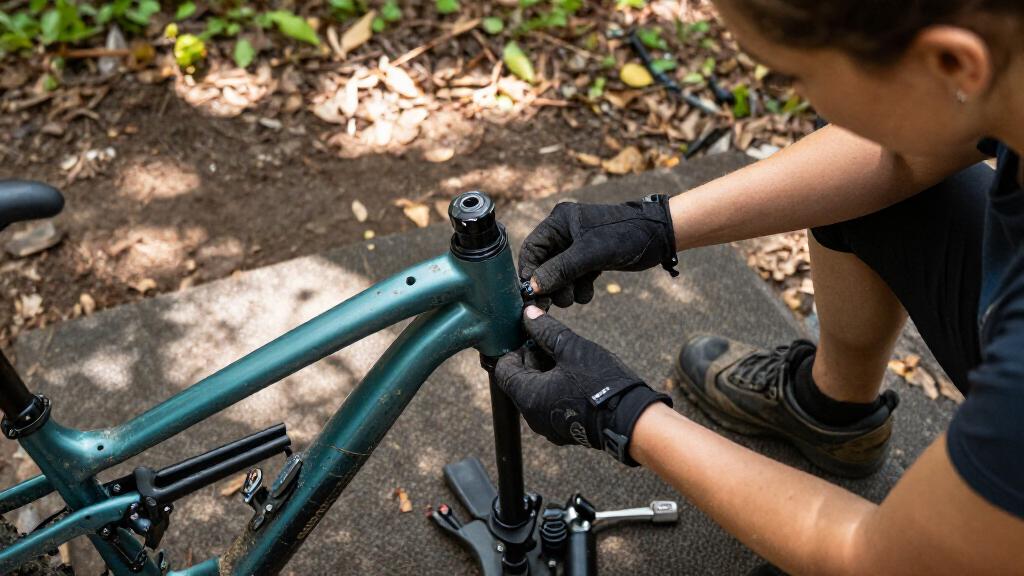
How We Picked
I ranked these frames by how clearly each matches a real build and riding goal, not by treating every frame as a general-purpose trail option. The main criteria were stated material, wheel size, hardtail or suspension layout, included parts where specified, and how readily a buyer can identify the frame’s intended use. I gave stronger placement to options with a distinct role and a more legible buying case, while specialized, older, or sparsely specified frames rank lower because they require more compatibility research.
Frame names do not provide every detail needed to confirm a safe, compatible build. I do not infer geometry, frame weight, suspension travel, standards, or included hardware when those details are absent. Before purchase, verify sizing, axle and brake standards, headset and bottom-bracket fit, shock dimensions for suspension frames, and the seller’s exact package contents. That caution matters especially for older models and frames listed for multiple wheel sizes.
Factors to Consider When Choosing Best Mountain Bike Frames
Choosing a frame is less about finding a universally superior design and more about avoiding a mismatch between your riding, existing parts, and future plans. I would settle the compatibility questions before comparing materials: a frame that cannot accept your wheels or drivetrain is not a useful bargain.
Match the Frame to the Riding, Not Just the Wheel Size
Start with the kind of riding you actually do: long climbs and smoother trails, technical descents, or repeated jumps place different demands on a frame. A hardtail often means fewer moving parts and a simpler build, but it cannot offer rear suspension’s ability to absorb repeated impacts. Full suspension adds a rear shock and pivots, bringing more setup and maintenance requirements. A dirt-jump frame is built around a different use than an all-day trail frame, even if the wheel diameter looks familiar. Avoid choosing by a “27.5” or “29” label alone; those numbers describe wheel fit, not the frame’s handling or intended terrain.
Treat Compatibility as a Checklist, Not an Assumption
Before ordering, compare the frame’s standards with every part you plan to reuse. Check wheel axle type and spacing, brake mounts, headset, bottom bracket, seatpost diameter, derailleur arrangement, and the required shock dimensions on a full-suspension model. A frame advertised for two wheel sizes may not accept both sizes in every build configuration, so confirm the exact setup with the seller or manufacturer. Small standard mismatches can require replacement parts or make a planned build impossible. I would write down the specifications of your current bike before shopping, rather than relying on a model name or a product photo.
Choose Material With the Whole Build in Mind
Carbon and alloy are not simple rankings from better to worse. Carbon can suit a buyer seeking a lighter-material frame, but the value depends on the frame’s construction, intended riding, and the cost of replacing a damaged part. Alloy can make sense for a practical build, particularly when durability, straightforward ownership, or a lower-complexity setup matters more than reducing frame weight. Magnesium is less common among the options here, so buyers should verify the frame’s technical details and support before building around it. Compare the complete build plan, including wheels and suspension, instead of paying extra for a material label alone.
Check Sizing and Geometry Before Committing
A stated frame size is only a starting point; riders with the same height can prefer different reaches and riding positions. Look for the maker’s geometry chart and compare reach, stack, seat-tube length, and effective top-tube length with a bike that fits you well. On an older or uncommon frame, geometry information may be harder to locate, which increases the risk of buying a frame that feels wrong after assembly. Do not assume that a familiar brand name or a nominal size guarantees a modern fit. If the seller cannot supply measurements, treat that uncertainty as a meaningful downside.
Account for Suspension Setup and Ongoing Service
Full-suspension frames require more than selecting a shock that appears to fit. The shock’s length, stroke, mounting hardware, and the frame’s intended travel must match the manufacturer’s requirements. Suspension pivots and bearings also add inspection and service tasks that a hardtail avoids. A frame listing that does not clearly identify the required shock or included hardware may lead to extra parts research before the bike can be assembled. If you want a low-maintenance build, a hardtail may be a better match even when a full-suspension option sounds more capable on paper.
Judge Value by Build Readiness and Support
A frame is only good value if it lets you complete the bike you want without costly surprises. Confirm whether the listing includes a fork, shock, headset, axle, or other hardware; phrases such as “frame set” do not always mean the same package from one seller to another. Ask about warranty terms, replacement parts, and documentation, particularly for discontinued or less common models. A lower-cost frame with missing standards information may demand more research and replacement components than a better-documented alternative. I would compare the total parts list and support available, not just the frame material or advertised category.
Frequently Asked Questions
Can I use the same wheels on a frame listed for either 27.5- or 29-inch wheels?
Not automatically. A frame listing that names both wheel sizes does not confirm that every size works with every fork, tire width, or geometry configuration. Ask the manufacturer which wheel size is supported for the exact frame size and build, and confirm tire clearance and axle standards. If you already own wheels, match their diameter, hub spacing, and axle type to the frame specifications before purchasing. Treat an unclear dual-size claim as a question to resolve, not a promise of universal fit.
Is a hardtail a better first frame than a full-suspension frame?
It can be, especially if you want a simpler build with fewer suspension parts to set up and maintain. A hardtail also makes component compatibility easier to manage because there is no rear shock or suspension linkage to match. Full suspension may suit rougher trails, but the frame’s shock dimensions and hardware must be correct, and ongoing service adds work. Choose based on your trails and comfort with setup rather than assuming one layout is always better for beginners. A well-matched hardtail is a poor choice only if its intended riding does not fit your needs.
Should I choose carbon over alloy for a mountain bike frame?
Choose by your priorities and the complete build, not by material prestige. Carbon may appeal if reducing frame weight is a main goal, while alloy can be a practical choice for a straightforward bike build. Neither material tells you whether the geometry, standards, or intended terrain suit your ride. Check the manufacturer’s care and warranty information, and think about the cost and availability of replacement parts. If you are comparing a carbon frame with an alloy one, confirm that both support the components you already own before weighing their material differences.
What should I verify before buying an older 26-inch frame?
First confirm that your wheels, fork, brakes, drivetrain, and headset match the frame’s standards. Then look for a geometry chart, signs of damage or repair, and information about replacement parts. Older 26-inch designs can suit a parts-based rebuild, but sourcing compatible components may take more effort than building around a current format. A model name by itself does not confirm condition or compatibility, so request clear measurements and photographs from the seller. If the key standards cannot be verified, the frame may be a poor fit even when its listed size looks right.
Does a frame-and-fork listing include everything needed to build a complete bike?
No. A listing that names a frame and fork may still leave out the headset, axle, shock, hardware, wheels, brakes, and drivetrain. Read the included-items list carefully and ask the seller to confirm any part that is not named. For a full-suspension frame, verify whether a rear shock is included and whether its dimensions match the frame’s requirements. Make a complete parts checklist before buying so you can spot missing standards or components early. The package description should be confirmed directly rather than inferred from product images.
Conclusion
For the strongest all-around choice in this comparison, I would start with the ICAN P9 Carbon Enduro Frame if your goal is an enduro-focused build and you have confirmed its standards and fit. The HIMALO Hardtail XC Frame is my practical value direction for riders seeking a simpler aluminum hardtail, while the HIMALO Carbon Hardtail suits buyers who specifically want a carbon hardtail platform. Beginners who want fewer suspension parts to maintain should focus on the hardtail options and prioritize clear sizing and compatibility details. For larger-wheel full-suspension builds, compare the Gravity FSX 29-Inch Frame Set with the HIMALO suspension frames only after checking the shock and component specifications. Choose the HIMALO Dirt Jump Frame for jump-focused riding, and consider the 26-inch magnesium or Cannondale Jekyll options mainly when you are building around compatible smaller-wheel parts. The best frame for you is the one whose use, fit, and standards line up with your actual build.