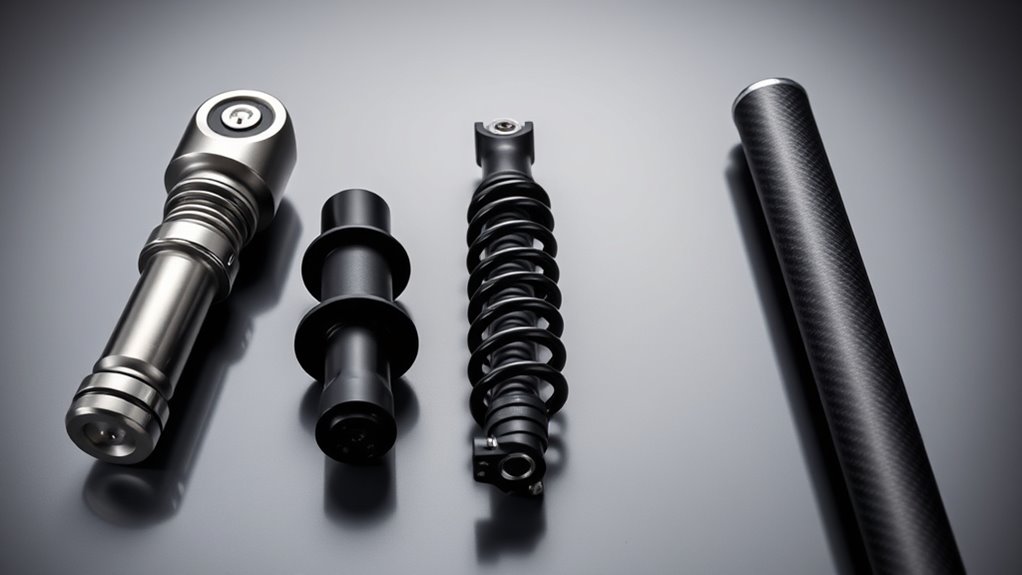

When choosing seatposts, you can opt for telescopic models that let you quickly adjust your saddle height, suspension seatposts that absorb shocks for a smoother ride, or lightweight carbon options that improve comfort and responsiveness. Each type offers unique benefits suited to different terrains and riding styles. If you want to explore how each performs and which fits best with your bike, keep exploring further—there’s plenty more to discover.
Key Takeaways
- Telescopic seatposts allow quick, on-the-fly saddle height adjustments via levers or remote controls for convenience.
- Suspension seatposts absorb shocks and vibrations, reducing rider fatigue on rough terrain.
- Carbon seatposts are lightweight, durable, and offer excellent vibration absorption for enhanced comfort.
- Compatibility depends on matching seatpost material with the bike frame and ensuring proper fit and diameter.
- Choosing between options depends on riding style, terrain, comfort needs, and budget considerations.
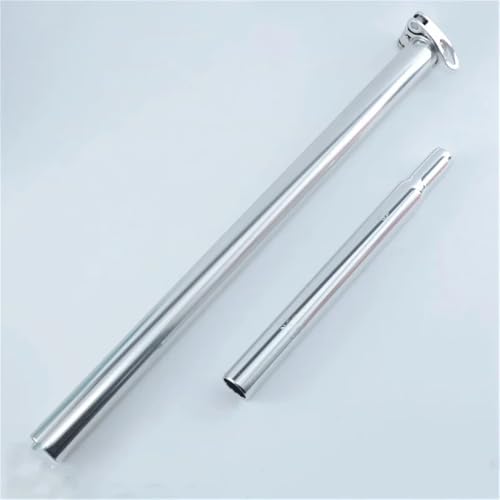
Folding Bike Length Adjustable seatpost 31.8mm,for Brompton seatpost Double Section, 31.8mm Telescopic seat Post (Gloss Silver)
The seat tube is made of ultra-light aluminum alloy, weighing only 430g and with a maximum load of…
As an affiliate, we earn on qualifying purchases.
As an affiliate, we earn on qualifying purchases.
Understanding Telescopic Seatposts

Telescopic seatposts are designed to easily modify your saddle height on the fly, making them ideal for riders who encounter varying terrain or need quick seat adjustments. With a simple lever or remote control, you can quickly change your seatpost height without stopping, enhancing your riding experience. These seatposts are great for technical trail riding or road cycling where frequent adjustments improve comfort and efficiency. By understanding seatpost adjustment mechanisms and compatibility, you can select the right telescopic seatpost to meet your riding needs effectively. Compatibility considerations are essential to ensure optimal performance and safety when choosing a telescopic seatpost. Additionally, choosing a seatpost with precision adjustment mechanisms can further improve your riding comfort and control. Recognizing vehicle compatibility is also critical to ensure the seatpost fits your bicycle frame properly. Furthermore, considering adjustment ease can help you select a model that best suits your riding style and technical requirements. Understanding the adjustment mechanisms can help you select a model that offers smooth and reliable operation during your rides.

DJC Bike Suspension Seatpost Shock Absorber Damper Post 27.2 30.9 31.6 mm, Lightweight Aluminum Body(Black Head,27.2mm)
Spring Coil Suspension: Build-in spring coil and damper rubber absorb the vibration while riding, the seat post comfort…
As an affiliate, we earn on qualifying purchases.
As an affiliate, we earn on qualifying purchases.
Benefits of Suspension Seatposts

Suspension seatposts absorb shocks and vibrations from rough terrain, providing a smoother ride for cyclists. This helps reduce fatigue and discomfort, especially on long or bumpy rides. Their ergonomic design promotes better posture and comfort, allowing you to maintain control more easily. Suspension seatposts can also help protect your spine and joints by minimizing jarring impacts. Additionally, many models are lightweight, contributing to weight reduction without sacrificing performance. This makes them ideal for riders seeking comfort and efficiency. By absorbing jolts, suspension seatposts enable you to ride more confidently over uneven surfaces, enhancing overall riding enjoyment. Furthermore, the shock absorption capabilities of suspension seatposts have roots in ancient engineering principles used in traditional transportation devices. These principles have evolved over centuries, demonstrating the longstanding importance of shock absorption in ensuring ride quality. Modern suspension technology continues to build on these foundational concepts, offering improved performance and durability. In recent years, advances in materials science have led to lighter and more resilient suspension seatposts, further benefiting riders. Whether you’re tackling challenging trails or rugged paths, these seatposts offer tangible benefits that improve both comfort and ride quality.

TPard Carbon Bike Seatpost 27.2/31.6 Ultralight Carbon Fiber Bicycle Seat Post Bike Seat Tube for Mountain Road Bikes MTB BMX
Ultralight Carbon Fiber: Made of full 3K T800 carbon fiber — as known as "black gold" in the…
As an affiliate, we earn on qualifying purchases.
As an affiliate, we earn on qualifying purchases.
Advantages of Carbon Seatposts

Carbon seatposts offer a lightweight yet strong alternative to traditional materials, enhancing your bike’s performance without adding unnecessary weight. Made from carbon fiber, these seatposts provide excellent strength-to-weight ratios, allowing you to save valuable ounces on your ride. The weight savings directly improve acceleration, handling, and climbing efficiency, making your bike more responsive. Carbon fiber also absorbs vibrations better than metal, giving you a smoother ride and reducing fatigue on long rides. Additionally, carbon seatposts are resistant to corrosion and environmental wear, increasing durability. Their sleek design can also add a modern aesthetic to your bike. Water resistance features in some models further enhance their suitability for diverse weather conditions. Moreover, advances in material technology have led to even more durable and lightweight options for cyclists seeking high-performance gear, including fiber reinforcement techniques that improve impact resistance. The development of composite materials continues to push the boundaries of what carbon fiber can achieve in cycling components. Incorporating manufacturing advancements has also contributed to more consistent quality and performance in carbon seatposts.
Factors to Consider When Choosing a Seatpost

When selecting a seatpost, it’s vital to take into account factors that impact both comfort and performance. Material compatibility is key; verify the seatpost material matches your bike frame to prevent corrosion and guarantee strength. For example, carbon seatposts work best with carbon frames, while alloy options suit aluminum frames.
Adjustment mechanisms also matter—look for easy-to-use clamps, quick-release levers, or micro-adjust bolts that let you fine-tune your saddle height quickly and securely. Consider how often you’ll need to make adjustments and choose a mechanism that’s convenient for you.
Additionally, check the seatpost’s diameter and length to fit your riding style and frame geometry. Balancing these factors will help you select a seatpost that enhances your comfort and riding efficiency.
Comparing Performance and Cost

While high-performance seatposts often come with a higher price tag, they can substantially improve ride quality and comfort, making them a worthwhile investment for serious cyclists. When comparing performance and cost, consider how seatpost weight impacts handling, as lighter options enhance agility but may cost more. Material durability is essential; carbon seatposts are lightweight and durable, but can be pricier, while alloy options are more affordable but slightly heavier. The table below highlights key differences:
| Feature | High-End Seatposts | Budget-Friendly Seatposts |
|---|---|---|
| Seatpost Weight | Lighter, improves performance | Heavier, less agile |
| Material Durability | More durable, longer lifespan | Less durable, might need replacement sooner |
Additionally, the material selection of a seatpost can influence not only weight but also vibration absorption, impacting overall ride comfort. This is especially important when choosing between carbon and alloy options for tailored performance. Understanding the cost-to-performance ratio helps riders make informed decisions based on their specific needs and riding style. A thorough understanding of performance factors can help optimize your cycling experience and ensure you select the best seatpost for your riding style and budget. Furthermore, considering the impact on ride quality can guide you toward options that best suit your terrain and riding conditions.
Frequently Asked Questions
How Do I Properly Maintain My Telescopic Seatpost?
To properly maintain your telescopic seatpost, start by regularly cleaning it to prevent dirt buildup.
Apply seatpost lubrication to the moving parts to guarantee smooth telescopic extension.
Check for any signs of corrosion or damage, and tighten any loose bolts.
Periodically, remove the seatpost to clean inside and re-lubricate.
Proper maintenance keeps your seatpost functioning smoothly, extending its lifespan and providing a comfortable ride every time.
Are Suspension Seatposts Suitable for All Mountain Biking Disciplines?
Suspension seatposts can be a great addition to your mountain biking gear, but they’re not suitable for all disciplines.
If you’re tackling technical descents or rough trails, suspension seatposts help absorb shocks and improve comfort.
However, for racing or smoother terrains, lightweight rigid posts might be better.
Consider your riding style and trail conditions to decide if suspension seatposts are the right choice for your mountain biking adventures.
Can Carbon Seatposts Be Recycled or Repaired?
You wonder if carbon seatposts can be recycled or repaired. While recycling options for carbon are limited, some facilities accept broken parts for specialized repurposing.
Repair techniques are challenging; often, cracks can’t be fixed, and replacement is recommended.
You should check with manufacturers or specialized recycling centers to explore your options. Proper disposal or recycling helps reduce environmental impact, even if repair isn’t practical.
What Is the Typical Lifespan of a Suspension Seatpost?
You might wonder about the typical lifespan of a suspension seatpost. Usually, it lasts around 3 to 5 years, but factors like seatpost corrosion and how well you maintain it play a role.
Regularly check for corrosion, especially around moving parts, and ensure compatibility with your bike. Proper maintenance can prolong its life, but eventually, wear and tear may require replacement.
How Do Seatpost Choices Impact Overall Bike Handling and Comfort?
Think of your bike as a finely tuned orchestra—each part must work in harmony. Your seatpost choices greatly influence handling and comfort by optimizing ergonomic design and weight distribution.
A well-chosen seatpost absorbs shocks and maintains stability, giving you smoother rides and better control. Conversely, the wrong one can cause discomfort and imbalance.
Selecting the right type guarantees your bike responds to your movements with grace and ease, elevating your riding experience.
Conclusion
Choosing the right seatpost can transform your ride. With over 60% of riders reporting increased comfort and control using suspension or carbon options, it’s clear these upgrades make a difference. Whether you prioritize smoothness or lightweight performance, understanding your needs helps you pick the perfect seatpost. Remember, a well-chosen seatpost isn’t just a component—it’s your ride’s foundation for comfort, efficiency, and enjoyment on every trail or road.