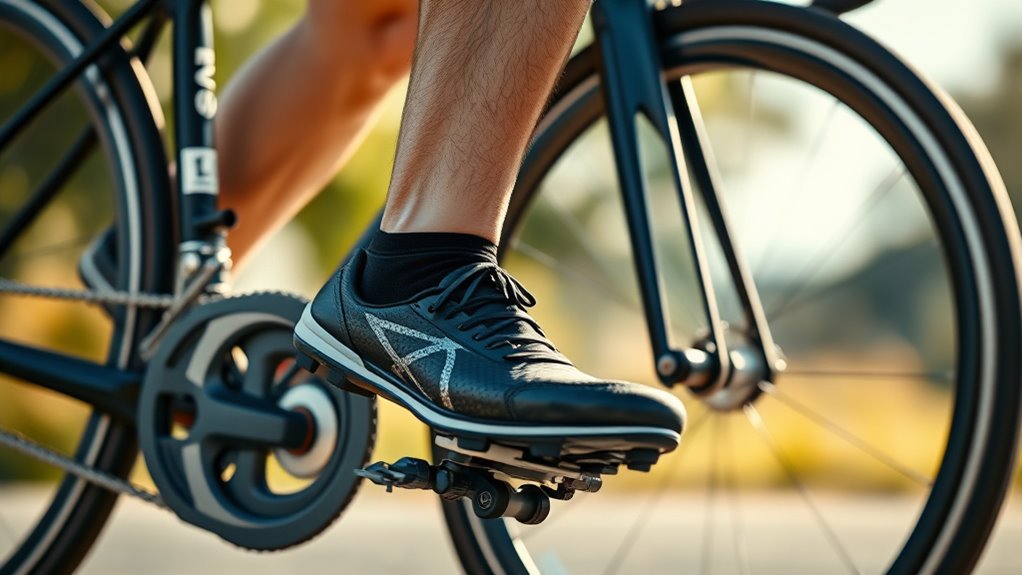

To perfect your pedal stroke with a simple drill, try focusing on a single-leg exercise. Remove one foot from the pedal and pedal slowly, emphasizing full extension and smooth push-through motion. Keep your cadence steady and maintain proper foot alignment. Switch legs after a set time to build balance and control. Incorporating this into your routine regularly can dramatically improve your efficiency—if you want to get the most out of this technique, there’s more you can explore.
Key Takeaways
- Practice single-leg pedaling to improve control, balance, and muscle engagement during each stroke.
- Focus on smooth, fluid motion with full extension and proper push-through for efficiency.
- Maintain consistent cadence and avoid jerky movements to develop a seamless pedal stroke.
- Ensure correct foot alignment and bike setup to maximize the drill’s effectiveness.
- Incorporate the drill regularly into rides to build muscle memory and enhance overall cycling performance.
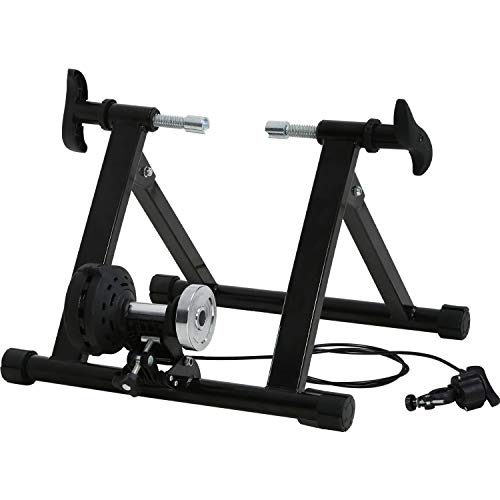
Bike Trainer Stand for Indoor Riding, Bicycle Exercise Training Stand with Magnetic Flywheel,Noise Reduction,5Resistance Settings Stationary Bike Resistance for Road
- Easy to Assemble: Assembles in 15 minutes with minimal parts
- Five Resistance Levels: Adjustable for flat, sandy, or uphill riding
- Compact and Portable: Folds for easy storage and transport
As an affiliate, we earn on qualifying purchases.
As an affiliate, we earn on qualifying purchases.
Understanding the Importance of a Smooth Pedal Stroke
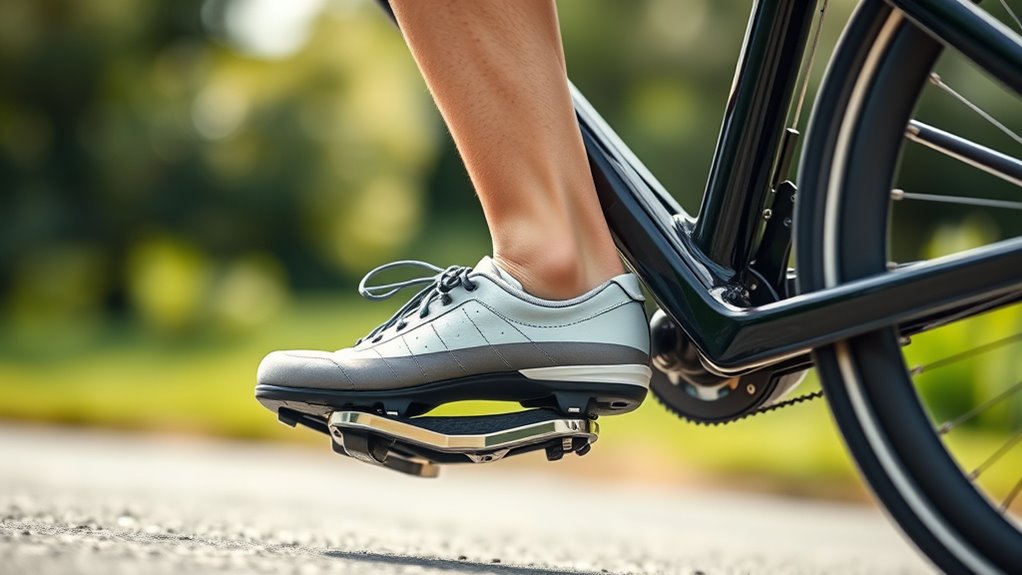
A smooth pedal stroke is essential because it directly affects your efficiency and comfort on the bike. When you maintain fluid muscle engagement, you distribute effort evenly, reducing fatigue and preventing unnecessary strain. This consistent motion also helps you control your cadence more effectively, avoiding sudden accelerations or decelerations that can disrupt your rhythm. By focusing on a seamless pedal motion, you activate the right muscles at the right time, making each revolution more powerful and sustainable. Proper cadence control ensures you don’t waste energy fighting against uneven pedaling. Developing a smooth pedal stroke over time becomes second nature, allowing you to ride longer distances comfortably and with less effort. It also cultivates muscle memory, which is crucial for maintaining consistency during longer rides. Incorporating proper technique into your training can significantly enhance your overall cycling performance, especially as advances in training technology continue to evolve.
Preparing for the Drill: Equipment and Setup
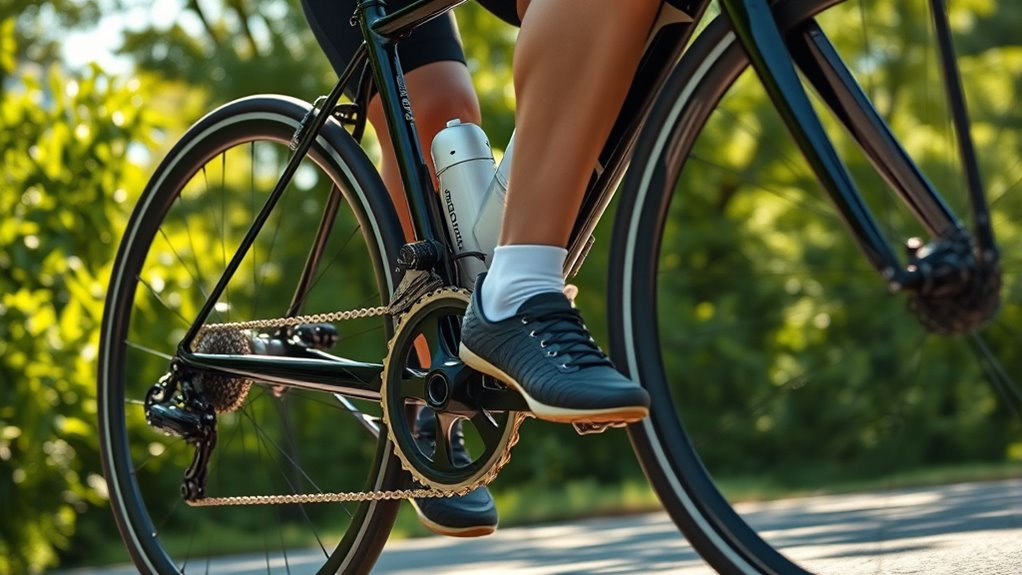
Before you start practicing your pedal stroke drill, gather the right equipment and set up your bike properly. Ensuring a good bike fit is essential; it helps you maintain proper muscle engagement and prevents injury. Adjust your saddle height so your knee is slightly bent at the bottom of each pedal stroke, and check that handlebars are comfortable for your reach. Use clipless pedals or toe cages to secure your foot, which promotes efficient movement and better muscle engagement. Keep your bike on a trainer or a flat surface to maintain stability. Clear the area around your bike to avoid distractions. Proper setup helps you focus on your technique, making your pedal stroke more effective and laying a solid foundation for improvement. Additionally, understanding Mazda Tuning principles can inspire creative ways to optimize your cycling experience. Paying attention to bike ergonomics can also enhance comfort and efficiency during your practice. Proper work environment setup can further boost your focus and motivation, leading to more productive training sessions. Ensuring proper vacuum cleaner performance metrics like suction power and filtration can help keep your training space clean and allergen-free, contributing to better focus and comfort during your workouts. Incorporating equipment maintenance routines ensures that your bike remains in optimal condition, reducing the risk of mechanical issues during training.
Step-by-Step Guide to the Single-Leg Pedal Drill
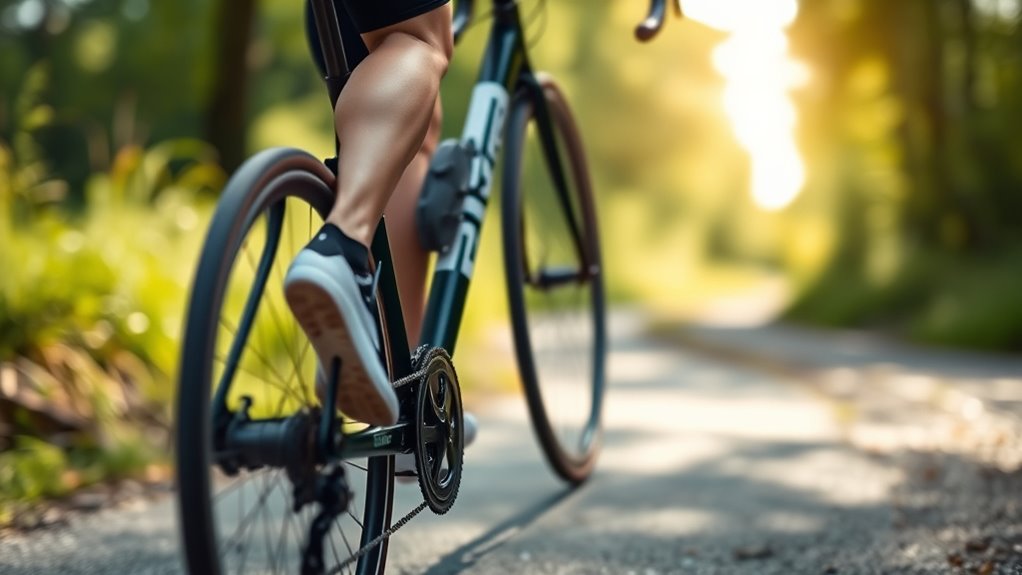
To improve your pedal efficiency, start by positioning yourself on your bike with one leg removed from the pedal. Focus on maintaining a smooth, consistent cadence control as you pedal with your working leg. This drill emphasizes muscle engagement and helps identify weak points in your pedal stroke. Keep your other leg raised or resting on the frame to avoid unnecessary movement. Pedal slowly, aiming for a fluid motion, and concentrate on full extension and proper push-through. Use the table below to track your progress and guarantee proper technique:
| Step | Action | Focus |
|---|---|---|
| 1 | Remove one foot from pedal | Balance and control |
| 2 | Pedal with one leg | Cadence control |
| 3 | Maintain smooth motion | Muscle engagement |
| 4 | Keep pedal stroke consistent | Efficiency and power |
| 5 | Switch legs after a set time | Symmetry and balance |
Additionally, incorporating wave and wind dynamics from the beach environment can help simulate varying resistance, further enhancing your pedaling endurance and adaptability.
Tips for Maximizing Effectiveness and Avoiding Common Mistakes

Maximizing the effectiveness of your pedal stroke drill requires focus and attention to detail. To avoid common mistakes, pay close attention to foot positioning and cadence control. First, ensure your feet are properly aligned on the pedals, with your toes pointing straight ahead to promote efficient power transfer. Second, maintain a steady cadence; avoid rushing or slowing down, which can disrupt the drill’s focus. Third, stay consistent in your pedal motion, avoiding jerky movements that can lead to improper muscle engagement. By keeping your foot positioning correct, controlling your cadence, and maintaining smooth, deliberate strokes, you’ll improve your technique faster. Additionally, understanding the importance of tuning your bike can help optimize performance and comfort during training sessions. Regularly checking your bike’s setup ensures that your pedal stroke remains efficient and injury-free. Paying attention to bike setup allows for more precise pedal stroke mechanics, ultimately enhancing your cycling efficiency. Remember, precision and consistency are key to transforming your pedal stroke into an efficient, powerful movement.
Incorporating the Drill Into Your Regular Riding Routine
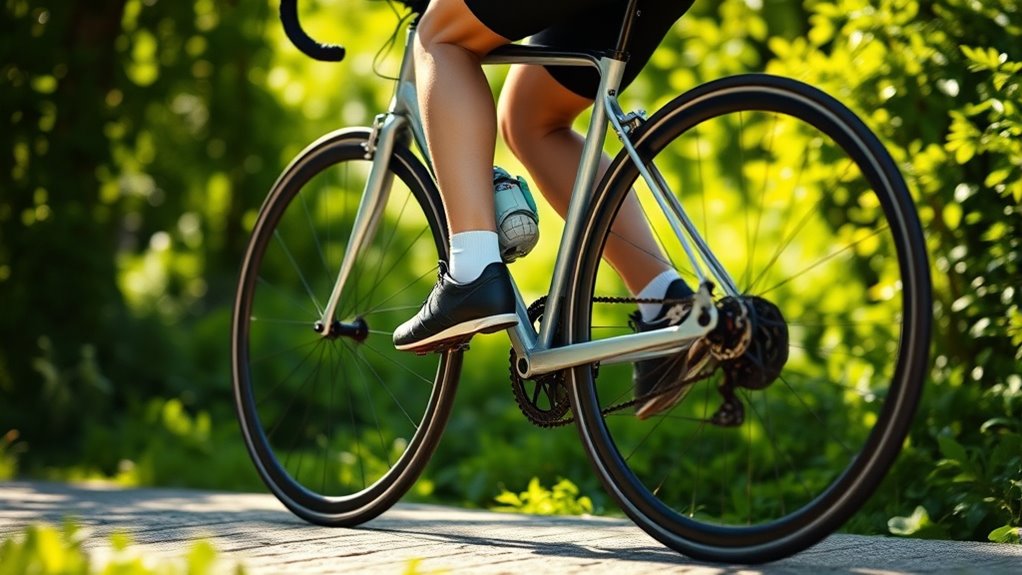
Integrating your pedal stroke drill into your regular riding routine can substantially boost your cycling efficiency over time. To do this effectively, start by dedicating a few minutes at the beginning or end of your rides for focused practice. Keep your cadence consistent during the drill to reinforce smooth, even pedal movement. This consistency encourages better muscle engagement, helping you activate the right muscles and reduce wasted effort. As you become more comfortable, gradually increase the duration or incorporate the drill into longer rides. Remember, the goal is to make proper pedal technique feel natural, so regular practice is key. Incorporating muscle engagement techniques into your routine can also provide a fresh perspective and motivation to stay consistent. Additionally, paying attention to cycling biomechanics can help optimize your form and prevent injury. Developing an awareness of pedal stroke mechanics can further enhance your efficiency and power transfer. Over time, this integration will improve your overall efficiency, power, and comfort on the bike.
Frequently Asked Questions
How Long Should I Practice the Drill Each Session?
Your practice duration depends on your fitness level and goals, but aim for about 15 to 20 minutes per session to build skill without fatigue. Focus on session consistency, practicing regularly to develop muscle memory and improve your pedal stroke. It’s better to do shorter, focused drills consistently than long, irregular sessions. Over time, gradually increase your practice time as your endurance and technique improve.
Can Beginners See Noticeable Improvements Quickly?
They say Rome wasn’t built in a day, and neither is perfect technique. As a beginner, you can see noticeable improvements quickly if you focus on technique during practice. Consistently dedicating time to technique focus drills accelerates your progress. While progress varies, staying patient and persistent helps you develop a smoother pedal stroke faster. Remember, small gains add up—your cycling will become more efficient with steady effort.
Is This Drill Suitable for All Types of Cycling?
This drill can improve your cycling efficiency, but its suitability depends on your cycling style. If you’re into road cycling, mountain biking, or spinning, you’ll likely benefit from it. Incorporating this drill into your training consistency helps enhance overall pedaling technique. However, adapt the drill as needed for your specific cycling type to maximize benefits. Always listen to your body to avoid overtraining or injury.
How Do I Modify the Drill for Indoor Trainers?
Imagine your indoor trainer as a stage for refining your pedal stroke. To adapt the drill, focus on resistance adjustments to mimic real road feel and prioritize trainer compatibility. Set your trainer to a moderate resistance, then perform the drill with smooth, controlled circles. This helps build efficiency and balance, no matter your cycling style. Adjust as needed to challenge yourself without losing that seamless pedal motion.
Are There Any Safety Tips to Consider During the Drill?
During the drill, prioritize cycling safety by ensuring your bike is secure and properly adjusted to prevent accidents. Keep your focus on injury prevention by maintaining good posture and avoiding sudden movements. Use a stable indoor setup to avoid falls, and wear appropriate gear like a helmet and padded gloves. Always start slowly and gradually increase intensity, listening to your body to prevent strain or injury. Safety first keeps your cycling practice safe and effective.
Conclusion
By mastering this simple drill, you’ll transform your pedal stroke from a shaky dance into a smooth, flowing river. Imagine each rotation as a gentle wave, propelling you forward effortlessly. Consistency is your oar, guiding you toward efficiency and power. Keep practicing, and soon, your pedaling will feel like gliding on glass—effortless and graceful. Embrace the journey, and watch your cycling become a symphony of seamless motion.