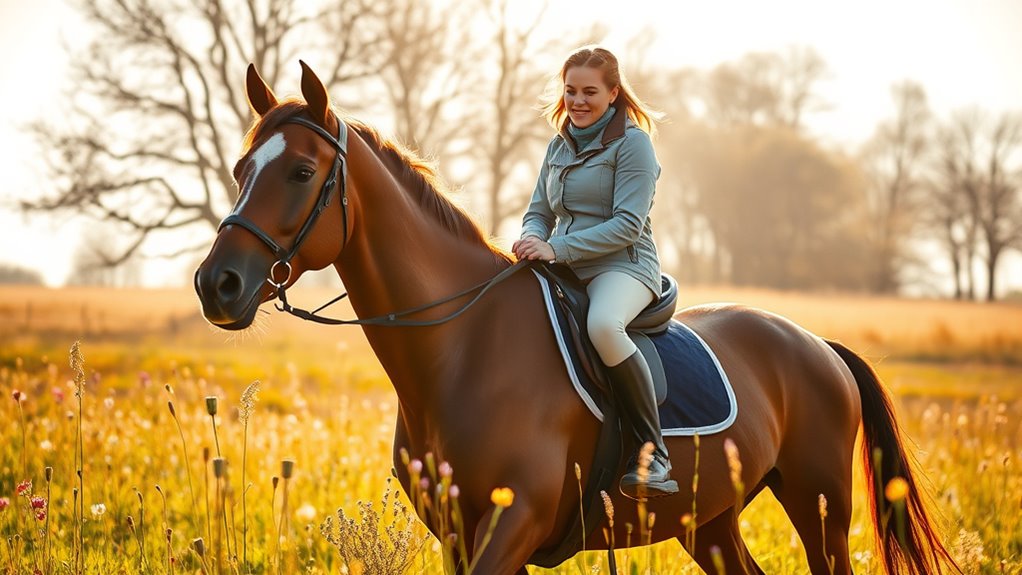

To ride comfortably during allergy season, plan rides in the late afternoon when pollen levels drop, and avoid windy days or vegetated areas. Wear protective gear like sunglasses, masks, or hats to reduce pollen contact, and wash your gear regularly. Follow your healthcare provider’s advice, carry allergy medications, and stay hydrated. Monitoring pollen forecasts helps you choose the best times and places to ride. Keep exploring for more tips to make allergy season riding easier for you.
Key Takeaways
- Plan rides during late afternoons or after rain to reduce pollen exposure.
- Wear protective gear like masks, sunglasses, and hats to minimize pollen contact.
- Monitor local pollen counts and avoid outdoor riding during high pollen days.
- Manage allergies proactively with medication and keep riding gear clean to prevent pollen buildup.
- Choose wind-protected, less vegetated areas and avoid high-pollen zones for a more comfortable ride.

Spring and fall bring beautiful riding weather, but for allergy sufferers, these seasons can also mean discomfort and difficulty enjoying your rides. As the air fills with pollen from blooming flowers and falling leaves, your exposure to pollen increases markedly. This heightened pollen exposure can trigger allergy symptoms that make riding uncomfortable or even risky. To enjoy riding during these seasons, you need effective allergy management strategies that reduce your symptoms and keep you focused on your horse.
Start by paying close attention to local pollen forecasts. Many weather apps now include pollen counts, so you can plan your rides on days when pollen levels are lower. On high pollen days, consider riding indoors or in the late afternoon when pollen counts tend to drop. Wearing sunglasses or a wide-brimmed hat can help keep pollen out of your eyes and off your face, reducing your overall exposure. A mask designed to filter pollen can also be a valuable tool, especially if you’re highly sensitive. These simple precautions can make a noticeable difference in how comfortable you feel during your ride.
Proper allergy management extends beyond just avoiding pollen. Make sure you’re following your healthcare provider’s advice, which may include taking antihistamines or using nasal sprays before riding. Consistently managing your allergies can prevent symptoms from becoming overwhelming during your ride. Keep your environment clean: wash your riding gear regularly, including your helmet, gloves, and riding clothes, to remove any pollen residue. Storing your gear in a pollen-free area can also help reduce ongoing exposure.
Hydration is another key component of allergy management. Staying well-hydrated helps your body combat allergy symptoms more effectively and keeps your respiratory system functioning efficiently. If you’re prone to asthma or respiratory issues related to allergies, carrying your inhaler and having quick access to allergy medications is vital. Always be prepared, especially when riding in open fields or areas with dense vegetation, where pollen accumulation can be substantial.
Additionally, using smart allergy tracking tools can provide real-time alerts and personalized recommendations to help you minimize pollen exposure during your rides. Lastly, consider the timing and location of your rides. Early mornings often have lower pollen levels, as pollen tends to settle overnight. Riding in areas with less vegetation or wind-protected environments can also minimize pollen contact. By integrating these strategies into your routine, you can reduce pollen exposure and better manage your allergies. This proactive approach allows you to enjoy your rides more fully, even during peak pollen seasons, ensuring that allergies don’t take away from your love of riding.
Frequently Asked Questions
How Can Riders Prevent Allergy Flare-Ups During Riding Sessions?
To prevent allergy flare-ups during riding sessions, focus on effective allergy management and smart riding gear choices. Wear a dust mask or riding mask to filter airborne particles, and opt for gear made from breathable, allergen-resistant fabrics. Keep your riding area clean and free of dust and pollen, and shower after riding to remove allergens from your skin and hair. These steps help minimize exposure and keep you comfortable while riding.
Are There Specific Breeds Less Prone to Allergy-Related Issues?
Certain breeds are less prone to allergy-related issues due to their genetic traits, making them better suited for allergy management. For example, hypoallergenic breeds like the Arabian or certain warmbloods tend to produce fewer allergens. By choosing these breeds, you can reduce allergy flare-ups during riding sessions. Always consider individual sensitivities and consult with a veterinarian to optimize allergy management strategies tailored to your needs and your horse’s breed susceptibility.
What Are the Best Antihistamines for Equestrians?
Imagine your body as a finely tuned instrument, and antihistamines as the gentle tuning pegs. For rider allergy management, consider cetirizine or loratadine—they’re effective and generally safe for regular use. Always check antihistamine safety guidelines and consult your healthcare provider before starting. These medications help clear the storm of allergies, allowing you to ride smoothly through the season without allergy clouds dimming your horizon.
How Does Pollen Count Affect Riding Schedules?
You should check the pollen forecast daily to determine if the pollen count is high, which can affect your riding schedule. When pollen levels are low, it’s best to prioritize riding sessions, especially if you have allergies. On days with high pollen counts, consider rescheduling or choosing indoor training to avoid allergy symptoms. Staying aware of pollen trends helps you make informed decisions to protect your health and maintain your riding routine.
Can Allergies Develop or Worsen Over Time With Seasonal Riding?
Yes, your allergies can worsen over time with seasonal riding, like a slow-growing storm brewing on the horizon. Seasonal allergy triggers may strengthen your immune response, making your symptoms more intense. This riding impact means you might find yourself sneezing more or feeling more congested after each ride. Staying vigilant and managing your allergy symptoms can help prevent them from intensifying, so you can keep enjoying your rides without worry.
Conclusion
Don’t let allergies ruin your riding adventures. With a little preparation, you can conquer seasonal allergies and enjoy every ride like it’s a once-in-a-lifetime event. Remember, a proactive approach turns allergy season into just another chapter in your riding story — not the whole book. So gear up, stay vigilant, and embrace the saddle with confidence. After all, nothing should stand between you and the pure joy of riding — not even the fiercest pollen storm!