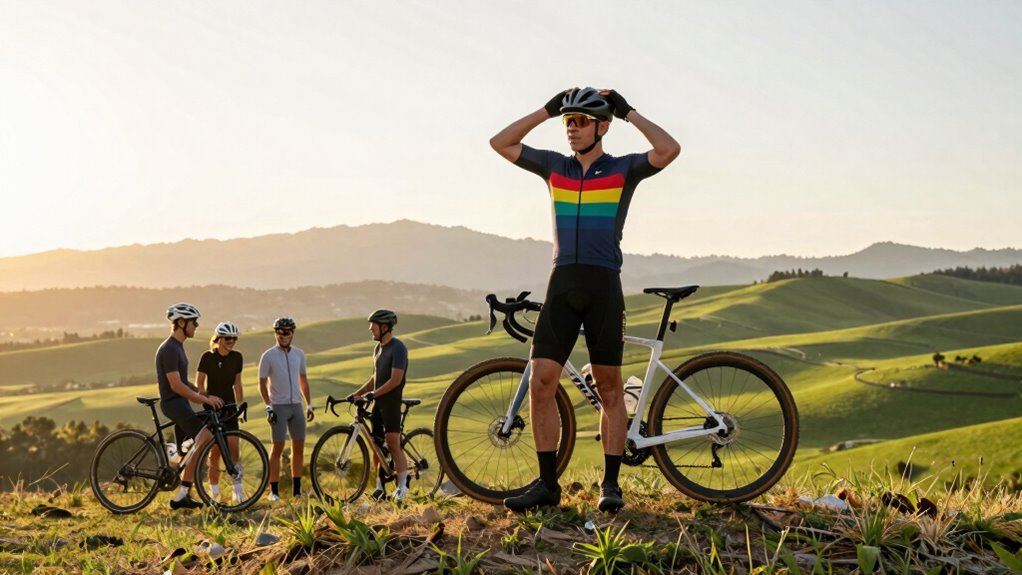

To balance social rides and training goals, plan your weekly schedule by dedicating specific days to structured training and others to social rides. Keep social efforts at a comfortable effort level to avoid burnout and use them as recovery or mental refreshment. Communicate your pace and goals clearly to your riding companions. By managing your effort and maintaining consistency, you can enjoy the social side of cycling while steadily progressing toward your fitness objectives. Learn more to optimize your cycling routine effectively.

Get sports gear delivered free with Prime
- Fast, free delivery on millions of items
- Prime Video, Amazon Music and more included
- Member-only deals all year
Key Takeaways
- Clearly define your training objectives and select rides that align with those goals.
- Use social rides for active recovery and mental refreshment, not high-intensity efforts.
- Communicate your pace and goals to group leaders to ensure appropriate ride participation.
- Schedule dedicated training days separate from social rides to maintain training intensity.
- Balance effort levels during social rides to prevent burnout and support overall progress.

Balancing social rides and training goals can be challenging, especially when you want to enjoy the camaraderie of group rides while still making progress toward your fitness objectives. Group rides are great for motivation, social connection, and learning new skills, but they can sometimes interfere with your individual training plan. To find a balance, you need to be intentional about how you participate in these rides and how you structure your personal pace. Recognize that not every ride has to be a hard effort; some are perfect for recovery, while others can be tailored to meet your specific training needs.
Start by identifying the purpose of each ride. If you’re aiming for endurance, consider joining group rides that are slower or more relaxed, allowing you to maintain your desired pace without feeling pressured to keep up with faster riders. Many group rides offer opportunities to ride at different paces or to break into smaller groups based on skill level. Communicate your goals with the group or ride leader beforehand, so they understand your focus on maintaining a personal pace. This way, you can participate actively without sacrificing your training objectives.
Choose relaxed group rides aligned with your endurance goals and communicate your pace preferences clearly.
When you’re on a group ride, focus on riding at your own comfortable pace whenever possible. This means not feeling compelled to chase the front or push beyond your limits just to stay with the group. If the ride splits into faster and slower groups, choose the one that aligns with your goals. Remember, social rides are about enjoyment and community, so it’s okay to take it easy or ride more conservatively if that helps you stick to your training plan. Incorporating biodiversity into your riding routes by exploring different terrains can also make your rides more engaging and environmentally conscious. Being mindful of your training intensity during group rides can help prevent burnout and overexertion.
You can also plan your week strategically by scheduling specific days for social rides and others for dedicated training. Use social rides as a mental break or a recovery day, especially if you’re feeling fatigued. On those days, keep your effort light and focus on the social aspect, rather than intensity. Additionally, paying attention to training principles such as recovery and variation can enhance your overall progress and prevent injury. Incorporating training load management can help you avoid overtraining and ensure consistent improvement. Conversely, on days dedicated to training, stick to your planned workout, whether that’s interval work, hill repeats, or long steady rides. This approach helps you stay consistent without sacrificing the benefits of social riding.
Ultimately, balancing social rides and training goals is about prioritizing your own progress while enjoying the ride. Respect your personal pace, communicate your needs, and plan your week to incorporate both social and training rides effectively. By doing so, you’ll sustain your motivation, enjoy the camaraderie, and stay on track with your fitness journey.
As an affiliate, we earn on qualifying purchases.
Frequently Asked Questions
How Do I Prioritize Training During Busy Social Ride Schedules?
To prioritize training during busy social ride schedules, plan your rides around specific goals and choose equipment that supports your intensity. Incorporate nutritional strategies like quick carbs or hydration to maintain energy without disrupting social aspects. Keep a flexible schedule, and use shorter, high-efficiency sessions when time is tight. This way, you stay consistent with training while still enjoying social rides, ensuring progress without sacrificing fun.
What Signs Indicate I’m Overtraining Despite Balancing Social Rides?
If you’re overtraining despite balancing social rides, you might notice persistent fatigue, irritability, or declining performance. To prevent this, incorporate cross-training strategies like swimming or cycling to reduce impact, and prioritize recovery techniques such as stretching, foam rolling, and proper sleep. Pay attention to your body’s signals—if soreness lingers or motivation drops, it’s time to rest, recover, and adjust your training plan accordingly.
How Can I Communicate My Training Goals to Social Riding Partners?
To communicate your training goals, be clear and honest with your social ride partners. Use training communication to explain why certain rides might need specific pacing or distances, setting social ride boundaries early on. Suggest discussing each ride beforehand, so everyone’s expectations align. Respectfully share your focus on training, and encourage partners to support your goals while still enjoying the social aspect. This openness helps maintain balance and mutual understanding.
Should I Skip Social Rides to Focus Solely on Training?
You don’t need to skip social rides entirely; instead, prioritize training consistency by choosing rides that align with your goals. Communicate your intentions with your riding partners to respect social ride etiquette, like maintaining steady pace and avoiding overexertion. Consider blending social rides with specific training sessions, ensuring you stay committed to your goals while enjoying the camaraderie. This balanced approach keeps you motivated and progressing effectively.
How Do I Prevent Injuries When Balancing Both Social Rides and Training?
To prevent injuries while balancing social rides and training, incorporate cross-training benefits like swimming or yoga to reduce impact and strengthen muscles. Always prioritize recovery strategies, such as stretching, proper hydration, and rest days, to allow your body to heal. Listen to your body and avoid pushing through pain. This approach helps you stay injury-free, enjoy social rides, and achieve your training goals effectively.
Conclusion
Remember, like a skilled conductor balancing an orchestra, you must harmonize social rides and training goals. Embrace the journey, finding joy in shared moments and personal progress alike. When you strike this balance, you’ll create a symphony of growth and camaraderie, echoing the timeless dance of harmony and effort. Keep tuning your priorities, and you’ll master the art of riding both with passion and purpose.
Halloween Picks
halloween
As an affiliate, we earn on qualifying purchases.