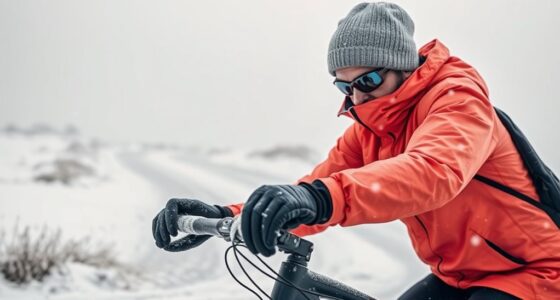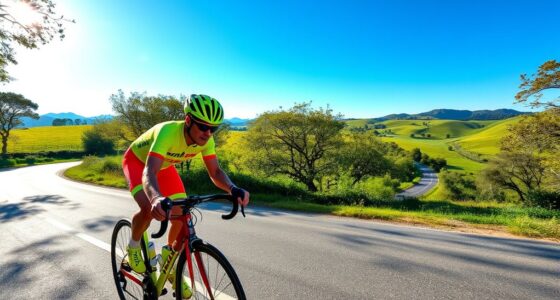
To make your camping-based cycling trips more comfortable, choose a well-fitting bike suited to your terrain and pack lightweight, weather-appropriate gear that’s organized for quick access. Use panniers to evenly distribute weight, and layer your clothing to stay adaptable to weather changes. Select flat, sheltered campsites and bring comfy sleeping gear. Staying hydrated, taking regular breaks, and keeping a positive mindset also boost comfort. Keep exploring tips to enhance every aspect of your outdoor journey.
Key Takeaways
- Choose appropriate gear and bikes tailored to your activity and terrain for better comfort and safety.
- Pack lightweight, weather-appropriate clothing and organize essentials for quick access.
- Select a flat, sheltered campsite with suitable tent and sleeping gear for restful nights.
- Stay hydrated, snack regularly, and monitor weather and trail conditions to prevent fatigue.
- Maintain a flexible plan and positive mindset to adapt to changing circumstances and enhance enjoyment.
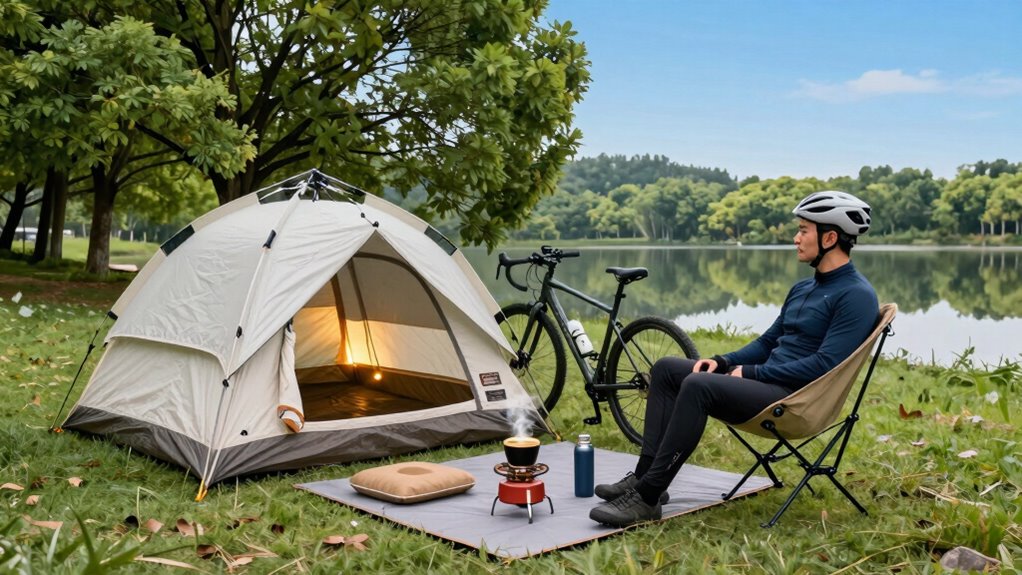
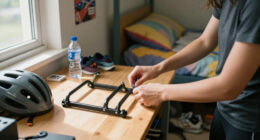
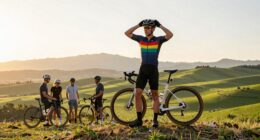
Starting a camping cycling trip combines the thrill of outdoor adventure with the freedom of exploring scenic landscapes on two wheels. Whether you’re tackling rugged mountain biking trails or setting out on a leisurely bike touring journey, comfort can make all the difference in enjoying your trip. To start, focus on choosing the right gear. A well-fitted bike that suits your riding style and terrain is essential. For mountain biking, make sure your bike has sturdy suspension, good tires, and reliable brakes, so you can handle rough trails without unnecessary fatigue. For bike touring, prioritize a comfortable saddle, wider tires, and a lightweight frame, making long days of riding less taxing.
Choosing the right bike and gear ensures comfort and confidence on every trail.
Next, pack smartly to avoid unnecessary strain. Use panniers or bike bags that evenly distribute weight, preventing imbalance and reducing fatigue. Keep your gear organized so you can access essentials quickly—think about packing a small toolkit, spare tubes, and repair supplies for quick fixes on the trail. Layer your clothing to adapt to changing weather conditions and prioritize moisture-wicking fabrics to stay dry and comfortable during intense efforts. Remember, a good pair of padded cycling shorts can greatly boost comfort, especially during long rides.
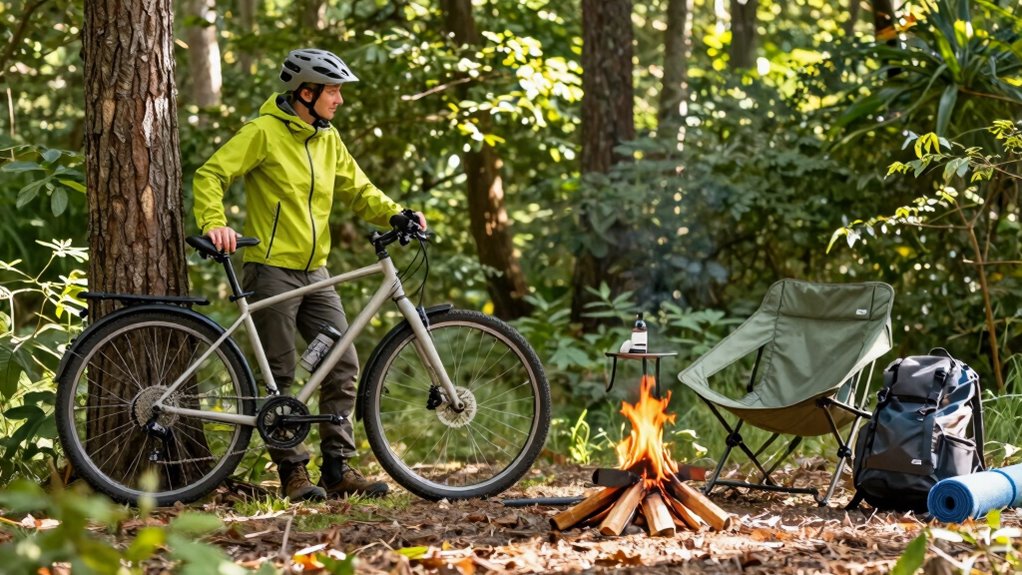
Your campsite setup plays an essential role in your overall comfort. Choose a flat, sheltered spot that’s close to water and away from high-traffic areas. A lightweight tent with good ventilation ensures restful sleep, which is critical after a day of riding. Bring a compact sleeping pad and a warm sleeping bag suited to the climate, so you wake up refreshed and ready to hit the trails again. A portable chair or hammock can create a cozy spot to unwind after a long day, helping you relax and recover. Additionally, selecting appropriate camping gear can significantly enhance your comfort and convenience during outdoor stays. Incorporating biodiversity-conscious camping practices, such as respecting wildlife and minimizing environmental impact, can make your trips more sustainable and enjoyable. Paying attention to trail conditions and keeping an eye on local maps can also help you avoid unexpected obstacles and stay on course. Being aware of local flora and fauna can enhance your appreciation of the environment and help you stay safe during your adventures.
Nutrition and hydration are key to keeping your energy levels high. Carry enough water and use a hydration pack for easy access during rides. Pack energy bars, trail mix, and other nutrient-dense snacks to fuel your body without adding extra weight. Listening to your body and taking regular breaks prevents overexertion, especially on challenging mountain biking trails or during extended bike touring days. Being aware of weather conditions and preparing accordingly can also help you avoid discomfort caused by unexpected changes.
Finally, develop a flexible plan that allows you to adapt to unexpected conditions. Weather, trail difficulties, or fatigue can change your day’s pace. Embrace the outdoor experience, stay positive, and remember that comfort isn’t just about gear—it’s about your mindset and preparedness. With these tips, your camping cycling trips will be more enjoyable, memorable, and comfortable every time you hit the trail.
lightweight camping tent for bike trips
As an affiliate, we earn on qualifying purchases.
As an affiliate, we earn on qualifying purchases.
Frequently Asked Questions
How Do I Choose the Best Camping Spot for Cycling Trips?
To choose the best camping spot for cycling trips, look for a site accessible by bike and close to trails. Check if the campsite requires reservations and book ahead to secure your spot. Respect camping etiquette by keeping noise low and respecting other campers. Opt for a location with flat terrain and nearby amenities like water and restrooms. This guarantees a comfortable, enjoyable experience tailored to your cycling adventure.
What Safety Gear Is Essential for Night Cycling During Camping Trips?
For night cycling during camping trips, you need headlamp essentials like a bright, adjustable light to keep your path visible. Wear reflective clothing to increase your visibility to others, especially in low-light conditions. Consider adding reflective gear to your bike and helmet. Always carry a backup light, and check your equipment before heading out. These safety measures help prevent accidents and guarantee you stay safe during your nighttime rides.
How Can I Prevent Bike Theft While Camping?
Did you know that bike thefts spike by up to 20% during camping season? To prevent theft, always use sturdy locking mechanisms like U-locks or cable locks, securing your bike through the frame and wheels. Additionally, consider setting up security cameras or portable alarms around your campsite. These measures act as strong deterrents, giving you peace of mind and ensuring your bike stays safe while you enjoy your trip.
What Are Quick Fixes for Common Bike Breakdowns in Remote Areas?
When facing bike breakdowns in remote areas, quick fixes are essential. Carry a reliable emergency toolkit with essentials like a multi-tool, tire levers, and a patch kit. For bike tire repair, remove the damaged tire, patch or replace the tube, and re-inflate. Keep calm, follow these steps, and you’ll be back on your ride faster. Practice these repairs beforehand to boost your confidence.
How Do I Pack Efficiently for Multi-Day Cycling and Camping?
Did you know that packing efficiently can save up to 30% of your luggage space? To do this, focus on smart packing strategies and select versatile camping gear that serves multiple purposes. Use compression bags, prioritize lightweight items, and pack your essentials systematically. Keep your camping gear organized in designated compartments, and always pack items you’ll need first on top. This way, your multi-day cycling and camping trip becomes more manageable and enjoyable.
Conclusion
So, there you have it—your foolproof guide to transforming camping cycling trips from soggy tents and sore muscles into luxurious adventures. Who knew that a few simple tweaks could turn your grueling trek into a cushioned, comfy escape? Now, instead of whining at the campsite, you’ll be busy bragging about your “glamping” skills. Remember, the secret to happiness on a bike? Comfort, a dash of sarcasm, and maybe a tiny tent that’s big enough for your ego.