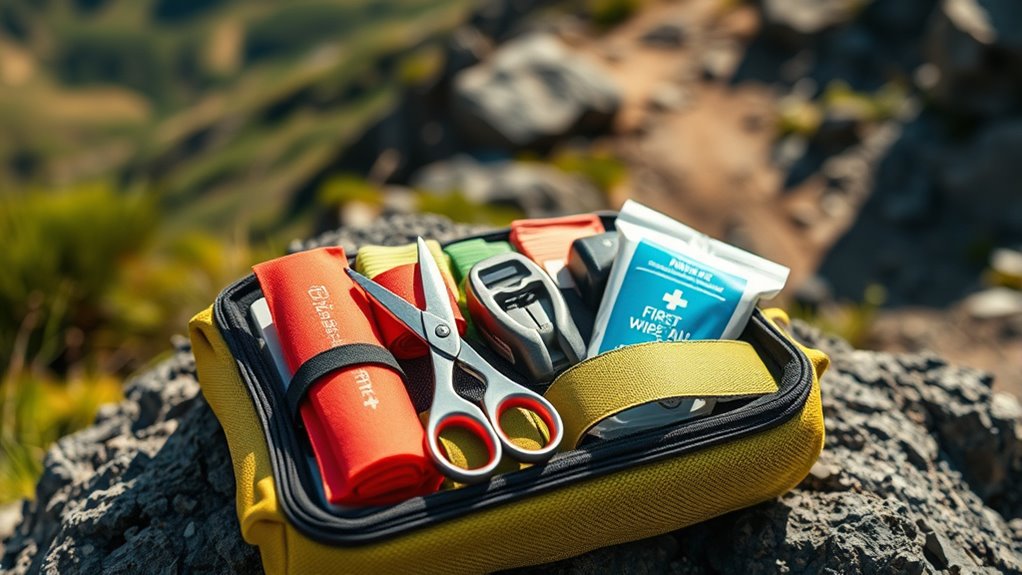

To stay prepared, keep a compact first aid kit with essentials like adhesive bandages, antiseptic wipes, antibiotic ointment, gauze pads, medical tape, pain relievers, and scissors. Always wear a properly fitted helmet, regularly check it for damage, and know how to clean and dress minor wounds. Recognizing serious injuries quickly can save lives, so stay calm and immobilize the injured if needed. If you want to be confident in handling emergencies, there’s more to cover on safety and injury prevention.
Key Takeaways
- Carry a well-stocked first aid kit with bandages, antiseptics, gauze, and scissors for quick wound management.
- Wear a properly fitted helmet that covers the forehead and is in good condition to prevent head injuries.
- Know how to clean and dress wounds to prevent infection and reduce complications during cycling.
- Recognize signs of serious injuries like heavy bleeding or unconsciousness and seek immediate medical help.
- Stay prepared and confident to respond effectively to injuries, ensuring safety during cycling activities.
Cycling is a great way to stay active and explore the outdoors, but accidents can happen anytime. Being prepared with basic first aid knowledge and supplies is essential to handle minor injuries and prevent them from worsening. One of the most critical aspects of safety while cycling is helmet safety. Wearing a properly fitted helmet isn’t just about complying with the law; it’s a vital step in injury prevention. A good helmet absorbs the impact during a fall or collision, significantly reducing the risk of head injuries. Make sure your helmet sits snugly on your head, covers your forehead, and isn’t tilted back or too loose. Regularly check for cracks or damage, and replace it after a crash or every few years to guarantee it offers optimal protection. Incorporating helmet safety into your routine means you’re actively reducing the severity of potential injuries, giving you peace of mind to enjoy your rides.
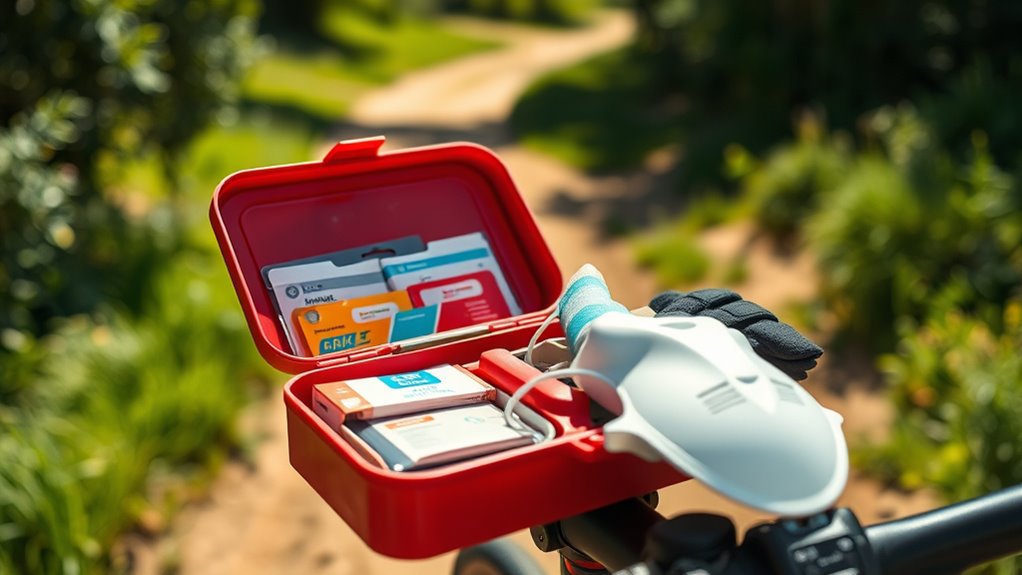
In addition to wearing a helmet, carrying a basic first aid kit is crucial. Your kit should include essentials like adhesive bandages, antiseptic wipes, antibiotic ointment, gauze pads, medical tape, pain relievers, and scissors. These supplies enable you to quickly address cuts, scrapes, or blisters that are common during cycling adventures. When you or a fellow cyclist gets hurt, clean the wound thoroughly to prevent infection and cover it with appropriate dressings. Knowing how to properly clean and dress wounds is a simple yet effective injury prevention technique. It minimizes the risk of bacteria entering the wound and reduces the chance of complications. Keep your first aid kit in a waterproof bag or container so it stays dry and ready for use, especially if you’re riding in unpredictable weather. Additionally, understanding the importance of proper injury assessment can help you determine when professional medical help is necessary.
Another important aspect of first aid for cyclists involves recognizing signs of more serious injuries. If you notice someone displaying symptoms such as severe bleeding, unconsciousness, broken bones, or head trauma, it’s vital to seek professional medical help immediately. While basic first aid can control bleeding or stabilize a person, some injuries require advanced care. Your role is to stay calm, provide reassurance, and keep the injured person still until help arrives. Knowing how to immobilize a limb or support a head injury can make a difference in outcomes.
Ultimately, being prepared with knowledge of helmet safety, injury prevention, and basic first aid skills empowers you to respond confidently when accidents happen. It’s about more than just riding; it’s about ensuring that you’re ready to handle unexpected incidents and keep yourself and others safe on the road. Proper preparation not only minimizes injury severity but also helps you enjoy cycling with confidence and peace of mind.
Frequently Asked Questions
What Should I Include in a Compact Cyclist First Aid Kit?
You should include essentials like adhesive bandages, antiseptic wipes, and a small roll of medical tape for minor cuts. Add pain relievers, antihistamines, and allergy medication for emergencies. Include a CPR face shield and scissors for safety. Keep a list of emergency contacts and your cycling safety info. A compact first aid kit boosts your emergency preparedness, ensuring you’re ready to handle minor injuries while enjoying your ride.
How Do I Treat a Broken Bike Chain During a Ride?
You might think a broken bike chain ruins your ride, but you can fix it quickly. First, shift to the smallest chainring and rear sprocket, then use a chain tool to remove the damaged section. Reconnect the chain links carefully, ensuring proper chain maintenance. Test your work by pedaling gently. Carry a mini chain repair kit for quick bike repair, so you stay safe and riding smoothly.
What Are Common Cycling Injuries and Their First Aid Responses?
You should know that common cycling injuries include cuts, scrapes, sprains, and bruises. For cuts and scrapes, clean the wound with water and apply pressure to stop bleeding. For sprains, rest, ice, compression, and elevation (RICE) help reduce swelling. Always prioritize bike safety and emergency preparedness by carrying a basic first aid kit. Knowing how to respond quickly minimizes injury severity and keeps you confident on your rides.
How Can I Prevent Dehydration and Heat Exhaustion While Cycling?
To prevent dehydration and heat exhaustion, you should follow hydration strategies like drinking water regularly before, during, and after your ride. Use heat safety tips such as wearing lightweight, breathable clothing and riding during cooler times of the day. Keep electrolyte drinks handy to replenish salts lost through sweat. Listen to your body, take breaks often, and find shaded areas if you start feeling dizzy or overly tired.
When Should I Seek Professional Medical Help After a Cycling Fall?
If you experience dizziness, fainting, or suspect a head injury after a cycling fall, seek professional medical help immediately. Picture yourself wobbling like a falling leaf or feeling the world spin—these signs signal serious issues. Don’t ignore persistent headache, confusion, or loss of consciousness. Trust your instincts; if anything feels off, get expert care promptly to prevent further harm and guarantee your safety.
Conclusion
Being prepared with first aid knowledge can make all the difference if an accident happens. Remember, nearly 80% of cycling injuries involve cuts, bruises, or broken bones—so knowing how to respond quickly is vital. By carrying a basic first aid kit and staying calm, you can help prevent minor injuries from worsening and guarantee help arrives faster. Stay safe, stay prepared, and enjoy your rides with confidence, knowing you’re ready for any unexpected bumps along the way.