Fitness trackers are useful for tracking your activity and health trends, but their data isn’t always perfect. Sensors like accelerometers and heart rate monitors can be affected by skin tone, placement, or movement type, so measurements should be seen as estimates. Recognizing these limitations helps you interpret your data more accurately and stay motivated. To get the most from your device, focus on trends over time and keep an eye on how the insights fit your goals—there’s more to uncover.
Key Takeaways
- Understand that fitness tracker data provides estimates, not exact counts, due to sensor limitations and activity variability.
- Recognize that sensors may be affected by skin tone, placement, and environmental factors, influencing data accuracy.
- Use trend analysis over time to interpret health patterns rather than relying on single data points.
- Leverage app visualizations and summaries to set realistic goals and track progress effectively.
- Remember that fitness data is valuable for motivation and lifestyle guidance, but should be viewed with awareness of its limitations.
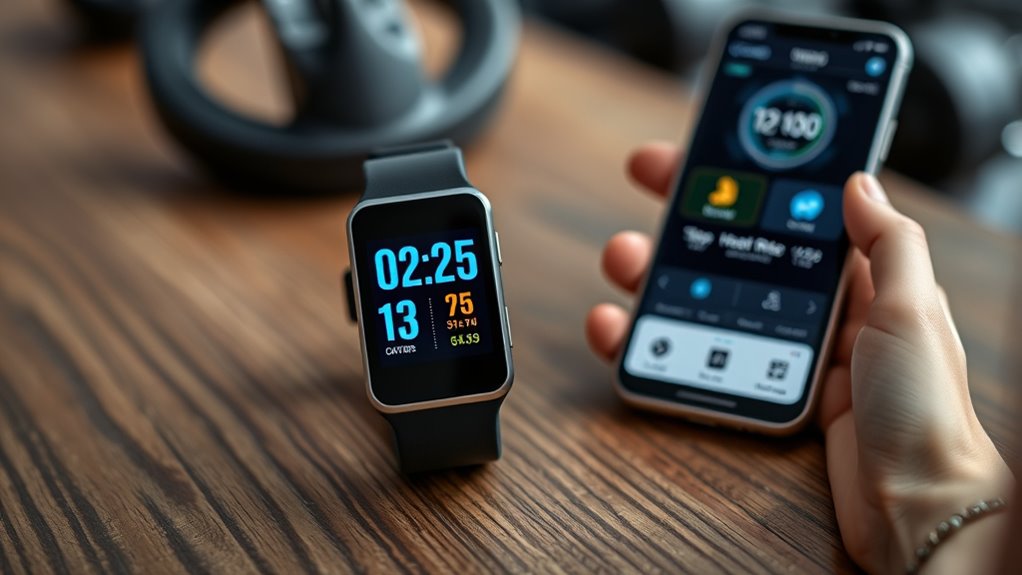
Fitness trackers have become essential tools for anyone looking to monitor their health and boost their activity levels. These devices are a prime example of wearable technology, seamlessly integrating into your daily routine to provide real-time insights into your physical activities. As you wear a fitness tracker, you might notice how it collects a wide array of data—steps taken, calories burned, heart rate, sleep patterns, and more. But understanding this data can be challenging if you don’t grasp how these devices work and their limitations. One vital aspect to consider is data accuracy, which determines how reliably your tracker reflects your actual activity.
Wearable technology has advanced rapidly, but no device is perfect. Many fitness trackers use accelerometers and sensors to estimate your movements and physiological metrics. While these sensors are sophisticated, they aren’t infallible. For example, counting steps can sometimes be thrown off by activities that involve minimal wrist movement or non-walking motions. Heart rate monitors, especially optical sensors in wrist-based devices, can be affected by skin tone, placement, and even ambient temperature. This variability means that the data you receive isn’t always perfectly accurate, but it’s usually consistent enough to track trends over time. Recognizing these limitations helps you interpret the information more wisely, avoiding over-reliance on a single reading.
To maximize the benefits of your fitness tracker, focus on understanding what the data actually means. Use it as a guide rather than an absolute measure. For instance, if your device shows you’ve walked 8,000 steps today, consider that it’s a solid estimate rather than an exact count. Pay attention to patterns—are your sleep cycles improving? Is your heart rate responding to your workouts? These trends, even if slightly off in exact numbers, can motivate you to make healthier choices and stay active. Additionally, many trackers sync with smartphone apps that provide detailed analyses and visualizations. These tools help you see the bigger picture, making it easier to set realistic goals and track progress over weeks and months.
Ultimately, understanding how wearable technology collects and presents data empowers you to use your fitness tracker effectively. Recognize that while data accuracy isn’t perfect, the device’s value lies in its ability to motivate, inform, and guide your lifestyle choices. When you interpret your tracker’s data with a critical eye, you can make smarter decisions about your health, set achievable goals, and celebrate your improvements along the way. Remember, the key isn’t perfect data but consistent use and awareness of what your device can realistically tell you about your health journey. Additionally, knowing that data accuracy varies across different devices helps set realistic expectations and prevents frustration.
Frequently Asked Questions
How Accurate Are Fitness Tracker Calorie Counts?
Your fitness tracker’s calorie estimation provides a reasonable estimate but isn’t perfectly accurate. It uses activity tracking data like heart rate, movement, and personal info to calculate calories burned. Keep in mind, factors like sensor limitations and individual differences can affect accuracy, so don’t rely solely on the numbers. Use it as a helpful guide to monitor trends rather than exact counts, and focus on overall activity and progress.
Can Fitness Trackers Detect Health Issues Early?
You can catch critical concerns early with a fitness tracker that monitors heart rate variability and sleep patterns. These devices detect subtle shifts signaling potential health issues, giving you a head start on medical help. By paying attention to changes in your heart rate variability and sleep pattern analysis, you stay proactive, prioritizing your health. So, yes—fitness trackers are powerful partners in early detection and diligent diagnosis.
Are Fitness Trackers Suitable for Children?
Fitness trackers can be suitable for children, especially to monitor child activity and encourage healthy habits. They help with parental monitoring, allowing you to keep track of your child’s daily movement and guarantee they’re staying active enough. However, choose age-appropriate devices designed for kids, with features like safety controls and limited data access. Always supervise usage and discuss the importance of balanced activity with your child to promote healthy habits.
How Long Does Tracker Battery Last With Daily Use?
Like a marathon runner pacing for the finish line, your tracker’s battery life depends on power management. Typically, with daily use, it lasts about 5 to 7 days. Features like GPS or heart rate monitoring drain the battery faster. To extend power, disable unnecessary functions and adjust settings. Keep an eye on battery life to make sure your tracker stays ready to motivate you every step of the way.
Do Fitness Trackers Work Well With All Smartphone Brands?
Yes, fitness trackers generally work well with most smartphone brands because of broad device compatibility and seamless app integration. You’ll find that popular trackers support both Android and iOS platforms, ensuring you can sync your data easily. Just make sure to check the specific device compatibility requirements before buying, so you can enjoy smooth app integration and accurate tracking regardless of your phone brand.
Conclusion
As you wear your fitness tracker daily, think of it as a helpful compass guiding your health journey. Just like a GPS keeps you on course, the data reveals patterns and progress, even when you don’t notice it. Remember Sarah, who tracked her steps and soon ran her first 10K—proof that understanding your data can turn small steps into big victories. Embrace your tracker, and watch your habits steer you toward healthier mornings and happier days.