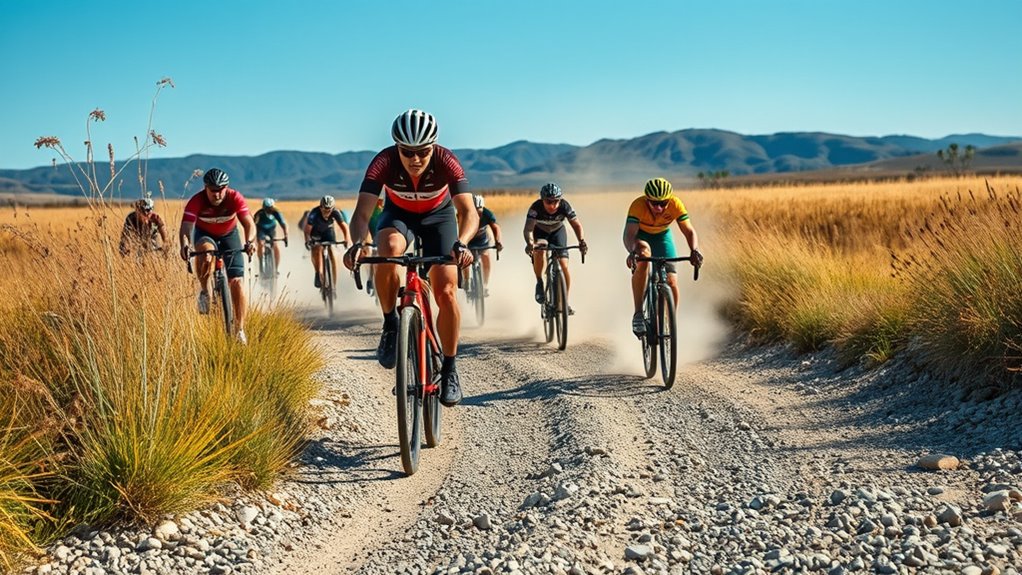

Gravel events are riding challenges that mix scenic dirt and gravel roads with a sense of adventure and camaraderie. They test your skills and endurance across varied terrain, requiring smart planning, proper bike setup, and adaptable strategies. No two races are the same, so understanding course profiles and personal strengths helps you perform your best. If you want to explore how to prepare and succeed in gravel racing, keep going for essential tips and insights.
Key Takeaways
- Gravel events combine challenge, scenery, and camaraderie, attracting cyclists and adventure enthusiasts seeking diverse terrain and unique race formats.
- Effective race strategy depends on terrain, course profile, and personal strengths, emphasizing pacing, navigation, and flexibility.
- Proper bike setup with wider tires, suitable tire pressure, and durable frames enhances performance on mixed terrain.
- Successful race execution involves pacing, nutrition, hydration, and smart line selection to conserve energy and maintain momentum.
- Preparation, strategic planning, and equipment choices are essential for maximizing enjoyment and competitive performance in gravel races.
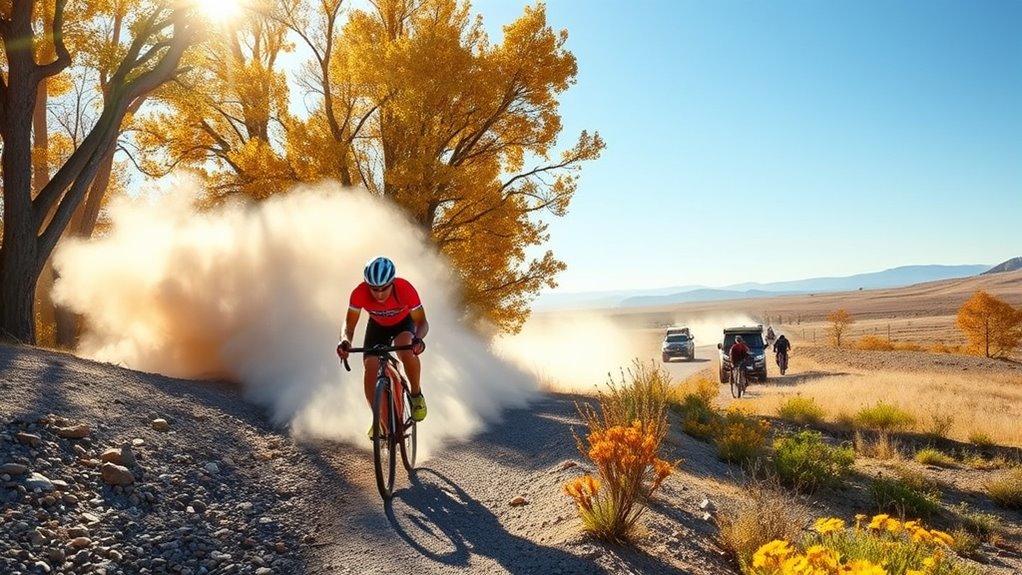
Have you ever wondered what makes gravel events so popular among cyclists and adventure enthusiasts? It’s the blend of challenge, scenery, and camaraderie that draws so many to these races. But to truly succeed, understanding race strategies and perfecting your bike setup are key. Gravel events are unique because they don’t follow a single formula for victory. Instead, they demand adaptability, smart planning, and the right equipment. Your race strategy should consider the terrain, your fitness level, and your goals. Will you push hard from the start or conserve energy for a late surge? The answer depends on the course profile and your strengths. Some courses feature rolling hills, where maintaining a steady pace and knowing when to attack can make a difference. Others include rougher sections, requiring careful navigation and patience. Developing a flexible race plan helps you respond to changing conditions, avoid burnout, and stay competitive. Properly understanding the refrigeration cycle can also help in maintaining the climate control systems in support vehicles or refreshment stations, ensuring optimal conditions for everyone involved.
Your bike setup plays an equally essential role. Gravel bikes are designed to handle mixed terrain, with wider tires for better traction and comfort, especially on uneven surfaces. Choosing the right tires involves balancing durability and grip—too narrow, and you risk slipping; too wide, and you may lose efficiency. Proper tire pressure is important; lower pressures improve grip but can increase rolling resistance. You’ll want a bike with a sturdy frame, capable of absorbing shocks from rougher patches, and appropriate gearing to handle climbs and accelerations. Many riders opt for a setup that allows quick adjustments, like tubeless tires for easier repairs and lower pressures. Additionally, consider adding racks or bags for essentials, but keep weight minimal to maintain speed and agility.
When planning your race strategy, think about pacing yourself early on. Going out too fast can lead to fatigue and a drop in performance later. Instead, aim for a steady effort, conserving energy for those critical sections or final pushes. Watch your nutrition and hydration, especially during longer events—carbohydrate intake and regular water stops help maintain stamina. Picking your lines carefully over loose gravel or technical sections can save time and energy, so stay alert and choose your path wisely. If you’re well-prepared with the right bike setup, you’ll find it easier to adapt to different terrains and maintain momentum.
In essence, mastering race strategies and optimizing your bike setup are essential for making the most of gravel events. They’re not just about endurance but also about smart decision-making and equipment choices. When you combine good planning with the right gear, you’ll enjoy the ride more and have a better shot at crossing the finish line with a smile. Gravel racing is about pushing your limits and embracing the adventure—being prepared makes all the difference.
Frequently Asked Questions
What Gear Is Essential for Gravel Riding?
You need a versatile bike with wide tires, reliable gears, and good brakes for gravel riding. Always perform bike maintenance before rides to guarantee everything works smoothly. Carry essential tools and spares for on-the-go repairs. Don’t forget nutrition strategies—pack energy bars, gels, and hydration. Staying fueled and maintaining your bike helps you stay safe and comfortable on rough terrains, making your gravel ride enjoyable and successful.
How Do I Train for a Gravel Event?
Wondering how to train for a gravel event? Focus on building endurance through long rides on varied terrains. Incorporate nutrition planning to fuel your body efficiently and optimize recovery. Don’t forget mental preparation—visualize challenging sections and stay positive. Mix in interval training to boost stamina and skill. Are you ready to push your limits? Consistent training, proper nutrition, and mental readiness will help you conquer the gravel with confidence.
What Safety Precautions Should I Take?
You should always prioritize safety by practicing trail navigation and carrying a map or GPS device, so you don’t get lost. Stay hydrated by following proper hydration strategies, drinking regularly to avoid dehydration. Wear a helmet, use reflective gear, and check your bike’s condition before the ride. Keep a small first aid kit handy, and tell someone your route and expected return time for added safety.
How Do I Choose the Right Bike?
Imagine yourself cruising over rugged gravel, feeling confident and in control. To choose the right bike, focus on a sturdy bike frame that can handle rough terrain and comfort for long rides. Consider tire pressure options—lower pressure offers better grip and shock absorption, while higher pressure speeds you up on smoother sections. Test different setups to find what feels best, ensuring you stay confident and enjoy every mile.
What Are Common Challenges Faced During Events?
During gravel events, you might face challenges like maintaining proper nutrition planning and route guidance. You’ll need to stay fueled to avoid fatigue and keep your energy levels steady. Charting unfamiliar or tricky routes can also be tough, so you should stay alert and use cues like GPS or course markers. Preparing ahead helps, but staying flexible and focused guarantees you can overcome these common hurdles and enjoy the ride.
Conclusion
So, after all this talk about gravel events, you might think they’re just about scenic routes and tough rides. But the real challenge lies in the unexpected, the mud, the flats, and those moments when you wonder why you signed up. Ironically, it’s these unpredictable hardships that make gravel events unforgettable. You’ll leave knowing it’s not just about the ride, but about conquering chaos—and loving every muddy, painful second of it.