
TL;DR

Get sports gear delivered free with Prime
- Fast, free delivery on millions of items
- Prime Video, Amazon Music and more included
- Member-only deals all year
The best mountain bike accessories focus on safety, repair, hydration, comfort, and performance. Picking gear that matches your riding style and terrain enhances your experience and keeps you prepared for anything.
Picture yourself cruising down a sun-dappled trail, the scent of pine filling the air, mud splattering your legs as you conquer rocky sections. Your gear makes or breaks that moment. Mountain bike accessories aren’t just add-ons—they’re your safety net, your trail companions, and your performance boosters.
In this guide, you’ll learn which accessories truly matter, how to pick them, and how they can turn a good ride into a great one. Whether you’re tearing up the trail or just starting out, knowing what to carry and why makes every trip smoother and safer.
Start with a well-fitting helmet and basic safety gear—these are your first line of defense.
Invest in performance upgrades like tubeless tires and dropper posts to boost control and confidence.
Always verify accessory compatibility with your specific bike model and riding terrain.
Stay updated on new gear trends like integrated storage and electronic safety features for safer, more efficient rides.
Build a tailored kit based on ride length, remoteness, and weather, avoiding unnecessary gear overload.
The must-have gear that keeps you safe and sound
Your helmet isn’t just a piece of gear—it’s your lifeline. Mountain-bike helmets typically offer more rear coverage than road helmets, and full-face models are standard for downhill adventures. Think of it like armor for your head, protecting against rocks, falls, and surprises around every corner.
Next, hydration—an absolute essential. A simple water bottle and cage are lightweight and reliable for short rides. But for longer treks, a hydration pack with a bladder that holds 2-3 liters offers the convenience of hands-free drinking plus space for snacks, tools, or a light jacket.
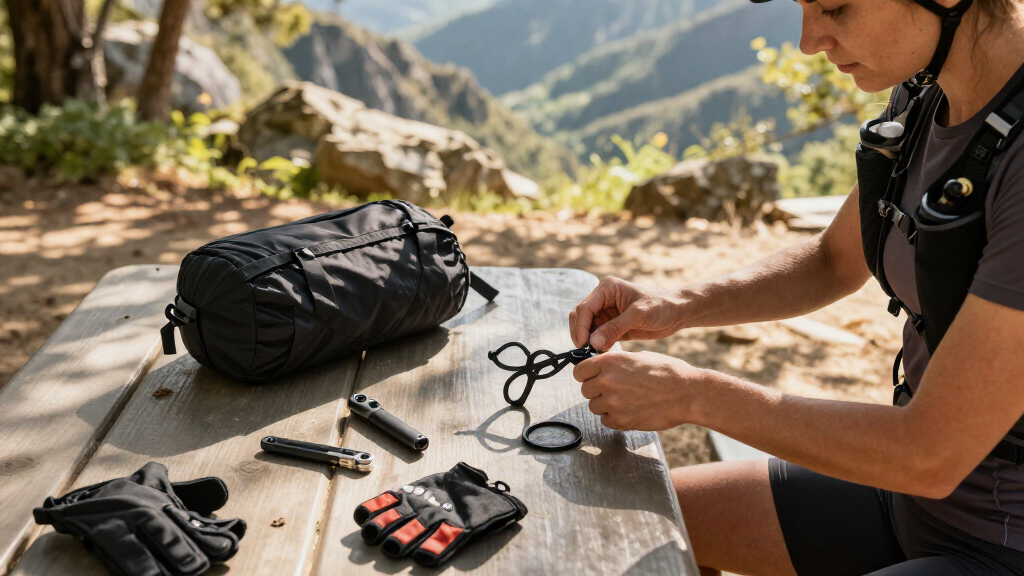
Don’t forget repair gear. A compact kit with a spare tube, tire levers, a mini pump or CO₂ inflator, and a multitool can save your day. Riders often carry a spare tube even with tubeless setups—because not every puncture seals perfectly.
Other essentials include eye protection, gloves, and lights. Dust, bugs, and branches are common trail hazards. Gloves improve grip and protect hands during a fall. Lights are game-changers for low-light rides or night adventures, ensuring visibility and safety.
Finally, carry a charged phone, emergency contact info, and a whistle. In remote areas, these could be your lifeline out of trouble.
As an affiliate, we earn on qualifying purchases.
Protect yourself better with gear designed for tough terrain
When tackling technical trails, protection becomes more critical. Knee pads are the most popular upgrade—think lightweight, flexible armor that guards against rocks, roots, and unexpected falls. The reason they matter is that they can prevent serious injuries that may sideline your ride or cause long-term damage. Choosing knee pads that stay in place and offer ventilation reduces the temptation to skip them due to discomfort, which is crucial for consistent safety.
Elbow pads, back protectors, and chest gear add layers of safety—these are not just for comfort but for minimizing injury severity during inevitable falls or crashes. For aggressive riding styles like enduro or downhill, these layers can be the difference between a minor bruise and a trip to the ER. The tradeoff is often weight and bulk, so selecting gear that balances protection with mobility is key. Proper fit ensures that the gear stays in place and doesn’t cause chafing or restrict movement, which could otherwise discourage consistent use. For example, a rider tackling a tricky descent benefits from full armor, but if it’s uncomfortable, they might leave it behind—defeating the safety purpose. Therefore, comfort and fit are as important as the protection itself, ensuring that safety gear becomes a natural part of your riding routine rather than an afterthought.
Performance and comfort upgrades that make a real difference
Investing in performance accessories like tubeless tires can radically improve your ride. These systems allow you to run lower pressures—sometimes as low as 20 psi—giving you better grip and shock absorption. The tradeoff is that lower pressures can increase the risk of pinch flats if not set up correctly, but with proper setup, they provide a significant advantage on rough terrain. Plus, tubeless systems seal small punctures automatically, which minimizes downtime and keeps you rolling longer. Dropper posts are another game-changer—allowing quick saddle height adjustments during rides, especially on technical descents or tight corners. This flexibility improves control, safety, and comfort, but compatibility depends on your bike’s seat-post diameter and cable routing—so understanding your bike’s specs is critical. Choosing the right pedals and shoes enhances control and efficiency. Flat pedals paired with sticky-rubber shoes provide confidence on technical sections, while clipless systems maximize power transfer on climbs and smooth terrain. The tradeoff is ease of use versus efficiency—your riding style and terrain should guide your choice. Other upgrades like better grips can reduce hand fatigue and improve control, while ergonomic saddles can prevent discomfort on long rides. Fenders are practical for muddy conditions, protecting you and your bike from grime and water. Finally, GPS units and bike computers provide navigation, data tracking, and training insights, transforming your ride into a more organized, enjoyable experience—especially on long or unfamiliar trails.
Getting accessories to match your bike and riding style
Not all accessories fit every bike. Before buying, verify key specs like wheel size, rim width, valve type, handlebar diameter, and frame mounting points. This is important because incompatible accessories can lead to poor performance, damage, or safety issues. For example, a 29-inch mountain bike with wide rims needs tubeless-compatible tires and valves designed for larger diameters, ensuring proper sealing and durability. Electric mountain bikes (e-MTBs) require heavier-duty accessories—like racks rated for extra weight, longer-lasting lights, and specialized batteries or chargers. Compatibility with the bike’s electrical system is vital to avoid issues like power drain or damage. For instance, a rider with a 150mm travel trail bike should look for protective gear and accessories designed for that suspension travel—like fenders that won’t interfere with the fork or shock, or heavier-duty protection that can withstand higher impacts. Always check manufacturer specs, and when in doubt, consult your local bike shop—they can help you select accessories that fit perfectly and perform reliably. A well-matched accessory not only enhances safety and performance but also prolongs the lifespan of your gear, saving you money and frustration in the long run.
Latest gear trends shaping the mountain biking scene
Recent advances make riding safer and more convenient. Tubeless repair tools are now compact, often stored inside handlebar or crank components, reducing bulky bags. Integrated storage compartments in frames hold tools, plugs, and essentials—perfect for minimalist riders. Electronic tech is growing fast—wireless drivetrains, smart suspension, and connected accessories add a high-tech edge. Some helmets now include crash detection and emergency alerts, giving peace of mind during remote rides. With the surge of e-mountain bikes, accessories like heavier racks, powerful lights, and extra batteries have become must-haves. Durability and repairability are also trending, with brands focusing on recycled materials and modular parts that are easier to fix or upgrade. Meanwhile, lightweight impact protection has improved—knee and elbow pads are now more flexible and comfortable, encouraging more riders to wear them on every trail. Removable chin bars and ventilated full-face helmets offer more options for those seeking comfort without sacrificing protection. These trends reflect a broader shift toward safer, smarter, and more sustainable riding gear that enhances the overall experience while addressing the needs of modern riders.
Smart advice for buying the right accessories
Prioritize your purchases in this order: helmet and protective gear, hydration, repair tools, navigation devices, comfort upgrades, and electronics. Understanding your typical rides—whether short local loops or remote backcountry adventures—helps tailor your gear list. For example, a rider doing long remote rides should invest more in hydration and navigation tools, while a casual rider might focus on comfort and safety basics. Don’t fall for price alone. A well-fitting, certified helmet and gear that meet safety standards will serve you better than expensive gear that’s uncomfortable or incompatible. Compatibility is critical—measure your bike’s specs and verify that accessories fit before purchasing. For example, a 29er needs specific tires and valves, and an e-MTB might require specialized batteries or chargers. Build a kit that covers common failures—flat tires, minor crashes, navigation mishaps—and share less-used gear with your riding group to lighten your load. Remember, investing in quality gear from trusted brands ensures durability and performance, reducing the need for replacements and repairs. Consult your local bike shop—they can provide personalized advice to match your riding style, terrain, and climate, ensuring your gear supports your riding ambitions effectively.
Frequently Asked Questions
What accessories does every mountain biker need?
Every rider should carry a certified helmet, water or hydration pack, a basic repair kit with a spare tube, tire levers, a pump, and a phone for emergencies. These essentials keep you safe, prepared, and on the trail longer.Do I still need a spare tube with tubeless tires?
Yes. While tubeless systems reduce flats, they can’t fix every damage—especially large sidewall cuts or unseated tires. Carrying a spare tube ensures you’re covered for unexpected failures.Are expensive helmets safer?
Price often reflects features like better ventilation, lighter weight, and advanced fit systems. The most important thing is a helmet that fits well and meets safety standards, regardless of cost.Should I choose a trail helmet or a full-face helmet?
Trail helmets suit most cross-country rides, offering good ventilation and protection. Full-face helmets are better for downhill, jumps, and high-speed terrain where falls can be more severe.Flat or clipless pedals—which are better?
Neither is universally better. Flats are easier to get on and off, great for technical terrain. Clipless pedals offer more efficiency and control on smoother trails—choose based on your riding style.Conclusion
Your mountain bike is only as good as the gear you equip it with. Thoughtful accessories elevate your safety, comfort, and performance—making every trail feel like a new adventure. Remember, quality and compatibility matter more than the latest gadgets or price tags.
Next time you gear up, picture yourself confidently tackling that rocky descent or muddy climb—fully prepared. Because in mountain biking, the right gear isn’t just a luxury; it’s your best trail partner.
Halloween Picks
halloween
As an affiliate, we earn on qualifying purchases.