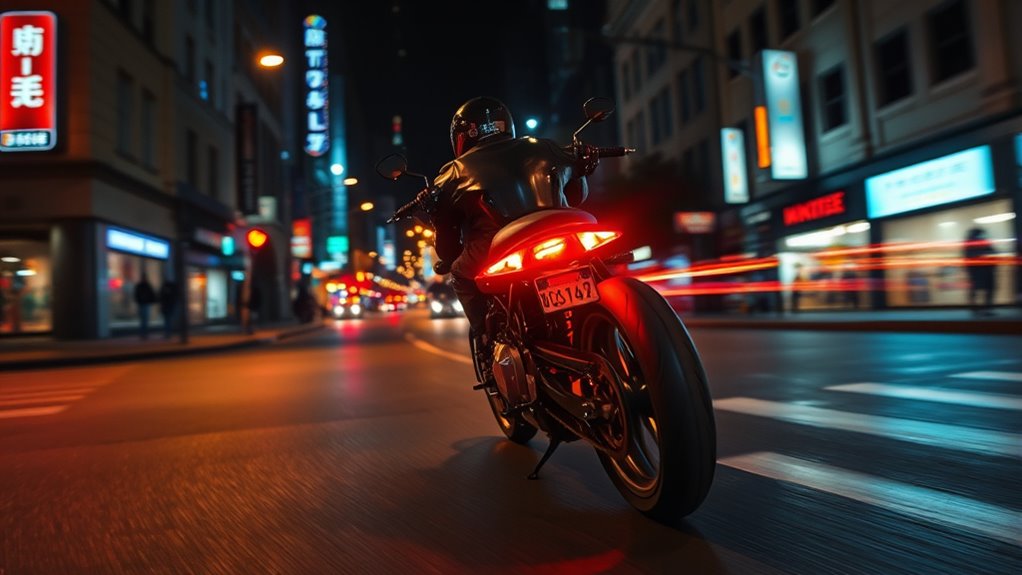

To stay safe during night riding, make sure your helmet has reflective decals or tape so drivers can see you from a distance. Wear high-visibility clothing with reflective strips on the chest, back, arms, and legs for multi-angle visibility. Use bright colors, additional lights, and keep your gear clean and maintained. Ride predictably and position yourself to be easily seen. Keep exploring to learn how combining gear, habits, and awareness can maximize your safety after dark.
Key Takeaways
- Use reflective decals on helmets and clothing to increase visibility during night riding.
- Wear high-visibility gear with reflective strips to enhance safety from multiple angles.
- Incorporate auxiliary front and rear lights to complement reflectivity and improve road awareness.
- Ride predictably and maintain proper positioning to ensure drivers can see and anticipate your movements.
- Regularly check and clean reflective materials and lighting to maintain maximum visibility in low-light conditions.
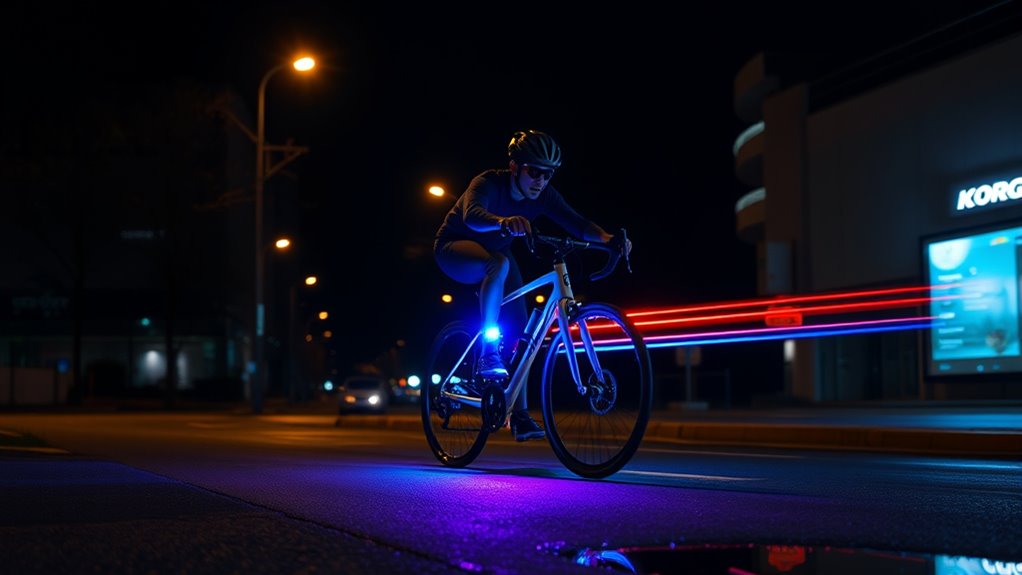
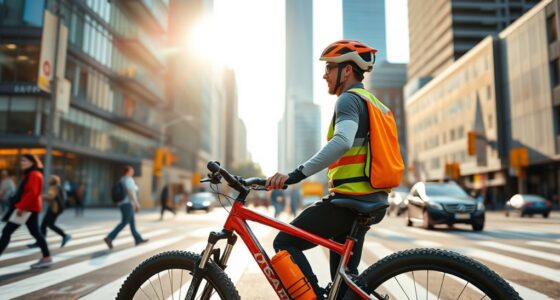
Have you ever wondered what makes night riding both exciting and challenging? It’s the thrill of the open road after dark, the quiet hum of your bike, and the cool night air. But along with that excitement comes the responsibility to stay visible and safe. Guaranteeing your helmet visibility and clothing reflectivity are key to achieving that. When you ride at night, your helmet becomes more than just a protective gear; it’s a fundamental piece of your visibility puzzle. Bright, reflective decals or strips on your helmet help other road users see you from a distance. Consider adding reflective tape or stickers that catch headlights and streetlights, making your head more noticeable. The more visible your helmet, the sooner drivers can spot you and react accordingly, decreasing the risk of accidents. Visibility isn’t just about your helmet, though. Your clothing plays an equally important role. Clothing reflectivity isn’t just a fashion statement—it’s a safety feature that can mean the difference between being seen and remaining unseen in the dark. High-visibility jackets or vests with reflective strips or piping are designed specifically for night riding. These materials reflect light back towards its source, such as a car’s headlights, making you visible from a long distance. When choosing your riding gear, prioritize those with ample reflective elements. Wearing clothing with reflective patches on the chest, back, arms, and legs ensures that you’re spotted from multiple angles. It’s also wise to layer your clothing with high-visibility gear, especially if you’re riding in poorly lit areas. Remember, the goal is to maximize your visibility without sacrificing comfort. Bright colors combined with reflective accents create a powerful combination that catches the eye, even in low-light conditions. Check your gear regularly to guarantee reflective strips are clean and intact, as dirt or damage can diminish their effectiveness. Beyond gear, consider adding auxiliary lighting to your bike—such as additional front or rear lights—that complement your reflectivity efforts. Keep in mind that your visibility doesn’t depend solely on gear; your riding position and movements also matter. Ride predictably, avoid sudden lane changes, and make eye contact with drivers when possible to assure they are aware of your presence. Night riding demands more awareness and preparation, especially when it comes to being seen. By paying close attention to helmet visibility and clothing reflectivity, you considerably enhance your safety, allowing you to enjoy the thrill of night riding without unnecessary risk. With the right gear and cautious habits, you can navigate the dark roads confidently and securely.
Frequently Asked Questions
What Are the Best Reflective Materials for Night Riding Gear?
You should choose reflective tape and glow-in-the-dark paint for night riding gear. Reflective tape is highly visible when illuminated by headlights, making it ideal for jackets, helmets, and bikes. Glow-in-the-dark paint adds extra visibility when lights aren’t shining directly on you, increasing safety. Combining both materials guarantees you’re easily seen in low-light conditions, helping you stay safe while riding at night.
How Do Different Light Colors Affect Visibility at Night?
Different light colors considerably impact your visibility at night. A bright white or yellow headlight beam offers strong contrast against dark backgrounds, making you more noticeable. Red and amber lights are less harsh on your eyes and improve safety by alerting others without blinding them. Using contrasting colors enhances your overall visibility, especially in low-light conditions, ensuring you’re seen clearly by others on the road.
Are There Specific Laws for Lighting Requirements While Night Riding?
Yes, there are specific law regulations and legal requirements for lighting while night riding. You must guarantee your bike has a white front light and a red rear reflector or light, as mandated by local laws. These regulations aim to improve visibility and safety. Always check your area’s legal requirements before riding at night, and make sure your lights are functioning properly to avoid fines or accidents.
How Can I Improve My Bike’s Reflectivity Effectively?
To improve your bike’s reflectivity, you should add reflective tape to key areas like the frame, wheels, and pedals. This tape catches car headlights and makes you more visible. You can also use glow-in-the-dark paint on parts of your bike or helmet for added visibility in low light. Combining these methods creates a highly visible bike, ensuring you stay safe during night rides.
What Safety Tips Are Recommended for Night Riding in Urban Areas?
When riding at night in urban areas, prioritize your safety by wearing a helmet with reflective elements and maintaining proper riding posture for visibility and control. Use bright, functioning lights on your bike, and wear reflective clothing or accessories. Stay alert to traffic signals and pedestrian movements, and keep a safe distance from vehicles. Being visible, alert, and protected helps you navigate urban streets safely during nighttime.
Conclusion
As you venture into vibrant, velvety night, remember the power of proper lights and reflective gear. Let luminous LEDs lead your way, illuminating your journey and alerting others to your presence. Reflective strips shimmer silently, signaling safety in the shadowy streets. By blending brightness with awareness, you build a barrier against the blackness. Embrace these essentials, ensuring your night rides are not only thrilling but safe, secure, and spectacularly seen in the dark.