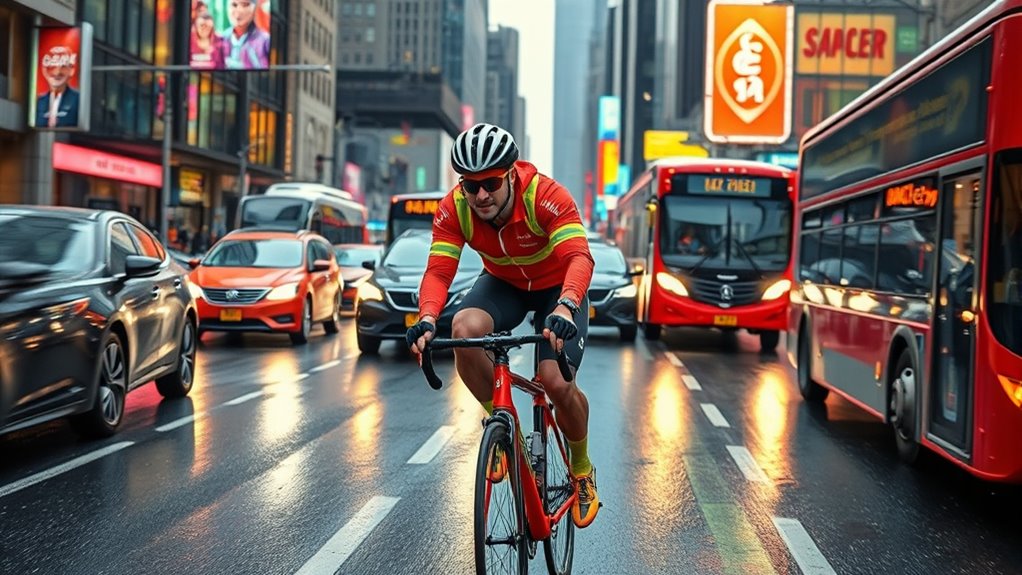

To ride safely in traffic, stay alert and avoid distractions like your phone or headphones. Watch for vehicles that might not obey signals and anticipate hazards like debris or sudden stops. Make eye contact with drivers and wear high-visibility gear, especially at night. Keep your skills sharp by understanding traffic laws and practicing defensive strategies. If you remain aware and cautious, you’ll better handle urban traffic surprises and ensure your safety every step of the way.
Key Takeaways
- Stay alert and avoid distractions to detect hazards early.
- Wear high-visibility clothing and reflective gear, especially at night or in poor weather.
- Make eye contact with drivers to ensure they see you before crossing or riding.
- Plan routes through well-lit, less congested streets and anticipate unpredictable vehicle behaviors.
- Carry a first aid kit and keep your phone charged for emergencies during traffic encounters.
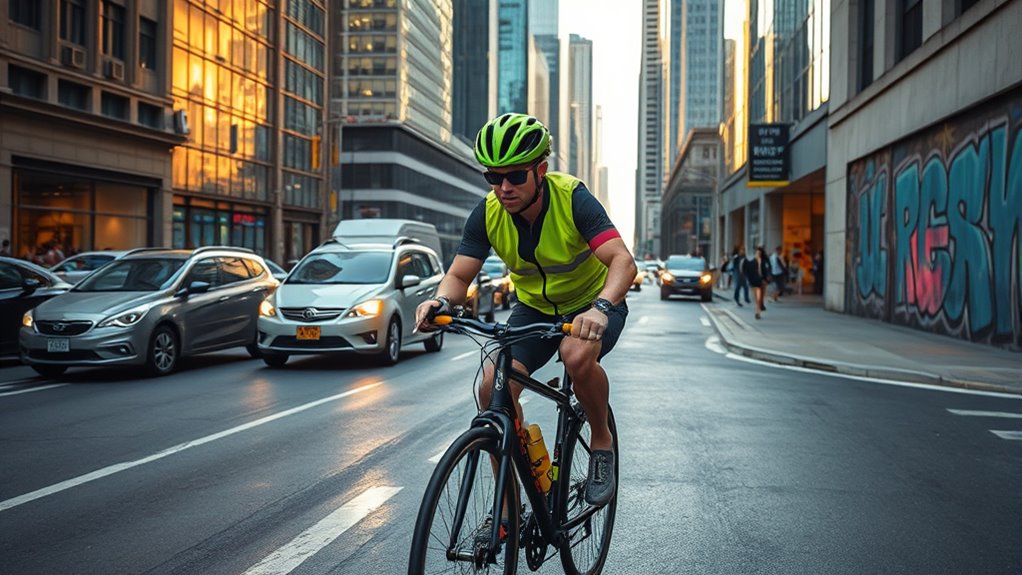
Living in an urban environment can be unpredictable, making it essential to develop basic survival skills. When you’re maneuvering busy streets and crowded intersections, pedestrian awareness becomes your first line of defense. Always stay alert; avoid distractions like your phone or headphones, and pay close attention to your surroundings. Watch for vehicles turning or reversing, and make eye contact with drivers when possible to guarantee they see you. Remember, drivers might not always obey traffic signals, so never assume a vehicle will stop just because you have the right of way. Instead, approach each crossing with caution, waiting until it’s clear and safe before stepping onto the street. Being proactive in your awareness helps you anticipate potential hazards, giving you enough time to react and avoid accidents. Incorporating high-visibility clothing can further enhance your safety during low-light conditions.
Alongside pedestrian awareness, emergency preparedness is vital when riding in traffic. Unexpected situations can arise suddenly—like a vehicle swerving, a cyclist losing control, or construction debris blocking your path. Preparing for these moments means knowing how to respond quickly and effectively. Carry a small first aid kit and know basic first aid skills to handle minor injuries until help arrives. Keep a charged cell phone with emergency contacts saved, so you can call for assistance if needed. It’s also wise to plan your routes in advance, choosing well-lit, less congested streets when possible, and avoiding areas with poor visibility or heavy congestion. If an emergency occurs, stay calm and assess the situation before acting. If you’re involved in a collision, move to a safe area if possible, and exchange information with other parties calmly and clearly.
Being equipped mentally and physically for emergencies means you can adapt to unpredictable traffic conditions better. Always wear visible clothing or reflective gear, especially at night or in poor weather, so others can see you easily. Practice defensive riding and walking strategies—don’t assume others will follow rules, and always expect the worst. Keep yourself informed about local traffic laws and safety regulations, so you know your rights and responsibilities as a pedestrian or cyclist. This knowledge helps you react confidently in tense situations. By staying alert, prepared, and aware of your environment, you become more resilient, capable of handling urban traffic hazards with confidence. These skills not only protect you but also contribute to a safer, more predictable city experience.
Frequently Asked Questions
How Do I Handle Aggressive Drivers Safely?
When faced with aggressive drivers, stay calm and avoid confrontation by practicing defensive riding. Keep a safe distance, avoid eye contact, and don’t respond to their behavior. If needed, use emergency preparedness by signaling your intentions clearly and moving away from the threat safely. Remember, your priority is to stay safe, so stay alert, maintain control, and surrender the lane if the situation escalates.
What Are the Best Routes to Avoid Traffic Jams?
To avoid traffic jams, you should plan ahead by researching alternate routes that bypass congestion hotspots. Use navigation apps that update in real-time to find the fastest options and consider peak hour planning, which means leaving earlier or later to avoid rush times. Staying flexible and choosing less busy streets during peak hours helps you save time, reduces stress, and keeps your ride smooth and safe.
How Should I Signal Lane Changes Effectively?
You should signal lane changes by using clear hand signals and mirror checks. Extend your left arm straight out for a left turn, or bend your elbow upward for a right turn, making your intentions visible to others. Before signaling, check your mirrors to guarantee it’s safe, then give the appropriate hand signal for at least three seconds. Constant eye contact with mirrors helps confirm other drivers see your signals, making lane changes safer.
What Bike Maintenance Is Essential for Urban Riding?
You’d think bike maintenance is optional, right? Nope. You should regularly check your tire pressure because flat tires are the universe’s way of saying, “Not today.” Brake maintenance is equally essential—stop signs aren’t just suggestions. Keep your brakes responsive and tires properly inflated to avoid accidents. A little maintenance now saves you from a big, expensive headache later. Stay safe out there, and your bike will thank you.
How Do Weather Conditions Impact Urban Cycling Safety?
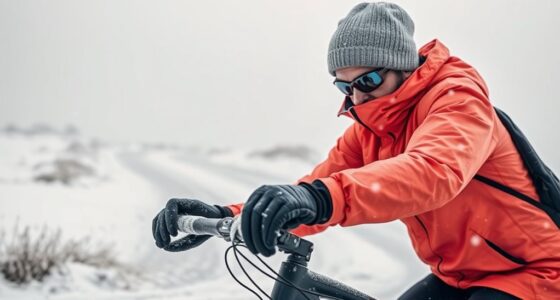
Weather conditions can substantially impact your urban cycling safety. Rain or snow reduce traction, so you should wear weather gear like waterproof jackets and gloves to stay dry and warm. Fog or low visibility calls for extra visibility tips, such as bright lights and reflective gear, so drivers see you clearly. Always check the forecast, slow down in bad weather, and stay alert to navigate safely through changing conditions.
Conclusion
Moving through busy streets is like steering through a raging river—you need sharp skills and awareness to stay afloat. By mastering these urban survival skills, you become a steady boat, resilient against the currents of traffic chaos. Remember, every cautious move keeps you afloat and moving forward. Stay alert, adapt quickly, and trust your instincts—these are your paddles in the unpredictable flow of city riding, guiding you safely to your destination.