
Aero gains for everyday riders mean making small adjustments to your posture and gear to cut down wind resistance, helping you ride faster and with less effort. Sitting more upright or tucking in your elbows can make a big difference, especially when combined with proper bike fit and accessories like aero helmets. These tweaks improve your efficiency over time, making rides smoother and more enjoyable. Keep exploring these tips to reveal even more aerodynamic secrets for your rides.
Key Takeaways
- Aero gains refer to reducing wind resistance to improve cycling speed and efficiency.
- Small posture adjustments can significantly enhance aerodynamics without sacrificing comfort.
- Proper bike fit and positioning optimize the effectiveness of aerodynamic accessories.
- Using gear like aero helmets and skinsuits amplifies aerodynamic benefits when combined with good posture.
- Consistent attention to wind resistance and position refinement leads to noticeable performance improvements.
Have you ever wondered how minor changes in your riding position can make a big difference in speed? It’s a question many riders ask as they seek to improve their performance without necessarily investing in the latest equipment. The truth is, understanding the real meaning of aero gains for everyday riders often comes down to optimizing your cycling posture and using aerodynamic accessories wisely. These tweaks might seem minor, but they can considerably reduce wind resistance, helping you ride faster with less effort.
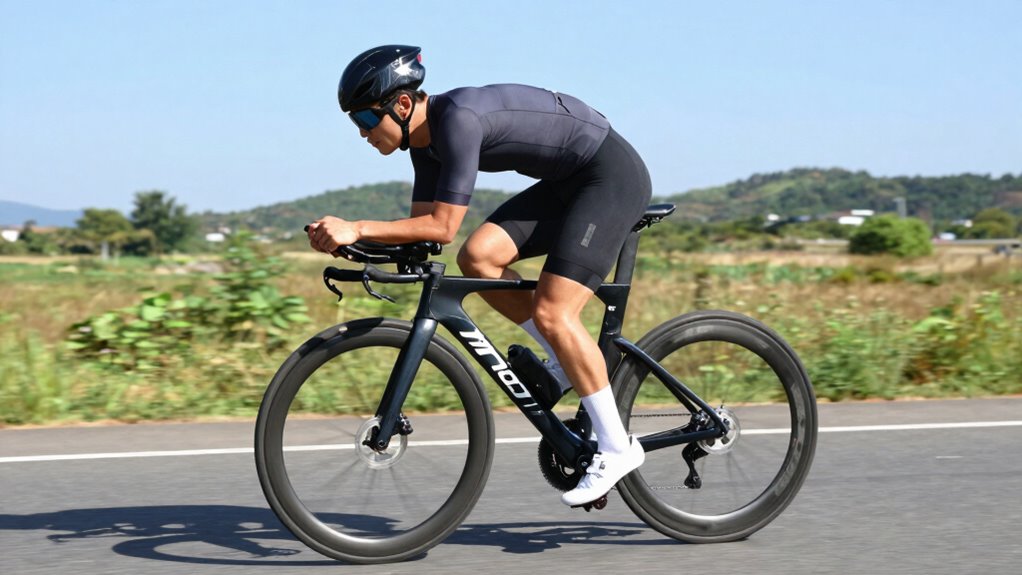
Your cycling posture plays an essential role in achieving these aerodynamic gains. When you sit upright or hunch over in a way that’s comfortable yet streamlined, you cut down on the surface area exposed to the wind. The goal is to find a position that maintains comfort while minimizing drag. Small adjustments—like lowering your torso slightly, tucking in your elbows, or aligning your head with your back—can make a noticeable difference. These changes reduce frontal area and streamline your profile, allowing you to slice through the air more efficiently. Remember, it’s not about sacrificing comfort; it’s about refining your posture to enhance aerodynamics without causing discomfort during longer rides. Additionally, understanding the importance of aerodynamic accessories can further enhance your gains. Incorporating cycling aerodynamics principles into your setup can help you better understand how to maximize these benefits.
Refine your cycling posture with small adjustments to reduce drag and ride more efficiently and comfortably.
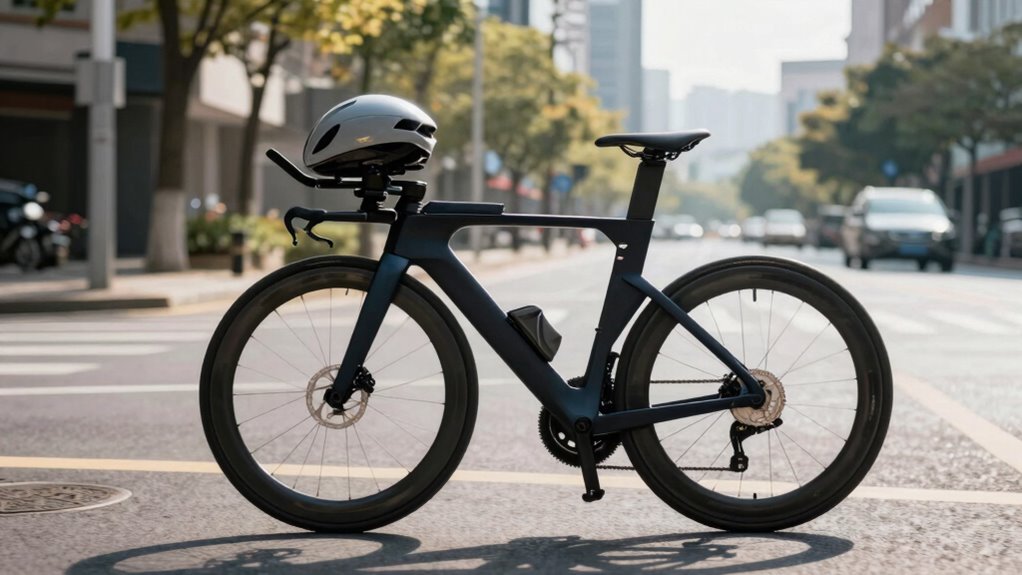
In addition to your cycling posture, aerodynamic accessories can amplify these gains. Items like aero handlebars, aero helmets, and skin suits are designed to streamline your shape and cut down on drag. Even placing a time-trial helmet on your bike for solo efforts can make a measurable difference. However, the key is to use these accessories appropriately—don’t just slap on the latest gear without considering how it fits with your riding style. Proper fit and positioning are vital to guarantee they deliver the intended aerodynamic benefits. Paying attention to bike fit and positioning can significantly enhance how well aerodynamic gear works for you. Also, understanding how wind resistance impacts your overall ride can motivate you to make more mindful adjustments.
Ultimately, aero gains for everyday riders come down to the small but impactful details. Improving your cycling posture isn’t about rewriting your entire riding style—it’s about making mindful adjustments that reduce wind resistance. Coupled with strategic use of aerodynamic accessories, these tweaks can help you ride faster with less effort, making your rides more efficient and enjoyable. Remember, consistent refinement is key. The more you pay attention to how you position yourself and the gear you choose, the more substantial your aero gains will become over time.

Lumos Ultra Aero GT Road Bike Helmet with Light | MIPS Lightweight Ventilation | Bicycle Helmets Commuter Cycling for Adults: Men, Women
- Light-Ready for Day and Night: Compatible with Lumos Firefly lights
- Lightweight and Comfortable: Weighs approximately 350g with ventilation channels
- Enhanced Safety with MIPS: Includes integrated MIPS protection for impact management
As an affiliate, we earn on qualifying purchases.
As an affiliate, we earn on qualifying purchases.
Frequently Asked Questions
How Do Aero Gains Affect Different Bike Types?
Aero gains influence different bike types through improved frame aerodynamics and rider positioning. On road bikes, sleek frames reduce drag, helping you ride faster with less effort. For mountain bikes, optimized aerodynamics can boost endurance on long climbs and descents. Whether you’re racing or commuting, adjusting rider positioning to minimize wind resistance enhances overall efficiency and speed across all bike types, making your rides smoother and more energy-efficient.
Are Aero Gains Noticeable at Low Speeds?
Yes, aero gains can be noticeable at low speeds, especially if you focus on reducing wind resistance through better rider posture. When you optimize your position, you cut through the air more efficiently, making a difference even at slower speeds. While the effect isn’t as dramatic as at high speeds, small improvements in aerodynamics can still make your ride smoother and easier, saving effort over longer distances.
Can Aero Modifications Improve Overall Riding Comfort?
Yes, aero modifications can boost your riding comfort in unexpected ways. When you adjust your rider posture and choose helmet designs that reduce drag, you’ll notice less fatigue on longer rides. These tweaks streamline your body and gear, making your ride smoother and less tiring. With improved aerodynamics, you’ll stay more comfortable, especially on extended journeys, and feel more in control as you carve through the road.
Do Aero Gains Impact Battery Life for E-Bike Riders?
Aero gains can positively impact your e-bike’s battery life by enhancing battery efficiency and enabling better speed optimization. When your bike cuts through the air more smoothly, it requires less power to maintain higher speeds, conserving battery life. This means you can ride longer distances with less energy consumption. So, investing in aerodynamics not only boosts performance but also helps you get the most out of your e-bike’s battery during each ride.
How Do Weather Conditions Influence Aero Benefits?
Weather conditions wildly influence aero benefits, especially through wind resistance and road conditions. When the wind whips and whirls, it fights your forward flow, cutting into your gains. Smooth, steady roads boost your aero advantage, while gusts and gusty breezes blow away efficiency. Rain, rainbows, and rough roads create resistance, reducing aerodynamic benefits and making pedaling more tiresome. Keep an eye on the weather to maximize your e-bike’s aero gains.
Conclusion
So, next time you’re obsessing over every millisecond saved with a tiny aero tweak, remember—sometimes, the real gain is simply staying motivated to ride. Ironically, all those sleek helmets and tight suits might not turn you into a pro, but they sure make you look like one. In the end, it’s not about perfect aero, but about enjoying the ride—because, honestly, that’s where the real gains happen. Keep pedaling, and don’t forget to breathe.