
Finding the sweet spot between cadence and gearing means maintaining a steady cadence—around 80 to 100 RPM—while choosing the right gear for the terrain. When you shift gears appropriately, you can spin comfortably without overexerting or losing momentum. This balance helps conserve energy, prevents fatigue, and boosts your efficiency. Keep adjusting and listening to your body, and you’ll discover how to ride smoothly across different terrains, releasing even better performance.
Key Takeaways
- Maintain a cadence between 80-100 RPM for optimal energy efficiency and reduced fatigue.
- Use appropriate gear ratios to match terrain, keeping cadence steady and manageable.
- Shift gears proactively to avoid overexertion or inefficient pedaling at incompatible speeds.
- Listen to your body for signs of fatigue or discomfort to adjust cadence and gear choices accordingly.
- Practice smooth gear transitions and consistent pedaling rhythm to find and sustain your personal “sweet spot.”

Have you ever wondered how cyclists optimize their pedaling efficiency? It all comes down to finding the right balance between pedaling rhythm and gear ratios. When you’re cycling, your pedaling rhythm—how fast or slow you turn the pedals—plays a vital role in maintaining energy and preventing fatigue. Too fast, and you risk overexertion; too slow, and you might struggle to keep momentum. The key is discovering a cadence that feels natural and sustainable for your body, typically around 80 to 100 revolutions per minute, but this can vary from person to person. This rhythm helps you generate power consistently without wasting energy or causing unnecessary strain on your muscles.
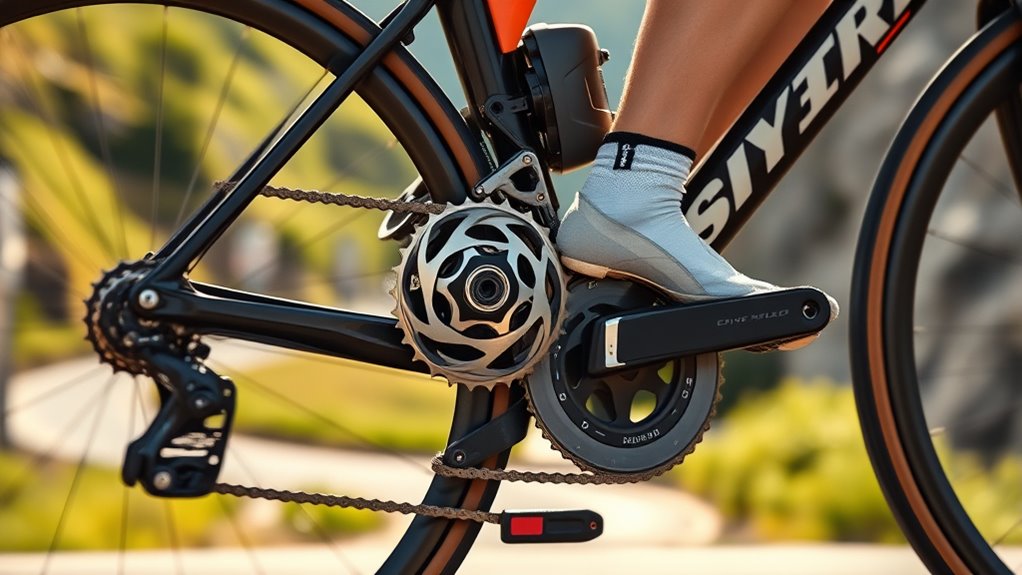
But rhythm alone isn’t enough. You also need to consider gear ratios, which are the combinations of chainring and sprocket sizes that influence how much effort it takes to turn the pedals. When you shift gears, you’re adjusting the gear ratio to match the terrain and your preferred pedaling rhythm. For example, on flat stretches, a higher gear ratio allows you to go faster with each pedal stroke, while on hills, a lower gear ratio makes pedaling easier, helping you maintain your cadence without exhausting yourself. The goal is to find a gear ratio that complements your pedaling rhythm, enabling you to sustain a comfortable cadence regardless of terrain.
Mastering the interplay between pedaling rhythm and gear ratios allows you to ride more efficiently and comfortably. If you’re pushing too hard or spinning your legs too quickly in a high gear, you’ll tire out faster. Conversely, spinning too slowly in a low gear might make you feel sluggish and inefficient. The secret is shifting gears strategically so your pedaling rhythm stays steady and manageable, no matter what’s ahead. This not only preserves your energy but also improves your overall speed and endurance.
To optimize your cadence and gear selection, pay attention to how your body feels during rides. If your legs start to burn or you find yourself struggling to keep a steady rhythm, it’s time to shift to a more appropriate gear. Practice and experience will help you instinctively select the right gear ratios for different situations, leading to smoother, more efficient rides. Additionally, understanding how your drivetrain components interact can help you make more precise gear adjustments. Ultimately, understanding how to balance your pedaling rhythm with the right gear ratios helps you ride longer, faster, and with less fatigue, making every ride more enjoyable and effective.
Frequently Asked Questions
How Does Rider Experience Influence Ideal Cadence and Gearing Choices?
Your rider experience greatly influences your ideal cadence and gearing choices because it affects your comfort and efficiency. As you gain experience, you learn to maintain a steady cadence that minimizes fatigue and maximizes gear efficiency. You’ll instinctively adjust gears to match terrain, ensuring a smooth ride. With more experience, you become more confident, allowing you to find that perfect balance where rider comfort and gear efficiency align seamlessly.
Can Cadence and Gearing Adjustments Improve Cycling Endurance?
Yes, adjusting your cadence and gearing can considerably improve your cycling endurance by optimizing bike ergonomics and pedal efficiency. When you find a comfortable cadence, you reduce fatigue and enhance energy transfer. Gearing adjustments help maintain this cadence on varied terrains, preventing muscle strain. By fine-tuning these elements, you conserve energy, ride longer, and enjoy smoother, more efficient cycling sessions.
What Are Common Mistakes When Synchronizing Cadence and Gear Shifts?
You often make a gear mismatch or fall into improper cadence when trying to synchronize your gear shifts. Common mistakes include shifting gears too abruptly, which causes loss of momentum, or shifting at inappropriate times, like during climbs or sprints. You might also ignore your target cadence, resulting in inefficient pedaling. To avoid these, shift smoothly and anticipate terrain changes, maintaining a steady cadence for ideal performance.
How Do Terrain Types Affect Optimal Cadence and Gear Selection?
Terrain variability critically influences your ideal cadence and gear choices. On flat terrain, you can maintain a higher cadence with lighter gears for efficiency, while climbing hills requires lowering gears to sustain power without overexertion. Descents allow for a faster cadence with easier gears, conserving energy. By adjusting gears to match terrain changes, you improve gear efficiency and keep your pedaling smooth and effective throughout varied conditions.
Are There Recommended Cadence and Gear Settings for Competitive Racing?
For competitive racing, you should aim for a cadence of 85-100 rpm, optimizing your bike fit and maintaining an aerodynamic positioning to reduce drag. Use gears that allow you to sustain this cadence comfortably without overexerting yourself, especially on climbs or sprints. Focus on a bike fit that supports your posture, and fine-tune your gearing to stay in your sweet spot, maximizing efficiency and power throughout the race.
Conclusion
Finding the perfect balance between cadence and gearing is about more than just speed; it’s about connection, control, and confidence. When you tune into your rhythm, choose your gears wisely, and listen to your body, you discover your true potential. Embrace the challenge, enjoy the flow, and push beyond limits. Because in cycling, as in life, it’s not just about how fast you go, but how smoothly you ride, how steadily you grow, and how passionately you pursue your best.