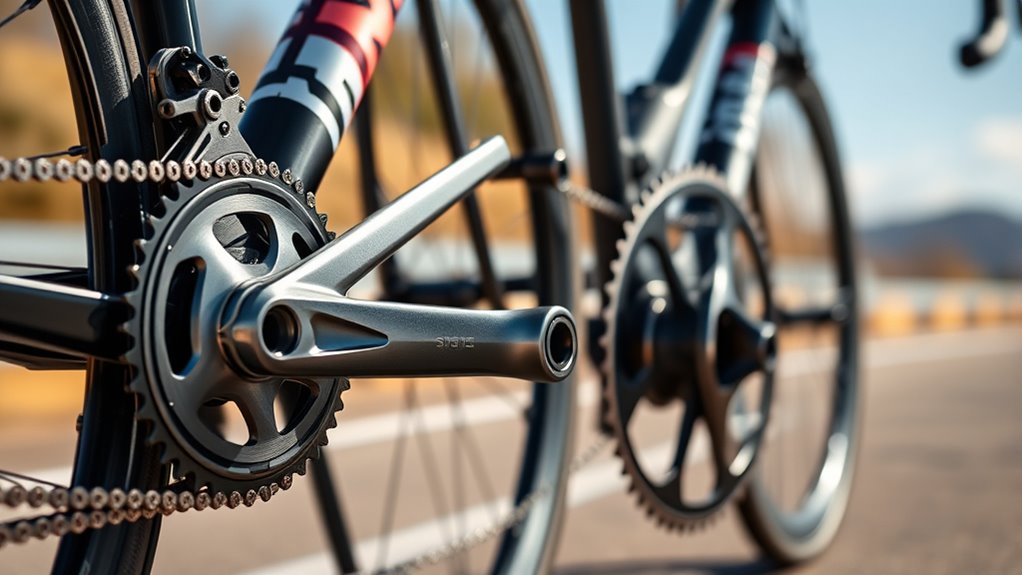

Crank length really matters because it affects your comfort, efficiency, and performance on the bike. Choosing the right size guarantees natural pedaling, reduces strain on your knees and hips, and helps you ride longer or harder with less discomfort. While most cranks range from 165mm to 175mm, the best fit depends on your height, leg length, and riding style. Keep exploring to find how fine-tuning your crank length can make a difference.
Key Takeaways
- Proper crank length ensures natural pedaling, comfort, and reduces injury risk during cycling.
- Variations from 165mm to 175mm suit different heights, leg lengths, and riding styles.
- Shorter cranks promote relaxed pedaling; longer cranks provide more leverage for power.
- Incorrect crank length can cause discomfort, strain, and negatively impact performance.
- Regular maintenance and proper sizing optimize ergonomics and improve overall riding experience.
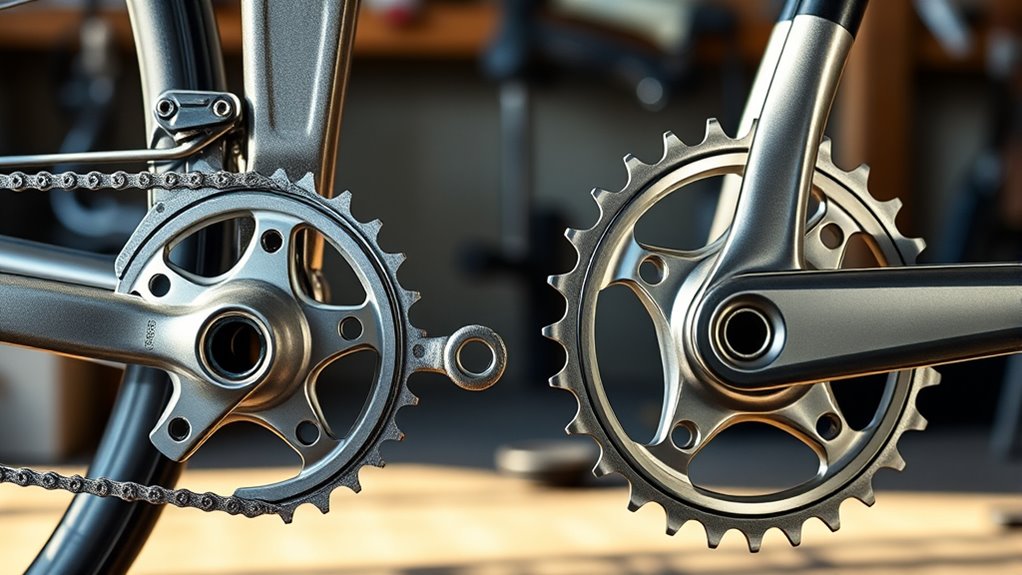
Have you ever wondered how the length of your bike’s crank arms affects your riding? It’s a question that many cyclists overlook, but crank length plays a vital role in comfort, efficiency, and performance. The right crank length can make your ride smoother and more enjoyable, while the wrong one might cause discomfort or even injury. When choosing the ideal crank length, considering ergonomic design is essential. An ergonomically designed crank ensures that your leg movements are natural and comfortable, reducing strain on your knees, hips, and lower back. This is especially important during long rides or intense workouts, where small misalignments can lead to fatigue or soreness.
Generally, crank lengths vary between 165mm to 175mm, but the ideal size depends on your height, leg length, and riding style. Shorter cranks (around 165mm) tend to promote a more comfortable, natural pedaling motion, which can benefit riders with shorter legs or those seeking a more relaxed ride. On the other hand, longer cranks (around 170-175mm) might provide more leverage for powerful climbs or sprinting, but they could also increase knee strain if not suited to your body. It’s worth experimenting with different lengths to find what feels best for you. Additionally, ergonomic design in crank length can help optimize your pedaling efficiency and reduce the risk of injury.
Crank length from 165mm to 175mm affects comfort and leverage; choose based on your height, riding style, and comfort.
When considering crank length, remember that proper maintenance tips can help you keep your components in top condition. Regularly check your crank arms for any looseness or damage, especially if you switch to a different size or upgrade your bike. Clean your crankset periodically to prevent dirt and grime buildup, which can affect smooth pedaling and lead to premature wear. Tighten any bolts or fasteners as needed, following manufacturer specifications, to guarantee safety and longevity. Proper maintenance not only prolongs your crank’s lifespan but also maintains your ergonomic benefits, keeping your ride comfortable and efficient.
Ultimately, the choice of crank length influences your riding experience more than many realize. It’s a blend of ergonomic design, personal anatomy, and riding goals. By paying attention to these factors and performing routine maintenance, you can customize your bike to fit you perfectly. This not only enhances your comfort but can also boost your performance, making every pedal stroke more effective. So, next time you’re gearing up for a ride, think about your crank length and whether it’s working for you. Small adjustments can lead to big improvements in how you feel on the bike, helping you enjoy every mile more fully.
Frequently Asked Questions
How Do I Measure My Ideal Crank Length?
To measure your ideal crank length, start with your bike fit and consider your inseam measurement. A good rule of thumb is to multiply your inseam by 0.21 to get a rough crank arm length. For a more precise fit, consult a professional bike fitter who can assess your riding style and body proportions. Ensuring your crank arm matches your leg length helps improve efficiency and comfort on the bike.
Does Crank Length Affect Pedaling Efficiency?
Yes, crank length impacts pedaling efficiency. Longer cranks can provide more leverage but may cause your knees to strain if they’re too long, while shorter cranks improve comfort and pedal positioning, especially with an ergonomic saddle. Proper crank length guarantees ideal pedal stroke, reducing fatigue and increasing efficiency. Adjusting your crank length to match your body and riding style helps you pedal more smoothly and efficiently, giving you a better cycling experience.
Can Changing Crank Length Improve Cycling Performance?
Yes, changing crank length can improve your cycling performance. It enhances ergonomics benefits by customizing your fit, which reduces fatigue and discomfort. Adjusting crank length also optimizes cycling biomechanics, allowing for more efficient pedaling and better power transfer. When you select the right crank length, you can ride more comfortably, maintain higher speeds, and potentially improve endurance, making your overall cycling experience more effective and enjoyable.
Is a Longer Crank Better for Climbing?
Many believe longer cranks improve climbing, but crank length myths often mislead cyclists. Longer cranks can increase leverage, but they also alter cycling biomechanics, possibly causing discomfort or inefficiency. For climbing, a shorter or standard crank often offers better control and comfort, enabling sustained power without strain. Ultimately, the best crank length for climbing depends on your individual anatomy and riding style, so experiment to find what works best for you.
How Does Crank Length Influence Knee Pain?
Using a crank length that’s too long can increase knee strain and reduce joint comfort, especially during intense riding or climbing. You might notice more pain or discomfort if your crank length isn’t suited to your leg length and riding style. To minimize knee pain, opt for a crank length that allows your knee to bend comfortably without overextending. Proper fit helps protect your knees and improves overall riding comfort.
Conclusion
Ultimately, choosing the right crank length can boost your comfort and efficiency on the bike. Imagine you’re a triathlete struggling with knee pain on long rides—switching to a slightly longer crank might give you that extra leverage you need to finish strong. Don’t overlook this small detail; it could make a big difference in your performance and enjoyment. Experiment, listen to your body, and find the crank length that helps you ride your best.