If you’re choosing between disc and rim brakes, consider where you’ll ride most. Disc brakes excel in muddy, wet, or rough conditions, offering consistent, powerful stopping power in challenging environments like mountain biking or off-road adventures. Rim brakes are lighter and simpler, making them ideal for road cycling and urban commutes on predictable surfaces. To find out which brake type suits your riding style best, explore how each performs in different settings and conditions.
Key Takeaways
- Disc brakes are ideal for mountain biking, cyclocross, and off-road riding due to their strong, consistent stopping power in rough conditions.
- Rim brakes are best suited for road cycling and urban commuting on paved, predictable surfaces.
- Disc brakes perform reliably in wet, muddy, or challenging weather, maintaining braking power regardless of environmental conditions.
- Rim brakes are simpler, lighter, and easier to maintain, making them suitable for riders seeking minimal setup and quick repairs.
- Disc brakes tend to be heavier and more complex, excelling in demanding terrains where consistent, powerful braking is essential.
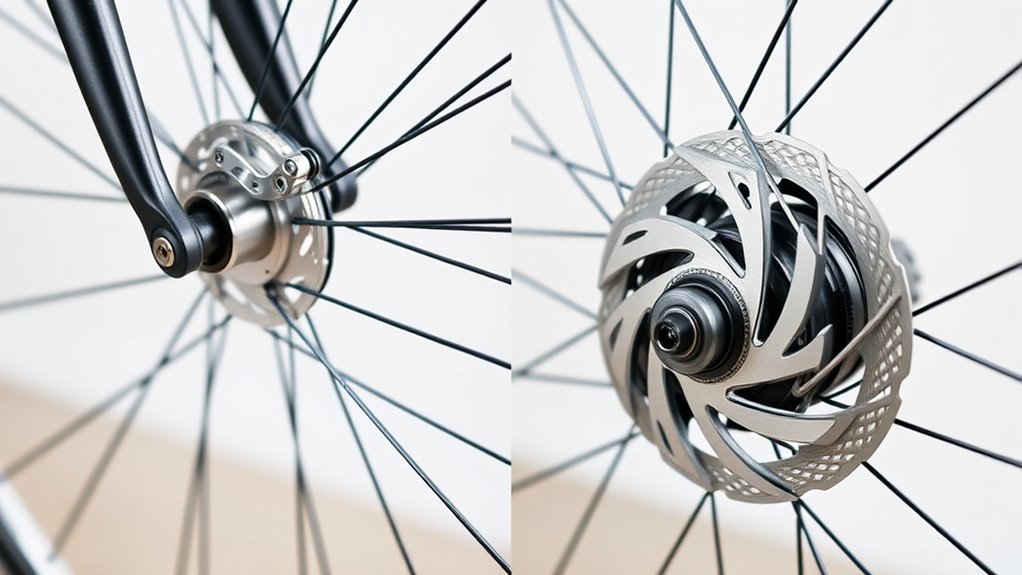
When choosing between disc and rim brakes, understanding their differences can considerably impact your riding experience. Your decision should be guided by how you plan to use your bike, as each brake type excels in different scenarios. Disc brakes are known for superior brake performance, especially in challenging conditions like wet or muddy terrains. They provide consistent stopping power regardless of weather, giving you confidence during mountain biking, cyclocross, or off-road adventures. Rim brakes, on the other hand, are often lighter and simpler, making them suitable for road cycling and urban commuting where conditions are typically predictable. Their straightforward design allows for easier maintenance, which is a significant advantage if you prefer minimal fuss or are new to bike repairs.
If you ride primarily on paved roads and prioritize a lightweight setup, rim brakes could be your best bet. They tend to have less complexity, making maintenance easier and quicker. Replacing brake pads or adjusting cable tension takes less time and requires fewer specialized tools. This simplicity means you can often perform basic repairs without visiting a bike shop, saving you both time and money. However, rim brakes often struggle with brake performance in wet or dirty conditions. Water and grime can reduce their effectiveness, which might compromise safety on rainy days or in muddy environments. In such cases, you might find yourself needing more frequent adjustments or replacements to maintain ideal brake performance.
Disc brakes shine in versatility. They deliver powerful, consistent braking in all weather conditions, which is vital for mountain biking, cyclocross, or commuting in unpredictable climates. Although they might be heavier and more complex to maintain, the payoff is a reliable and robust stopping power that can handle rough terrains and challenging weather. Maintenance can be more involved since disc brake systems include additional components like rotors and calipers. However, once you understand how they work, routine checks and pad replacements become straightforward. Many riders appreciate that disc brakes tend to stay cleaner, as they’re less affected by mud and water splashing onto the braking surface, which helps maintain brake performance over time.
Frequently Asked Questions
Can Disc Brakes Be Used With Rim Brake-Compatible Frames?
Yes, disc brakes can be used with rim brake-compatible frames, but you might need frame modifications. Since brake compatibility depends on the frame’s design, you’ll likely have to upgrade or modify your bike’s fork and rear stay mounts. These adjustments guarantee proper disc brake installation and safe operation. Always check your frame’s specifications and consult a bike mechanic to confirm your bike can handle disc brakes safely.
How Do Brake Types Affect Wheel Longevity and Maintenance?
Think of your bike wheel like a trusted friend—how long they last depends on how well you care for them. Rim brakes tend to cause more pad wear on the rim surface, leading to quicker replacement, while disc brakes distribute force more evenly, reducing wear. Regular checks and maintenance keep your wheels healthy, ensuring they stay reliable on every ride. Proper care extends their lifespan, just like nurturing a good friendship.
Are Disc Brakes More Effective in Wet Conditions Than Rim Brakes?
Yes, disc brakes are more effective in wet weather than rim brakes because they provide better braking performance when conditions are rainy or muddy. You’ll notice that disc brakes maintain consistent stopping power, even in wet conditions, thanks to their design that keeps the brake surface away from water. Rim brakes tend to lose efficiency in wet weather, making disc brakes the safer choice for riding in challenging, wet environments.
What Are the Weight Differences Between Disc and Rim Brake Setups?
You’ll find that disc brake setups generally weigh more than rim brake systems due to heavier brake calipers, rotors, and associated hardware. When considering wheel setup considerations, disc brakes require thicker, more robust wheels to handle added stresses, which adds weight. Rim brakes are lighter overall, making them ideal if reducing bike weight is a priority. Keep in mind, the extra weight of disc brakes can be offset by better braking performance in various conditions.
Do Disc Brakes Require Special Compatible Hubs or Wheels?
Coincidentally, disc brakes do require compatible hubs and wheels. You’ll need hubs designed for disc rotor mounting, which often means choosing specific hub compatibility for your bike’s frame and fork. This guarantees proper wheel durability and safe operation. While some wheels are versatile, many are dedicated to disc brake setups, so double-check your wheel’s compatibility before upgrading. This alignment guarantees smooth performance and long-lasting durability for your ride.
Conclusion
Ultimately, whether you choose disc or rim brakes, your decision depends on your riding routines and preferences. Both bring benefits and barriers, so weigh your needs carefully. Remember, the right brake boosts your bike’s brilliance and your confidence. So, whether you’re tackling tough terrains or city streets, select the style that suits your stride. Stay safe, stay swift, and enjoy every exhilarating ride, no matter which braking buddy you bring along!